- Muslims believe that Isa (عليه السلام) did not die on the cross but Allah (ﷻ) raised him to heaven and he will return one day to defeat the Dajjal (Anti-Christ). According to a Hadith, he is on the second heaven. The Prophet (ﷺ) mentioned, “During the Me’raj (Ascension), I met Isa (عليه السلام) on the second heaven. I found him of medium stature, reddish white. His body was so clean and clear, that it appeared as though he had just performed ghusal (ablution, cleansing of the entire body) and come.”
- In another Hadith, the Prophet (ﷺ) mentioned, “Allah will send Maseeh ibne Maryam (Messiah son of Mary). Thus he will descend near the white eastern minaret of Damascus, clad in two yellow sheets, leaning on the shoulders of two angels.” [Sahih Muslim]
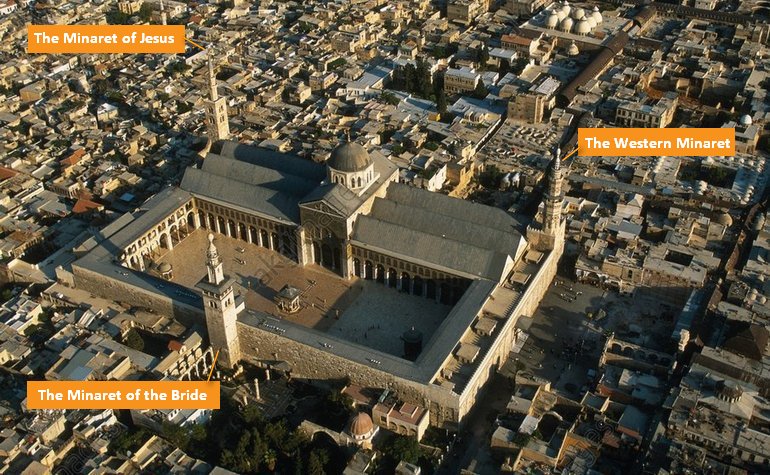
- The physical features of Isa (عليه السلام): He will resemble the famous sahabi Urwa bin Masoodi (رضي الله عنه). He will be of average height and red and white in colour. His hair will be spread to the shoulders, straight, neat and shining as after a bath. On bending his head, it will seem as if pearls are falling. He will have armour on his body. He will be wearing two pieces of cloth light yellow in colour.
- He will descend on a Jamaat (group) that will be righteous at the time and comprising of 800 men and 400 women. The people will be preparing for war at the time against Dajjal. It will be time for Fajr prayers, and Imam Mahdi will be the Amir (leader) of the Muslims. From the darkness of the dawn, a sound will suddenly be heard that “one who listens to your pleas has come” – the righteous people will look everywhere and their eyes will fall on Isa (عليه السلام). Briefly, at the time of Fajr, Isa (عليه السلام) will descend. When descending, Isa (عليه السلام)’s hands will be on the shoulders of two angels (according to another source (Ka’b Abrar), a cloud will carry him). On their insistence Isa (عليه السلام) will introduce himself. He will inquire about their enthusiasm and thoughts on Jihad against Dajjal. Isa (عليه السلام) will descend on the eastern side near the minaret in Damascus (or in Baitul-Muqaddus according to another narration). At the time Imam Mahdi will have proceeded forward to lead the Fajr Salaat. The Iqamat of the Salaat will already have been recited and Imam Mahdi will call Isa (عليه السلام) for Imamat (to lead the prayer), but he (Isa (عليه السلام)) will instead tell Imam Mahdi to lead the prayer since the Iqamat of that Salaat has already been said for him. Thus Imam Mahdi will lead the prayer, and Isa (عليه السلام) will follow him. After the ruku, he will make this statement: “Allah has killed Dajjal and the Muslims have appeared.”
- Isa (عليه السلام) will subsequently kill Dajjal and a great era of peace and harmony will come to the world. Isa (عليه السلام) will marry and have children and will live for 19 years after his marriage. He will then pass away and be buried next to the Prophet (ﷺ) in Majid-e-Nabwi, Madinah.
References: Major signs of Qiyamat – Mufti A.H.Elias
]]>Travel to Syria
- When Muhammad (ﷺ) was about 12 years old, he accompanied his uncle Abu Talib on a trade journey to Syria (which was a part of the region known as ‘Sham’). In a place called Busra a very interesting incident took place, which caused Abu Talib to return Muhammad to Makkah.

- On their trade journey they met a Christian monk by the name of Bahira, who lived a simple life in a monastery which contained ancient sacred texts that were not available anywhere else. Bahira had very simple provisions and lived a harsh life, surviving on the bare essentials. His diet was very simple and the clothes he wore were also coarse and well worn. He was looking outside and caught sight of a caravan approaching. His residence was on the main caravan route and he regularly saw caravans passing by, carrying different goods destined to be sold in the great markets of Syria.
Bahira’s invitation
- He noticed that this caravan was different; there was something special about it. He decided to invite the people to a meal and find out more. Bahira sent a message to the caravan that his hospitality was extended to all the members of the caravan. The caravan traders accepted the invitation and arrived at the monk’s place.
- When they arrived, Bahira searched their faces looking for something. He said that he had offered his hospitality to everyone, was there anyone left behind? They said that they had left a young boy called Muhammad to look after the camels. Bahira insisted that they send someone to get Muhammad and bring him to the entertainment.

Meeting the young Muhammad (ﷺ)
- When Bahira saw the face of Muhammad he was delighted for he was aware from the scriptures of the arrival of a mighty prophet and he could see the signs on the young boy. He asked him a series of questions such as how he sleeps, what does he see when he sleeps, what he thinks about and what he does all day. The young Muhammad answered truthfully which convinced Bahira of who he is.
- After the food, Bahira approached Abu Talib and asked him of his relationship to Muhammad. Abu Talib initially replied saying that he was his son upon which Bahira remarked that that could not be possible upon which Abu Talib confirmed that he was in fact his nephew. Bahira revealed to Abu Talib that Muhammad would be a great prophet one day. He said that when he had seen the caravan in the distance there was a cloud hanging over them, which was shading them from the great heat of the desert. When the caravan had stopped under a tree the cloud had also stopped above them.

- Bahira said that he had seen the stones and the trees prostrating to Muhammad as he had been walking by. They only do this for a prophet of Allah. He looked at the Muhammad’s back and noticed the seal of the prophets, which was an oval shape protruding just below Muhammad’s shoulder blades. He said that this was one of the signs of a great prophet to come that was taught to them in their books.
- Bahira said, “This is the master of all humans, Allah will send him with a message which would be a mercy to all humans”. Bahira advised that Muhammad should be taken back to Makkah at once, if the Jews found out about Muhammad they would try to kill him. Abu Talib took the advice of this wise old monk and sent Muhammad back with some of the guides.
Video of the Monastery of Bahira
- Some commentators report that accompanying Muhammad (ﷺ) on this trip was the young Abu Bakr and Bilal (رضي الله عنهم). They formed a deep bond which lasted right through their adult life.
- It should also be noted that some commentators have dismissed the authenticity of the story of Bahira’s interaction with the Prophet (ﷺ). However, the majority of ḥadith and seerah experts regard the incident as established. A more detailed explanation can be found on the IslamicPortal website.
References: Musalla.org, Life of the Prophet (ﷺ) – Shaykh Abdul Nasir Jangda (Qalam Institute)
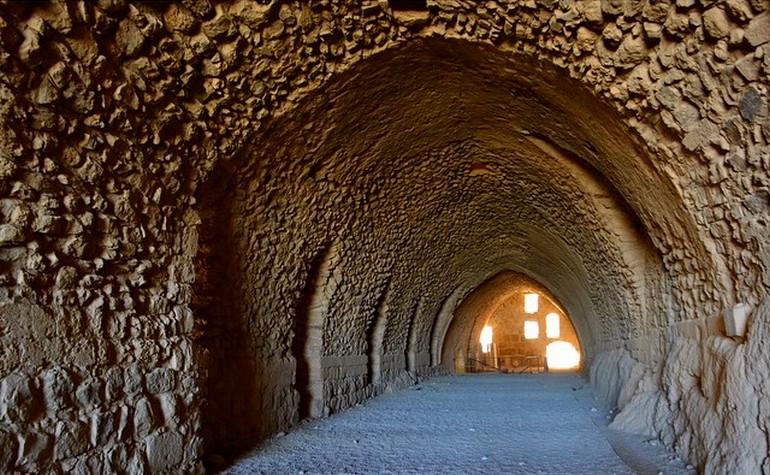
]]>- Krak des Chevaliers was the headquarters of the Knights Hospitaller during the Crusades who were contemporaries of the Knights Templar. It was expanded between 1150 CE and 1250 CE and eventually housed a garrison of 2,000. The inner curtain wall is up to 100 feet thick at the base on the south side, with seven guard towers 30 feet in diameter
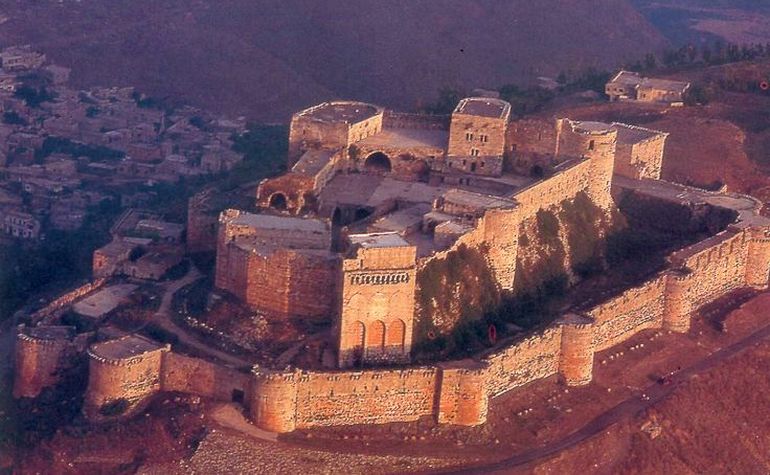
- Salahuddin Ayyubi unsuccessfully besieged the castle in 1188 CE.
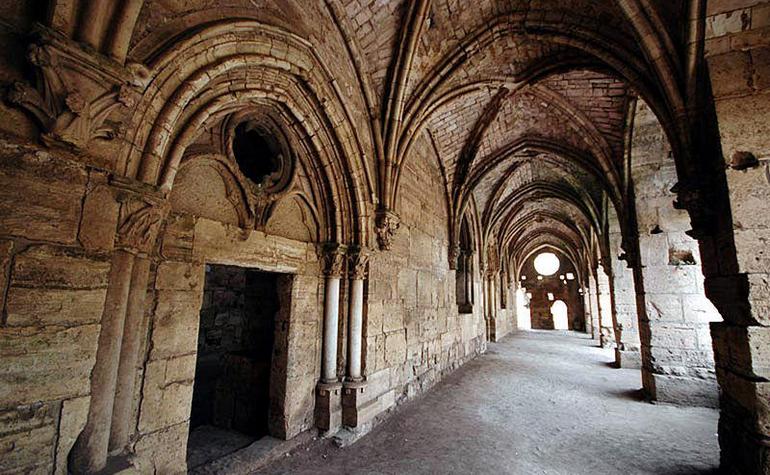
- In 1271 CE the fortress was captured by the Mameluke Sultan Baybars on April 8 with the aid of heavy catapults, at least one of which was later used to attack Acre in 1291 CE. Baybars refortified the castle and used it as a base against Tripoli. He also converted the Hospitaller chapel to a mosque (masjid).
References: Wikipedia
]]>- In around 250 CE there ruled a Roman king called Daqyanoos (Decius) who would annually hold a gathering dedicated to the worshipping of idols. Many people would attend, dressed in their best clothing. However, one youth believed in the oneness of Allah (ﷻ), the teachings of Isa (عليه السلام) and shunned pagan worship. He rebelled against the practices that were happening in the society. He attracted another youth and then another to form a small group.
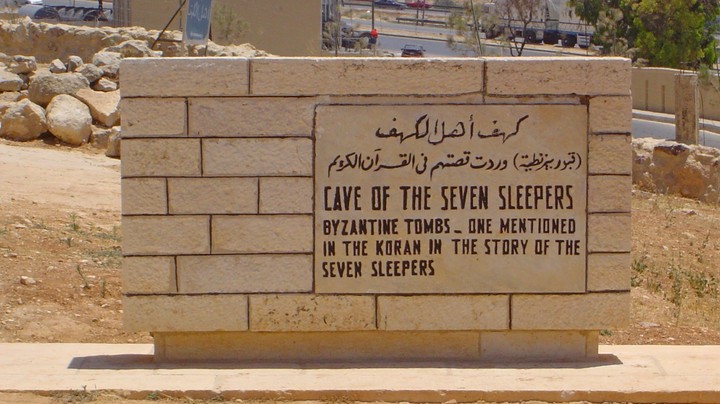
- When the king heard of their rebellion he became very angry and issued a command for them to be killed. In order to save their iman (faith) they fled and went into hiding. On their escape route they met a young farmer who owned a dog; they gave him da’wah, he accepted and decided to also join them. Eventually they came to a cave in which they made dua to Allah (ﷻ) for ease. They decided to take rest there for a while, leaving the dog (named Qitmir) near the entrance as a guard. Allah (ﷻ) caused them and the dog to sleep for 300 years.
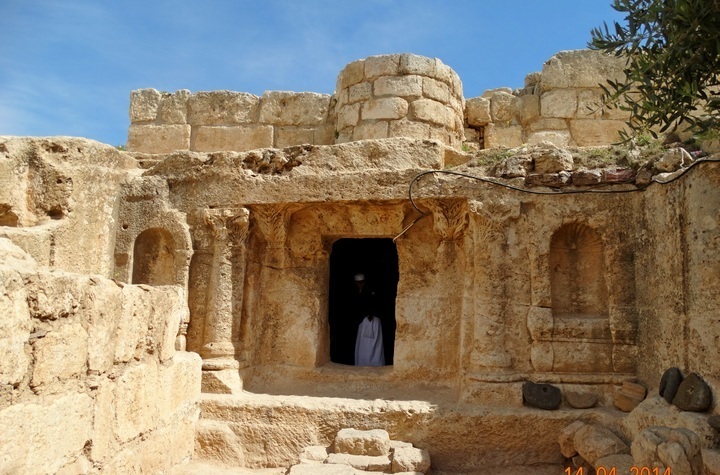
- Allah (ﷻ) describes their sleeping in the Holy Quran in Surah Kahf: “You would have thought they were awake, though they lay asleep. We turned them over, to the right and the left, with their dog stretching out its forelegs at the entrance. If you had seen them, you would turn and run away, filled with fear of them.” [18:18]
- The Quran further states that the period of time these sleepers spent in the cave was 300 years during which the calendar of their people was changed from solar to lunar and, as a result, the period of their sleep was 309 years.
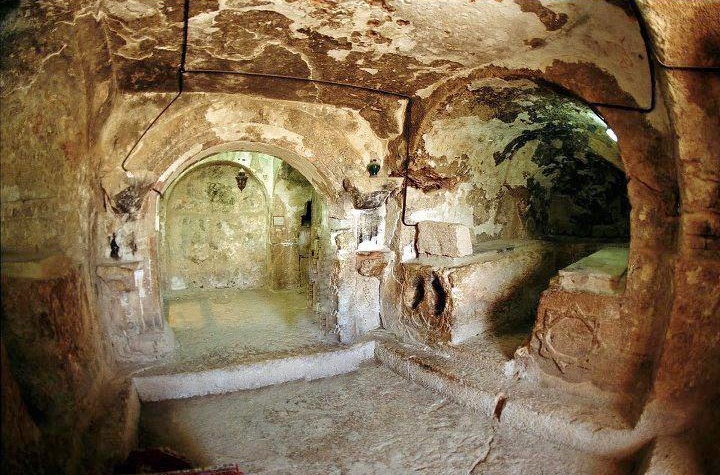
- When they woke up, they had no idea they slept for centuries and thought they had only slept a few hours. When they sent one of them to buy food, the shopkeeper was amazed to see such old coins and the reality of the time they had spent in the cave gradually came to light. The present ruling king, whom some scholars have identified as Tandoosees, was a believer who came on foot to see them and seek their blessings. When these young men died they were buried in the cave along with their dog. The bones of these youth and the dog are visible to see inside.
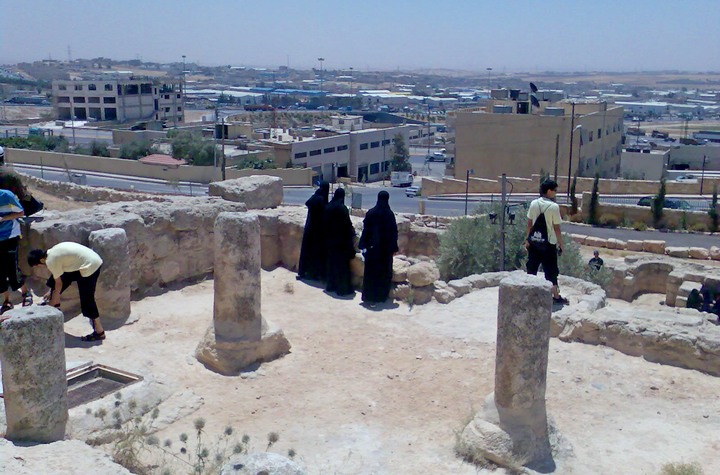
- To the left of the entrance is an ancient olive tree. At one time a small church was built on top of the cave; this was converted to a mosque with the mihrab still being visible above the entrance.
- Apart from Amman in Jordan, the location of the cave is also claimed to be in Turkey (see below). And Allah (ﷻ) knows best.
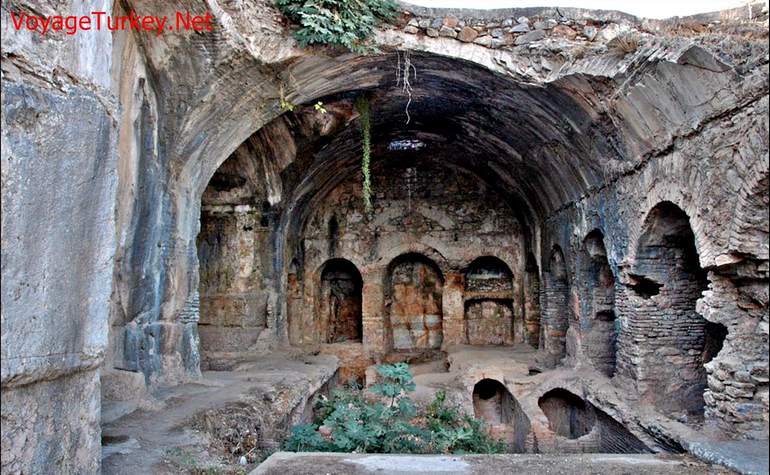
References: Stories of the Prophets – Ibn Kathir, Wikipedia, The Rough Guide to Jordan.
]]>- The Prophet (ﷺ) was challenged by the Quraysh of Makkah who did not believe in his message to answer three questions passed onto them by the Jews. One of the questions was, “Who were the youth who disappeared, and how many were they?” The Jews knew that the Prophet (ﷺ) would only be able to tell the story if he was indeed a prophet.
- The Prophet (ﷺ) had no clue and said that he would answer them tomorrow, hoping for the answer to be revealed to him through Jibraeel (عليه السلام) but forgetting to say ’Inshallah’ (if Allah wills). No revelation came to the Prophet (ﷺ) for 15 days, leading the Quraysh to greatly abuse and revile him.
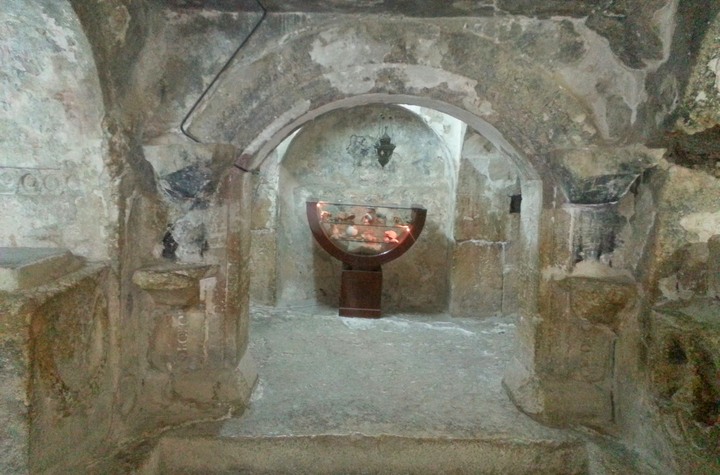
- The answer, however, was eventually revealed to the Prophet (ﷺ) in a Surah named after the cave (Al-Kahf) of the sleepers. The Quran revealed the exact story that the Jews knew of, and it answered the questions similarly to the information they had. The Quran confirmed that they slept for 309 years, which the Jews knew of. The Quran however did not give an exact answer as to how many they were. Allah (ﷻ) revealed: “[Some] say, ‘The sleepers were three, and their dog made four,’ others say, ’They were five, and the dog made six’- guessing in the dark – and some say,’ They were seven, and their dog made eight.’ Say [Prophet], ‘My Lord knows best how many they were.’ Only a few have real knowledge about them, so do not argue, but stick to what is clear, and do not ask any of these people about them.” [18:22]
- The Jews themselves did not know exactly how many there were (whether 3,5 or 7) and were astonished when the Quran gave all the possible numbers they had suspected for the number of sleepers.
References: Stories of the Prophets – Ibn Kathir, Wikipedia
]]>- Some angels came down in the form of handsome young men to Sadoom (Sodom), where lived Lut (عليه السلام) among a community indulging in homosexuality and immoral behaviour. The first to see them was one of the daughters of Lut (عليه السلام) who immediately told her father about them. Lut (عليه السلام), fearing that they will be abused if they were spotted, rushed out to meet them and invited them to his house as his guests. Allah (ﷻ) mentions this incident in the Quran in Surah Hud:“And when Our messengers came to Lut [Lot], he was anxious for them, feeling powerless to protect them, and said, ‘This is truly terrible day’.” [11:77]
- Only the people of his house were aware of the guests but his wife went out and informed the people that Lut (عليه السلام) had brought handsome men into the house. People immediately came and surrounded the house and demanded Lut (عليه السلام) to give up his guests to them. Lut (عليه السلام) barricaded himself behind the closed door but when he found the task of holding them back formidable, he said,“If only I had the strength to stop you or could rely on strong support!” [11:80]
- In that moment, Allah (ﷻ) makes mention of what the angels said:“O Lut, we are your Lord’s messengers. They will not reach you. Leave with your household in the dead of night, and let none of you turn back. Only your wife will suffer the fate that befalls the others. Their appointed time is the morning not near?’“[11:81]
- Lut (عليه السلام) left with his family and when the sun rose the decree of Allah was fulfilled. A severe punishment descended upon the people and destroyed all of them. On the saving of Lut (عليه السلام), Allah (ﷻ) says in the Holy Quran: “We saved him and all his family, except for an old woman who behind.“ [26:170-171]
- There are two interpretations about how his wife was destroyed. Either she remained inside the city or she looked back at the punishment and as a result was punished herself.
- Allah (ﷻ) has mentioned in Surah At-Tahrim: “Allah has given examples of disbelievers: the wives of Nuh [Noah] and Lut [Lot] who married two of Our righteous servants, but betrayed them. Their husbands could not help them against God: it was said,’Both of you enter the Fire with the others.” [66:10]
References: Stories of the Prophets – Ibn Kathir
]]>
- In 1183 Salahuddin besieged the castle, the siege taking place during the marriage of Humphrey IV of Toron and Isabella of Jerusalem. Lady Stephanie (the wife of Reynald) sent plates of food to the Muslim army beyond the walls. In response, while his men were trying to bridge the moat and catapulting rocks against the walls, Salahuddin enquired which tower the newly weds were occupying. As an act of chivalry, Salahuddin ordered his army not to bombard the tower and direct their fire elsewhere. The siege was eventually relieved by King Baldwin IV.
- Despite a truce between the Crusaders and Muslims, in 1186 Reynald attacked a caravan travelling between Cairo and Damascus. In the ensuing hostilities, Reynald launched ships on the Red Sea, partly for piracy, but partly as a threat against Makkah and Madinah, challenging Islam in its own holy places. His pirates ravaged villages up and down the Red Sea, before being captured by the army of Al-Adil only a few miles from Madinah and subsequently beheaded.
- Reynald’s rein in Kerak was characterised by wanton cruelty. Not only did he throw prisoners from the castle walls, he encased their heads in boxes first, in the hope that this would stop them losing consciousness before they hit the rocks below.
- Salahuddin swore that if Reynald was ever captured he would be executed by his own hands. In 1187, the Muslims defeated the Crusaders at the Battle of Hattin during which Reynald was taken prisoner along with King Guy, both of whom Salahuddin ordered brought to his tent. The chronicler Imad ad-Din al-Isfahani, who was present at the scene, relates: “Salahuddin invited the king [Guy] to sit beside him, and when Arnat [Raynald] entered in his turn, he seated him next to his king and reminded him of his misdeeds. “How many times have you sworn an oath and violated it? How many times have you signed agreements you have never respected?”. Reynald answered through a translator: “Kings have always acted thus. I did nothing more.”
- During this time King Guy was gasping with thirst, his head dangling as though drunk, his face betraying great fright. Salahuddin spoke reassuring words to him, had cold water brought, and offered it to him. The king drank, then handed what remained to Reynald, who slaked his thirst in turn. The sultan then said to Guy: “You did not ask permission before giving him water. I am therefore not obliged to grant him mercy.” After pronouncing these words, the sultan smiled, mounted his horse, and rode off, leaving the captives in terror. He supervised the return of the troops, and then came back to his tent. He ordered Reynald brought there, then advanced before him, sword in hand, and struck him between the neck and the shoulder-blade. When Reynald fell, he cut off his head and dragged the body by its feet to the king, who began to tremble. Seeing him thus upset, Salahuddin said to him in a reassuring tone: “This man was killed only because of his maleficence and perfidy”.
- Salahuddin besieged Kerak castle again and finally captured it in 1189.
- Kerak is the unofficial capital of southern Jordan and lies around 125 km south of Amman.
References: Wikipedia, The Rough Guide to Jordan – Matthew Teller
]]>- The Nabateans were a Semitic people, Arabs of southern Jordan, Canaan and the northern part of Arabia,
- Petra lies on the slope of Mount Hor and close to the town of Wadi Musa (the valley of Moses). Harun (عليه السلام), the brother of Musa (عليه السلام) is buried close by, as is Miriam, their sister.
- The Nabateans worshipped the Arab gods and goddesses of the pre-Islamic times as well as few of their deified kings. Many statues carved in the rock depict these gods and goddesses. Three of the idols worshipped by the disbelievers at the time of the Prophet (ﷺ), Lat, Uzza and Manat have their origins with the Nabateans. They used to believe that they were the daughters of Allah.
- One of the first things that can be seen around the entrance to Petra are three huge blocks, standing 6 to 8 metres high. Tradition holds that they contained ‘jinn’, placed there to guard the city.
References: Wikipedia
]]>(more to follow)
References: Cairo – Cardogan guides
]]>(more to follow)
References: Eyewitness Travel: Egypt, Wikipedia
]]>