- Bilal (رضي الله عنه) was an Abyssinian (Ethiopian) slave of a disbeliever in Makkah. His conversion to Islam was, naturally, not liked by his master and he was, therefore, persecuted mercilessly. Ummayah-bin-Khalaf, who was the worst enemy of Islam, would make him lie down on the burning sand at mid-day and would place a heavy stone on his breast, so that he could not even move a limb. He would then say to him, “Renounce Islam or swelter and die.”
- Even under these afflictions, Bilal (رضي الله عنه) would exclaim: “Ahad” – The One (Allah), “Ahad” – The One (Allah).
- He was whipped at night and, with the cuts thus received, made to lie on the burning ground during the day to make him either forsake Islam or to die a lingering death from wounds. The torturers would get tired and take turns (Abu Jahl, Ummayah and others) and vie with one another in afflicting more and more painful punishment, but Bilal (رضي الله عنه) would not yield. At last Abu Bakr (رضي الله عنه) bought his freedom, and he became a free Muslim.
- Allah (ﷻ) rewarded his steadfastness. He was to have the honour of becoming the Prophet’s Muezzin. He was to always remain with him at home and abroad to call out the Azaan for his Salat. After the Prophet’s death it became very hard for him to continue his stay in Madinah where he would miss him at every step and in every corner. He therefore left Madinah, and decided to pass the rest of his life striving in the path of Allah. Once he beheld the Prophet (ﷺ) in his dream saying to him: “O Bilal! How is it that you never visit me?” .
- No sooner did he get up that he set out for Madinah. On reaching there, Hassan and Hussain (رضي الله عنهم), the Prophet’s grandsons, requested him to call out the Athan. He could not refuse them, for they were very dear to him. But as soon as the Athan was called, the people of Madinah cried openly out of their anguish at the memory of the happy old days of the Prophet’s time. Even the women came out of their houses weeping. Bilal (رضي الله عنه) left Madinah again after a few days and died in Damascus in 20 AH.
Note that this entry has been shown for information purposes only. On no account should anybody pray to a grave or seek supplication through them as this is tantamount to committing shirk, associating partners with Allah (ﷻ)
References: Fazail-e-Aamal – Sheikh Zakariyya Kandhalvi
]]>- Kathir bin Qais narrates: “I was sitting with Abu Darda (رضي الله عنه) in a masjid in Damascus, when a person came to him and said, ‘O, Abu Darda (رضي الله عنه), I have come all the way from Madinah to learn one Hadith from you, as I understand you have heard it directly from the Prophet (ﷺ)’.”
- Abu Darda (رضي الله عنه) asked: “Have you any other business in Damascus?”. The person:“No.” Abu Darda (رضي الله عنه):“Are you sure that you have no other work in Damascus?”. The person: “I have come to this place with the sole purpose of learning this Hadith”. Abu Darda (رضي الله عنه) responded:“Listen. I have heard the Prophet (ﷺ) saying, ‘Allah eases the way to Paradise for one who traverses some distance to seek knowledge.The angels spread their wings under his feet, and all things in heavens and earth (even the fish in the water) pray for his forgiveness. The superiority of a person possessing knowledge over a person doing worship is as the superiority of the moon over the stars. The Ulama are the inheritors of the Prophet (ﷺ). The legacy of Prophets (Alaihis-salaam) is neither gold nor silver. Their legacy is knowledge. A person who acquires knowledge acquired a great wealth.”
The entrance to the tomb:

- Abu-Darda (رضي الله عنه) is foremost among the Sahabah who possessed very sound knowledge in religion. He is called ‘Hakeem-ul-Ummah’ (The Sage of Islam). He once said: “Before Islam, I lived on trade. After accepting Islam, I tried to combine the service of Allah with my business,but I could not do so. I therefore gave up business and devoted myself solely to the service of Allah. Now if I have a shop at the gate of a masjid and have no fear of losing a single salah thereby, and even if the shop gives me a daily profit of 40 dinars to spend the whole lot in the path of Allah, even then I am not willing to turn to business.” Somebody inquired the reason. He replied: “Because of the fear of reckoning.”
- Abu-Darda (رضي الله عنه) narrated 179 ahadith.
- He passed away in 32 AH.
Note that this entry has been shown for information purposes only. On no account should anybody pray to a grave or seek supplication through them as this is tantamount to committing shirk, associating partners with Allah (ﷻ)
Reference: Wikipedia
]]>- Prior to him accepting Islam, Khalid-bin-Waleed (رضي الله عنه) fought on the side of the Quraysh in the Battle of Uhud and it was his military manoeuvres that led to the deaths of 70 Sahabah.
- After embracing Islam, Khalid (رضي الله عنه) first took charge of a Muslim army at the Battle of Mu’ta after the three leaders appointed by the Prophet (ﷺ) had been martyred. He successfully commanded a protective withdrawal. Khalid (رضي الله عنه) broke 9 swords during combat in the battle and after the Battle of Mu’ta he was given the title ‘Saifullah‘ (Sword of Allah).
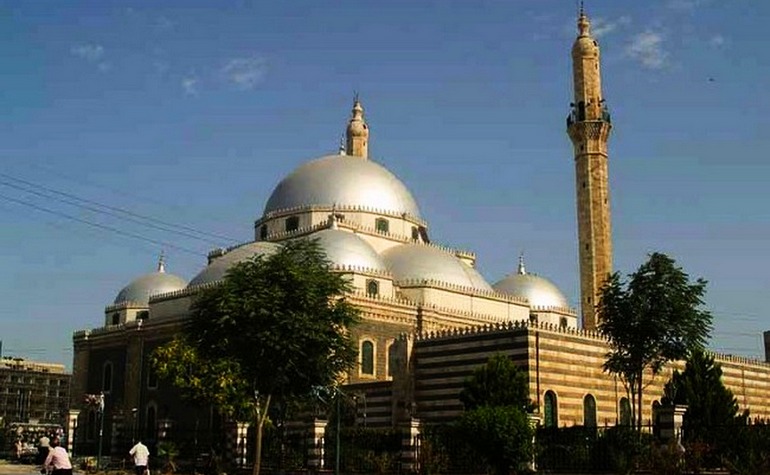
- He was one of the most successful military commanders of all time. He is noted for his military prowess, commanding the forces of the Prophet (ﷺ) and those of his immediate successors of the Rashidun Caliphate; Abu Bakr and Umar ibn al-Khattab. He has the distinction of being undefeated in over a hundred battles, against the numerically superior forces of the Byzantine Roman Empire, the Sassanid Persian Empire, and their allies. His greatest strategic achievements were his swift conquest of the Persian Empire’s Iraq and conquest of Roman Syria within three years from 633 to 636 CE, while his greatest tactical achievements were his successful double envelopment manoeuver at Walaja and his decisive victories at Yamamah, Ullais and Yarmouk.
- In 631 CE he participated in the farewell Hajj of the Prophet (ﷺ). According to a narration, when the Prophet (ﷺ) shaved his head, Khalid (رضي الله عنه) took some of his hairs. When asked by the Prophet (ﷺ) the reason for this, he replied, “I will keep these hairs with me forever as a relic so that they will help me be victorious in battles.“ Later he sewed those hairs in his cap, which he always wore under his turban.
- The tragedy of Khalid-bin-Waleed (رضي الله عنه) was to die on his bed. He himself narrates, “ I attended such-and-such a battle, and such-and-such a battle, proceeding (towards the enemies); and there is no spot of my body but that it has either a sword’s strike, a spear’s pierce or an arrow’s throw. And now I’m dying on my bed, in the same way as the camel dies. May the eyes of the cowards never sleep.”
- Scholars have commented that the reason he died a natural death was that he was ‘The Sword of Allah’ and thus it was not possible for him to be killed by another man.
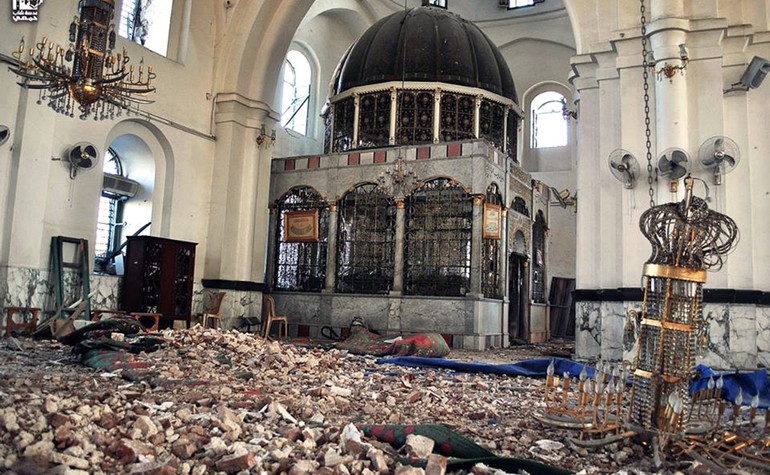
- The Mosque of Khalid-bin-Waleed has been bombed during the Syrian civil war. This video shows the aftermath of the bombing of the mosque (in arabic):
- The mosque has now been renovated:
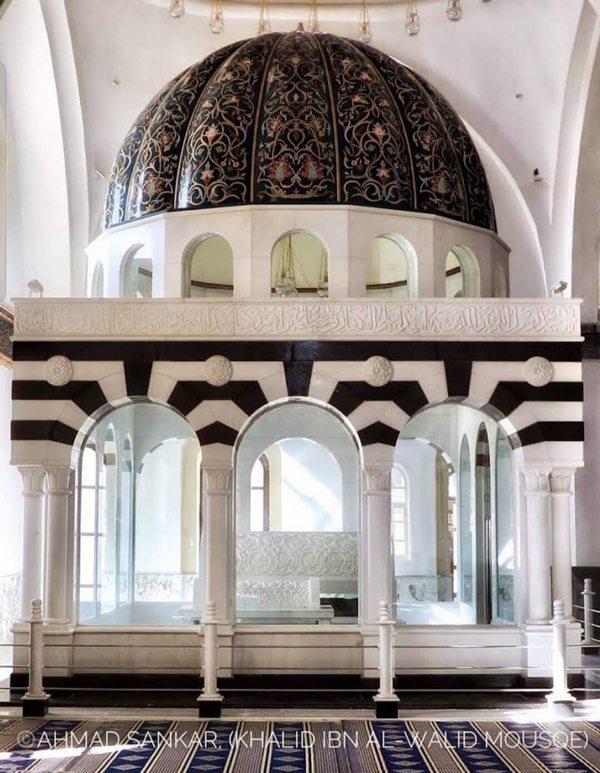
References: Men around the Messenger – Khalid Mohammed Khalid, Wikipedia.
Note that this entry has been shown for information purposes only. On no account should anybody pray to a grave or seek supplication through them as this is tantamount to committing shirk, associating partners with Allah (ﷻ)
]]>
Warning: Undefined array key "file" in /home/wtim8wecc6jt/public_html/overhaul.islamiclandmarks.com/wp-includes/media.php on line 1763
Deprecated: preg_match(): Passing null to parameter #2 ($subject) of type string is deprecated in /home/wtim8wecc6jt/public_html/overhaul.islamiclandmarks.com/wp-includes/media.php on line 1763
- Zaid (رضي الله عنه) was the first to embrace Islam after Ali (رضي الله عنه). He was the first slave to accept Islam.
- When still a small child he was travelling in a caravan when it was attacked by the tribe of Banu Qais. He was taken as a slave and sold in Makkah to Hakim-bin-Hizam who purchased him for his aunt Khadijah (رضي الله عنه), who offered him as a present to the Prophet (ﷺ) at the time of her marriage to him.
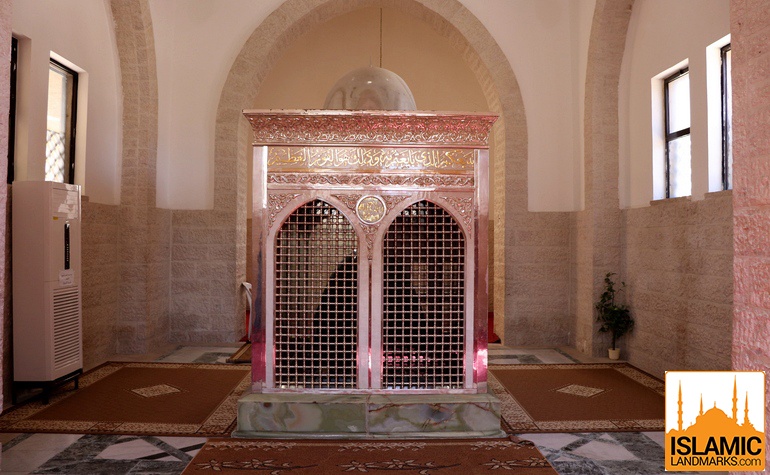
- Zaid’s father was in immense grief at the loss of his son and roamed about in search of him. Zaid met some people of his clan during their pilgrimage to Makkah and sent a letter to his father assuring him that he was quite well and happy with his noble master. Zaid’s father and uncle came to Makkah with sufficient money to ransom Zaid and approached the Prophet (ﷺ) to free him so they could take him back. The Prophet (ﷺ) gave Zaid the free choice to go back with his father but he refused saying, “How can I prefer anybody else to you? You are everybody for me, including my father and uncle.” On this the Prophet (ﷺ) took Zaid in his lap and said, “From today, I adopt Zaid as my son.” Zaid’s father and uncle were quite satisfied with the situation and gladly left Zaid with the Prophet (ﷺ).

- Zaid (رضي الله عنه) is the only companion (Sahabi) of the Prophet (ﷺ) mentioned by name in the Quran which concerned his divorce from Zainab (رضي الله عنها): “When Zaid no longer wanted her, We gave her to you in marriage.” [33:37]
- Zaid (رضي الله عنه) died at the age of 55.
References: Fazail-e-Aamal – Sheikh Zakariyya Kandhalvi, The Holy sites of Jordan – TURAB Publishing, In the Blessed Lands: Jamiatul Ulama KZN
Note that this entry has been shown for information purposes only. On no account should anybody pray to a grave or seek supplication through them as this is tantamount to committing shirk, associating partners with Allah (ﷻ)
]]>
- Jafar (رضي الله عنه) was the paternal cousin of the Prophet (ﷺ) and the older brother of Ali (رضي الله عنه).
- He had a special love for the poor and often mingled and associated with them.
- He was amongst the first of the companions to emigrate to Abyssinia (Ethiopia) during the persecution of the Quraysh. He was the spokesman of the Muslims who successfully defended the emigrants in the court of the King Negus against the Quraysh who had come to force them back to Makkah.
- He returned to Madinah at the occasion of Khaybar. The Prophet (ﷺ) came out to welcome him and kissed him on his forehead and mentioned, “I am not sure whether I am happier with the arrival of Ja’far or with the conquest of Khaybar.” This took place in 7 AH, one year before the battle of Mu’ta.
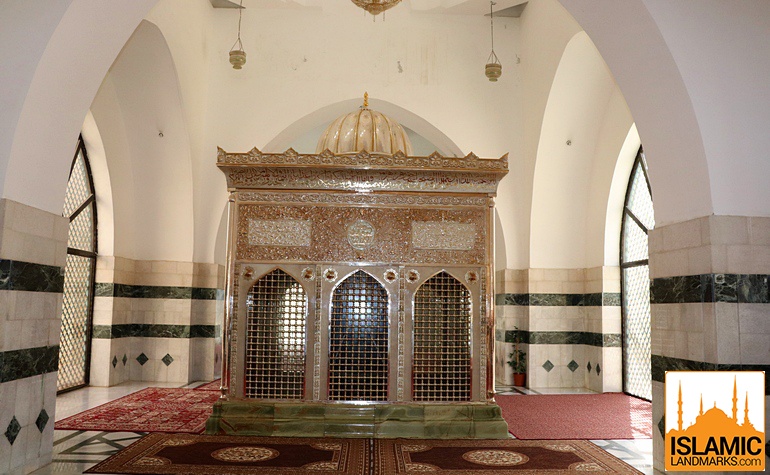
- When Zaid (رضي الله عنه) had been killed, the flag of the Muslims was taken by Jafar (رضي الله عنه). He intentionally disabled his horse to dispel any idea of returning home from the battlefield. With flag in one hand and sword in the other, he jumped into the enemy lines. The enemy cut his right hand, which held the flag. He at once transferred it to his left. When that was cut off, he held the flag in his teeth and supported it with his bleeding arms. His body was cut into two by somebody from behind and he fell dead, he was around 33 at the time.
- On hearing the news of his death, the Prophet (ﷺ) went to his house to condole with his family. Asma bint-e-Umais (رضي الله عنها), the wife of Jafar (رضي الله عنه) mentions that she was at home bathing and changing her children when the Prophet (ﷺ) entered and hugged the children. She saw tears streaming down his mubarak eyes and asked him, “O Prophet of Allah, may my parents be sacrificed for you, why are you crying like this? Has information regarding Jafar and his companions reached you?” The Prophet (ﷺ) replied, “Yes, today Jafar has been martyred.” Asma (رضي الله عنها) says, “When I heard this I shrieked and all the women began gathering at my home to console me” The Prophet (رضي الله عنها) then left the house, went home and instructed his family to prepare food for the household of Jafar (رضي الله عنه).
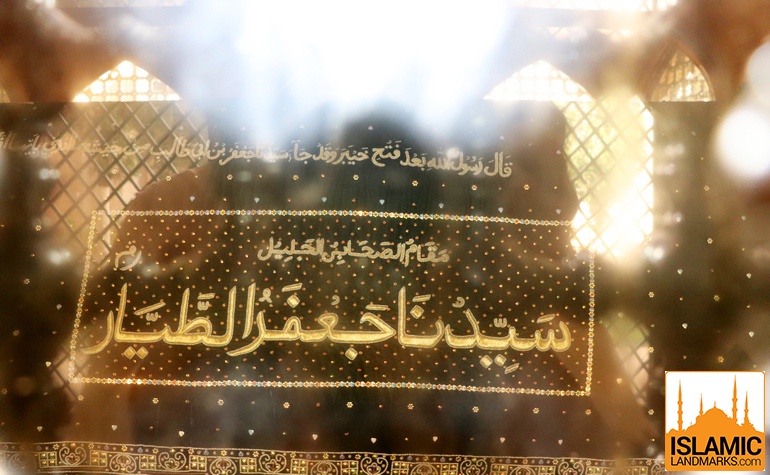
- It was on this occasion, the Prophet (ﷺ) mentioned, “In Jannah, Allah Ta’ala has given Jafar wings in place of his hands with which he flies around as he wishes and where he wishes”. It is for this reason that he became famously known as Jafar ‘al-Tayaar’ (One who flies).
References: Fazail-e-Aamal – Sheikh Zakariyya Kandhalvi, In the Blessed Lands: Jamiatul Ulama KZN
Note that this entry has been shown for information purposes only. On no account should anybody pray to a grave or seek supplication through them as this is tantamount to committing shirk, associating partners with Allah (ﷻ)
]]>- Abdullah-bin-Rawahah (رضي الله عنه) was originally a Christian scribe from Madinah and was also known as Abu Amro’ Al-Ansari Al-Khazraji Al-Badri. He was one of the most active persons from among the Ansar to support the faith of Islam and strengthen its structure.
- During the Battle of Badr, he was left behind by the Prophet (ﷺ) in charge of Madinah.
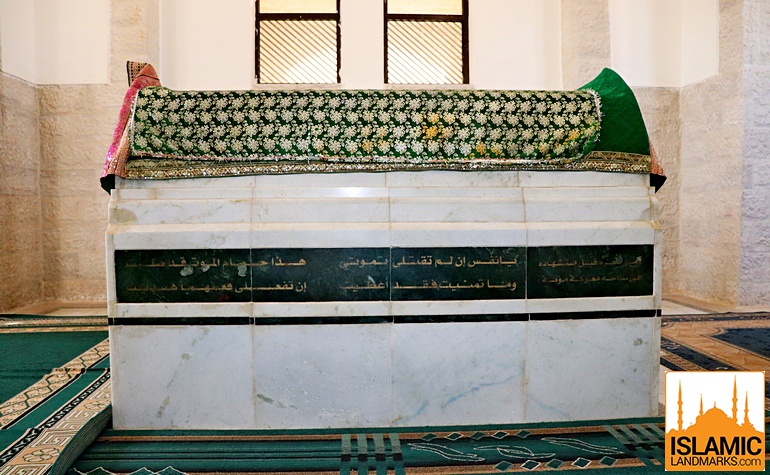
- When Jafar (رضي الله عنه) was killed in Mu’ta, Abdullah-bin-Rawahah (رضي الله عنه) was eating a piece of meat in a corner of the battle-field. He had been hungry for three days. On hearing of Jafar’s death, he threw away that piece of meat, saying to himself, “Abdullah! You are busy in eating, while Jafar has reached Paradise.” He then took the flag and began to fight. His finger was severely injured and hung loose. He put the hanging finger under his foot and tore it off from the hand, and then rushed forward, striking with his sword till he was martyred.
References: Fazail-e-Aamal – Sheikh Zakariyya Kandhalvi, The Holy sites of Jordan – TURAB Publishing
Note that this entry has been shown for information purposes only. On no account should anybody pray to a grave or seek supplication through them as this is tantamount to committing shirk, associating partners with Allah (ﷻ)
]]>
- The Prophet (ﷺ) said, “Every nation has a trustworthy man, and the trustworthy man of this (Muslim) nation is Abu Ubaidah.”
- Abu Ubaidah (رضي الله عنه) has been described as a tall, thin, light bearded man with two broken teeth that was the envy of all the Muslims, as they had been broken in the process of helping the Prophet (ﷺ). During the battle of Uhud, the Prophet (ﷺ) was fiercely attacked by the enemy and two links of the helmet worn by him was struck deep into his head (or face). Abu Ubaidah ran to help him and started pulling out the links with his teeth. By the time one of the links was out he had lost one of his teeth. Without minding this, he again used his teeth to pull out the other link as well. He succeeded in taking out that one too, but he had to loose another tooth in the effort. In this process his blood mixed with the Prophet’s blood.
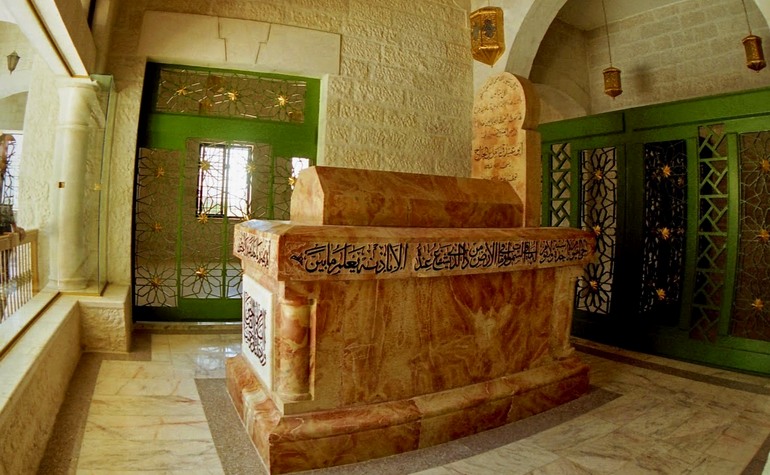
- During the Caliphate of Umar (رضي الله عنه), Abu Ubaidah (رضي الله عنه) replaced Khalid-bin-Waleed as the commander of the Muslims during the Syrian Campaign.
- When Syria was struck with the plague that had claimed the lives of many Sahaabah (رضي الله عنهم), Caliph Umar (رضي الله عنه) wrote the following letter immediately to Abu Ubaidah (رضي الله عنه), “Assalamu alykum, I have a severe need for which I need to speak to you face to face. For this reason I emphasise that the moment you get this letter in your hand, without even placing it down leave immediately to come and see me.” Abu Ubaidah (رضي الله عنه) was a man who lived his life in the obedience of his elders. But the moment he read this letter he smiled and understood exactly what was Umar’s (رضي الله عنه) pressing need to see him. Umar (رضي الله عنه) only wanted him to leave the plague stricken area and come safely home to Madinah. Abu Ubaidah (رضي الله عنه) turned to his companions and said, “I know what the need of our Ameer is. He wishes for someone to survive who is not going to survive.”
- Immediately he wrote the following reply to Umar (رضي الله عنه). “I know exactly the reason for which you are calling me back. At this particular time, I am sitting among such people in the Muslim army whom I am comfortable with. Hence I do not want to desert them and return until such a time Allah Ta’ala decides our fate. I implore you to please excuse me from your command and allow me to stay with the army.” When Umar (رضي الله عنه) read the letter, tears welled up in his eyes. The people around him noticed this and asked, “Ameerul Mu’mineen, has the news of Abu Ubaidah’s demise reached you?” Umar (رضي الله عنه) replied, “No it hasn’t happened as yet but it seems that it will happen soon.” Thereafter Umar (رضي الله عنه) wrote another letter, “Assalamu alykum, The place where you have kept the people is a very low land. Take them to some higher grounds where the air is clear.”
- Abu Musa Ashari (رضي الله عنه) says that when this letter reached Abu Ubaidah , he called me and read out the letter from Ameerul Mumineen. He then asked me to go and look for a suitable place for the Muslim army. He further stated that before going out to look, he first went home to find his wife affected with the plague. He went back quickly and mentioned this to Abu Ubaidah (رضي الله عنه) who had mounted his camel to search for some suitable place when it was discovered Abu Ubaidah (رضي الله عنه) also was afflicted by the plague. Shortly after his condition worsened and he also passed away near Fahl.
- This incident occurred in the year 17 AH when Abu Ubaidah (رضي الله عنه) was 58 years old. Muadh bin Jabal (رضي الله عنه) performed his janaza salah (funeral prayer). The grave of Abu Ubaidah (رضي الله عنه) is in a small room adjacent to the Masjid. As you come out of the Masjid, you will notice a large graveyard on the right hand side. The local people mentioned that in this graveyard, many Sahabah and Shuhadaa, who were martyred in this plague, are buried.
References: Fazail-e-Aamal – Sheikh Zakariyya Kandhalvi, The Holy sites of Jordan – TURAB Publishing, In the Blessed Lands: Jamiatul Ulama KZN
Note that this entry has been shown for information purposes only. On no account should anybody pray to a grave or seek supplication through them as this is tantamount to committing shirk, associating partners with Allah (ﷻ)
]]>- Muadh (رضي الله عنه) was an Ansari who became a Muslim at a young age at the hands of Musayb-bin-Umair (رضي الله عنه), whom the Prophet (ﷺ) had sent to Yathrib (Madinah) before the Hijrah. When the Prophet (ﷺ) reached Madinah, Muadh stayed in his company as much as possible. He studied the Quran and the laws of Islam until he became one of the most well-versed of all the companions in the religion of Islam. Wherever Muadh went, people would refer to him for legal judgements on matters over which they differed.
- He was from the Khazraj tribe in Madinah and was among the 70 people who had taken the pledge of Aqabah prior to the Hijrah of the Prophet (ﷺ). At that time he was so young that he did not even have a beard. At the time of Badr he was only 20 years old and thereafter fought in every battle with the Prophet (ﷺ). It was only in the Battle of Hunain that he was absent because the Prophet (ﷺ) had sent him to Makkah to teach Islam to the new Muslims.
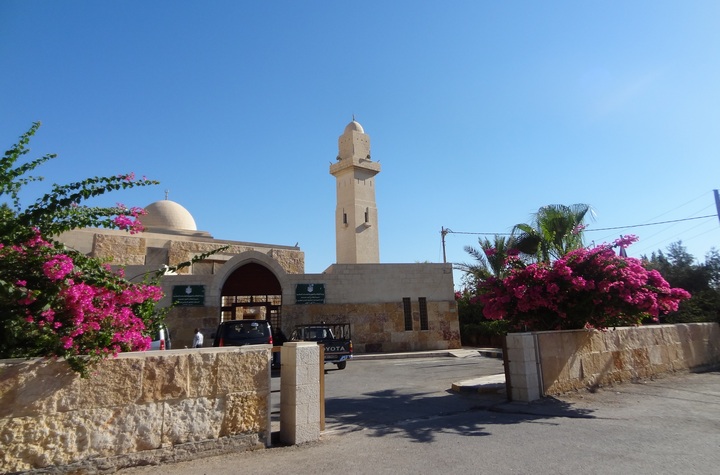
- Sometime after the Prophet (ﷺ) had returned to Madinah, messengers of the kings of Yemen came to him announcing that they and the people of Yemen had become Muslims. They requested that some teachers should be with them to teach Islam to the people. For this task the Prophet (ﷺ) commissioned a group of competent da’ees (missionaries) and made Muadh-bin-Jabal their amir. He then put the following question to Muadh: “According to what will you judge?”. “According to the Book of Allah,” replied Muadh. “And if you find nothing therein?”. “According to the Sunnah of the Prophet of Allah.”. “And if you find nothing therein?”. “Then I will exert myself (exercise ijtehad) to form my own judgement.” The Prophet (ﷺ) was pleased with this reply and said: “Praise be to Allah who has guided the messenger of the Prophet to that which pleases the Prophet.” The Prophet (ﷺ) personally walked for some distance alongside Muadh as he rode out of the city.
- When it came time to bid farewell the Prophet (ﷺ) said to Muadh, “O Muadh, perhaps you shall not meet me again after this year. Perhaps when you return you shall see only my mosque and my grave.” Muadh (رضي الله عنه) wept upon hearing this as he knew in his heart that he was never to meet the Prophet (ﷺ) in this world again. A feeling of sadness and desolation overtook him as he parted from the Prophet (ﷺ). The Prophet’s premonition was correct, the eyes of Muadh (رضي الله عنه) never beheld the Prophet after that moment. The Prophet (ﷺ) died before Muadh returned from Yemen.
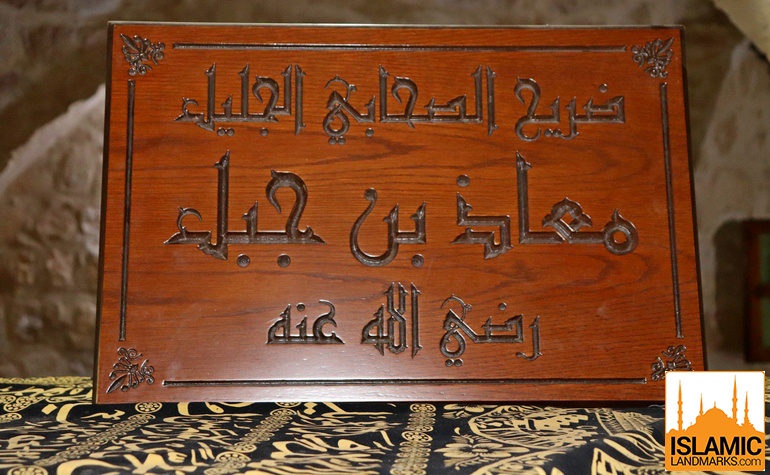
- When Abu Ubaidah bin Jarraah (رضي الله عنه) was afflicted by the plague, he appointed Muadh (رضي الله عنه) as the governor of Shaam. During this time a plague had gained rapid momentum and affected many people. Muadh (رضي الله عنه) addressed the people saying he heard the Prophet (ﷺ) say, “You people will migrate to Shaam and you will conquer this land. Thereafter such a sickness will appear which will be like sores and boils. Allah Ta’ala will bless you with Shahada (martyrdom) and purify your actions.”
- Thereafter, he made the following dua, “O Allah, if Muadh really heard this from the Prophet (ﷺ), then bless him and his family with this virtue”. The plague then entered his home and no one from his family was spared. When he saw the signs of the plague appearing on him he smiled and said, “If someone had to give me red camels in exchange of this it would not please me.” Someone began crying when he saw his condition. Muadh bin Jabal (رضي الله عنه) asked him, “Why are you crying?” This person replied, “I am not crying over any worldly benefit which I acquired from you, rather I am crying at the loss of the ilm (knowledge) I used to gain from you.” Muadh (رضي الله عنه) consoled him saying, “Don’t cry over that as well. Look at Ebrahim (عليه السلام). He was born and brought up in places where there was no knowledge. Allah Ta’ala blessed him with knowledge. After my demise, you should obtain knowledge from four people. Abdullah bin Mas’ood, Salman Farsi, Abdullah bin Salaam and Abu Darda (رضي الله عنهم).”
- Muadh (رضي الله عنه) died in Jordan during the 18th year after Hijra, at the age of 38. His son is also buried close to him.
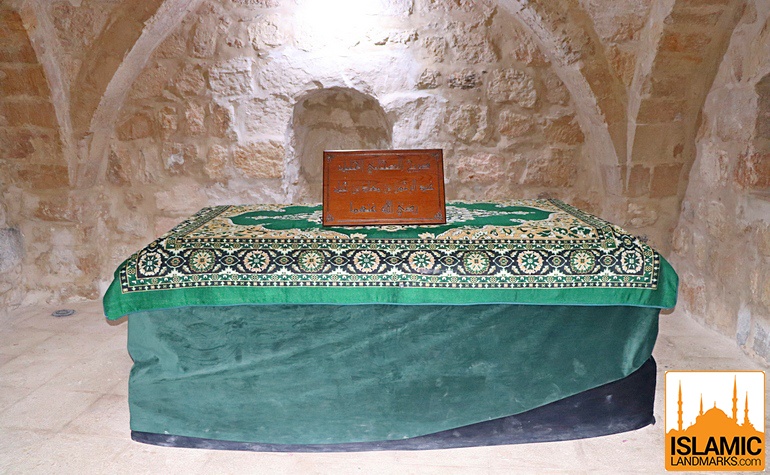
- Many visitors have commented on the lovely fragrance that is present in the room where he is buried. Caretakers have insisted they have never applied anything there.
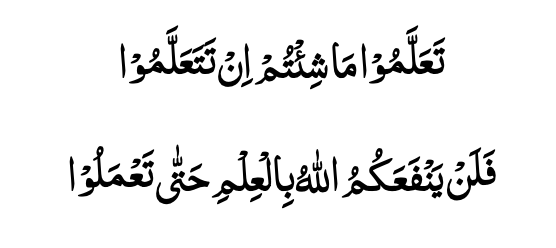
You may attain as much knowledge as you wish
Saying on the tomb of Muadh bin Jabal (رضي الله عنه)
But Allah will not allow that knowledge to benefit you so long as you
do not practice on it
References: Men around the Messenger – Khalid Mohammed Khalid, Wikipedia, In the Blessed Lands: Jamiatul Ulama KZN
Note that this entry has been shown for information purposes only. On no account should anybody pray to a grave or seek supplication through them as this is tantamount to committing shirk, associating partners with Allah (ﷻ)
]]>- Shurahbeel ibn Hasanah (رضي الله عنه) was among the first people to accept Islam. He was among the second group of Muslims who made migrated to Abyssinia and later to Madinah.
- He was among the leaders of the Muslims appointed by Caliph Abu Bakr (رضي الله عنه) when they marched towards Syria.
- A major portion of Jordan was conquered at his hands. For a period of time he was also made the governor of Jordan.
- He fought in the Ridda (Apostatsy) wars, the Battle of Yamama and the Battle of Ajnadayn. He had a leading role in the Muslim capture of northern Palestine.
- Shurahbeel ibn Hasanah (رضي الله عنه) was martyred in the plague of Amwas. He passed away on the same day as Abu Ubaidah bin Jarrah (رضي الله عنه) in 639 CE.
References: In the Blessed Lands: Jamiatul Ulama KZN, Wikipedia
]]>
References: ClassicalIslam.com by graduate of Darul-Uloom London, Wikipedia
]]>