- Muslims believe that Isa (عليه السلام) did not die on the cross but Allah (ﷻ) raised him to heaven and he will return one day to defeat the Dajjal (Anti-Christ). According to a Hadith, he is on the second heaven. The Prophet (ﷺ) mentioned, “During the Me’raj (Ascension), I met Isa (عليه السلام) on the second heaven. I found him of medium stature, reddish white. His body was so clean and clear, that it appeared as though he had just performed ghusal (ablution, cleansing of the entire body) and come.”
- In another Hadith, the Prophet (ﷺ) mentioned, “Allah will send Maseeh ibne Maryam (Messiah son of Mary). Thus he will descend near the white eastern minaret of Damascus, clad in two yellow sheets, leaning on the shoulders of two angels.” [Sahih Muslim]
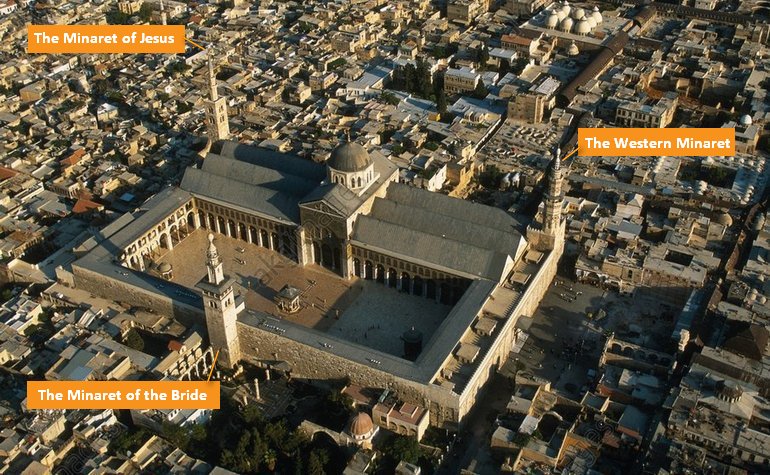
- The physical features of Isa (عليه السلام): He will resemble the famous sahabi Urwa bin Masoodi (رضي الله عنه). He will be of average height and red and white in colour. His hair will be spread to the shoulders, straight, neat and shining as after a bath. On bending his head, it will seem as if pearls are falling. He will have armour on his body. He will be wearing two pieces of cloth light yellow in colour.
- He will descend on a Jamaat (group) that will be righteous at the time and comprising of 800 men and 400 women. The people will be preparing for war at the time against Dajjal. It will be time for Fajr prayers, and Imam Mahdi will be the Amir (leader) of the Muslims. From the darkness of the dawn, a sound will suddenly be heard that “one who listens to your pleas has come” – the righteous people will look everywhere and their eyes will fall on Isa (عليه السلام). Briefly, at the time of Fajr, Isa (عليه السلام) will descend. When descending, Isa (عليه السلام)’s hands will be on the shoulders of two angels (according to another source (Ka’b Abrar), a cloud will carry him). On their insistence Isa (عليه السلام) will introduce himself. He will inquire about their enthusiasm and thoughts on Jihad against Dajjal. Isa (عليه السلام) will descend on the eastern side near the minaret in Damascus (or in Baitul-Muqaddus according to another narration). At the time Imam Mahdi will have proceeded forward to lead the Fajr Salaat. The Iqamat of the Salaat will already have been recited and Imam Mahdi will call Isa (عليه السلام) for Imamat (to lead the prayer), but he (Isa (عليه السلام)) will instead tell Imam Mahdi to lead the prayer since the Iqamat of that Salaat has already been said for him. Thus Imam Mahdi will lead the prayer, and Isa (عليه السلام) will follow him. After the ruku, he will make this statement: “Allah has killed Dajjal and the Muslims have appeared.”
- Isa (عليه السلام) will subsequently kill Dajjal and a great era of peace and harmony will come to the world. Isa (عليه السلام) will marry and have children and will live for 19 years after his marriage. He will then pass away and be buried next to the Prophet (ﷺ) in Majid-e-Nabwi, Madinah.
References: Major signs of Qiyamat – Mufti A.H.Elias
]]>- Yahya (عليه السلام) is mentioned by name 5 times in the Holy Quran. He is the only Prophet whose name was chosen for him exclusively by Allah (ﷻ).
- The Prophet Zakariyyah (عليه السلام) used to go to the temple daily (the current al-Aqsa Sanctuary) to deliver his sermons even though he had grown feeble with age. He was not a rich man, but he was always ready to help those in need. His one disappointment in life was that he had no children, for his wife was barren. This worried him, for he feared there was no one after him to carry out his work. The people needed a strong leader, for it they were left on their own, they would move away from Allah’s teachings and change the Holy Laws to suit themselves.
- During one of his visits to the temple, he went to check on Maryam (عليه السلام) [Mary], who was living in a secluded room of the temple. He was surprised to find fresh out of season fruit in her room. Besides him, no one had entry to her room. When he inquired, she told him that the fruit was from Allah which she found every morning. But why was he so surprised, she asked him. Did he not know that Allah provides without measure for whom He wills? This noble girl had opened his eyes to a startling idea. Could he not ask his Lord to bless him with a child in his old age? Even though his wife was past childbearing age, nothing was impossible for Allah (ﷻ).
- Allah (ﷻ) revealed in the Holy Quran in Surah Maryam:
“Kaf Ha Ya Ayn Sad (These letters are one of the miracles of the Quran, and none but Allah Alone knows their meanings). This is an account of your Lord’s grace towards His servant, Zachariah, when he called to his Lord secretly. saying, ‘Lord, my bones have weakened and my hair is ashen grey. But never, Lord, have I ever prayed to You in vain: I fear [what] my kinsmen [will do] when I am gone, for my wife is barren, so grant me a successor – a gift from You – to be my heir and the heir of the family of Jacob. Lord , make him well pleasing [to you].” [19:1-6] - (Allah said): “Zachariah, We bring you the good news of a son whose name will be John (Yahya). We have chosen this name for no one before him.” [19:7]
- The name Yahya literally means ‘he lives’ . Qatadah (may Allah show mercy on him) says this name was given to him because Allah had given him the inner life through Iman and Nubuwwah (i.e. belief and prophethood). Some say it was because Allah (ﷻ) brought people to life by guiding them through Yahya (عليه السلام). Yet others have said it was due to his mother’s womb being brought back to life after being barren until old age.
- Yahya (عليه السلام) was born six months before Isa (عليه السلام). His mother was the sister of Hanna, who was the mother of Maryam (عليها السلام). When supplicating for a child Zakariyyah had specifically asked for a ‘pure child’ (Quran 3:38). According to his wishes, Allah (ﷻ) granted him an extraordinary son.
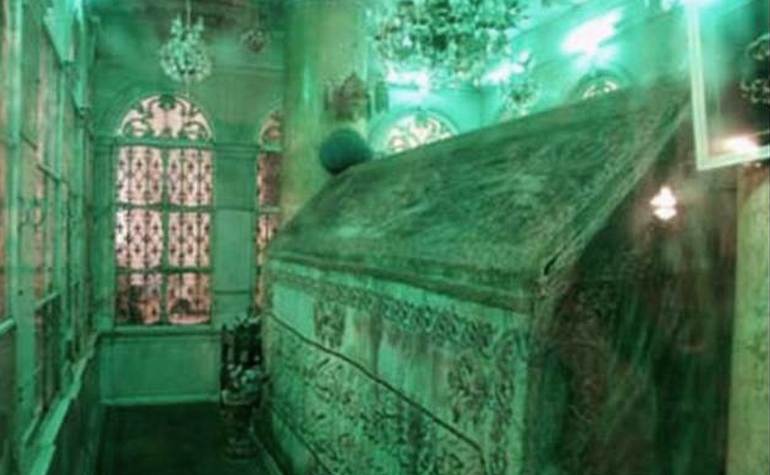
- In infancy, Yahya (عليه السلام) was instructed by Allah (ﷻ) to adhere and abide to the teachings of the Torah. He was also given the duty of propagating and communicating it to the people. Allah (ﷻ) granted him tremendous maturity and wisdom while he was still a child, and according to some historians, he was endowed with prophethood before the age of thirty.
- Yahya (عليه السلام) preferred solitude to company. He ate leaves of trees and sometimes locusts or grasshoppers and drank the water of springs. He wept much from the fear of Allah and was the epitome of chastity, remaining unmarried throughout his life.
- A conflict took place between Yahya (عليه السلام) and the authorities at that time. A tyrant king, Herod Antipas, the ruler of Palestine, was in love with Salome, his brother’s daughter. He was planning to marry his beautiful niece. The marriage was encouraged by her mother and by some of the learned men of Zion, either out of fear or to gain favour with the ruler. On hearing the ruler’s plan, Yahya (عليه السلام) pronounced that such a marriage would be incestuous. He would not approve it under any circumstance, as it was against the Law of the Torah.
- Yahya’s (عليه السلام) pronouncement spread like wildfire. Salome was angry, for it was her ambition to rule the kingdom with her uncle. She plotted to achieve her aim. Dressing attractively, she sang and danced before her uncle, arousing Herod’s lust. Embracing her, he offered to fulfill whatever she desired. At once she told him: “I would love to have the head of Yahya, because he has defiled your honour and mine throughout the land. If you grant me this wish, I shall be very happy and will offer myself to you.” Bewitched by her charm, he submitted to her monstrous request. Yahya (عليه السلام) was executed and his head was brought to Salome. The cruel woman gloated with delight. But the death of Allah’s beloved prophet was avenged. Not only she, but all the children of Israel were severely punished by invading armies which destroyed their kingdom. According to Biblical sources, Yahya (عليه السلام) died in the year 36 CE aged 42.
References: Atlas of the Quran – Dr. Shauqi Abu Khalili, Stories of the Prophets – Ibn Kathir, HUMA Travel guide to Palestine.
Note that this entry has been shown for information purposes only. On no account should anybody pray to a grave or seek supplication through them as this is tantamount to committing shirk, associating partners with Allah (ﷻ)
]]>- Shoayb (عليه السلام) is mentioned in the Holy Quran 11 times, he is known as Jethro in the Bible. The people of Madyan were originally true followers of Ebrahim (عليه السلام) but gradually over the centuries had become involved in disobedience and sin. In particular they were involved in:
1. Idol worship and polytheist customs
2. Cheating when giving measure but claiming in full or more than entitled
3. Falsehood in all matters and robbing people - Allah (ﷻ) makes mention in the Holy Quran in Surah Al-A’raf: “And to Madyan (We sent) their brother Shoayb. He said, ‘My people, serve God: you have no god other than Him. A clear sign has come to you from your Lord. Give full measure and weight and do not undervalue people’s goods; do not cause corruption in the land after it has been set in order: this is better for you, if you are believers’.“ [7:85]
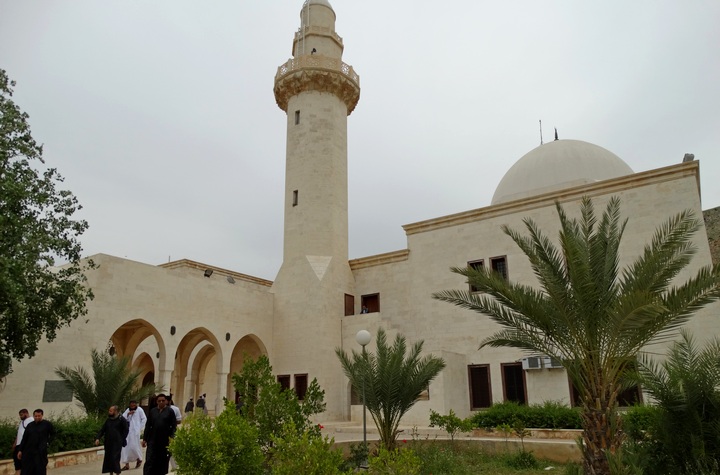
- Shoayb (عليه السلام) was very upset on seeing his people practice bad deeds. He advised them to seek forgiveness of Allah. Alas, they desisted and were destroyed by an earthquake.
- Shoayb (عليه السلام) was renowned for his eloquence and good speech. According to Ibn Abbas (رضي الله عنه), whenever the Prophet (ﷺ) mentioned him, he said, “he was the orator of the Prophets”.
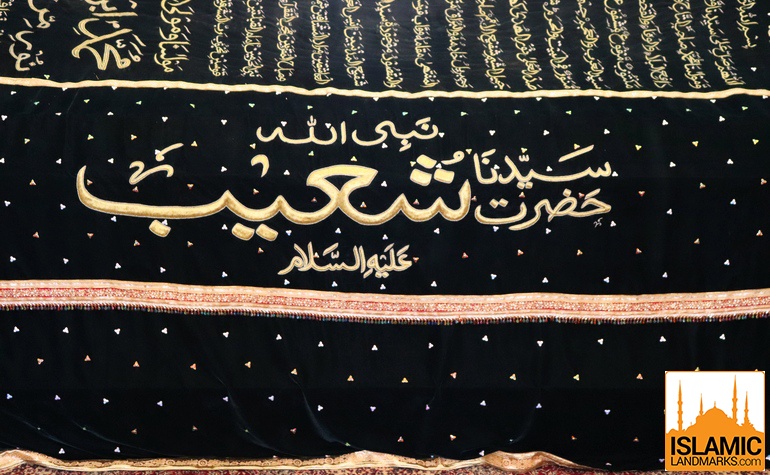
- Shoayb (عليه السلام) was ethnically an Arab. In a hadith narrated by Abu Zarr (رضي الله عنه) it is stated, “Four are from the Arabs. Hud, Salih, Shoayb and your Prophet, O Abu Zarr!”.
- The tomb of Shoayb (عليه السلام) is also claimed to be in Hadramawt, Yemen.
References: Stories of the Prophets – Ibn Kathir, Atlas of the Quran – Dr. Shauqi Abu Khalili
Note that this entry has been shown for information purposes only. On no account should anybody pray to a grave or seek supplication through them as this is tantamount to committing shirk, associating partners with Allah (ﷻ)
]]>- Harun (عليه السلام) is mentioned by name in the Holy Quran 20 times. In the Bible he is known as Aaron.
- When Musa (عليه السلام) was commanded by Allah (ﷻ) to go to Firawn (Pharoah) he made dua for Prophethood to be bestowed on his brother Harun so he could help him. Allah (ﷻ) reproduces this dua in the Holy Quran in Surah Ta Ha:
“Musa (Moses) said, ‘Lord, lift up my heart and ease my task for me. Untie my tongue, so that they may understand my words, and give me a helper from my family, my brother Harun (Aaron) – augment my strength through him. Let him share my task so that we can glorify You much and remember You often: You are always watching over us.” [20:25-35]
- Harun (عليه السلام) was a gifted speaker, and would often speak for Musa (عليه السلام) who suffered from a speech impediment. He was largely responsible with teaching the Israelites the way of worship as it was laid out in the Torah of that time.
- Islam holds that Harun (عليه السلام) held no part in causing the Israelites to worship the golden calf. Rather, he was overpowered and was threatened with being killed by his people. When Musa (عليه السلام) returned from the mount, he immediately blamed Harun (عليه السلام) and seized him by his beard, but Harun (عليه السلام) then gave his explanation, after which Musa (عليه السلام) prayed to Allah to forgive both of them.
- Amir bin Sa’d bin Abi Waqqas (رضي الله عنه) reported (on the authority of his father) that the Prophet (ﷺ) said: “You are in the same position with relation to me as Harun was in relation to Musa but with (this explicit difference) that there is no prophet after me.“ [Muslim]
- Harun (عليه السلام) is said to have lived for 122 years.
References: Stories of the Prophets – Ibn Kathir, Atlas of the Quran – Dr. Shauqi Abu Khalili
Note that this entry has been shown for information purposes only. On no account should anybody pray to a grave or seek supplication through them as this is tantamount to committing shirk, associating partners with Allah (ﷻ)
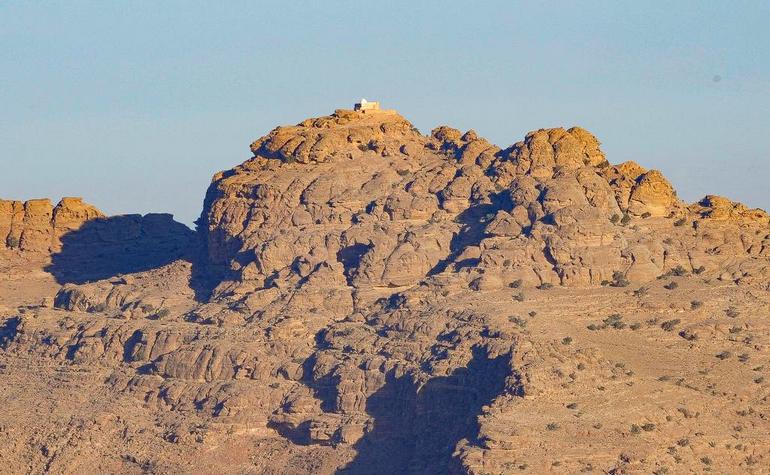
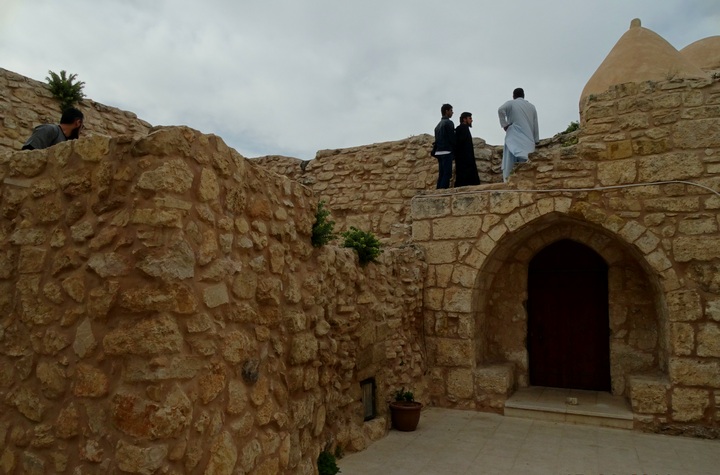
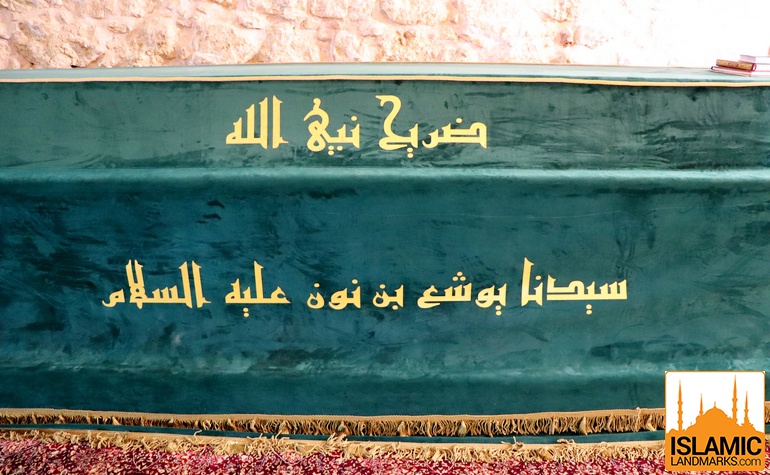
]]>- Yusha (عليه السلام) was the great grandson of Prophet Yusuf (عليه السلام), his full name being Yusha bin Nun bin Afraeem bin Yusuf. Although he is not mentioned by name in the Holy Quran there are references made to him in two places.
- After the Bani Israil fled bondage in Egypt and wandered the desert for 40 years Musa (عليه السلام) died close to Bayt al-Maqdis, often referred to as ‘The Promised Land’. Yusha (عليه السلام) took over and led the Bani Israil over the River Jordan and into the surroundings of Jericho (also known locally as Ariha). It was a splendid city with large palaces. He laid siege over it for six months and then with a final push, raising the takbeer, he led his army in and conquered it.
- It is said that when they were about to take the city of Jerusalem it was on a Friday at Asr time. The sunset was close approaching which would subject them to the observance of the sabbath (on Saturday), meaning that they would have had to cease fighting. Yusha (عليه السلام) addressed the sun that it was under a command while he was under another command and he prayed to Allah, “O Allah, hold it back from setting!”. It was stopped till Allah made him victorious.
- A hadith has been narrated from Abu Hurairah (رضي الله عنه) that the Prophet (ﷺ) said, ”Surely, the sun has never been stopped from setting down for a human being except for Yusha (عليه السلام) on the evening he invaded the Bayt al-Maqdis.”
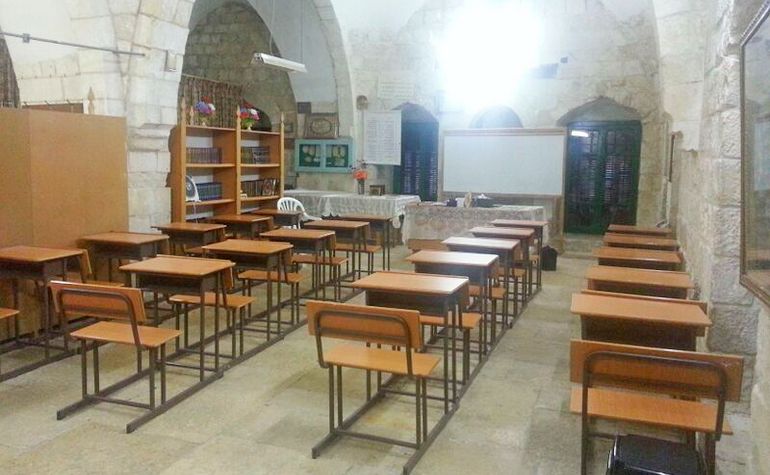
- The Bani Israil lived in the Bayt al-Maqdis for some time and Yusha (عليه السلام) taught them the Torah and ruled according to it. He lived for 127 years.
References: Stories of the Prophets – Ibn Kathir
Note that this entry has been shown for information purposes only. On no account should anybody pray to a grave or seek supplication through them as this is tantamount to committing shirk, associating partners with Allah (ﷻ)
]]>- In Islam, Lut (عليه السلام), like all the other Prophets of Allah is regarded as being righteous and the upholder of all forms of moral conduct. There occurs a major difference between the Islamic and Judeo/Christian beliefs regarding what happened to Lut (عليه السلام) and his daughters after they fled the destruction of Sodom.
- According to ‘Who’s Who in the Bible’ by Peter Calvocoressi, after they went to live in the cave the two daughters of Lut (عليه السلام) feared they would never get a man so they plotted to make their father seduce them when he was drunk. They took it in turns and each subsequently bore a son who became the ancestors of the Moabites and Ammonites. The story is told in Genesis 19:30-36:
30 And Lot went up out of Zoar, and dwelt in the mountain, and his two daughters with him; for he feared to dwell in Zoar: and he dwelt in a cave, he and his two daughters.
31 And the firstborn said unto the younger, Our father is old, and there is not a man in the earth to come in unto us after the manner of all the earth:
32 Come, let us make our father drink wine, and we will lie with him, that we may preserve seed of our father.
33 And they made their father drink wine that night: and the firstborn went in, and lay with her father; and he perceived not when she lay down, nor when she arose.
34 And it came to pass on the morrow, that the firstborn said unto the younger, Behold, I lay yesternight with my father: let us make him drink wine this night also; and go thou in, and lie with him, that we may preserve seed of our father.
35 And they made their father drink wine that night also: and the younger arose, and lay with him; and he perceived not when she lay down, nor when she arose.
36 Thus were both the daughters of Lot with child by their father.
- The allegation of drunkenness and incestuous behaviour of Lut (عليه السلام) is completely rejected in Islam who regard him as one of the mightiest messengers of Allah (God) who were all examples of moral and spiritual rectitude.
References: AtlasTours.com, “Who’s Who in the Bible” – Peter Calvocoressi, Wikipedia
]]>- Prophet Sulaiman (عليه السلام) ruled for 30 years, and his public work was largely carried out by the jinns. This was a punishment for their sin of making people believe that they were all-powerful, knew the unseen, and could foresee the future. As a prophet, Sulaiman (عليه السلام) had the duty to remove such false beliefs from them.
- And then the time destined by Allah Almighty came for the death of Sulaiman (عليه السلام). Like his life, his death too was unusual; and Allah devised it as a means to teach the people that the domain of the world of the unseen including the future is known to Allah alone. Thus, even the death of Sulaiman (عليه السلام) served an important purpose.
- Sulaiman (عليه السلام) was sitting holding his staff, overseeing the jinns at work. He died sitting in this position. For a long time, no one was aware of his death, for he was seen sitting erect. (The explanations of the story of Sulaiman (عليه السلام) were adapted from the exegesis of the Quran by the Islamic scholar, Ibn Kathir).
- The jinns continued with their toil, thinking that the king was watching over them. Days passed, and the king’s death became known only when his supporting stick, eaten by termites gave way and the body fell to the ground.
- Allah (ﷻ) makes mention in the Quran:“They worked for him as he desired, making arches, images, basins as large as reservoirs, and cooking cauldrons fixed in their places: “Work you, sons of David, with thanks!” But few of My servants are grateful.Then, when We decreed Solomon’s death, nothing showed them his death except a little worm of the earth that kept slowly gnawing away at his staff: So when he fell down, the jinns saw plainly that if they had known the unseen, they would not have tarried in the humiliating penalty of their task.” [34:13-14]
References: Stories of the Prophets – Ibn Kathir, Wikipedia, OnIslam.net.
]]>- Dawud (عليه السلام) is mentioned by name 16 times in the Holy Quran.
- Dawud (عليه السلام) ruled the Children of Israel [Banu Israil] for forty years, seven years in Hebron (al-Khalil) and thirty-three in Jerusalem, which became known as the City of Dawud.
- According to Jewish and Christian belief (ref: Who’s Who in the Bible by Peter Calvocoressi), Dawud (عليه السلام) [David] committed adultery with Bathsheba, the wife of Uriah the Hittite. Bathsheba became pregnant and David sent for Uriah, who was with the Israelite army at the siege of Rabbah, so that he might lie with his wife and so conceal the identity of the child’s father. Uriah refused to do so while his companions were in the field of battle and David sent him back to Joab, the commander, with a message instructing him to abandon Uriah on the battlefield, “that he may be struck down, and die.“ In Islam, Dawud (عليه السلام) is regarded as one of the great Prophets, to whom the Zabur (Psalms) were revealed by Allah (ﷻ). The Islamic tradition includes many elements from the Jewish/Christian history of David, such as his battle with the giant Goliath, but completely rejects the Biblical portrayal of him as an adulterer and murderer.
- Dawud (عليه السلام) was the first person skilled in making armour from iron. Allah (ﷻ) mentions in Surah Saba in the Holy Quran:“And certainly We gave Dawud bounty from Us (and said), ‘O mountains! Repeat Our praises with him, and the birds you too’. And we softened for him iron, (saying) ‘Make wide coats of mail, and measure well the links and do righteous deeds. Surely I am Seer of what you do.” [34:10-11]
- The Prophet (ﷺ) said, “The most loved Salat (prayer) in the sight of Allah is the Salat of Dawud and the most loved of Saum (fasting) in the sight of Allah is the Saum of Dawud. He used to sleep for the first half of the night and offer prayer for one-third of it and sleep (again) for one-sixth of it. And he used to observe fast on alternate days. And when he encountered an enemy he never fled.” [Bukhari]
- Allah (ﷻ) had given him a very sweet voice such as not had been given to anyone before. When he used to recite the Zabur (Psalms) human beings, jinn, birds and animals stood devotedly listening to him.
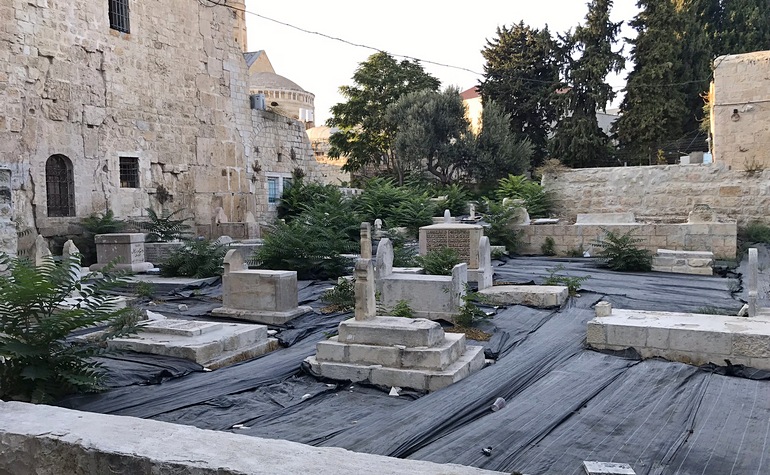
References: Atlas of the Quran – Dr. Shauqi Abu Khalili, Al-Quds – Mohammed Abdul Hameed Al-Khateeb, Stories of the Prophets – Ibn Kathir
Note that this entry has been shown for information purposes only. On no account should anybody pray to a grave or seek supplication through them as this is tantamount to committing shirk, associating partners with Allah (ﷻ)
]]>- According to the Book of Genesis in the Bible, the land over which the mosque has been built was bought by Ebrahim (عليه السلام) [Abraham] as a family burial plot after the death of Sarah (عليها السلام) [Sara]. The plot is named as the ‘Cave of Machpelah’ which means cave of the double tombs, referring to the fact that the wives of the Prophets are buried close to them. It is also known as the ‘Cave of the Patriarchs’.
- Some Jews believe that Adam (عليه السلام) and Hawa (عليها السلام) [Eve] are also buried here.
- Almost all of the outer construction which can be seen today was built in the 1st century BC by Herod the Great. Herod’s building did not contain a roof. In 637 CE, the area came under the control of the Muslims and the building was converted to a roofed mosque.

- The Jerusalem geographer al-Muqaddasi, writing in 985 CE described the town as:“In Hebron is a public guest house continuously open, with a cook, a baker and servants in regular attendance. These offer a dish of lentils and olive oil to every poor person who arrives, and it is set before the rich, too, should they wish to partake. Most men express the opinion this is a continuation of the guest house of Abraham, however, it is, in fact from the bequest of the sahabI (companion) of the Prophet Muhammed, Tamim-al Dari and others…. The Amir of Khurasan…has assigned to this charity one thousand dirhams yearly, …al-Shar al-Adil bestowed on it a substantial bequest. At present time I do not know in all the realm of al-Islam any house of hospitality and charity more excellent than this one.”
- The complex was taken by the Crusaders in 1100 CE under Godfrey of Bouillon and became known as the Castle of St. Abraham. Muslims were no longer permitted to enter. It was retaken by the Muslims in 1188 CE under Salahuddin Ayyubi and converted again into a mosque, with Christians still allowed to worship there. Salahuddin also added a minaret at each corner – two of which still survive, and the mimbar (pulpit).
- In 1994, an orthodox Jew, Baruch Goldstein, took a sub machine-gun into the enclosure and killed 29 Palestinian Muslims as well as injuring 125 others, before being killed himself. Bullet holes from the incident can still be seen around the mosque.
- The cemetery underneath the masjid can be viewed from the cupola which is situated opposite the qibla wall.
- The tomb of Yusuf (عليه السلام) is also claimed to be in the Palestinian city of Nablus.
References: Wikipedia
]]>- Ebrahim (عليه السلام) is mentioned by name 69 times in the Quran. He is known as ‘Khalil-ullah’, the friend of Allah. Ebrahim (عليه السلام) is considered the Patriarch of the three great monotheistic faiths, Judaism, Christianity and Islam.
- Almighty Allah has declared in the Quran in Surah al-Imran: “O People of the Scripture (Jews and Christians)! Why do you dispute about Abraham, while the Torah and the Gospel were not revealed till after him? Have you then no sense? Verily, you are those who have disputed about that of which you have no knowledge. Why do then dispute concerning that which you have no knowledge? It is Allah Who knows, and you know not. Abraham was neither a Jew nor a Christian, but he was a true Muslim Hanifan (Islamic Monotheism), to worship none but Allah Alone and he was not of the polytheists (he joined none in worship with Allah). Verily, among mankind who have the best claim to Abraham are those who followed him, and this Prophet (Muhammad) and those who have believed (Muslims). And Allah is the Wali (Protector and Helper) of the believers.” [3:65-68]
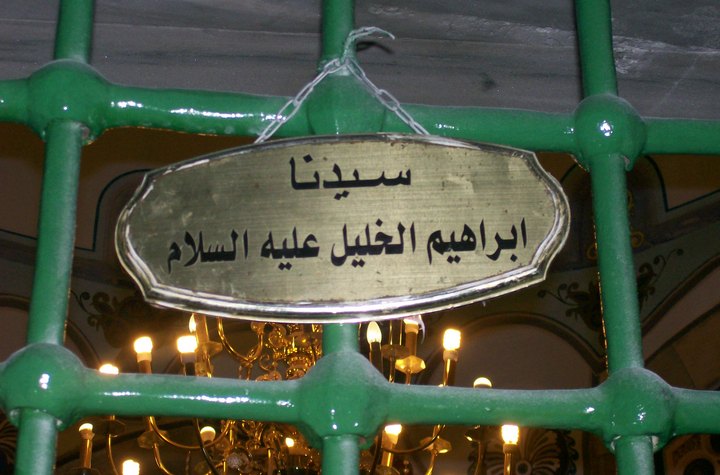
- Ebrahim (عليه السلام), along with his eldest son Ismail (عليه السلام) rebuilt the Ka’bah in Makkah, carrying the stones with their own hands.
- Yahya bin Said bin al−Musayyub said, “Ebrahim, may Allah bless him and grant him peace, was the first to give hospitality to the guest and the first person to be circumcised and the first person to trim the moustache and the first person to see grey hair. He said, ‘O Lord! What is this?’ Allah the Blessed, the Exalted, said, ‘It is dignity, Ebrahim.’ He said, ‘lord, increase me in dignity!’ “
- Ebrahim (عليه السلام) died at the age of 175.
References: Atlas of the Quran – Dr. Shauqi Abu Khalili, Stories of the Prophets – Ibn Kathir
Note that this entry has been shown for information purposes only. On no account should anybody pray to a grave or seek supplication through them as this is tantamount to committing shirk, associating partners with Allah (ﷻ)
]]>