(more to follow)
Video from YouTube documenting a climb to the summit (contains music)
References: Wikipedia
]]>- When the Muslims surrounded Jerusalem in 638 CE, the inhabitants said they would surrender the city only if the Muslim ruler himself – Umar, the second successor or “Caliph,” of the Prophet Muhammad (peace be upon him) came to them. So Umar (رضي الله عنه) travelled by camel from Damascus, Syria to Jerusalem in the Holy Land. As he approached the city, his servant became weary, so he ordered his servant to ride the steed while he walked it by the reins.
- When they entered Jerusalem, records indicate it very well could have been Easter, the people of the city mistook the servant for the Caliph. When corrected, they couldn’t believe that this man in tattered and dirty clothes, leading on foot his servant who rode his steed, was the ruler of this new people who were conquering the Persian and Roman Empires, the greatest empires the world had ever seen, with such speed that had never been seen before.
- St. Sophronius, Christian Patriarch of Jerusalem, greeted Umar (رضي الله عنه) with a set of fresh regal clothes and insisted he wear them instead of the dirty rags he was wearing. According to the Greek chronicler Theophilus of Edessa (695-785 CE), Umar (رضي الله عنه) refused saying, “It is not right for a man to take from another what God has not decreed for him, for God has given to each and every one of humanity from His Divine knowledge, and he who desires to receive something from his companion exceeding that, does so against God.” The Christians of the city were outraged and Umar (رضي الله عنه) sensed that they found it humiliating to concede the city to someone who looked so base and common so he compromised. Theophilus further records from Umar (رضي الله عنه), “Because you request it of me, and have shown me such great honour, please lend me these clothes and I will wear them while you wash mine. When mine are returned, I will return these clothes to you.”
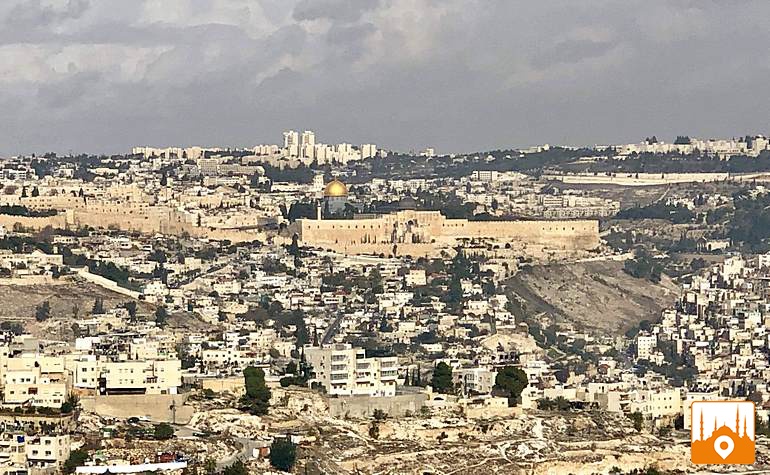
- Michael the Syrian, 12th Century Patriarch of the Syriac Orthodox Church, says about Umar (رضي الله عنه), “He was certainly just and removed from greed, to the degree that from all the empire that the Arabs ruled, that is, from all the wealth and treasures of the Romans and Persians, he took nothing for himself. He did not change the simplicity of his habits, not even the piece of hide that was placed under him when he rode by camel and that he used for sitting on the ground or sleeping on.”
References: SuhaibWebb.com, Wikipedia
]]>
References: History of Madinah Munawwarah – Dr. Muhammad Ilyas Abdul Ghani
]]>The Prophet (ﷺ) goes to meditate
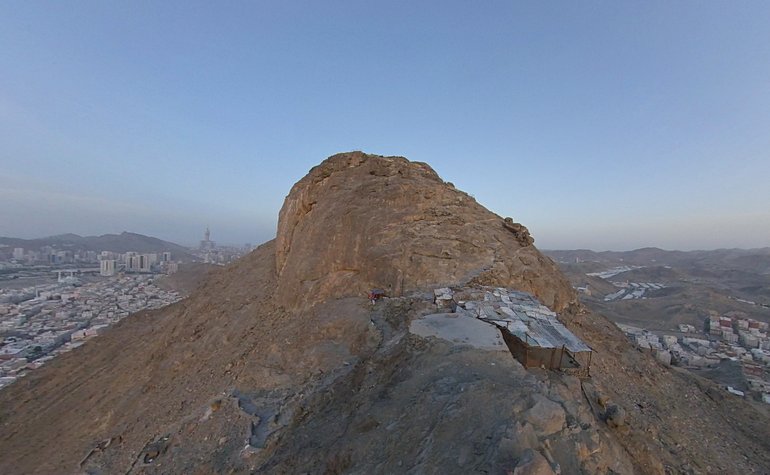
- The Prophet (ﷺ) first began to have revelations in the form of good dreams which came true. Then he began to like solitude. He would go to the cave of Hira and meditate there in solitude for a number of days and nights. He would take provisions with him to stay for an extended period, and when he returned to Khadija (رضي الله عنه), he would stock up again and go back to the cave. This was his practice until Truth was revealed to him by an angel while he was in the cave of Hira.
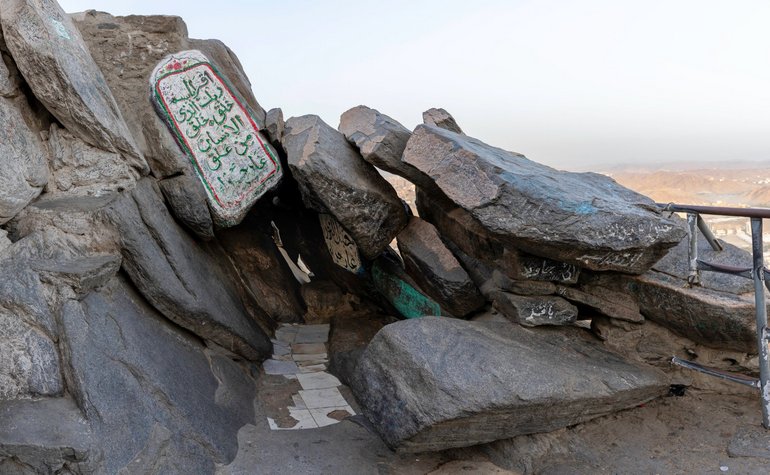
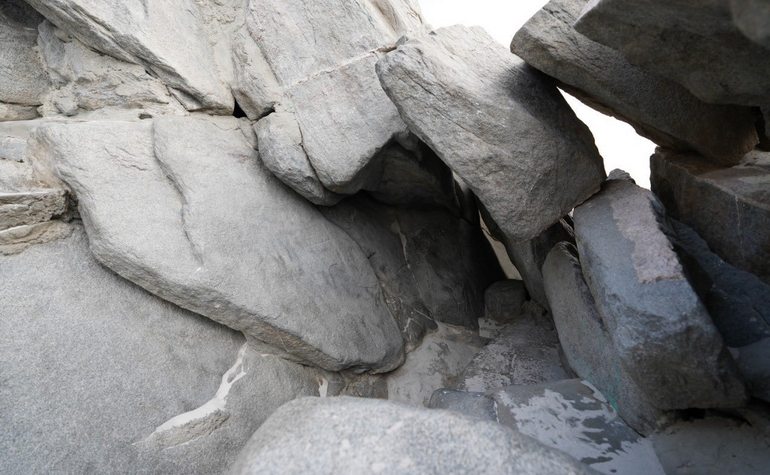
First revelation of the Quran
- During Tahajjud time one night, when he was alone in the cave, there came to him an angel in the form of a man. The angel said to him, “Recite!”. “I cannot read”, the Prophet (ﷺ) replied. The angel took hold of him a second time and pressed him until he could not endure it any longer. After letting him go, the angel again said, “Recite!”. Again the Prophet (ﷺ) replied “I cannot read”. The angel further embraced him again until he had reached the limit of endurance and said “Recite!” for the third time the Prophet (ﷺ) said “I cannot read”. The angel released him and said: “Read in the name of your Lord, the Creator. He Who created man from a clot. Read! And your Lord is the Most Bounteous. Who taught by the Pen, taught man what he knew not.” [96:1-5]
- This was the first day of his Prophethood and these were the first verses of the Quran revealed to him. He recited these words after the angel, who thereupon left him; and he said; “It was as though the words were written on my heart.” He was very alarmed by the experience and feared that he had become possessed.
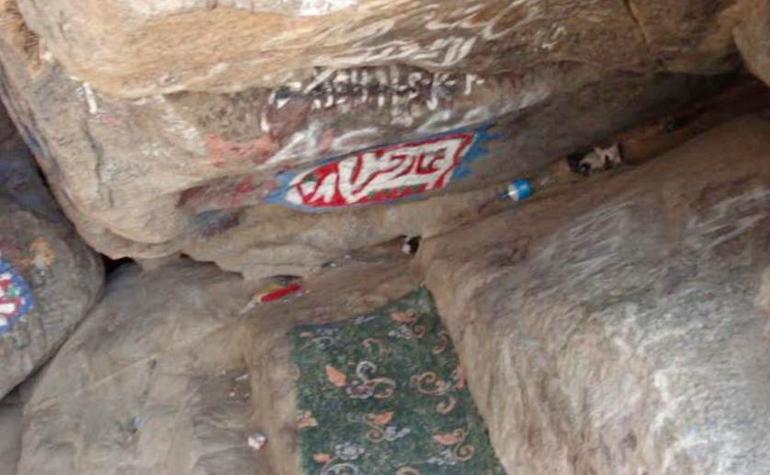
- The Prophet (ﷺ) fled from the cave, and when he was halfway down the slope of the mountain he heard a voice above him saying: “O Muhammad, thou art the Messenger of God, and I am Jibraeel (Gabriel)”. The Prophet (ﷺ) stood gazing at the angel; then he turned away from him, but whichever way he looked the angel was always there on the horizon, whether it was to the north, east, south or west. Finally the angel turned away. The Prophet (ﷺ) was terrified and his heart was pounding hard. He returned home to Khadija (رضي الله عنها) and said, “Cover me!”. Khadija (رضي الله عنها) covered him and helped him calm down.

- The Quran tells us that the first revelation descended in Ramadan on the ‘Night of Power’.“The month of Ramadan is the month in which the Quran was revealed.” [2:185]“We have indeed revealed this message during the Night of Power.” [97:1]
- The entire Quran was revealed over a period of approximately 22 years, 5 months and 14 days.
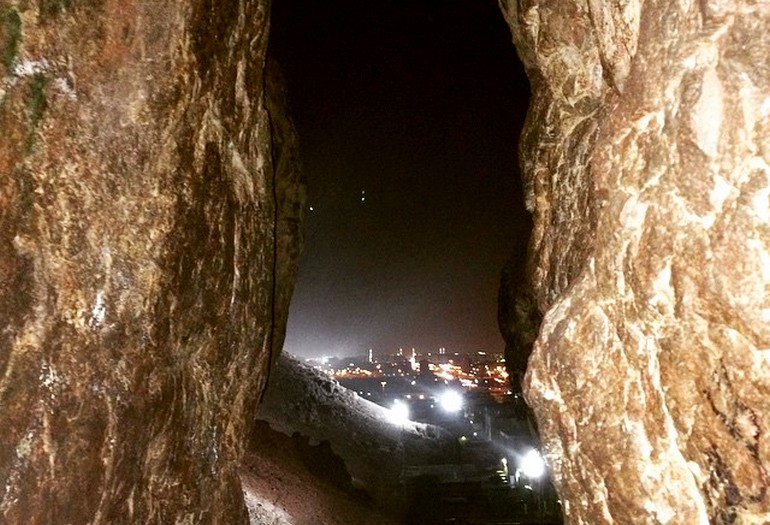
The view from inside the Cave of Hira
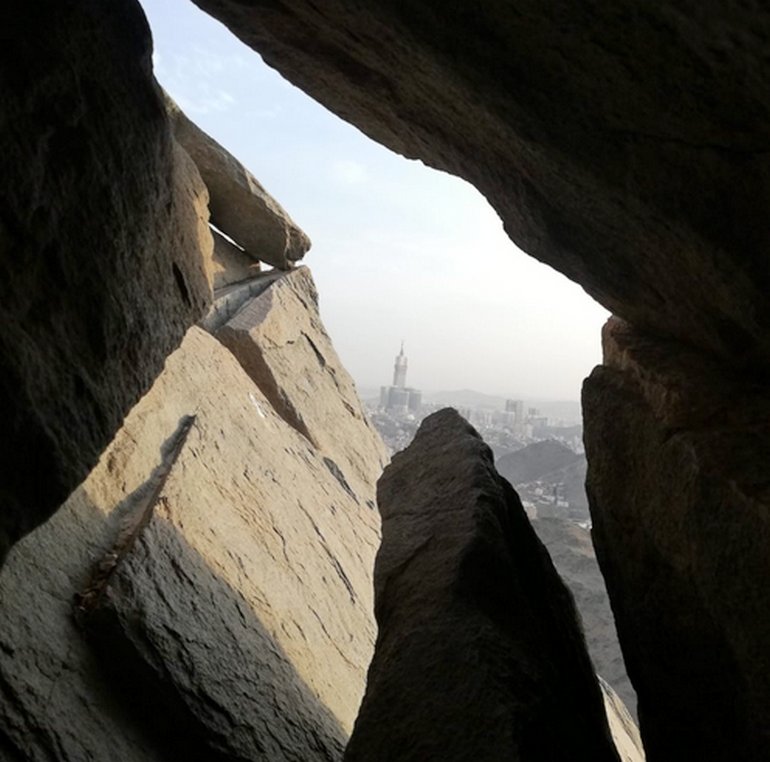
Video of the interior
References: The History of Makkah Mukarramah – Dr. Muhammad Ilyas Abdul Ghani, When the Moon Split – Shaikh Safiur-Rahman Mubarakpuri, Muhammad – Martin Lings, Astonishing Facts about The Qur’an – Mufti AH Elias
]]>Arriving at the cave of al-Thawr
- When the Prophet (ﷺ) and Abu Bakr (رضي الله عنه) arrived at the cave in Jabal al-Thawr (Ghar al-Thawr), Abu Bakr (رضي الله عنه) entered first to clear away anything that might injure the Prophet (ﷺ). He found a few holes and stuffed them with pieces of cloth. The Prophet (ﷺ) then entered and went to sleep on Abu Bakr’s (رضي الله عنه) lap.
- Suddenly, something stung Abu Bakr’s (رضي الله عنه) foot, but he did not twitch, fearing he would wake the Prophet (ﷺ). The pain was so intense that tears began to run down his cheeks and onto the Prophet’s (ﷺ) face. The Prophet (ﷺ) woke up and saw that Abu Bakr (رضي الله عنه) was in pain. He applied his spittle on the injury and the pain disappeared.
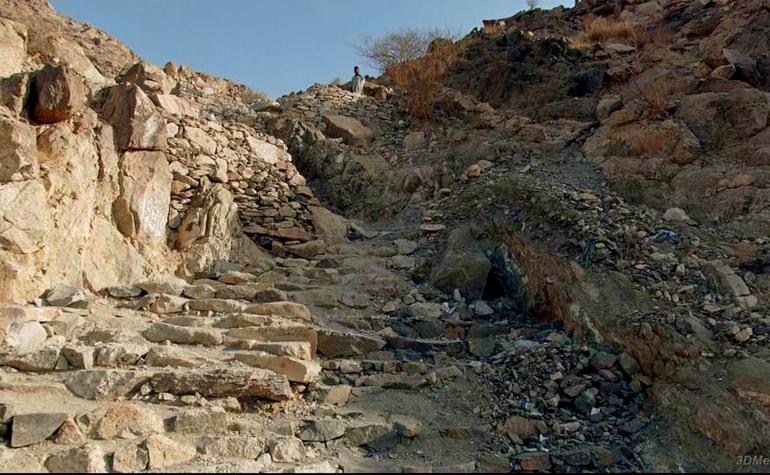
Staying in the cave
- For three consecutive nights the Prophet (ﷺ) and Abu Bakr (رضي الله عنه) remained hidden in the cave. During this period, Abu Bakr’s (رضي الله عنه) son, Abdullah, would pass his nights nearby. The young man would return to Makkah very early in the morning so that the Quraysh had no idea that he had slept elsewhere. Each day in Makkah he collected information about the activities of the Quraysh, and each night went back to Jabal al-Thawr to inform the Prophet (ﷺ) and his father Abu Bakr (رضي الله عنه).
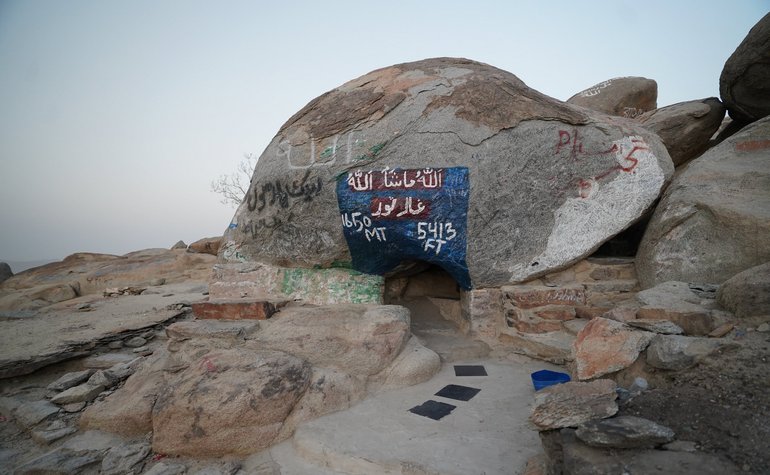
- Abu Bakr’s (رضي الله عنه) slave, Amir bin Fuhayra (رضي الله عنه), would graze Abu Bakr’s (رضي الله عنه) goats near the cave so that both men could drink fresh milk. Early the next morning Amir would drive the goats back to Makkah along the same route that Abu Bakr’s (رضي الله عنه) son took, to obscure his footprints.
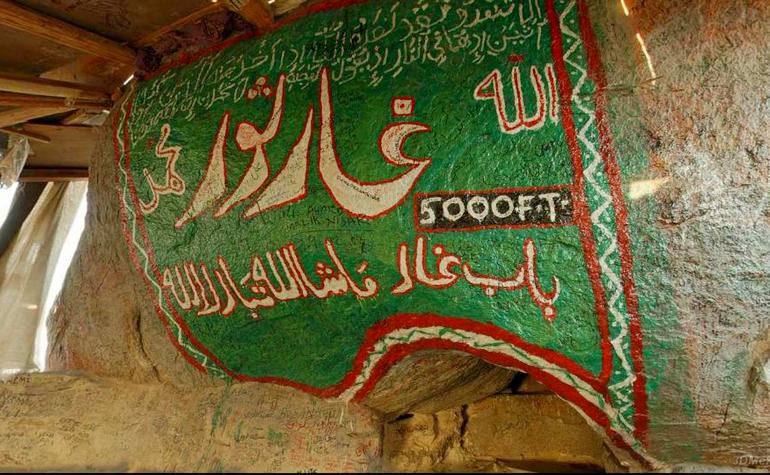
Allah’s help and protection
- When they were inside Allah (ﷻ) sent a spider to spin a web from a bush across the entrance to the cave. Allah (ﷻ) also commanded two doves to fly down between the spider and the tree, make a nest and lay eggs. Meanwhile the Quraysh search party scoured the area south of Makkah where the Prophet (ﷺ) and Abu Bakr (رضي الله عنه) where hiding. They came upon the mouth of the cave, and had they looked down while standing at the edge of the cave, they would have surely found the men they were hunting.
- With the Quraysh so close to discovering their hiding place, Abu Bakr (رضي الله عنه) became very tense about the Prophet’s (ﷺ) safety. The Prophet (ﷺ) reassured him, “How can you be apprehensive about two with whom is a third, especially when the third one is Allah?”
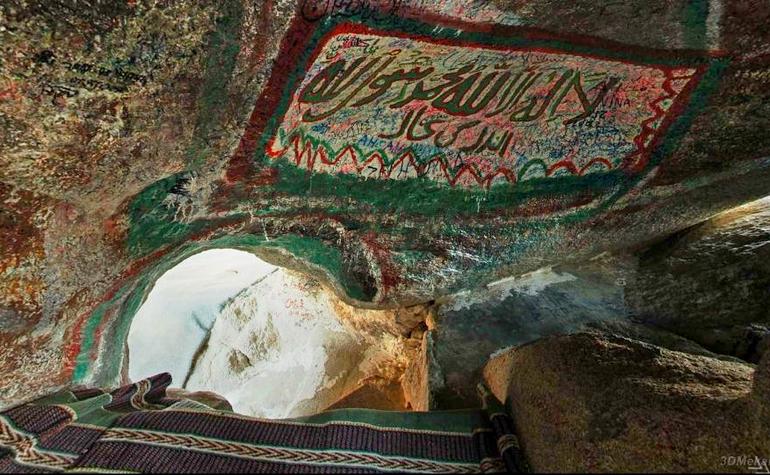
- On seeing the spider’s web and dove nest, the Quraysh concluded that no one could have entered the cave and left. Describing this scene the Quran mentions in Surah Taubah: “If ye help not (your leader), (it is no matter): for Allah did indeed help him, when the Unbelievers drove him out: he had no more than one companion; they two were in the cave, and he said to his companion, “Have no fear, for Allah is with us”: then Allah sent down His peace upon him, and strengthened him with forces which ye saw not, and humbled to the depths the word of the Unbelievers. But the word of Allah is exalted to the heights: for Allah is Exalted in might, Wise.“ [9:40]
Heading out to Madinah
- After three days when they learnt that the search by the Quraysh had petered out they left the cave and headed towards Yathrib (Madinah). Asma (رضي الله عنها), the daughter of Abu Bakr (رضي الله عنه) came to them bringing food for the journey. When they were about to start she could find nothing to tie it to their saddles and so she undid her waistband, tore it in two, wore half and tied the food with the other half. This ready solution won her praise from the Prophet (ﷺ) who also named her ‘She of the two waistband’. And after that the Muslims knew her by that name.
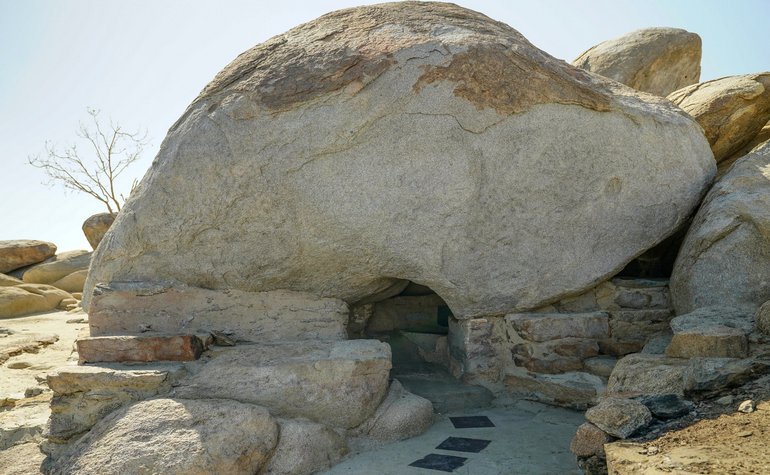
- The entrance to the cave is wider than it was in the past. In approximately 800 AH (1858 CE) a man got stuck in it, and the opening had to be enlarged in order to free him.
- Jabal al-Thawr is located about 4km south of Makkah.
References: When the Moon Split – Shaikh Safiur-Rahman Mubarakpuri, The Life of Muhammad (ﷺ) – Tahia Al-Ismail
]]>Meaning of ‘Arafat’
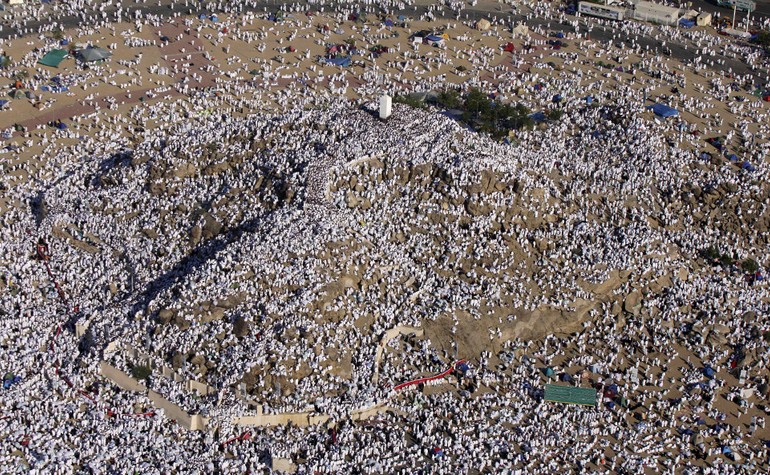
- The common meaning of the word Arafat is ‘to know’. After being taken out of Jannah and placed on Earth, it was at Jabal Arafat that Prophet Adam (عليه السلام) and Hawa (عليها السلام) met up again.
- Arafah (عرفة) is the name of the day, and Arafat (عرفات) is the name of the land.
Importance of Arafat for the Hujjaj
- Standing on Arafat is an essential part of the Hajj; whoever misses the standing on Arafat has missed Hajj, because the Prophet (ﷺ) said: “Hajj is Arafat.” [al-Hakim]
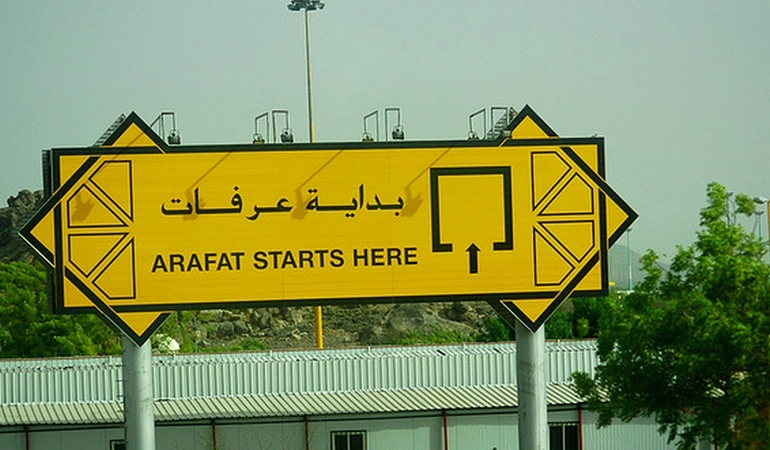
- The day of Arafat has many virtues, as was narrated in many Ahadith. Aisha (رضي الله عنها) narrated that the Prophet (ﷺ) said: “There is no day in which Allah sets free more souls from the fire of hell than on the day of Arafat. And on that day Allah draws near to the earth and by way of exhibiting His Pride remarks to the angels, ‘What is the desire of these (servants of mine)?'” [Muslim]
Du’a on the Day of Arafat
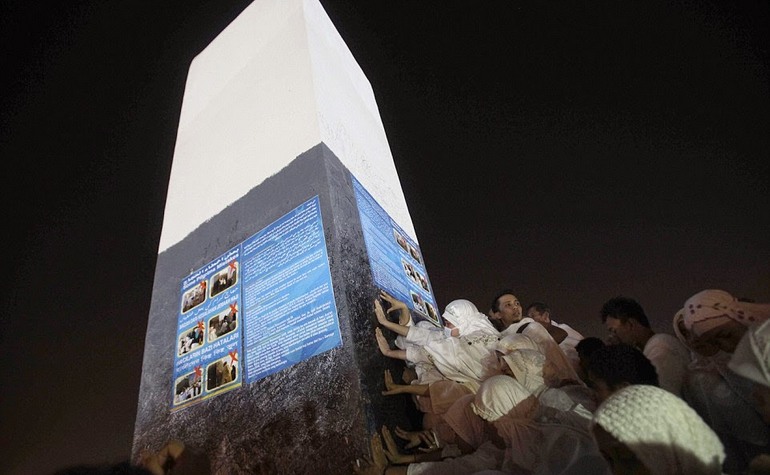
- The Prophet (ﷺ) said, “The best invocation on the day of Arafat, and the best of all the invocations I ever offered or other holy Prophets before me ever offered is: “There is no god but Allah: He is Unique ; He hath no partner, the whole universe is for Him and for Him is the praise, and He hath power over all things.” [Tirmidhi]

- In another Hadith the Prophet (ﷺ) said: “Apart from the day of the Battle of Badr there is no day on which the Shaitan is seen to be more humiliated, more rejected, more depressed and more infuriated, than on the day of Arafat, and indeed all this is only because of beholding the abundance of descending mercy (on the day) and Allah’s forgiveness of the great sins of the servants.“ [Mishkat]
Fasting on the Day of Arafat
- One of the virtues of the day of Arafat is that fasting this day expiates for the sins of the past and coming year. It was reported from Abu Qatadah that a man said: “O Messenger of Allah, what do you think of fasting on the day of Arafat?” He said: “It expiates for the sins of the previous year and of the coming year” [Muslim]
- This (fasting) is mustahab (desirable) for those who are not on Hajj. In the case of the one who is on Hajj, it is not Sunnah for him to fast on the Day of Arafat, because the Prophet (ﷺ) did not fast on this day when he was in Arafat.
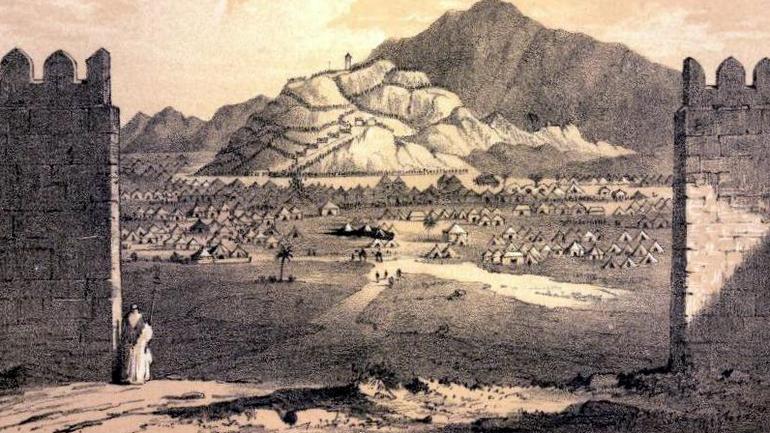
Points of reflection at Jabal Arafat
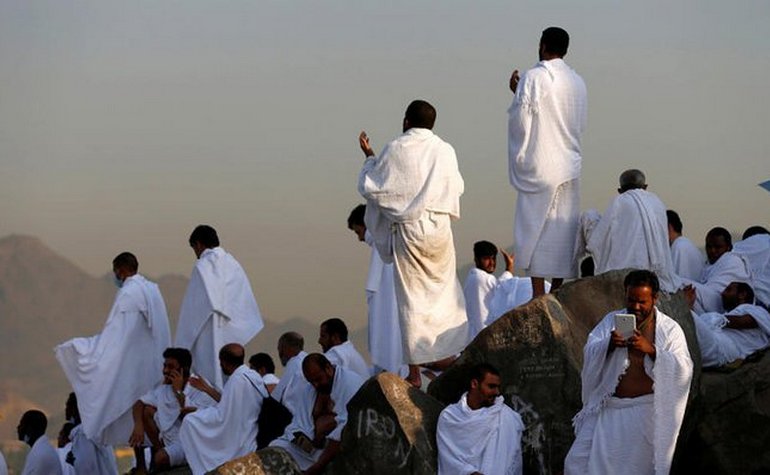
- Jabal Arafat is a special place of Du’a (supplication). The virtue of this place is in asking from Allah (ﷻ) and the response is promised. Our beloved Prophet (ﷺ) and Prophet Ebrahim (عليه السلام) made Du’a at this very spot.
- The pilgrims heart should filled with nothing but neediness; which is presented in heartfelt Du’as. What better day to ask and we are the only losers if we don’t take a share of the promised response from the Almighty.
References: The History of Makkah Mukarramah – Dr. Muhammad Ilyas Abdul Ghani, Holy Makkah – Shaikh Safiur-Rahman Mubarakpuri, Virtues of Hajj – Sheikh Zakariyya Kandhalvi
]]>- The western wall of Jabal Abu Qubais (facing the Ka’bah) was called ‘Fadih’. The mountain was also known as ‘al-Amin’, an Arabic word meaning ‘the trustworthy’ when used to describe a person’s honourable character, but which can be understood to mean the ‘safekeeper’.
- This name arose from the tradition that this mountain safeguarded the Hajar al-Aswad (the Black Stone of the Ka’bah) when the flood in the time of Prophet Nuh (عليه السلام) rushed through Makkah, destroying it along with the Ka’bah. Jabal Abu Qubais, believed by some to have been the first mountain on earth created by Allah (ﷻ) is narrated in several records as having been the final resting place of the Hajar al-Aswad during this catastrophic event. Then, as these records assert, once Prophet Ebrahim (عليه السلام) had been guided to the location of the Ka’bah’s foundations and was subsequently engaged in reconstructing it, he was further guided to where the Hajar al-Aswad was resting upon Mount Abu Qubais. He was then informed that it was a stone that had descended from Jannah (Paradise) and was told where it should be placed on the Ka’bah.
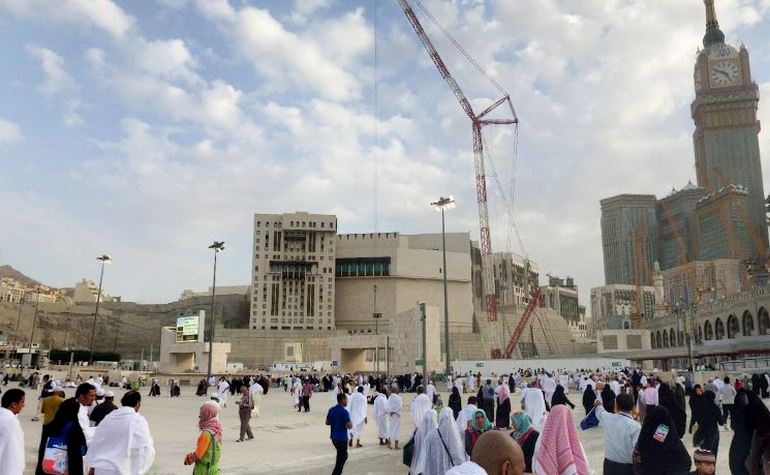
- Other narrations say that the angel Jibraeel (Gabriel) had lifted the stone when the flood took place, and then later descended to give the stone to Ebrahim (عليه السلام). If both narrations are strong enough to be authentic, or have support from authentic hadith, then it seems that what is meant is that Jibraeel (عليه السلام) had lifted the stone up from the Ka’bah and placed it securely within Jabal Abu Qubais. Then, when Ebrahim (عليه السلام) was commanded generations later to reconstruct the Ka’bah on its original foundations, Jibraeel (عليه السلام) then descended and showed Ebrahim (عليه السلام) where the Black Stone was.
- As for the name Abu Qubais, narrations state that in the early pre-Islamic era, a man named Qubais was the first to build a home on this mountain, so the mountain was called Abu Qubais after his name.
- According to at-Tabari, Prophet Adam (peace be upon him) died at the foot of Jabal Abu Qubais and was subsequently buried there.
- The Umayyad governor Hajjaj bin Yusuf fired a catapult from the top of Mount Abu Qubais onto the Ka’bah during the siege of Makkah in 691 CE. This resulted in the subsequent killing of Abdullah bin Zubair (رضي الله عنه).
- During the reign of Caliph Harun al-Rashid (786-809 CE), Abdallah bin Malik al-Khuza’i erected several minarets upon Mount Abu Qubais and other mountains so that the adhan (call to prayer) could be heard throughout Makkah. This was due to some of the valley’s residents complaining that they had missed some of their prayers due to not being able to hear the sound of the adhan.
- A royal palace currently exists on top of the mountain.
References: Atlas of the Qur’an – Dr. Shauqi Abu Khalil, AlMiskeenah.com, Local Makkan guide, Makkah at the time of Prophet Muhammad (PBUH) – BinImad Al-Ateeqi
]]>- After the humiliating defeat in the Battle of Badr a year earlier, the Quraysh of Makkah made preparations to muster a great army to fight the Muslims again and take revenge. They assembled an army of 3000 soldiers with 300 camels, 200 horses and 700 coats of mail. Wives and daughters of slained chiefs in Badr accompanied the army to see with their own eyes the spectacle of the killers being killed. Abu Sufyan was the commander-in-chief of the Makkan army and his wife Hind commanded the women’s section. Both were non-Muslims at the time and bitter enemies of Islam. The left and right flanks were commanded by Ikrimah ibn Abi Jahl and Khalid bin Waleed respectively. Amr ibn al-As was named the commander of cavalry and his task was to co-ordinate attack between the cavalry wings. (All three subsequently became Muslims and become great generals of Islam).
- The Prophet (ﷺ) left Madinah for the valley of Mount Uhud with a Muslim army of only 700 and drew up his troops for battle. Zubair bin al-Awwam (رضي الله عنه) was the commander of the right wing and Mundhir bin Amr (رضي الله عنه) was given the left wing of the army. Hamza (رضي الله عنه), the uncle of the Prophet (ﷺ) was made the advance guard. Mus’ab bin Umair (رضي الله عنه) was chosen as the standard-bearer of Islam and Abu Dujanah (رضي الله عنه) was fortunate enough to receive the Prophet’s sword (which was known as Zulfikar).
- Before the battle, the Prophet (ﷺ) had positioned 50 archers under Abdullah bin Jubair (رضي الله عنه) at Jabal al-Rumah. He (ﷺ) ordered them strictly to stay there until further orders, whatever may be the condition. They were to obstruct the enemy if they attacked the Muslims from the rear.
- The two armies set upon each other and a fierce battle ensued. The Muslim soldiers concentrated their attack on the eleven standard bearers of the pagans until they were all wiped out. As the enemy standards sank to the ground, the Muslim soldiers hurled themselves against the enemy. Abu Dujanah (رضي الله عنه) and Hamza (رضي الله عنه), fought with great fearlessness, and their heroic feats on the battlefield were to become legendary in Muslim military history.
- Tragically, Hamza (رضي الله عنه), the ‘Lion of Allah’, was martyred in the same battle he had dominated. He was killed by the javelin of Wahshi bin Harb, an Abyssinian slave, who with that successful throw earned his freedom from his master, Jubayr bin Mutim.
- Despite the loss of Hamza (رضي الله عنه), the Muslims managed to overcome the unbelievers who, faced with yet another defeat, began to flee. The pagan women also scattered as some of the Muslim soldiers gave chase.
- It was at this point of perceived victory that events began unravelling. The archers who had been entrusted with the safety of their brothers in faith disobeyed the Prophet’s clear orders and deserted their stations, thinking that the battle was over. Forty of the rearguards descended the mountain and left the Muslims vulnerable to a counter attack by the enemy.
- Khalid bin Waleed saw the sudden vacuum created by the disappearance of the rearguard and his cavalrymen attacked the Muslims from behind, killing many in the process. When the Muslims saw themselves surrounded, they were overtaken by panic and disorder and failed to map out a cohesive plan.
- The enemy fought their way close to the Prophet (ﷺ) who was hit with a rock and fell on his side. One of his front teeth was chipped, his lower lip was cut, and his helmet was damaged. As an enemy soldier thrust his sword at the Prophet (ﷺ), he caught his bone below the eye, and two rings from the Prophet’s helmet pierced his face. The blood ran down his face and he wiped it away, saying, “How can a people prosper who have stained their Prophet’s face with blood while he summoned them to their Lord!”
- Mus’ab bin Umair (رضي الله عنه), was targeted by the enemy as he was the Muslims standard-bearer and he was killed. Since Mus’ab (رضي الله عنه) resembled the Prophet (ﷺ) to a great extent, his killer, Abdullah bin Qam’a, thought he had slain the Prophet (ﷺ) and jubilantly shouted out that he had killed Muhammad.
- Rumours of the death of the Prophet (ﷺ) filtered through the Muslims, plummeting their morale. Grief stricken and lost, some of them simply abandoned the field, while others were infused with resolve and rallied saying, “Come, let us die for what the Prophet (ﷺ) gave his life.”
- The crisis receded only when Ka’b bin Malik (رضي الله عنه) caught a glimpse of the Prophet (ﷺ), making his way to join the besieged Muslims. K’ab recognised the Prophet’s eyes although his face was covered with the helmet. He cried loudly, “O Muslims, rejoice! Here is the Prophet!”.
- Ka’b’s words galvanised the remaining Muslims, and they streamed to the Prophet’s side. Within a short time thirty Companions assembled around him. The Prophet (ﷺ) decided against further combat, wisely choosing to retreat. He made his way through the rows and successfully led his troops towards the mountain pass.
- By retreating, the Prophet (ﷺ) managed to save his army from further losses; losses that had come about from simple disobedience of his orders. Disobedience had changed the Muslim victory in the Battle of Uhud into catastrophe, but with Allah’s help the Muslims were pulled back from the edge of disaster.
References: History of Madinah Munawwarah – Dr. Muhammad Ilyas Abdul Ghani, Fazail-e-Aamal – Sheikh Muhammad Zakariyya Kandhalvi, The life of Muhammad – Tahia Al-Ismail, When the Moon Split – Safiur Rahman Mubarakpuri
]]>- The Prophet (ﷺ) appointed 50 archers under the command of Abdullah bin Jubair (رضي الله عنه) at Jabal al-Rumah. He (ﷺ) said to him, “Drive off the horses from us, lest we should be attacked from the rear. Whether we win or lose the battle stand steadily at your position. See that we are not attacked from your side.”
- Seeing that the battle was going in the favour of the Muslims and the polytheists were retreating created a zest and fervour among the Muslim archers hearts to chase the escaping enemy and to collect the booty left behind. Many began to leave their position from Mount Rumah. Abdullah bin Jubair (رضي الله عنه) tried his utmost to check them by reminding them of the Prophet’s command and solicited them to stay on, but no more than ten persons would listen to him, arguing that the orders given by the Prophet (ﷺ) were only for the duration of the actual fight. The enemy cavalry then noticed the unguarded pass in the rear, made a flank movement, forced a passage through it, and fell right on the rear of the Muslims, who were pre-occupied with the booty. Abdullah bin Jubair (رضي الله عنه) was martyred on the spot. This sudden attack by the polytheists created a temporary confusion in the Muslim ranks and they stopped chasing the Makkan army. The chaotic condition of the Muslim ranks emboldened Ikramah bin Abi Jahl and Abu Sufyan to stop fleeing and they gathered their soldiers together to launch another attack on the Muslims while they were in the state of turmoil. This sudden onslaught only added to the trouble and losses in the Muslim ranks.
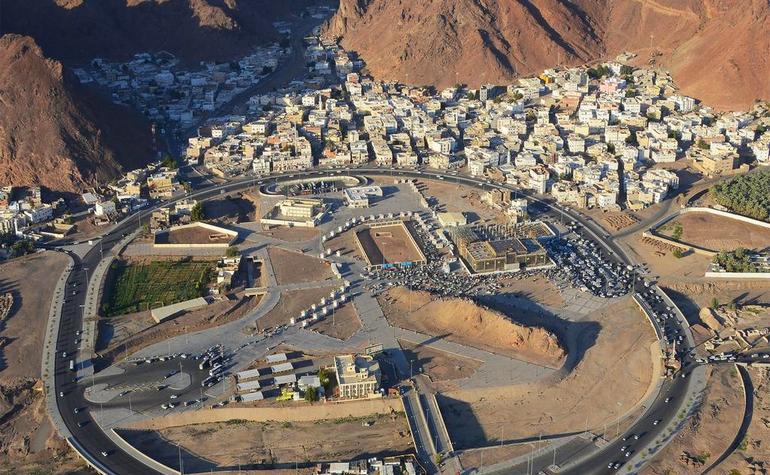
- It was in this state of affairs that Anas bin Nadhr (رضي الله عنه) saw Sa’ad bin Ma’az (رضي الله عنه) passing in front of him. He shouted to him: “O Sa’ad! Where are you going? By Allah! I smell the fragrance of Paradise coming from Mount Uhud.” Saying this, he threw himself into the very thick of the enemy, and fought tooth and nail till he met his martyrdom. After the battle, it was found that his body had been mauled and mutilated to such an extent that only his sister could identify him, and that barely from the finger tips. No less than eighty wounds of arrows and swords were counted on his body.
- To be cheated of victory over the Quraysh when it was within grasp was a great disappointment to the Prophet (ﷺ), especially as the archers had disobeyed a direct instruction . At this bitter moment, the holy verses of the Quran came down to console and guide him with the following words: “By the mercy of Allah you have softened towards them. Had you been rough, hard-hearted, they would have dispersed away from you. So pardon them, ask forgiveness for them and consult them in affairs. Once you make a decision, then trust in Allah. Allah loves those who trust in Him.” [3:159] The Qur’an ordered him to forgive them, as Allah in His mercy forgives the erring, and not only was he to forgive them, but to call them to him and consult them in affairs, thus restoring their self-respect.
References: History of Madinah Munawwarah – Dr. Muhammad Ilyas Abdul Ghani, Fazail-e-Aamal – Sheikh Muhammad Zakariyya Kandhalvi, The life of Muhammad – Tahia Al-Ismail
]]>Close up of the cave:
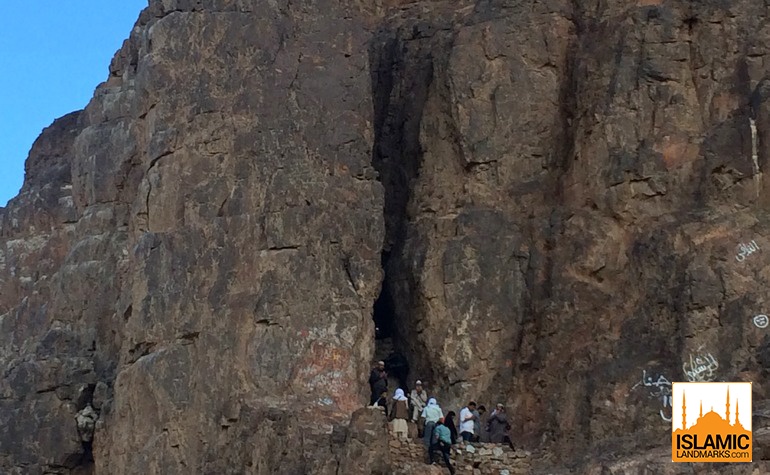
The view from inside the cave:
References: Wikipedia
]]>