- Of the epistles (letters) that the Prophet (ﷺ) despatched to various kings, inviting them to Islam, one was sent to the King of Bursa through Haris-bin-Umair Azdi (رضي الله عنه). When Haris (رضي الله عنه) reached Mu’ta, he was killed by Sharjeel Ghassani, one of the governors of the Qaiser. The murder of the envoy was against all laws of inter-tribal morality. The Prophet (ﷺ) was naturally very much upset when the news reached him. He collected an army, 3,000-strong, to advance against the enemy. This was the first time the Muslims would fight the Byzantines (The Roman Empire during the Middle Ages).
- While nominating Zaid-bin-Haritha (رضي الله عنه) to command the army, the Prophet (ﷺ) said: “If Zaid is killed, then Jafar-bin-Abi Talib will be your Amir and if he is also martyred, then Abdullah-bin-Rawahah will take the command. If he also dies, then you can select a commander from among yourselves.” A Jew, who was listening to this, said: “All the three must die. This is exactly how the earlier Prophets used to prophesy.”
- The Prophet (ﷺ) gave Zaid a white flag made by himself. He then accompanied the army for some distance out of Madinah and prayed for them saying: “May Allah bring you back safely and triumphantly, May He guard you against all evils.”
- When Sharjeel received intelligence about this army, he prepared an army 100,000 strong and another army of 100,000 was raised by the Qaiser himself to meet the Sahabah. When the Sahabah heard the rumour of the impending army they hesitated whether they should face such heavy odds or inform the Prophet (ﷺ). Abdullah bin Rawahah (رضي الله عنه) exhorted them to advance and they faced the army in the battlefield of Mu’ta.
- A fierce battle raged in which, as prophesised, Zaid-bin-Haritha (رضي الله عنه), followed by Jafar-bin-Abi Talib and Abdullah-bin-Rawahah were martyred. After the last leader had fallen, Thabit bin Aqram (رضي الله عنه) ran to receive the flag and rose it high, so that the Muslims would not disperse in chaos. Thabit (رضي الله عنه) then handed the flag to Khalid-bin-Waleed (رضي الله عنه) and called the Muslims publicly to accept his leadership. They unanimously agreed and for the first time Khalid-bin-Waleed (رضي الله عنه) headed a Muslim army.

- Back in Madinah the Prophet (ﷺ) was fully informed of the happenings of the war. One morning, he (ﷺ) addressed the Sahabah saying, “Zaid has taken up the flag and now he has been martyred. Jafar has now taken it and he has also been martyred. Ibn Rawahah has taken it and he has also been martyred.” Saying this, tears welled up in the eyes. Thereafter he mentioned, “Now the flag has been hoisted by a sword from among the swords of Allah Ta’ala and Allah Ta’ala has granted the Muslims victory on his hands.”
- Khalid-bin-Waleed (رضي الله عنه) reported that the fighting was so intense that he used nine swords which broke in the battle. Seeing that the situation was hopeless, he prepared to withdraw the army. He continued to engage the Byzantines in skirmishes, but avoided pitched battle. One night he completely changed his troop positions and brought forth a rearguard that he had equipped with new banners; all this was intended to give the impression that reinforcements had arrived from Madinah. He also ordered his cavalry to retreat behind a hill during the night, hiding their movements, and then return during daytime when the battle resumed, raising as much dust as they could. This also was intended to create the impression that further reinforcements were arriving. The Byzantines believed in the fictitious reinforcements and withdrew, thus allowing the Muslim force to safely retreat to Madinah.
- Today, those Muslims who fell at the battle are considered martyrs (shaheed). Far from being a defeat, this battle was a strategic success; the Muslims had challenged the Byzantines and had made their presence felt amongst the Arab Bedouin tribes in the region.
References: Fazail-e-Aamal – Sheikh Zakariyya Kandhalvi, Men around the Messenger – Khalid Mohammed Khalid.
]]>- After the humiliating defeat in the Battle of Badr a year earlier, the Quraysh of Makkah made preparations to muster a great army to fight the Muslims again and take revenge. They assembled an army of 3000 soldiers with 300 camels, 200 horses and 700 coats of mail. Wives and daughters of slained chiefs in Badr accompanied the army to see with their own eyes the spectacle of the killers being killed. Abu Sufyan was the commander-in-chief of the Makkan army and his wife Hind commanded the women’s section. Both were non-Muslims at the time and bitter enemies of Islam. The left and right flanks were commanded by Ikrimah ibn Abi Jahl and Khalid bin Waleed respectively. Amr ibn al-As was named the commander of cavalry and his task was to co-ordinate attack between the cavalry wings. (All three subsequently became Muslims and become great generals of Islam).
- The Prophet (ﷺ) left Madinah for the valley of Mount Uhud with a Muslim army of only 700 and drew up his troops for battle. Zubair bin al-Awwam (رضي الله عنه) was the commander of the right wing and Mundhir bin Amr (رضي الله عنه) was given the left wing of the army. Hamza (رضي الله عنه), the uncle of the Prophet (ﷺ) was made the advance guard. Mus’ab bin Umair (رضي الله عنه) was chosen as the standard-bearer of Islam and Abu Dujanah (رضي الله عنه) was fortunate enough to receive the Prophet’s sword (which was known as Zulfikar).
- Before the battle, the Prophet (ﷺ) had positioned 50 archers under Abdullah bin Jubair (رضي الله عنه) at Jabal al-Rumah. He (ﷺ) ordered them strictly to stay there until further orders, whatever may be the condition. They were to obstruct the enemy if they attacked the Muslims from the rear.
- The two armies set upon each other and a fierce battle ensued. The Muslim soldiers concentrated their attack on the eleven standard bearers of the pagans until they were all wiped out. As the enemy standards sank to the ground, the Muslim soldiers hurled themselves against the enemy. Abu Dujanah (رضي الله عنه) and Hamza (رضي الله عنه), fought with great fearlessness, and their heroic feats on the battlefield were to become legendary in Muslim military history.
- Tragically, Hamza (رضي الله عنه), the ‘Lion of Allah’, was martyred in the same battle he had dominated. He was killed by the javelin of Wahshi bin Harb, an Abyssinian slave, who with that successful throw earned his freedom from his master, Jubayr bin Mutim.
- Despite the loss of Hamza (رضي الله عنه), the Muslims managed to overcome the unbelievers who, faced with yet another defeat, began to flee. The pagan women also scattered as some of the Muslim soldiers gave chase.
- It was at this point of perceived victory that events began unravelling. The archers who had been entrusted with the safety of their brothers in faith disobeyed the Prophet’s clear orders and deserted their stations, thinking that the battle was over. Forty of the rearguards descended the mountain and left the Muslims vulnerable to a counter attack by the enemy.
- Khalid bin Waleed saw the sudden vacuum created by the disappearance of the rearguard and his cavalrymen attacked the Muslims from behind, killing many in the process. When the Muslims saw themselves surrounded, they were overtaken by panic and disorder and failed to map out a cohesive plan.
- The enemy fought their way close to the Prophet (ﷺ) who was hit with a rock and fell on his side. One of his front teeth was chipped, his lower lip was cut, and his helmet was damaged. As an enemy soldier thrust his sword at the Prophet (ﷺ), he caught his bone below the eye, and two rings from the Prophet’s helmet pierced his face. The blood ran down his face and he wiped it away, saying, “How can a people prosper who have stained their Prophet’s face with blood while he summoned them to their Lord!”
- Mus’ab bin Umair (رضي الله عنه), was targeted by the enemy as he was the Muslims standard-bearer and he was killed. Since Mus’ab (رضي الله عنه) resembled the Prophet (ﷺ) to a great extent, his killer, Abdullah bin Qam’a, thought he had slain the Prophet (ﷺ) and jubilantly shouted out that he had killed Muhammad.
- Rumours of the death of the Prophet (ﷺ) filtered through the Muslims, plummeting their morale. Grief stricken and lost, some of them simply abandoned the field, while others were infused with resolve and rallied saying, “Come, let us die for what the Prophet (ﷺ) gave his life.”
- The crisis receded only when Ka’b bin Malik (رضي الله عنه) caught a glimpse of the Prophet (ﷺ), making his way to join the besieged Muslims. K’ab recognised the Prophet’s eyes although his face was covered with the helmet. He cried loudly, “O Muslims, rejoice! Here is the Prophet!”.
- Ka’b’s words galvanised the remaining Muslims, and they streamed to the Prophet’s side. Within a short time thirty Companions assembled around him. The Prophet (ﷺ) decided against further combat, wisely choosing to retreat. He made his way through the rows and successfully led his troops towards the mountain pass.
- By retreating, the Prophet (ﷺ) managed to save his army from further losses; losses that had come about from simple disobedience of his orders. Disobedience had changed the Muslim victory in the Battle of Uhud into catastrophe, but with Allah’s help the Muslims were pulled back from the edge of disaster.
References: History of Madinah Munawwarah – Dr. Muhammad Ilyas Abdul Ghani, Fazail-e-Aamal – Sheikh Muhammad Zakariyya Kandhalvi, The life of Muhammad – Tahia Al-Ismail, When the Moon Split – Safiur Rahman Mubarakpuri
]]>- The Prophet (ﷺ) appointed 50 archers under the command of Abdullah bin Jubair (رضي الله عنه) at Jabal al-Rumah. He (ﷺ) said to him, “Drive off the horses from us, lest we should be attacked from the rear. Whether we win or lose the battle stand steadily at your position. See that we are not attacked from your side.”
- Seeing that the battle was going in the favour of the Muslims and the polytheists were retreating created a zest and fervour among the Muslim archers hearts to chase the escaping enemy and to collect the booty left behind. Many began to leave their position from Mount Rumah. Abdullah bin Jubair (رضي الله عنه) tried his utmost to check them by reminding them of the Prophet’s command and solicited them to stay on, but no more than ten persons would listen to him, arguing that the orders given by the Prophet (ﷺ) were only for the duration of the actual fight. The enemy cavalry then noticed the unguarded pass in the rear, made a flank movement, forced a passage through it, and fell right on the rear of the Muslims, who were pre-occupied with the booty. Abdullah bin Jubair (رضي الله عنه) was martyred on the spot. This sudden attack by the polytheists created a temporary confusion in the Muslim ranks and they stopped chasing the Makkan army. The chaotic condition of the Muslim ranks emboldened Ikramah bin Abi Jahl and Abu Sufyan to stop fleeing and they gathered their soldiers together to launch another attack on the Muslims while they were in the state of turmoil. This sudden onslaught only added to the trouble and losses in the Muslim ranks.
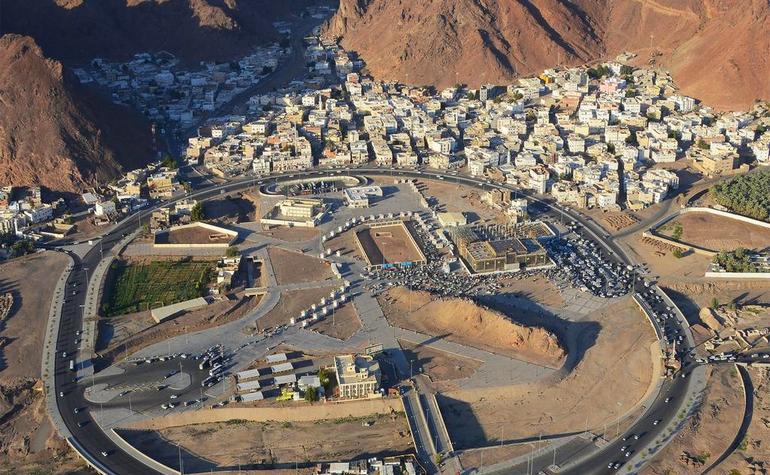
- It was in this state of affairs that Anas bin Nadhr (رضي الله عنه) saw Sa’ad bin Ma’az (رضي الله عنه) passing in front of him. He shouted to him: “O Sa’ad! Where are you going? By Allah! I smell the fragrance of Paradise coming from Mount Uhud.” Saying this, he threw himself into the very thick of the enemy, and fought tooth and nail till he met his martyrdom. After the battle, it was found that his body had been mauled and mutilated to such an extent that only his sister could identify him, and that barely from the finger tips. No less than eighty wounds of arrows and swords were counted on his body.
- To be cheated of victory over the Quraysh when it was within grasp was a great disappointment to the Prophet (ﷺ), especially as the archers had disobeyed a direct instruction . At this bitter moment, the holy verses of the Quran came down to console and guide him with the following words: “By the mercy of Allah you have softened towards them. Had you been rough, hard-hearted, they would have dispersed away from you. So pardon them, ask forgiveness for them and consult them in affairs. Once you make a decision, then trust in Allah. Allah loves those who trust in Him.” [3:159] The Qur’an ordered him to forgive them, as Allah in His mercy forgives the erring, and not only was he to forgive them, but to call them to him and consult them in affairs, thus restoring their self-respect.
References: History of Madinah Munawwarah – Dr. Muhammad Ilyas Abdul Ghani, Fazail-e-Aamal – Sheikh Muhammad Zakariyya Kandhalvi, The life of Muhammad – Tahia Al-Ismail
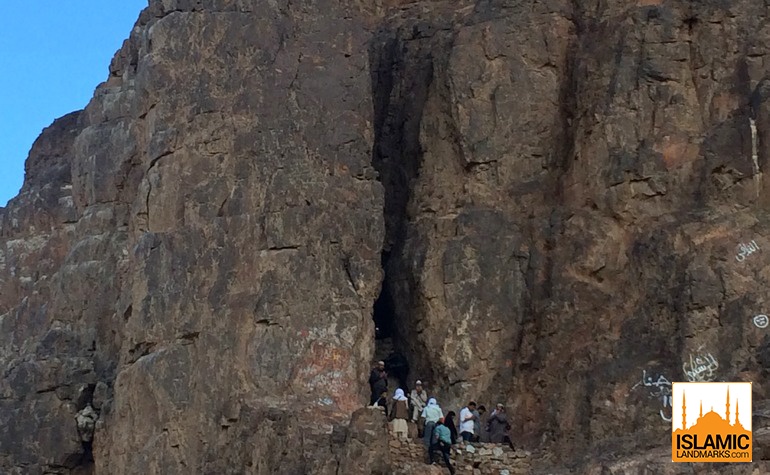
]]>Close up of the cave:
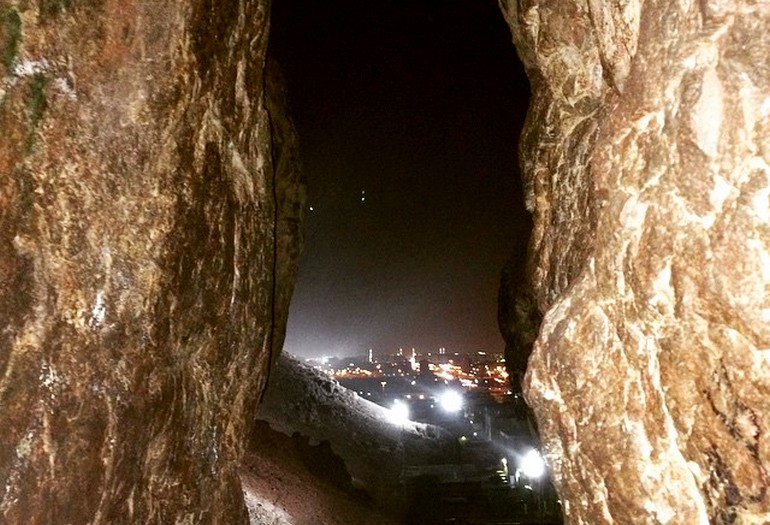
The view from inside the cave:
References: Wikipedia
]]>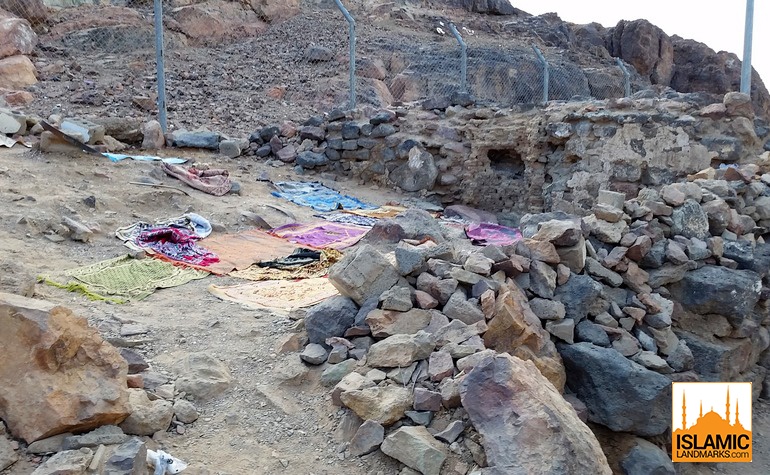
References: History of Madinah Munawwarah – Dr. Muhammad Ilyas Abdul Ghani
]]>- Hamza ibn Abdul Muttalib was one of the finest huntsmen and greatest warrior of the Arabs. In the battle of Badr, he had killed many of the Qurayshi nobles and now he cut his way through their ranks like a mighty wave sweeping all before it. One of the Qurayshi nobles had a black slave called Wahshi from Abyssinia (present Ethiopia) who could use the javelin with great skill. Hind, the wife of Abu Sufyan, promised Wahshi freedom and his master Jubayr bin Mut’im also promised him the same as Hamza (رضي الله عنه) had killed his uncle in Badr. Wahshi prowled amongst the fighters until he saw Hamza (رضي الله عنه). He says, “I held my spear and balanced it well, then I aimed it. It entered into his abdomen and went out the other side. I waited until he was dead, then I took my spear and went to wait in the camp. I had no quarrel with anyone. I killed him only to be set free.” Wahshi later on in life became a Muslim and killed Musailimah, the imposter who claimed Prophethood after the demise of the Prophet Muhammad (ﷺ).
- When the tide of war turned towards the Quraysh, the women of Quraysh, led by Hind, whose brother, uncle and loved ones had been killed in Badr began to mutilate the Muslim dead. She particularly vented her fury on the body of Hamza (رضي الله عنه), cutting off his nose and ears, making a slit in his chest, taking out his liver, chewing it but unable to swallow it. The Prophet (ﷺ) was greatly grieved when he came upon the body of his beloved uncle. Years later, when Makkah lay open at his feet, he gave all its inhabitants, including Hind a free pardon. Hind subsequently accepted Islam.
- Mus’ab (رضي الله عنه) held the flag of Islam. When the Muslims on meeting defeat were dispersing in confusion, he held the flag and stood at his post like a rock. An enemy came and cut his hand with a sword, so that the flag might fall and the defeat might be accomplished. He at once took the flag in the other hand. The enemy then cut the other hand also. He held the flag to his bosom with the help of his bleeding arms. The enemy at last pierced his body with an arrow. He fell dead and, with him fell the flag that he had not allowed to fall while he was alive. Another Muslim ran and took over the flag. At the time of his burial, he had only one sheet to cover his body. This sheet was too short for his size. When it was drawn to cover the head, the feet would be exposed, and when it was drawn to cover the feet, the head would become uncovered. The Prophet (ﷺ) said: “Cover his head with the sheet, and his feet with the ‘Azkhar’ leaves.”
- Around sixty-five Ansar and four Muhajirun were honoured with martyrdom, while there were twenty-two fatalities among the polytheists.
- The Jews kept waiting the outcome of the battle in their safe dwellings. Mukhairiq, a person amongst the Jews told his people that they must lend support to Prophet Muhammad. “We can’t fight for this is Saturday,” they replied. He said, “This is the fighting between the Prophet and the disbelievers, so Saturday can’t stand in the way.” He took his sword and pronounced that in case he was killed, all of his property should be given to Muhammad (ﷺ) and non should go against him. He joined the battle and was killed. When the Prophet (ﷺ) came to know of this, he remarked, “He was the best of the Jews.”
- The Prophet (ﷺ) instructed the martyrs to be buried still covered with blood, in the condition that they had fallen. Two or three of the martyrs were buried in a single grave. In some cases, he directed his Companions to shroud the martyrs in pairs. The martyr who had learned more of the Quran was lowered in the grave first. Paying tribute to their sacrifice in the cause of Allah, the Prophet (ﷺ) said, “I shall be a witness unto them on the Day of Resurrection.”
- As they retrieved the bodies of their martyred brothers, the people came upon the body of Hanzlah bin Abu Amer (رضي الله عنه) above the earth with water dripping from it. The Prophet (ﷺ) explained to his men, “The angels are bathing him.” Apparently, the newly married Hanzlah had just consummated his marriage when the call for Jihad was made. Without even stopping to bathe, he left his bride and rushed into the battlefield. Hanzlah fought heroically and was martyred, so the Prophet (ﷺ) explained that the angels were bathing him to purify his body. Hanzlah was forever remembered as “Ghaseel Al-Malaaika” (one bathed by the angels).
- The Prophet (ﷺ) used to visit the graves of the martyrs of Uhud and thus it is sunnah to also visit them. However, care should be taken not to engage in any innovative or non-Muslim practices such as supplicating to the martyrs, throwing letters or money into the graveyard, the tying of threads or tawaf.
References: History of Madinah Munawwarah – Dr. Muhammad Ilyas Abdul Ghani, Fazail-e-Aamal – Sheikh Muhammad Zakariyya Kandhalvi, The History of Islam – Akbar Shah Najeebabadi, The life of Muhammad – Tahia Al-Ismail
]]>Supplications of the Prophet (ﷺ)
- Jabir (رضي الله عنه) reports that the Prophet (ﷺ) made dua for three days (after the ritual prayers).
- From amongst his supplications were:
“O Allah, Revealer of the Book, swift in taking account, turn the confederates to flight, O Lord defeat them and cause them to quake.”
“There is no God but Allah, the One who conferred upon His armies the honour of victory and helped His servant and routed the confederates alone; there is nothing after that.”

The prayers are answered
- On the third day of the siege, between Zohar and Asar, Allah (ﷻ) answered the call of His Messenger. Jibraeel (عليه السلام) was sent to give him the good news that Allah (ﷻ) had responded to his prayer and promised him victory. Masjid al-Fatah marks the spot where this happened. Fatah is Arabic for victory.
- Soon after, a fierce wind raged that dispersed the pagan confederates and the siege was lifted.
Other names for Masjid al-Fatah
- Masjid Fatah is also known as Masjid Ahzab and Masjid A’la. A masjid existed here at the time of the Prophet (ﷺ).
- It is one of the group of masjids known collectively as Masaajid Sab’ah (The Seven Mosques), the others being Masjid Salman Farsi, Masjid Ali, Masjid Umar, Masjid Sa’ad, Masjid Abu Bakr and the seventh is Masjid Qiblatain. Some of these masjids have now been dismantled.
References: History of Madinah Munawwarah – Dr. Muhammad Ilyas Abdul Ghani, Muhammad – Martin Lings
]]>- The Prophet (ﷺ) marched out along the road from Madinah to Makkah, passing through Naqb al-Madinah, then Al-Aqeeq, then Zul Hulaifah, then Oolat al-Jaish, then Turban, then Malal, then Ghamees al-Hamam, then Sukhairat al-Yamam, then As-Sayyalah, then Fajj ar-Rawha, then Shanookah, proceeding on until they reached Irq al-Zabiyyah.
- Abu Sufyan, the head of the caravan the Muslims were planning to intercept, was highly cautious and would ask every person he met about the movements of the Muslims. He was at a great distance from Badr when he found out that a large band of Muslims had left Madinah. Acting quickly, he turned the caravan westward and headed for the coast, bypassing Badr altogether. He then sent a messenger to Makkah to warn the Quraysh and request reinforcements.
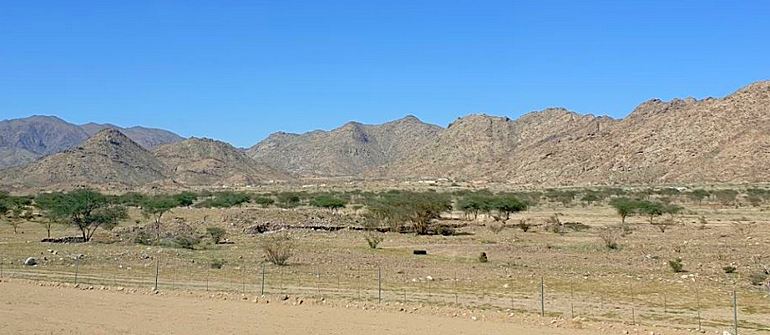
- When the Quraysh received Abu Sufyan’s message, they quickly rounded up a large squadron of men to confront the Muslims and protect the caravan. All the notable chiefs of Makkah, except for Abu Lahab, joined the force, as well as every available man from each of the neighbouring tribes.
- Ibn Ishaq mentioned some numbers about the Quraysh. There were 950 fighters from among the Quraysh and 50 were there for cooking food. They also brought with them entertainers, musicians and songstresses to celebrate their anticipated victory.
- Out of the 950 fighters, 200 were made up of cavalry (men on horses). They had so many camels that as they left Makkah and camped for the first night, Abu Jahal sacrificed 10 camels to feed the entire army. The Quraysh army travelled for a week before they reached the place near Badr. Just in the first week, they had consumed nearly 70 camels.
References: When the Moon Split – Shaykh Safiur Rahman Mubarakpuri, Muhammad (s.a.w.) the Last Prophet – Moulana Sayyed Hasan Ali Nadwi, The Life of Muhammad (s.a.w) – Tahia Al-Ismail, Qalam Seerah notes – Shaykh Abdul Nasir Jangda
]]>- Ar-Rawha has the distinction as being a place where many previous Prophets of Allah passed through on their way to the Ka’bah in Makkah. Anas and Abu Musa al-Ash‘ari (رضي الله عنهم) report that the Prophet (ﷺ) said, “Indeed 70 Ambiya (Prophets) had passed the hill of Rawha enroute to the house of Allah (the Ka’bah)….” [Majma’uz Zawaid]
- There are the historic remains of a masjid at Rawha. Amr ibn ‘Awf (رضي الله عنه) reports that the Prophet (ﷺ) said: “.. Indeed seventy Ambiya (Prophets) prayed salah in this Masjid (at Rawha)…” [Fathul Bari]
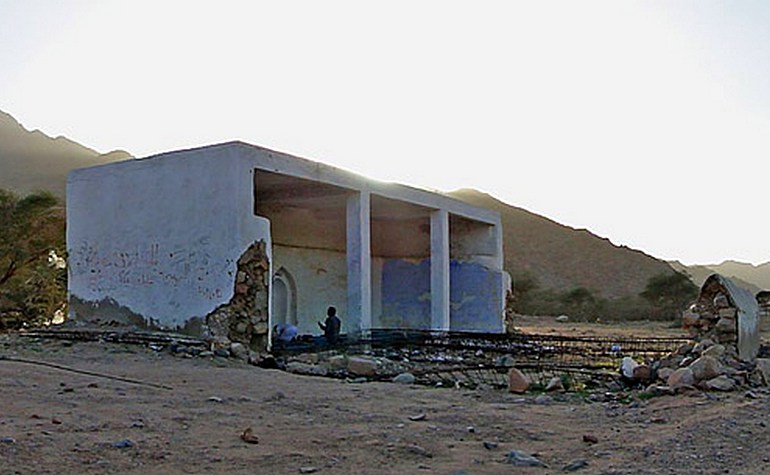
- After reaching Ar-Rawha, the Prophet (ﷺ) sent Abu Lubaba (رضي الله عنه) back to Madinah. He told Abu Lubaba, “Abdullah bin Ummi Maqtum will take care of the masjid and lead the prayers, but you will be in charge of the city of Madinah”. Abu Lubaba was an Ansari from Banu Aus and knew everyone in and outside of Madinah. This was why the Prophet (ﷺ) appointed him to keep watch over the city in his absence.
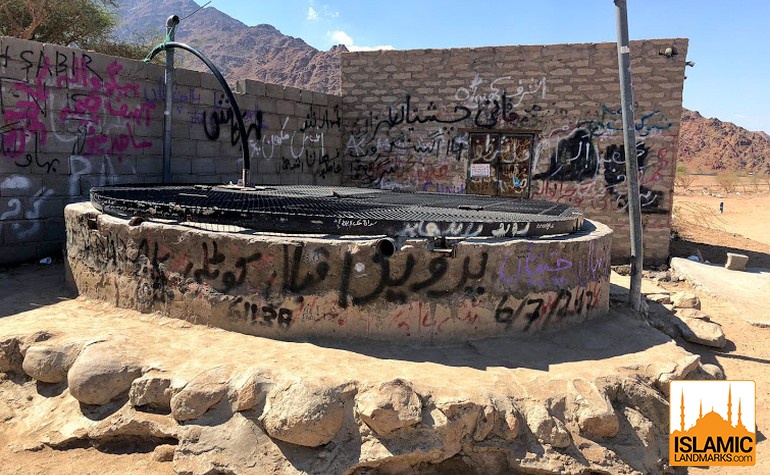
- Towards the end of time the Prophet Isa [Jesus] (peace be upon him) will pass through ar-Rawha after his return back to Earth. It has been narrated from Abu Hurairah (رضي الله عنه) that the Prophet (blessings and peace of Allah be upon him) said, “By the One in Whose hand is my soul, the son of Maryam will certainly enter ihraam in the valley of ar-Rawha, as a pilgrim performing Hajj or ‘Umrah, or both.” [Muslim]
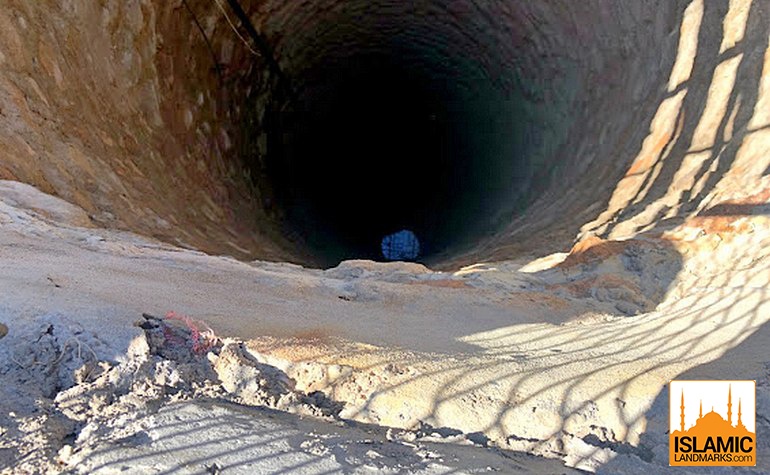
- Water from the well of al-Rawha (Bir Rawha) is available to drink
References: When the Moon Split – Shaykh Safiur Rahman Mubarakpuri, Muhammad (s.a.w.) the Last Prophet – Moulana Sayyed Hasan Ali Nadwi, The Life of Muhammad (s.a.w) – Tahia Al-Ismail, Qalam Seerah notes – Shaykh Abdul Nasir Jangda
]]>- The old name for this area is ‘Al-Munsarif’ which means ‘to leave’.
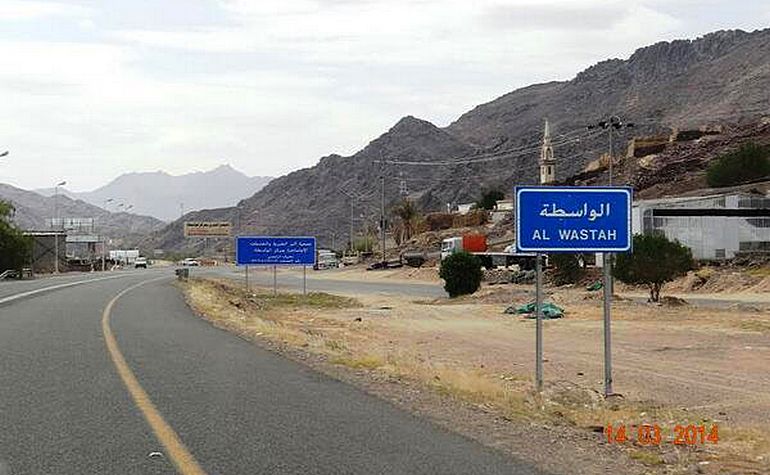
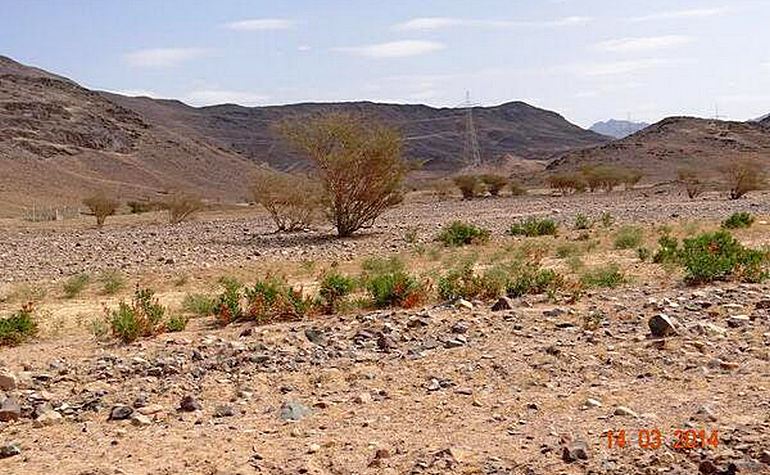
- After leaving Al-Munsarif the Muslim army passed through Al-Wastah and then through the valley of Al-Safra.
References: When the Moon Split – Shaykh Safiur Rahman Mubarakpuri, Muhammad (s.a.w.) the Last Prophet – Moulana Sayyed Hasan Ali Nadwi, The Life of Muhammad (s.a.w) – Tahia Al-Ismail, Qalam Seerah notes – Shaykh Abdul Nasir Jangda
]]>