History
- The complex stands on the grounds of the first palace built in the city by the conquering Ottomans. When in 1465 CE, the imperial entourage moved to the Topkapi Palace, the grounds of the old one was given over for construction of the new complex. Work on the Suleymaniye Mosque began in 1550 CE and was finished in 1558 CE. During this time, Sinan and his family lived on site.
- Like the city’s other imperial mosques, the Suleymaniye Mosque was not only a place of worship, but also a charitable foundation, or kulliye. The mosque is surrounded by its former hospital, soup kitchen, schools, caravanserai (resting place for travellers) and bath house. This complex provided a welfare system which fed over 1,000 of the city’s poor – Muslims, Christians and Jews alike – every day. The size of the millstone in its courtyard gives an idea of the amount of grain that was needed to feed everyone.
Exterior
- As with all imperial mosques in Istanbul, the entrance to the mosque contains a forecourt with a central fountain. The exterior facade of the mosque is decorated with rectangular blue coloured Iznik tile window lunettes.
- To the south of the mosque is a madressa housing a library containing 110,000 manuscripts. The main courtyard entrance contained the rooms of the mosque astronomer who determined the times of prayer.
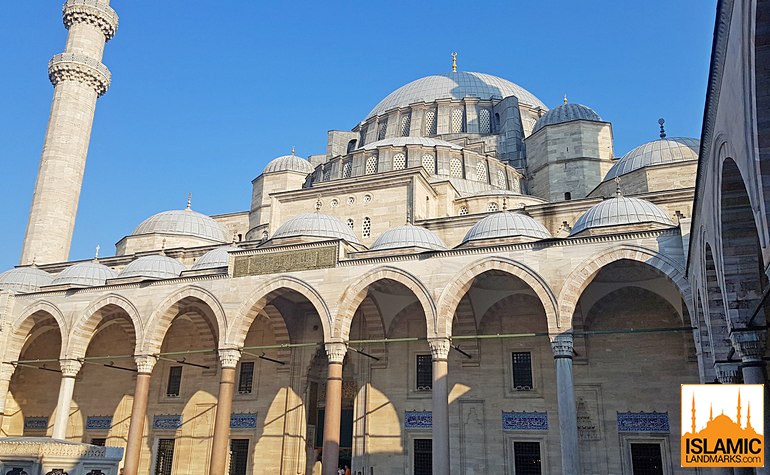
- A minaret stands on each of the four corners of the courtyard, two tall and two short. Traditionally, four minarets were used for mosques that were endowed by a sultan. Princes and princesses could construct two minarets; others only one. In total, the minarets have ten galleries (small balconies), which by tradition indicates that Sulayman I was the 10th Ottoman sultan. The main dome is 53 meters high.
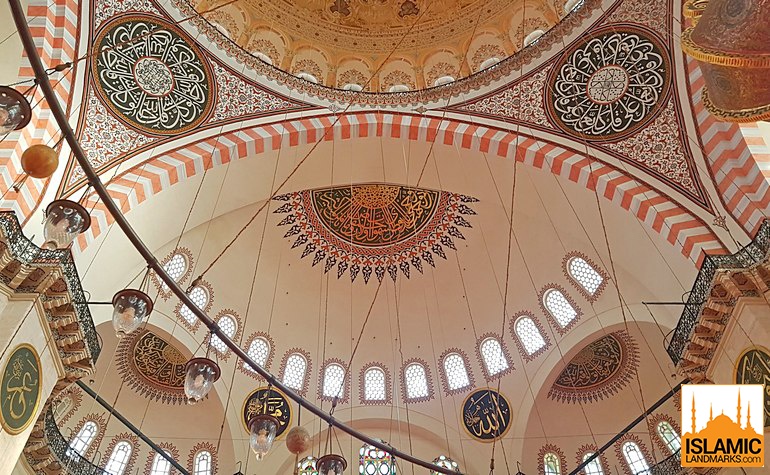
- The Suleymaniye Mosque was ravaged by a fire in 1660 and was restored by Sultan Mehmed IV. Part of the dome collapsed again during the earthquake of 1766. Subsequent repairs damaged what was left of the original decoration of Sinan. Recent cleaning has shown that Sinan experimented first with blue, before turning red the dominant colour of the dome.
- During World War I the courtyard was used as a weapons depot, and when some of the ammunition ignited, the mosque suffered another fire. Not until 1956 was it fully restored again.
Interior
- The interior of the mosque is a vast, almost square space, being 59 metres in length and 58 metres in width.
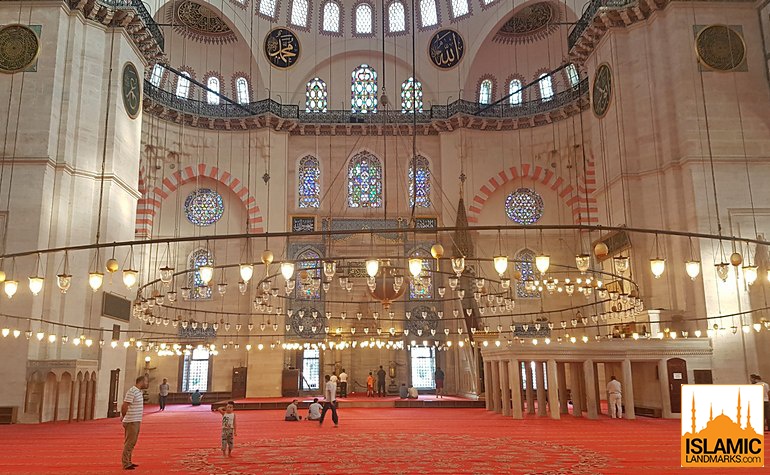
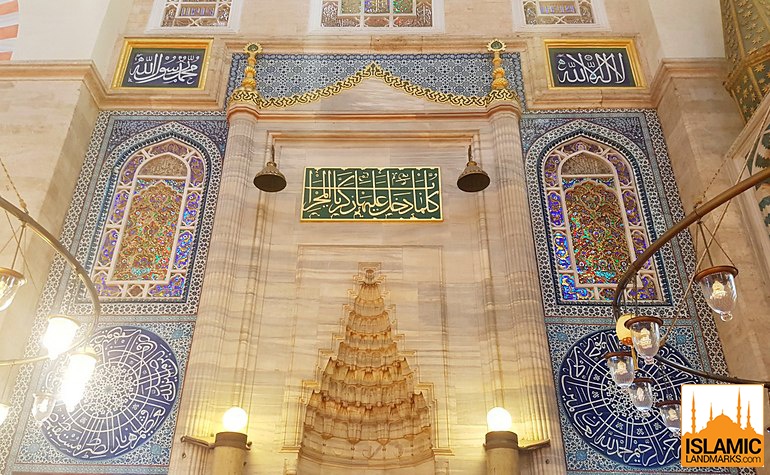
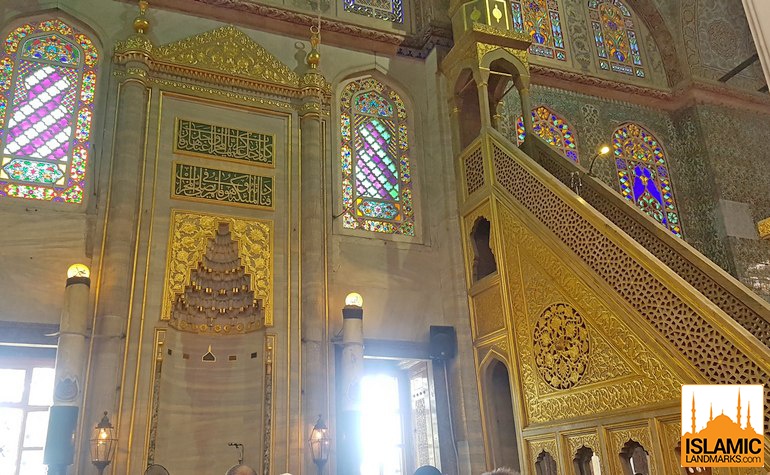
- There are stained glass windows and blue, Iznik tilework on the qiblah wall. On either side of the mihrab are large calligraphy tiles with text from Surah al-Fatiha, the beginning chapter of the Quran.
- The interior always feels cool, partly because a clever air-flow system was incorporated into the original design to direct soot from the candles and oil lamps to a single point. It was then collected and used for ink.
Mausoleums
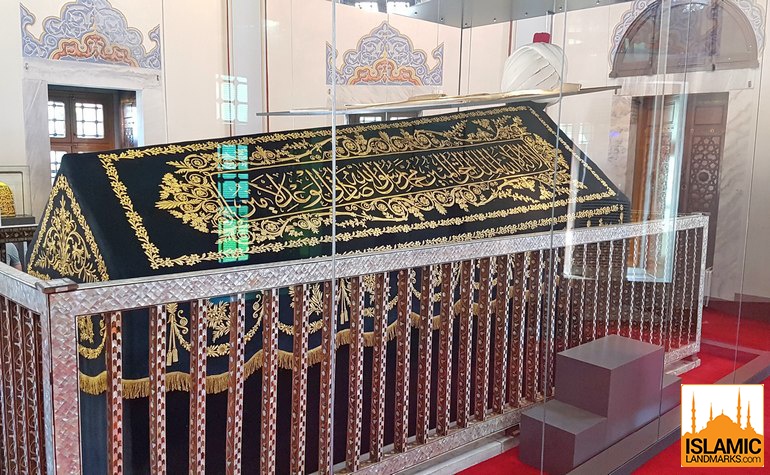
- In the garden behind the main mosque there are two mausoleums including the tombs of Sultan Sulayman I, his wife Roxelana, his daughter Mihrimah, his mother Dilaşub Saliha and his sister Asiye. The sultans Sulayman II and Ahmed II, are also buried here.
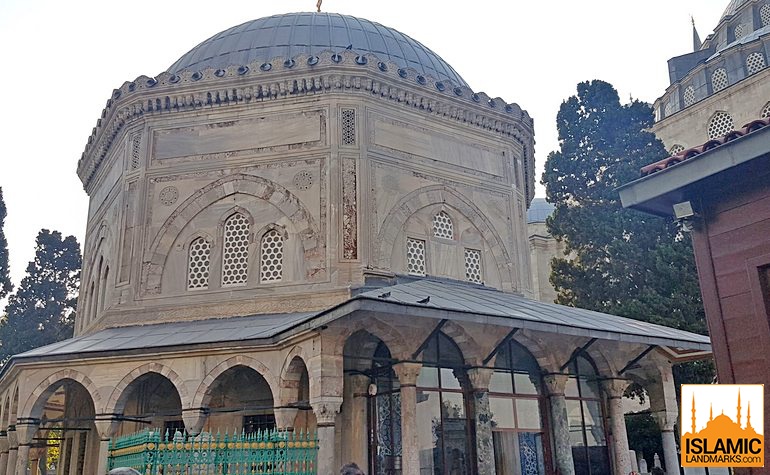
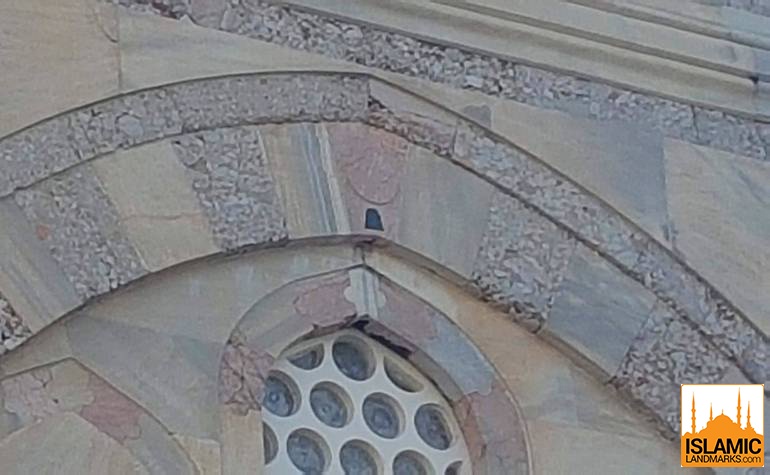
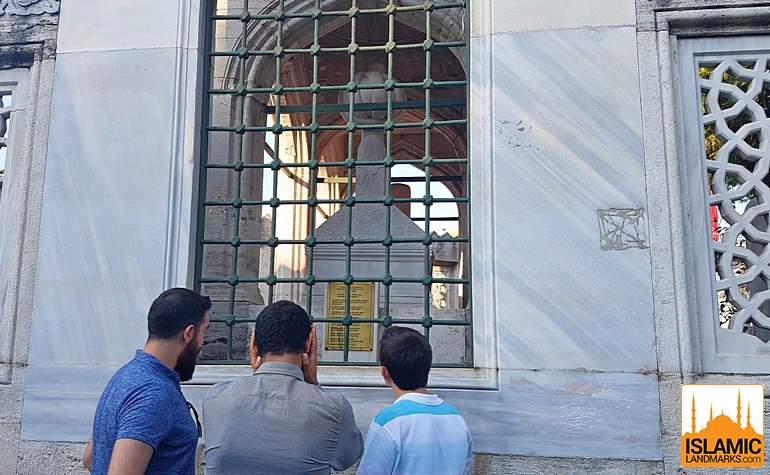
- Embedded within the main mausoleum is said to be a piece of the Hajar al-Aswad. This is a part of the Black Stone attached to the Ka’bah in Makkah, the holiest place in Islam.
Tomb of Sinan
- Just outside the mosque walls, to the north is the tomb of Sinan, considered the greatest architect of the classical period of Ottoman architecture. Sinan died aged 98, having built 131 mosques and 200 other buildings. He was born a Christian and later converted to Islam.
- Video of the Suleymaniye mosque:
References: Wikipedia, Istanbul – DK Eyewitness Travel, The Rough Guide to Istanbul
]]>- This mosque is widely known as the ‘Blue Mosque’ due to its spectacular decoration made up of 20,000 hand-painted Iznik style glazed ceramics. There are more than 50 different patterns in blue, turquoise and green hues.
- The architect for the Blue Mosque was Sedefekar Mehmet Agha. He also followed in the footsteps of master Ottoman architect Mimar Sinan and wanted to create a spectacular and majestic form of architecture.
- The Blue Mosque was designed as a mark of imperial show of strength, with part of it being built over a Byzantine Palace. The mosque directly faces the Hagia Sophia which at the time was the primary imperial mosque.
- According to folklore, the Sultan asked for “altin minareler” (golden minarets) but the architect wrongly heard “alti minare” (six minarets). So the mosque was built with six minarets just like the mosque of the Ka’bah in Makkah which had six minarets at the time. But later a seventh minaret was added due to the controversy the number of minarets caused.
- Only the Sultan was allowed to enter the court from the entrance on the western side on horseback and a heavy iron chain hung in the upper part of this entrance. In order for the Sultan to enter, he would have to lower his head every time he entered the court. This was a symbolic gesture , to ensure the humility of the ruler in front of his supreme creator Allah.
- The Blue Mosque can accommodate 10,000 worshippers. In November 2006 Pope Benedict XVI visited the Blue Mosque on 30 November 2006 during his visit to Turkey. It was only the second papal visit in history to a Muslim place of worship.
- Video by Hikma History showing an overview of the history of the mosque:
Reference: Hikma History, Wikipedia
]]>History of Hagia Sophia
- For almost a thousand years, Hagia Sophia (Turkish: Aya Sofya), was the largest enclosed space in the world and regarded as an engineering marvel. It was designed to impress the strength and wealth of the Byzantine emperors upon their own subjects and visiting foreign dignitaries alike.
- Hagia Sophia is the third church of this name to stand on the site. The first, a wooden basilica built in 360 CE, was totally destroyed during a riot. The second, a grand marble structure of which some fragments remain, was erected under Theodosius II in 415 CE. Like it’s predecessor, this too was razed to the ground, in the Nika Revolt of 532 CE.
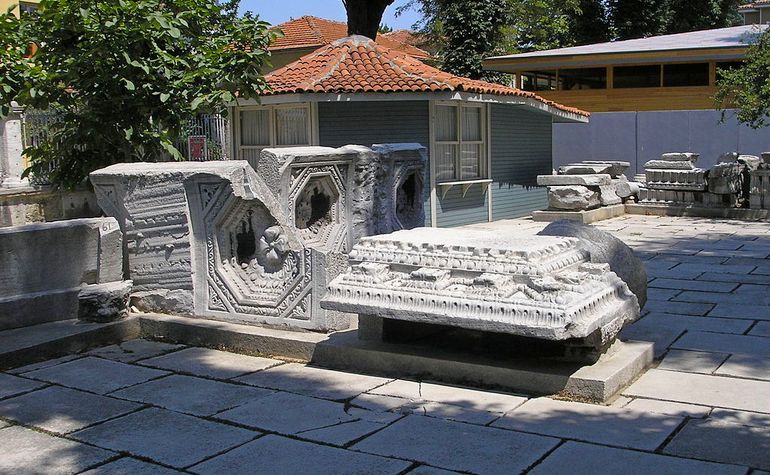
- The magnificent building seen today was commissioned in the sixth century by Emperor Justinian. He was determined his creation would exceed in size and splendour the ‘Temple of Solomon’ in Jerusalem. Work started in 532 CE and the building was inaugurated in 537 CE. The building was therefore present during the lifetime of the Prophet Muhammad (ﷺ).
- In 558 CE, part of the great dome collapsed in an earthquake. During reconstruction the height of the external buttresses at the door was increased, and some of the windows blocked, resulting in an interior much gloomier than originally intended. The dome collapsed again in 989 CE and was rebuilt by an Armenian architect. The worst desecration, however, was in 1204 CE, when it was ransacked by Catholic soldiers during the Fourth Crusade. Mules were brought in to help carry off silver and gilt carving and a prostitute was seated on the throne of the patriarch.
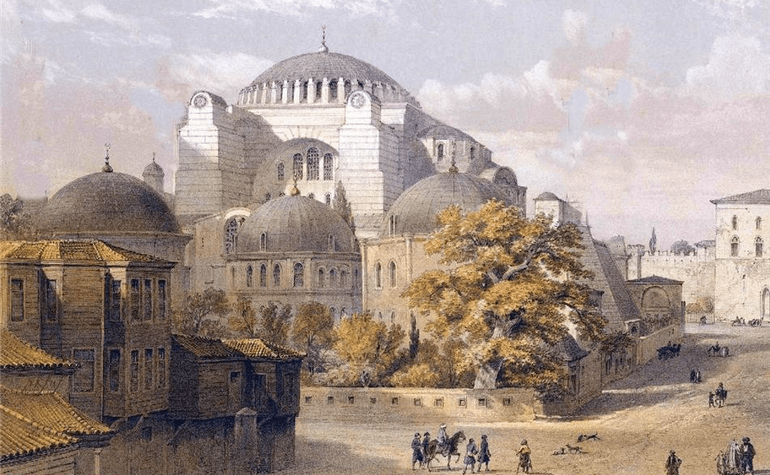
- In 1452 CE, the Byzantine Church reluctantly accepted union with the Catholics in the hope that Western powers would come to the aid of Constantinople against the Turks. In 1453 CE, those who said that they would rather see ‘the turban of the Turk than the hat of a cardinal in the streets of Constantinople’ got their way when the city was captured. Sultan Mehmet the Conqueror (Muhammad al-Fatih) rode to the church of Aya Sofya and stopped his troops looting the holy buildings. He then had it cleared of relics and said his first prayer on the following Friday. The former bastion of the Byzantine Christian Empire was now a mosque.
- In 1935, the building was transformed into a museum by Mustafa Kemal Ataturk, the founder of the Republic of Turkey. The prayer carpets were removed and the white plaster covering Christian era mosaics were cleared. Use of the complex as a place of worship (either by Muslims or Christians) became prohibited. However, since 2006 the Turkish government has allowed the use of a small room within the complex as a place for prayer for Muslim and Christian museum staff. In July 2016, the adhan (call of prayer) was broadcast from its minarets during Ramadhan, the first time the adhan was called in 85 years.
Exterior
- Emperor Justinian appointed the architects Anthemius of Tralles and Isidore of Miletus realise his dream, to create a building of a type and scale unknown in the Byzantine world. The vast thirty-one-metre-diameter dome, which seems to hover over a seemingly empty space rather than being supported by solid walls, was unprecedented. Numerous marble pieces and columns of different shapes and sizes dating back to more ancient times were brought in from ruins all around the empire and used in the building. There are many stories about the origin of these materials, especially the columns, but none of these can be taken seriously.
- Despite its uniqueness and magnificence, the building had many structural problems and parts of it would collapse. This necessitated expensive repairs which meant over time maintenance work would not be done resulting in a dilapidated state.
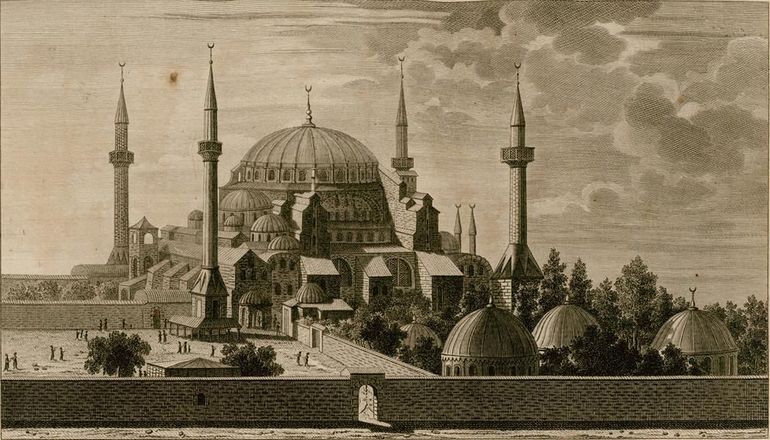
- Extensive strengthening work was carried out in the 16th century under the Turks by the famous Ottoman architect Mimar Sinan. He also erected two large minarets at the western side of the building to supplement two other minarets that had been built under the rule of Bayezid II. A golden crescent was mounted on top of the dome.
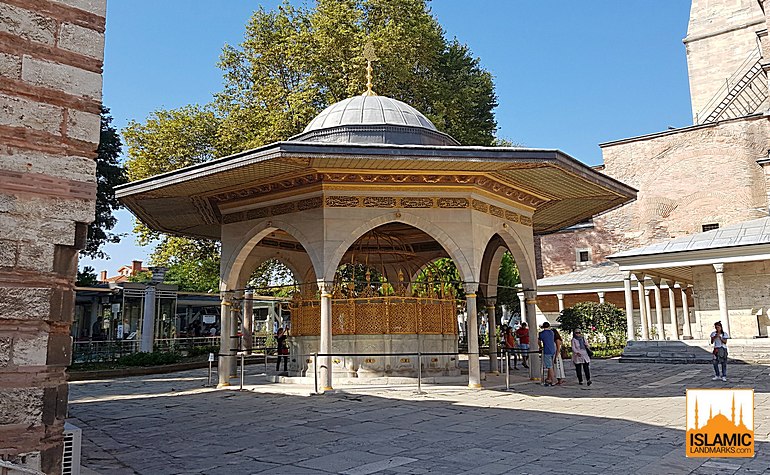
- More restoration work was carried out in 1739 CE under Sultan Murad I. In addition, a madressa (Quran school), soup kitchen, library and ablution fountain were added to the complex.
Interior
- Over the centuries, the Hagia Sophia was decorated with mosaics depicting Jesus, the Virgin Mary, saints and emperors or empresses. During the Fourth Crusade in 1204 CE, many of these mosaics were removed and shipped to Venice. After the Ottoman occupation, remaining mosaics were whitewashed or plastered, as the church was transformed into a mosque. Extensive restorations were carried out on the mosaics in the mid-nineteenth century by the Swiss Fossati brothers, but due to Muslim sensitivities the mosaics were later covered over again. Some of the mosaics have been recovered and restored since the building was turned into a museum.
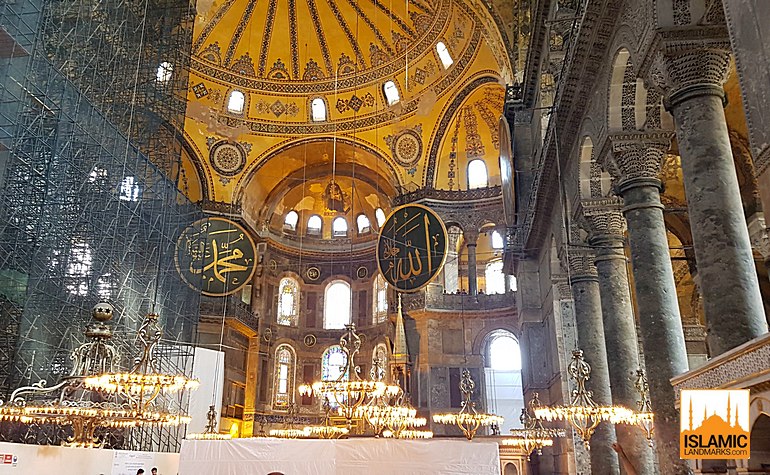
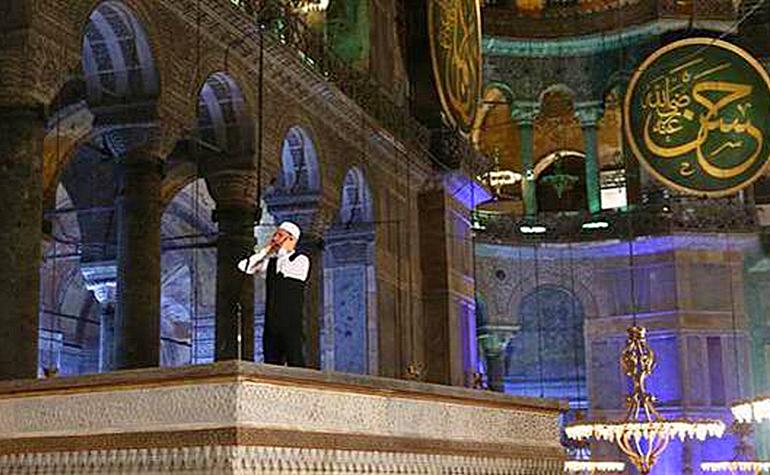
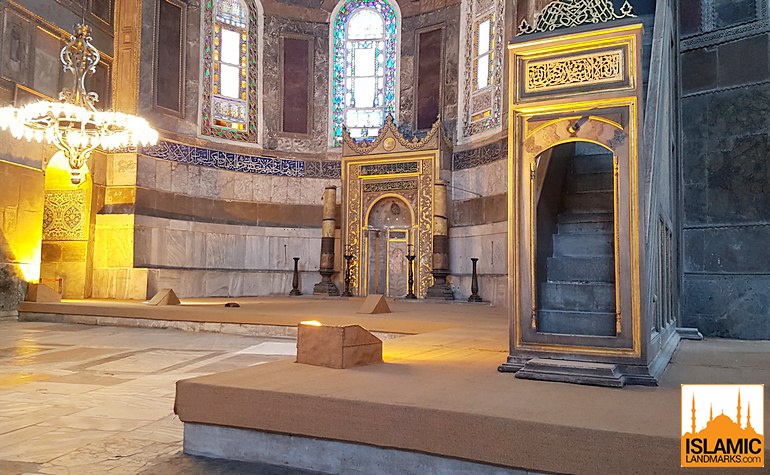
- The church apse was made into a mihrab (prayer niche facing Makkah) as part of its conversion into a mosque by the Ottoman Turks. Sulayman the Magnificent installed large candlesticks on either side of the mihrab which were brought from his conquest of Hungary.
- The giant, circular calligraphy discs seen above were installed as part of the restoration work carried out by the Fossati brothers in the mid-nineteenth century. Inscribed on them are the names of Allah, Muhammad (ﷺ), the first four caliphs Abu Bakr, Umar, Uthman and Ali, and the two grandchildren of the Prophet, Hassan and Hussain (رضي الله عنهم).
- Over the past few years there have been several campaigns calling for the Hagia Sophia to be converted back to a mosque. Turkish president, Recep Tayyip Erdoğan, recited the Quran in the Hagia Sophia in 2018. He dedicated the prayer to the “souls of all who left us this work as inheritance, especially Istanbul’s conqueror“.
Conversion of Hagia Sophia back into a mosque
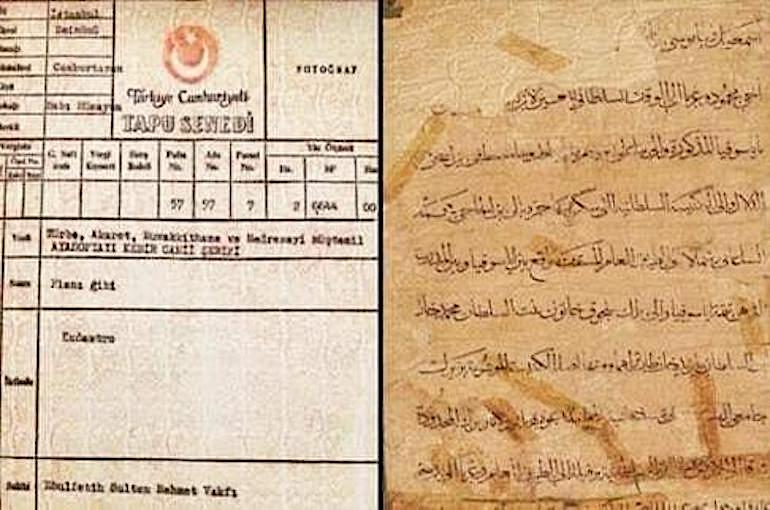
- In July 2020, Erdoğan announced that Hagia Sophia will be changed back into a mosque. This was following a court ruling that found its conversion into a museum was unlawful as it violated the will of its endower, Sultan Mehmet (Muhammad al-Fatih).
- When Constantinople was conquered, the Sultan remunerated for the property with his own money and the ownership was given to Muslims as a permanent endowment. A copy of the title deeds is below.
References: The rough guide to Istanbul, All of Istanbul, Wikipedia
History
- The construction of the Topkapi Palace began in 1459 CE, a few years after the conquest of Constantinople by Mehmet the Conqueror. It was originally called ‘New Palace’ to differentiate it from the Old Palace in Beyazıt Square. The name ‘Topkapi’ (meaning ‘Cannon Gate’) was coined in the 19th century.
- Over time, the palace lost its importance as reigning Sultans preferred staying in newer palaces (such as the Dolmabahçe Palace) along the Bosphorous. Some important functions remained in the Topkapi Palace, such as the imperial treasury and library.
- The palace is located where the acropolis of Byzantium once stood on the peninsula overlooking the Golden Horn, the Bosphorus and the Sea of Marmara. The palace complex covers an area of 700,000 sqm. and is surrounded by five kilometres of walls.
Layout
- The Topkapi Palace is typical of Turkish palaces. The distinctive element of its plan is a series of open courtyards with trees to provide shade. Each courtyard serves a purpose and are connected to one another by monumental doors. Functional buildings are arranged on the sides of courtyards. The palace plan today is quite different from when it was first built, succeeding Sultans having constructed additional buildings and annexes in their time.
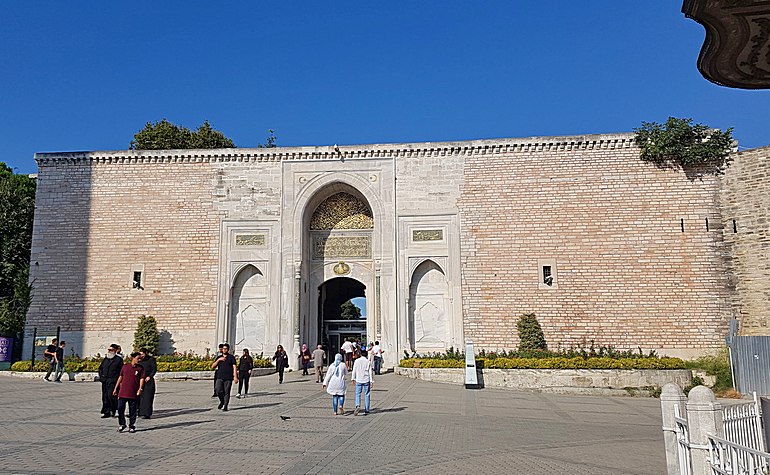
The first Court
- The first and outermost court of the palace is entered through the Bab-e-Humayun (Imperial Gate). The monumental fountain outside the gate is a precious example of 18th century Turkish art. Surrounding the first court are the palace bakery, mint, palace quarters and stores for firewood. On the terraces below were the vegetable gardens that supplied the palace. Çinili Köşk (The Tiled Lodge), the first building built in the Topkapi Palace complex, is also inside this court. Immediately upon entering the court, one sees the Hagia Eirene; a Byzantine church-turned-museum dating back to the 6th century.
- The Pavilions of Judges were located at the Ortakapi (the entrance to the palace proper, between the first and second courts), in accordance with the tradition that justice should be dispensed at the gate of the palace.
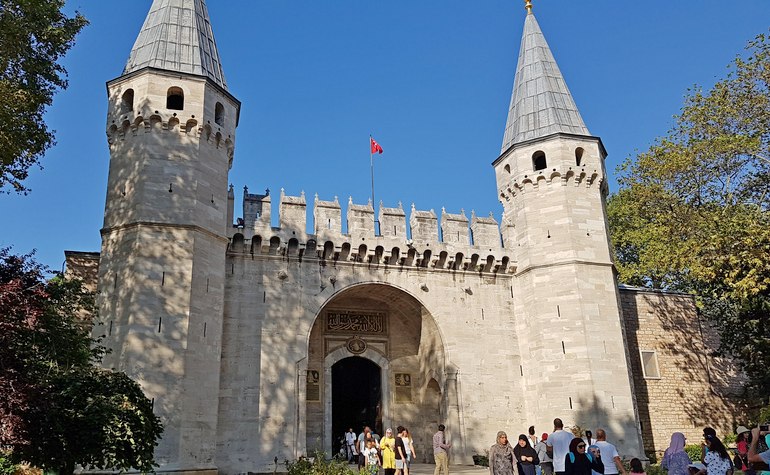
The Second Court
- The actual entrance to the Topkapi Palace Museum is a second gate called Bab-e-Salem (Gate of Salutation), through which one enters the second court that was reserved for the administrative functions of the state. To this court, only representatives of the Janissaries on paydays were admitted. Certain ceremonies were held here. Historians have noted that during such ceremonies which were attended by as many as five or even ten thousand people, absolute silence prevailed. For ceremonies the Sultan himself attended, the imperial throne was placed in front of the gate at the other end of the court and all those present stood facing him with their hands clasped in gesture of reverence. To the left of the court was the administrative section where the cabinet met.
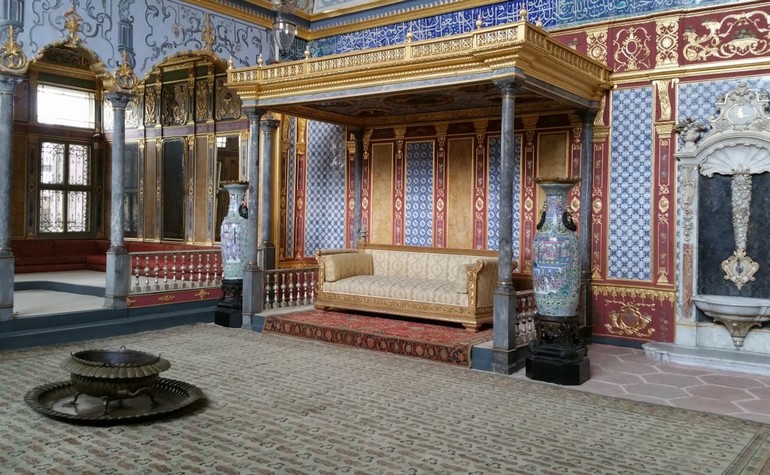
The Harem
- The Harem section of the Topkapi palace is made up of about 400 rooms scattered around small inner courts. Throughout the history of the palace, the Harem quarters underwent alterations continuously. It was the private quarters of the Sultan’s residence where his mother, brothers and sisters, wives children and other members of the family, as well as the servants and eunuchs lived. Throughout the centuries, many stories have evolved about these private quarters of the palace, entrance to which was strictly prohibited to outsiders.
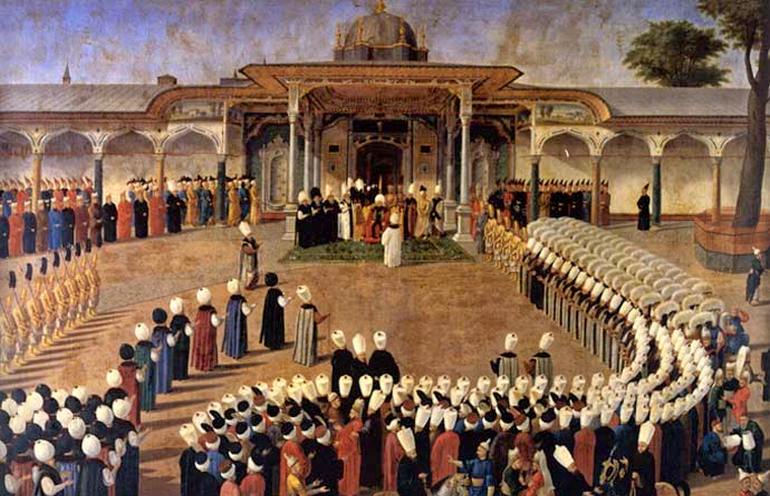
The Third Court
- The entrance to the third court of the Topkapi Palace, the private court of the Sultans, is through the gate called Bab-us-Saade (Gate of Felicity). Nobody without special permission could pass through that gate, and those with permission were admitted only in the company of white eunuchs.
- Surrounding this court were the Palace University, the throne chamber, the Sultan’s treasury and the sanctuary of Holy Islamic relics. The Sultan met with the ambassadors of foreign countries and the high officials of his government in the throne chamber that is located directly opposite the gate. The servants to the throne chamber were specially picked from deaf-mutes for security reasons.
- The Library of Ahmed III located at the centre of the court is a perfect example of the blend of the baroque style with Turkish architecture.
The Imperial Treasury
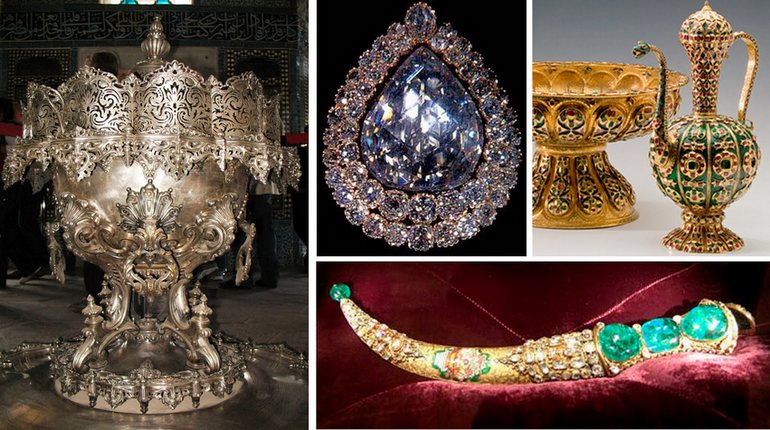
- The Treasury has the richest collection of Ottoman dynasty artwork, jewelry and heirlooms in the world. The pieces are housed in four rooms.
- The first contains the armours of Sultan Mustafa III, the ebony throne of Murad IV, several pearl embellished Qur’an covers and a music box from India containing a gold elephant.
- The second houses the famous Topkapı Dagger, made by Sultan Mahmud I for Nader Shah of Persia. In the middle of the room stands the walnut throne of Ahmed I.
- The third room exhibits two large, solid gold candleholders, each weighing 48 kg and mounted with 6,666 cut diamonds. They were a gifted by Sultan Abdülmecid I to the Ka’bah in the holy city of Makkah. They were brought back to Istanbul shortly before the Ottoman Empire lost control over Makkah.
- In the fourth room is the gold-plated throne of Sultan Mahmud I. This was an 18th century gift from the Persian ruler Nader Shah.
Chamber of the Sacred Relics
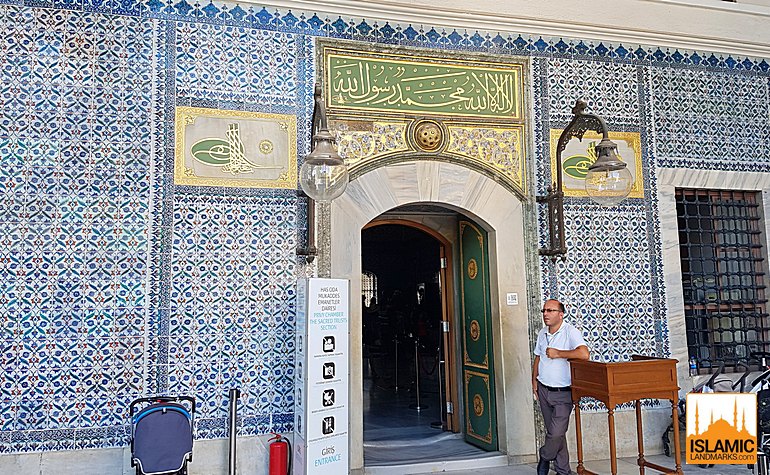
- Islamic holy relics were brought from Egypt by the Ottoman Empire early in the 16th century after they captured the land. They have since been kept inside a special sanctuary within the Privy Chamber in the Topkapi Palace.
- Relics include personal articles and garments of the Prophet Mohammed (ﷺ), one of the oldest manuscript copies of the Quran and the keys to the Ka’bah.
The Fourth Court
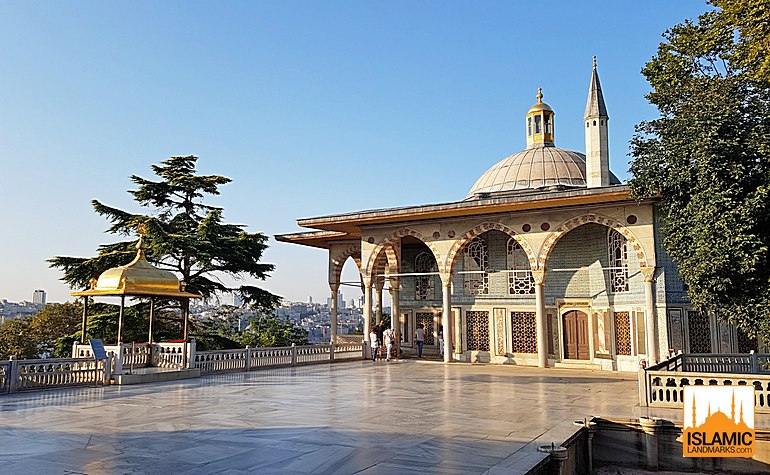
- Passageways connect the third court to the fourth where there are pavilions surrounded by gardens. The only wooden pavilions in the palace, the Baghdad and Revan Pavilions and the Mecidiye Pavilion, the last structure built in the Topkapi Palace complex, are found in this court. The terrace by the Baghdad Pavilion is the best place to enjoy the magnificent panorama of the Golden Horn and across it, the Galata Section of the city, as well as the unique skyline of Istanbul with its domes and minarets.
- At the edge of the terrace there is a gold plated bronze canopy, and next to it is the Circumcision Room which has tile panels decorating the wall by the entrance.
Conversion into a museum
- Following the end of the Ottoman Empire in 1923, The Topkapı Palace was transformed into a museum by a government decree dated April 3, 1924.
References: The rough guide to Istanbul, All of Istanbul – Ugur Ayyildiz, Wikipedia
- The original church was built between 527 and 536 CE to service the palace of Hormisdas, and was originally named after two Roman soldiers, Sergius and Bacchus. They were martyred for their faith and later became the patron saints of Christians in the Roman army. It was commissioned by Justinian shortly before the erection of Hagia Sophia and believed to have been designed by the same architects.
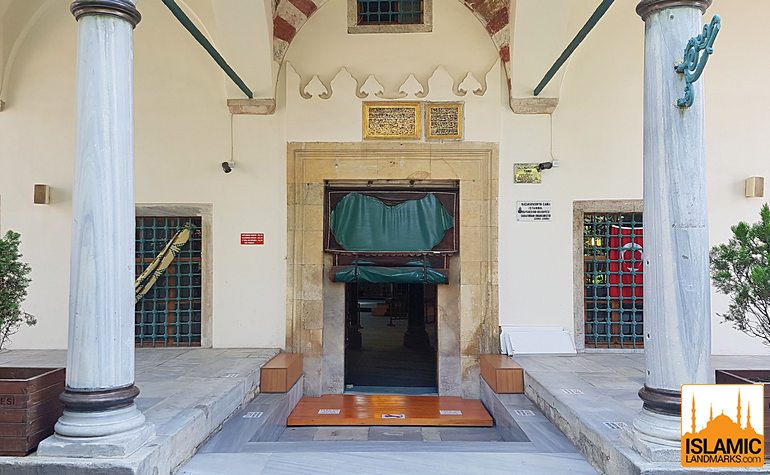
- The church remained untouched for sixty years after the conquest of Constantinople in 1453 CE. It was transformed into a mosque by Hüseyin Ağa who was the Chief Black Eunuch in the Topkapi Palace. The portico and madrasah (school) were added at this time.
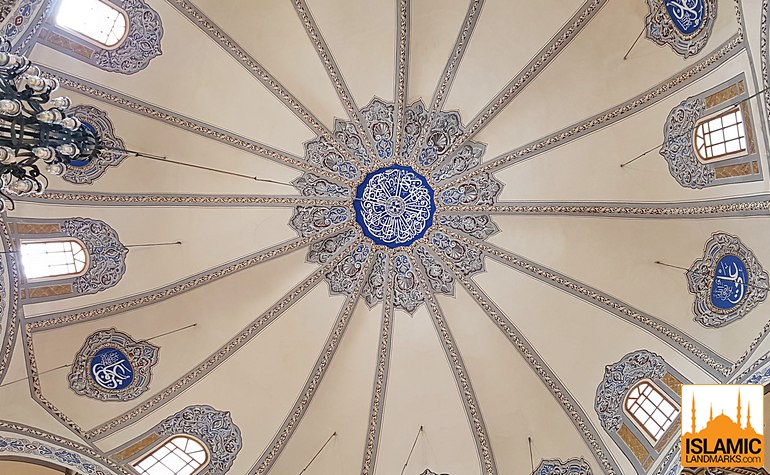
- Like most Byzantine churches of this era, is exterior is unassuming brick, and only once inside the proportions can be properly appreciated. It is basically an octagon with semicircular niches at its diagonals, inscribed in a rectangle. Nothing remains from the original church interior decoration, which was said to be covered in mosaics. During the conversion into a mosque, the windows and entranceway were changed, the floor level raised, and the interior walls plastered.
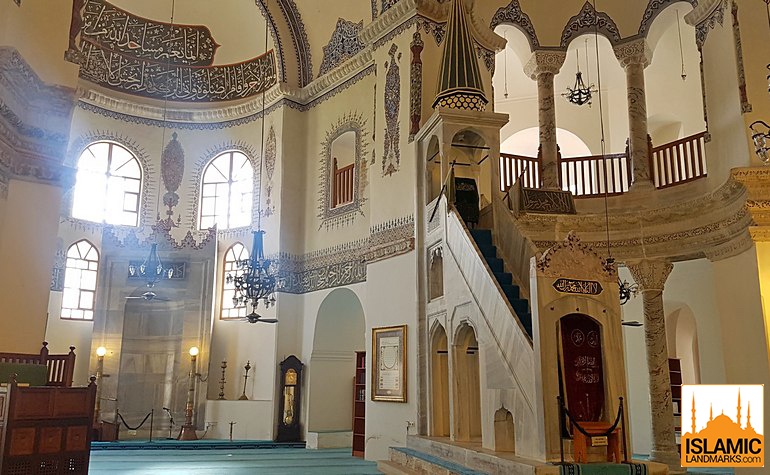
- As the first domed church, just preceding Hagia Sophia, it is regarded as one of the most important buildings in the development of Byzantine architecture in Istanbul.
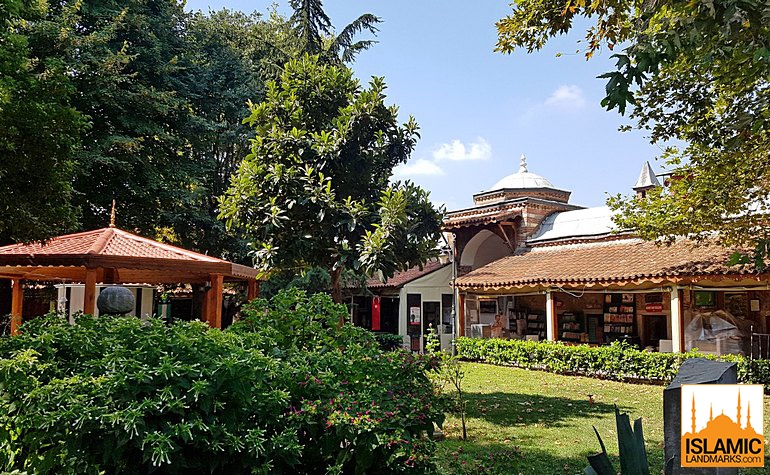
- Opposite the mosque entrance is where the madrasah was located. The courtyard now serves as a shady tea garden.
References: The Rough Guide to Istanbul, Wikipedia
]]>- The mosque was commissioned by its namesake, Sokullu Mehmet Pasa, who was the last grand vizier and son-in-law of Sulayman the Magnificent. It was his military expertise that later saved the Ottoman Empire from the worst effects of the dissolute rule of Selim the Sot.
- Completed in 1571/72 CE, this was one of the later buildings designed by the Ottoman Imperial architect Mimar Sinan.
Exterior
- The mosque complex is built on a steep slope. Sinan got around this problem by making the part of the complex in front of the mosque two stories high. The first level once contained small shops, while the upper level accommodated the madrassa and courtyard still standing today.
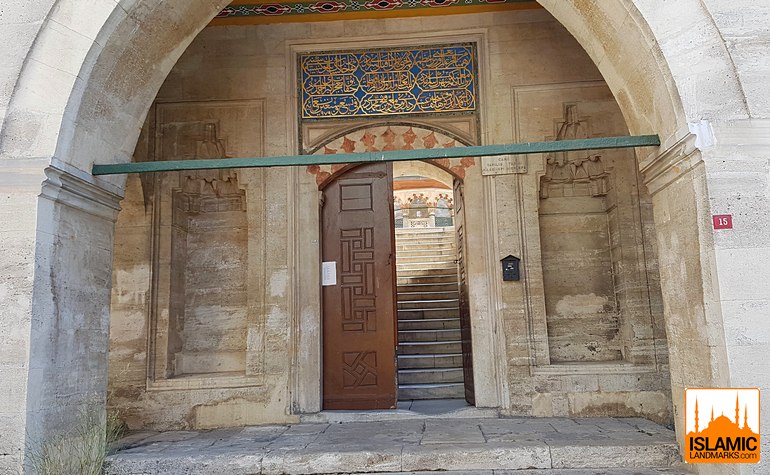
- The large mosque courtyard is surrounded on three sides by the rooms of the madressa, now occupied by a boys Quran school. In the centre of the courtyard is a twelve sided ablution fountain, topped by an onion shaped dome. There’s a single minaret in the northeast corner of the mosque.
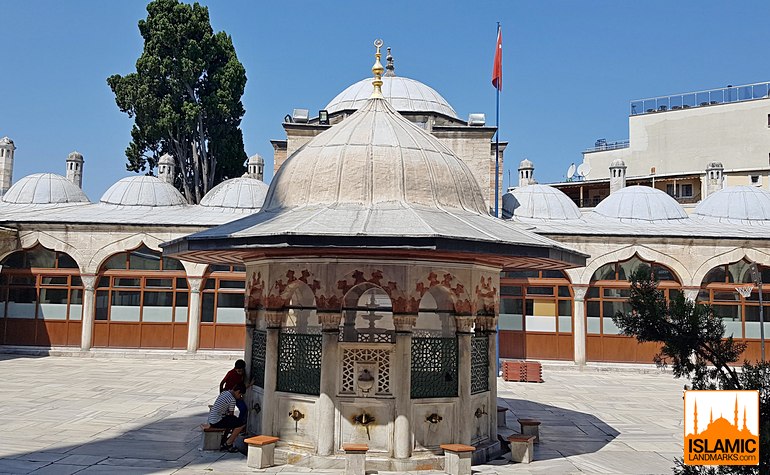
Interior
- The interior of the Sokollu Pasa mosque is distinguished by the height of its dome and the impressive display of Iznik tiles on its east wall. These are from the best period of Turkish ceramics; the white is pure, the green vivid and the red intense. Calligraphic inscriptions are set against a jungle of enormous carnations and tulips, and the designs and colours are echoed all around the mosque and in the conical cap of the mimbar, the tiling of which is unique in Istanbul.
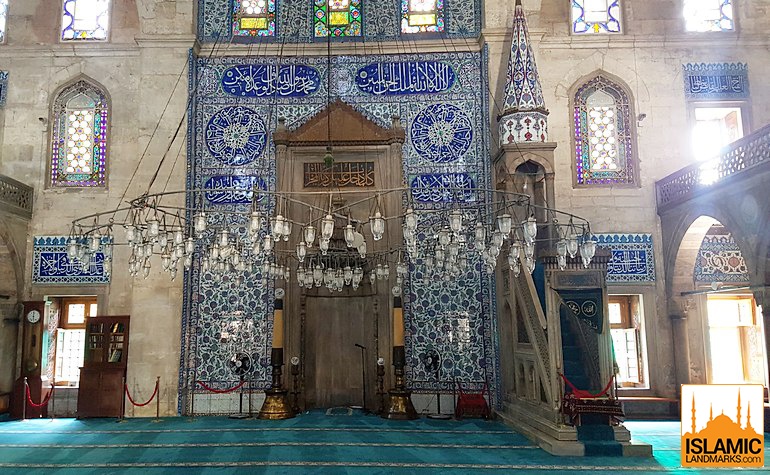
- While the stained-glass windows are copies, some of the original, extremely delicate paintwork can be seen in the northwest corner below the gallery and over the entrance. There are more than 90 windows in the interior.
Embedded pieces of the Hajar al-Aswad
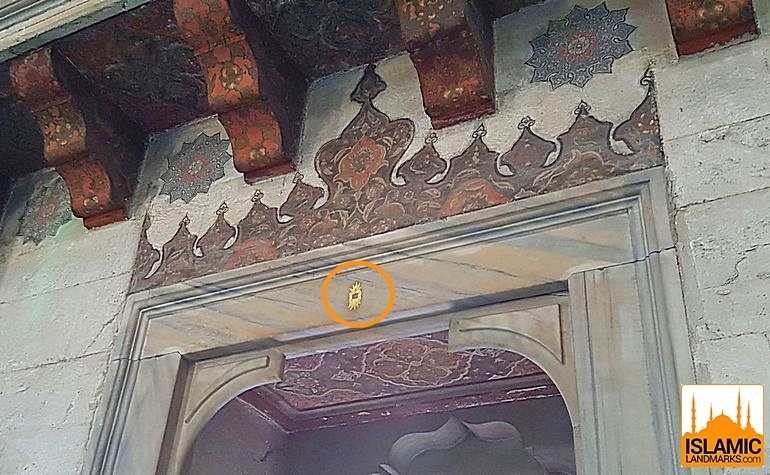
- Embedded in different parts of the mosque are said to be four pieces of the Hajar al-Aswad. These are pieces of the Black Stone attached to the Ka’bah in Makkah, the holiest place in Islam.
1. Above the mehrab
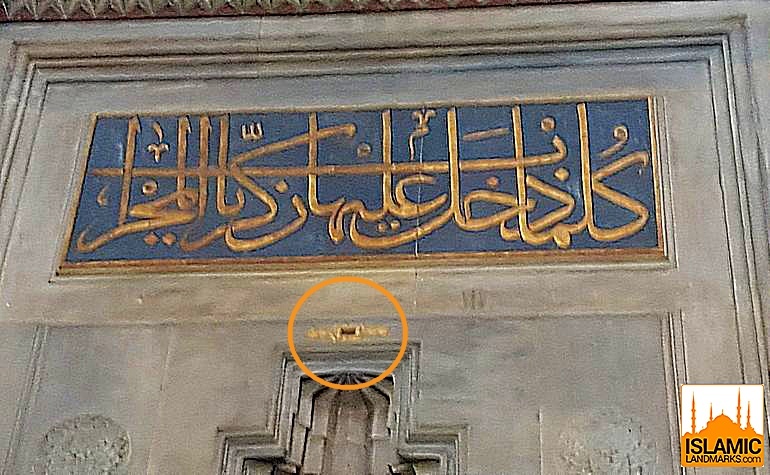
2. At the front of the mimbar
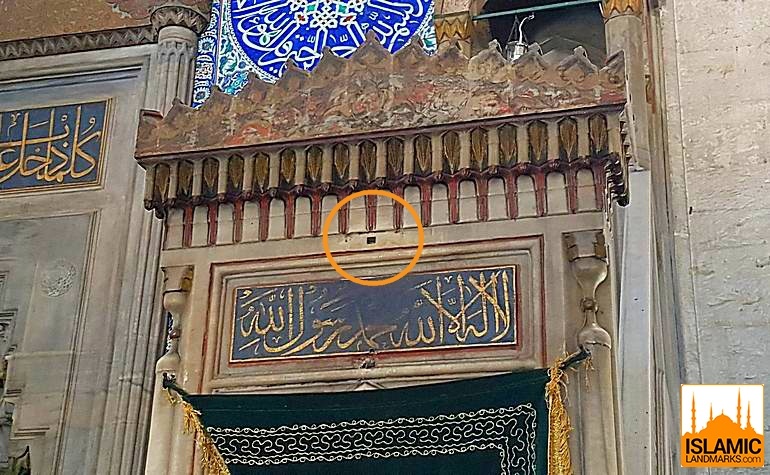
3. On top of the mimbar
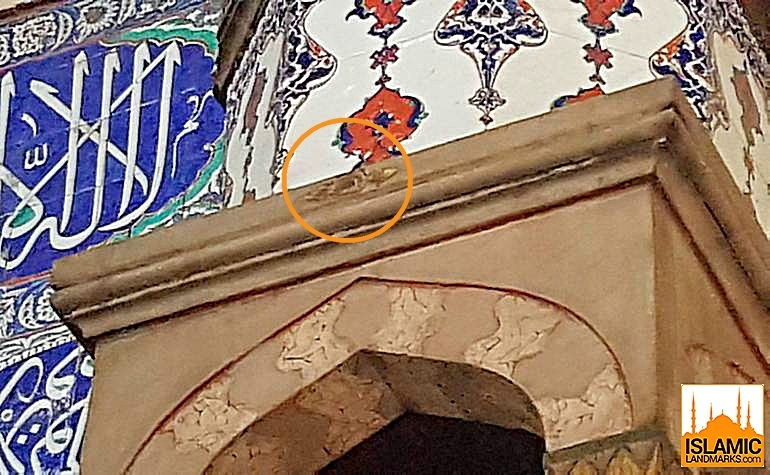
4. Above the inner entrance
References: The rough guide to Istanbul, Wikipedia
]]>- Mehmed was the eldest of Sulayman’s sons by his wife Hurrem, more commonly known as Roxelana. His exact cause of death is unknown, some are of the opinion he died from smallpox while others believe he was actually murdered.
- The Sehzade Mosque was the architect Sinan’s first major imperial commission. He completed it in 1548 CE and is regarded as the best work of his apprenticeship.
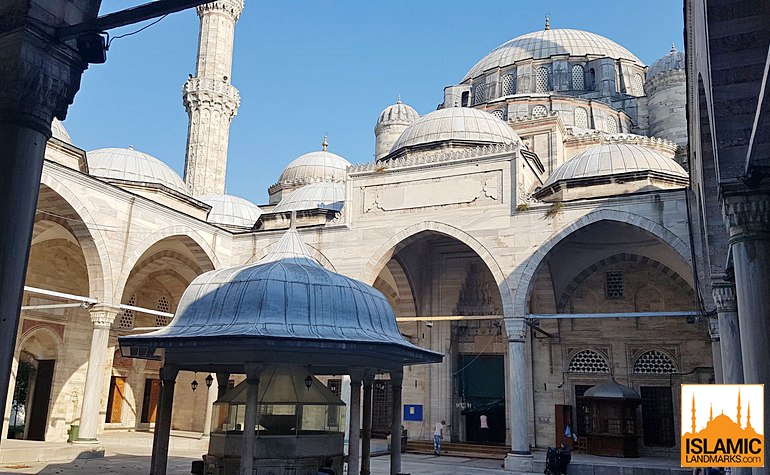
- The forecourt has an area equal to that of the mosque itself. The ablution space (known as a şadırvan) in the centre was donated from Sultan Murat IV.
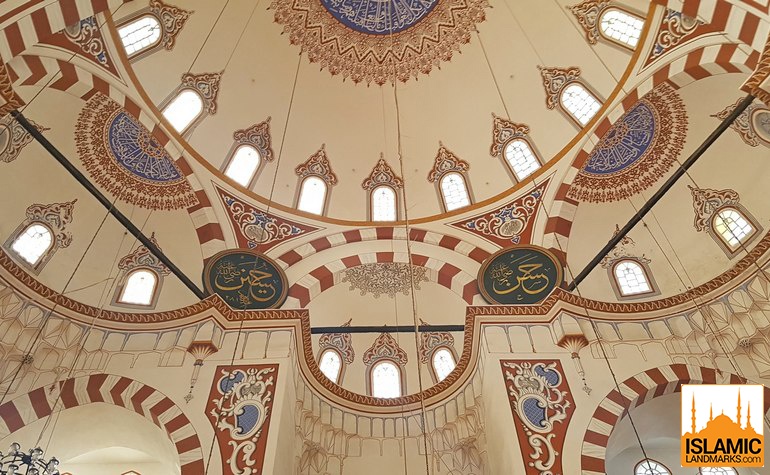
- The mosque interior is square based upon which rests a large central dome flanked by four half domes and numerous smaller domes. A bomb blast in central Istanbul in 2016 resulted in many of the windows being shattered.
- Apart from the mosque, the complex consists of the mausoleum of Prince Mehmed, two madrasahs, a public kitchen and a travellers inn (caravansarai). The prince’s only daughter Hümaşah and his youngest brother Cihangir are also buried here.
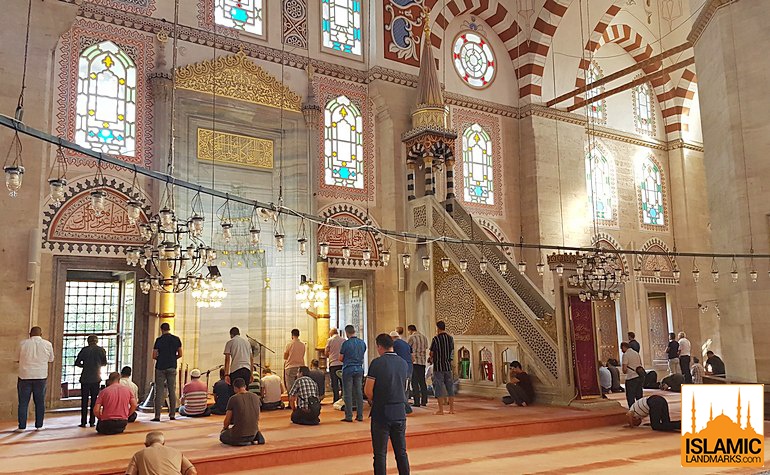
References: The Rough Guide to Istanbul, Wikipedia
]]>- The mosque was built on the site of one of the most important Christian buildings in the city at the time, the Church of the Holy Apostles. Up until 1028 CE, the church had been the burial place of all Byzantine emperors (including Constantine) but had been left in a poor condition. Construction of the mosque began ten years after the Conquest of Istanbul, in 1463 CE and lasted seven years.
- The original mosque complex included madressas (religious schools), library, hospital, travellers inn, and a public kitchen which served food to the poor. Much of the building material for the mosque complex came from the demolished church, such as some of the pillars in the courtyard. It was designed by the Greek architect Atik Sinan (Sinan the Elder).
- The original mosque was almost completely destroyed in an earthquake in 1766 CE. It was rebuilt in 1771 CE (to a different plan) by the architect Mimar Mehmet Tahir under the order of Sultan Mustapha III.
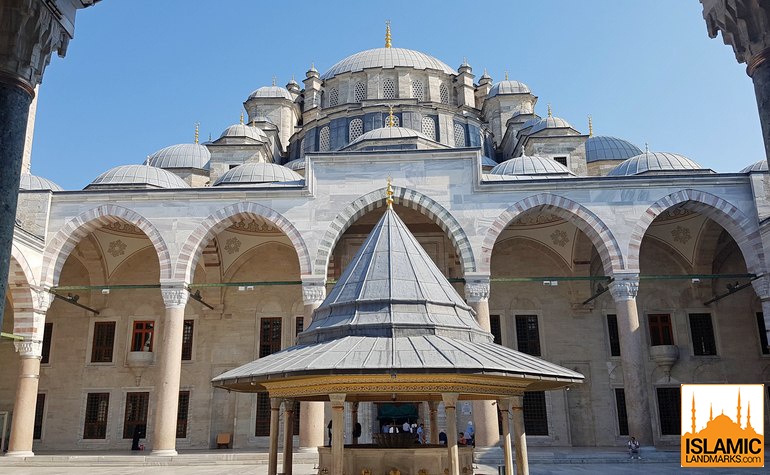
- The outer precinct of the mosque is quite large, having been built to accommodate the tents of a caravan. It’s enclosed by a wall and, to the north and south, by the madrassa (religious school) buildings, which accommodated the first Ottoman university. The inner courtyard of the mosque is regarded as one of the most beautiful in the city.
- The present mosque features a central 26 meter dome supported by four semi-domes on each axis which are all supported by four large marble columns. There are two slender minarets on either side.
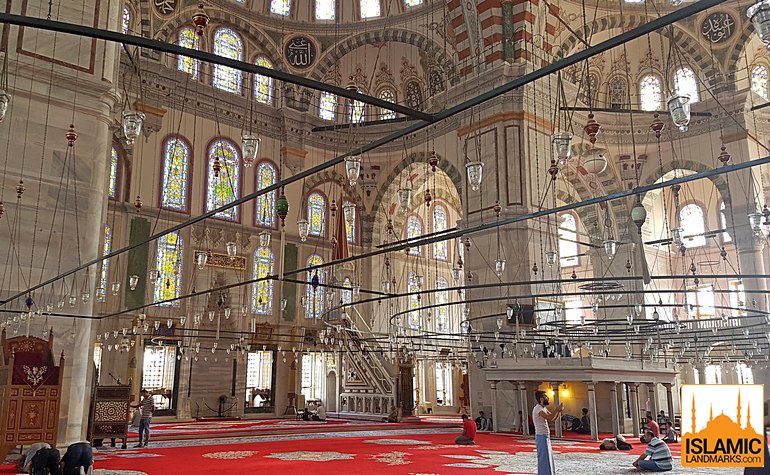
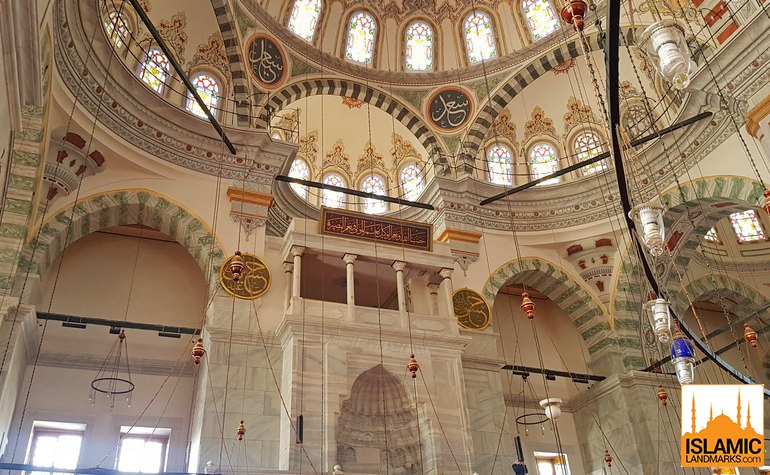
- The interior of the Fatih Mosque shows a distinct Baroque influence and has a more subdued look compared to many of the other major mosques in Istanbul.
- The tombs of Mehmet II and of one of his wives, Gulbahar, are situated to the east of the mosque. The originals were destroyed in the earthquake.
- The largest street market in Istanbul takes place around the Fatih Mosque every Wednesday, selling food, clothing and household goods.
References: The rough guide to Istanbul, Wikipedia, Istanbultourstudio.com
]]>History
- Historical records mention that there was previously a small mosque on the grounds. The area was purchased and existing buildings knocked down for the new complex. The architects were Mustafa Ağa and a non-Muslim Greek master called Simeon Kalfa.
- Construction of the Nuruosmaniye Mosque was commissioned by Mahmud I in 1749. However, his sudden death meant that his brother Osman III would take on the task of completing the complex. The opening ceremony was in December 1755, seven years after the beginning of the project.
- It was named Nuruosmaniye Mosque, meaning ‘The light of Osman’, after Osman III, but also because of its many windows which lets a lot of light inside the mosque’s hall.
Exterior
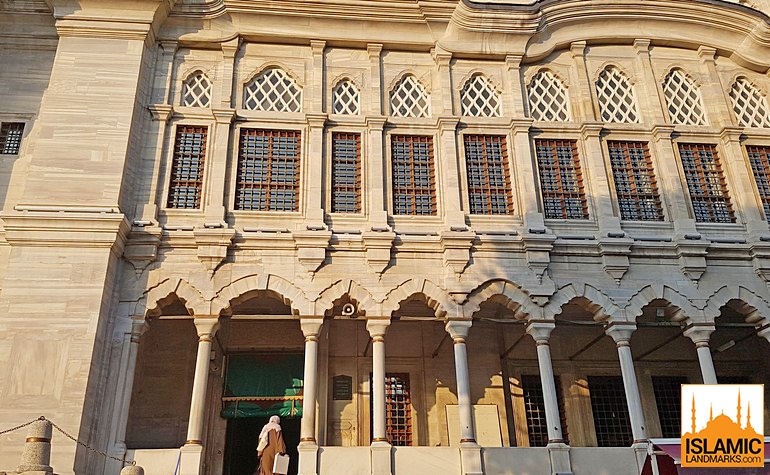
- The mosque was built on a slope and there is a vast empty area under the courtyard, probably intended as a market but was never used.
- The Courtyard of the mosque is in an innovative shape of horseshoe which was not seen in traditional Turkish mosques. It does not contain a fountain inside and the ablution areas are on the outer wall of the building. These imply that the courtyard had a more decorative purpose than practical.
- The madressa and kitchen/dining hall lie in the outer courtyard, the Baroque style seen with less emphasis here. The school follows a square plan with 12 student rooms and a lecture room. The trust deed of the madressa included a condition to teach calligraphy. This duty was performed by some famous calligraphers in a special room reserved for this use.
- Between the library and the Royal Pavilion there is a square shaped tomb covered with a dome. It was mainly built as a grave for Shehsuvar Sultan, mother of Osman III. With time there were also other members of the royal family buried here. The complex also houses a large manuscript library.
Interior
- The mihrab (prayer niche) is a cavity in the marble wall. On top of the mihrab is a verse of the Quran talking about the Prophet Zakariyyah (عليه السلام), and Maryam (Mary), the mother of Prophet Isa (عليه السلام): “Whenever Zakariyyah went in to see her in her sanctuary, he found her supplied with provisions.“. [3:37]
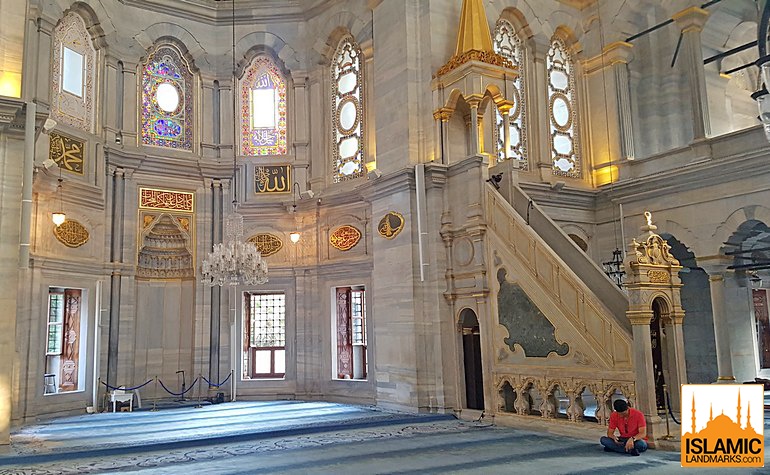
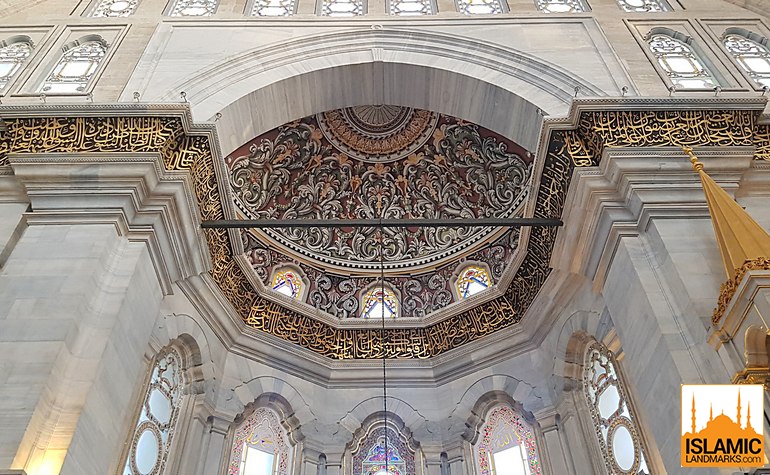
- The dome has a diameter of 26 metres and is surrounded by 32 windows. On the dome the verse from the Quran says:
“Allah is the light of the heavens and the earth. The example of His light is like a niche within which is a lamp, the lamp is within glass, the glass as if it were a pearly [white] star lit from [the oil of] a blessed olive tree, neither of the east nor of the west, whose oil would almost glow even if untouched by fire. Light upon light. Allah guide to His light whom he wills. Allah presents examples of the people, and Allah is knowing of all things.” [35:24] - The Ottoman Baroque style is quite evident in the interior decoration.
References: The rough guide to Istanbul, Wikipedia, Nuruosmaniye mosque publications
]]>- The mosque is built on a terrace on the crest of one of Istanbul’s seven hills, in the neighbourbood of Çukurbostan. The views from the northeast of the complex, looking out over the Golden Horn, are magnificent.
- The mosque architect was called Alaüddin. The famous Mimar Sinan designed one of the tombs in the garden.
- It is more basic than the other imperial mosques with just a single large dome on top of a square room with a walled courtyard in front of it. The avlu ( courtyard) in front of the prayer hall is quite beautiful, with a central fountain surrounded by tall cypress trees. The floor of the portico is paved with a floral design and the columns made from a variety of marbles and granites.

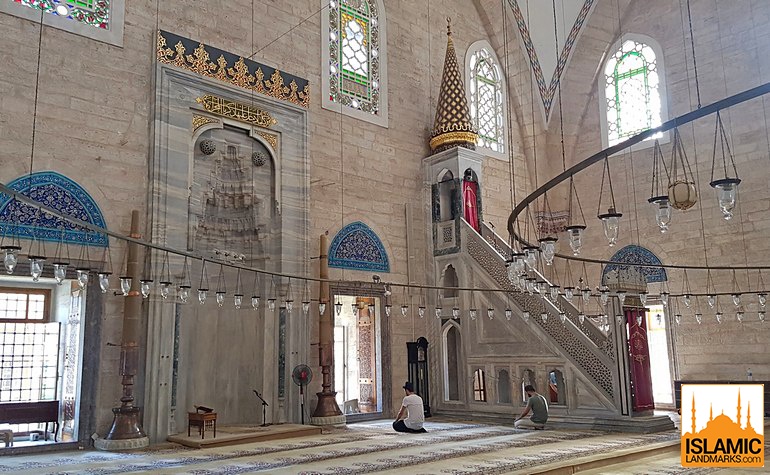
- The interior of the mosque is striking in its simplicity, the shallower-than-usual dome emphasizing the sense of space. Light floods in through a series of windows in the arches and from the twenty-four stained-glass windows piercing the dome. The interior is decorated with beautiful blue and white iznik tiles which fill the lunettes above the lower windows. Gilt work highlight the beautiful geometry of the stalactite carving above the mihrab.
- Beside the mosque lies the tomb of Selim I, also known as Selim the Grim. It’s lost it’s original interior decoration but retains two beautiful tiled panels on either side of the door. Other tombs in the complex include that of four of Sulayman’s children, probably the work of Sinan.
References: The rough guide to Istanbul, Wikipedia
]]>