From the bustling markets of Damascus to the ancient alleys of Aleppo, these mosques stand as architectural marvels, reflecting the nation’s intricate past and enduring devotion.
Each mosque tells a unique story, carrying the whispers of worshippers and the echoes of history. Read this guide on Mosques in Syria and as we explore ten remarkable mosques that have etched their beauty into Syria’s tapestry.
How Many Mosques Are There in Syria?
Syria is a land steeped in religious heritage, with mosques serving as essential hubs for communal worship and cultural gatherings. While the precise number may vary due to ongoing developments, it’s estimated that there are thousands of mosques across the country.
These mosques, ranging from small neighborhood sanctuaries to grand historical complexes, embody the rich spiritual fabric of Syria and underscore its role as a center of Islamic civilization.
Each mosque contributes to the vibrant mosaic of Syrian life, bridging the past with the present through its architectural and cultural significance.
How Many Muslims Are in Syria?
Syria, a nation at the crossroads of history and culture, has been home to a predominantly Muslim population for centuries.
As of the latest available data, approximately 87% of Syrians identify as Muslims. This religious composition has significantly influenced the country’s customs, traditions, and societal norms.
Umayyad Mosque in Aleppo (the Great Mosque of Damascus)
The Umayyad Mosque in Aleppo is an luminous gems within Syria’s architectural crown, each encapsulating its own unique narrative.
Umayyad Mosque, Aleppo: Standing proudly in Aleppo, the Umayyad Mosque, also known as the Great Mosque of Damascus, is a remarkable synthesis of architectural styles spanning centuries.
Its towering minaret, an emblem of medieval Islamic architecture, graces the city’s skyline. Within its sacred confines lies a rich history that mirrors the city’s own evolution, from the Umayyad era to Ottoman influences.
The mosque has weathered the ravages of time and conflict, remaining a beacon of resilience and a testament to Aleppo’s enduring spirit.
Through it’s architectural elegance and historical resonance, encapsulate the essence of Syria’s cultural and spiritual tapestry, offering a glimpse into the profound connections between faith, heritage, and identity.
Largest Mosque in Syria
The Umayyad Mosque in Damascus claims the title of the largest mosque in Syria. Its grandeur and historical significance have made it a symbol of Islamic architecture and cultural heritage.
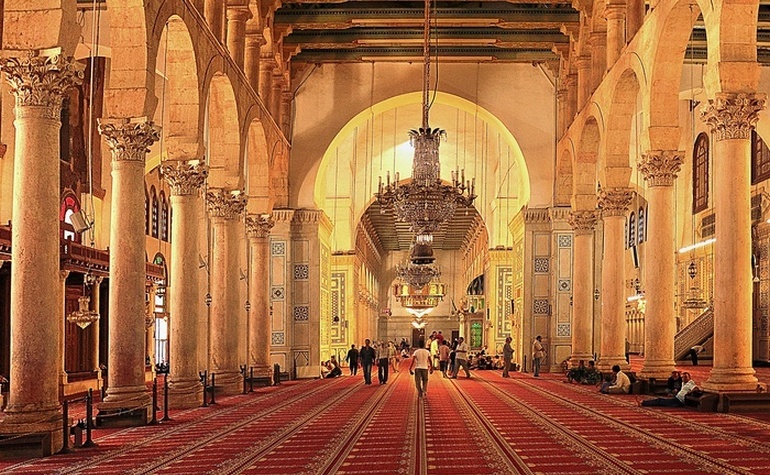
Interior of Umayyad Mosque
Step inside the Umayyad Mosque to witness a breathtaking blend of intricate design, ancient calligraphy, and serene ambiance—a sacred space that echoes centuries of devotion.
Minaret of Umayyad Mosque
The mosque’s towering minaret punctuates the skyline, a marvel of architecture dating back to 727 CE. Its elegant form and historical resonance continue to inspire.
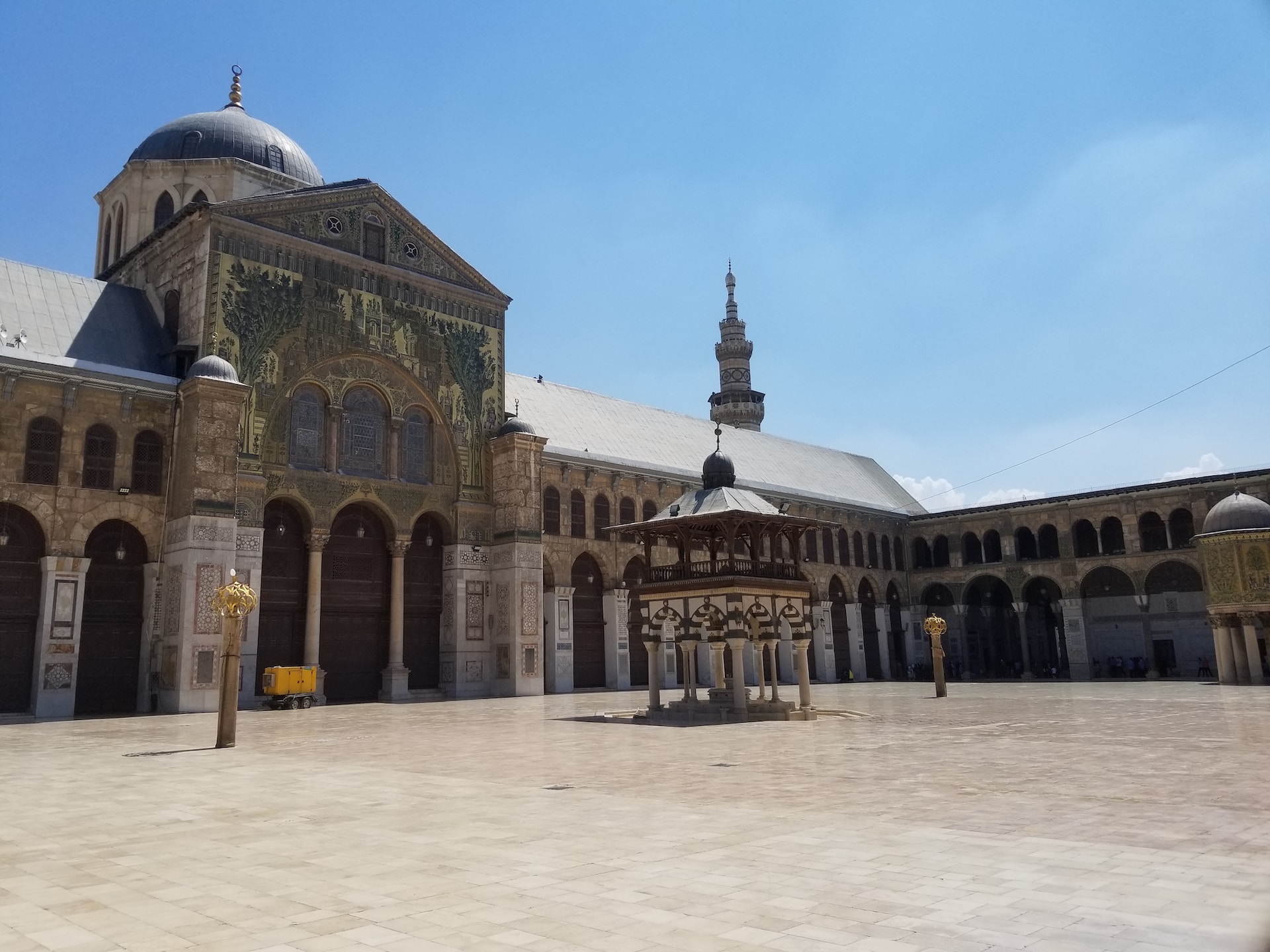
Mosaics of Umayyad Mosque
Adorned with vibrant mosaics, the Umayyad Mosque narrates stories of faith and artistry. These meticulously crafted designs reflect a rich cultural legacy and aesthetic prowess.
Sayyidah Zaynab Mosque
The Sayyidah Zaynab Mosque, nestled in the heart of Damascus, is a revered site for Shiite Muslims. Its history traces back to the Umayyad period, gaining prominence as a place of spiritual solace.
The mosque’s architecture marries traditional and contemporary elements, with its iconic blue dome catching the eye.
- Address: Sayyidah Zaynab, Damascus.
- Capacity: Accommodates thousands of worshippers.
- It remains a mosque, embodying the essence of Shiite devotion.
- Opening hours vary with prayer times.
- No entry fee is required, as it’s open to all.
- Images of the mosque depict its majesty, attracting visitors worldwide.
- The mosque’s origins date back to the Umayyad era, solidifying its historical significance in the tapestry of Damascus.
Sayyidah Ruqayya Mosque
The Sayyidah Ruqayya Mosque, an emblem of reverence for Shiite Muslims, resides in Damascus. With origins dating back centuries, it holds deep spiritual importance. Its intricate architecture and serene ambiance invite reflection.
- Location: Sayyidah Ruqayya, Damascus.
- Capacity: A sanctuary for numerous worshippers.
- It continues to serve as a mosque, cherishing its Shiite heritage.
- Visiting hours are subject to prayer times.
- No admission fee is enforced.
- Images showcase the mosque’s grandeur.
- The mosque stands as a testament to Syria’s rich religious history.
Al-Omari Mosque
The Al-Omari Mosque, situated in Daraa, stands as a tribute to Islam’s legacy. Steeped in history, it has witnessed epochs of change. Its architectural brilliance reflects a blend of styles.
- Address: Al-Omari Mosque, Daraa.
- A mosque since its inception, it retains its sacred purpose.
- Visiting hours are tailored around prayer schedules.
- Entry is free of charge.
- Images capture the mosque’s timeless allure.
- The mosque’s foundation signifies the roots of faith and community.
Sulaymaniyya Takiyya Mosque
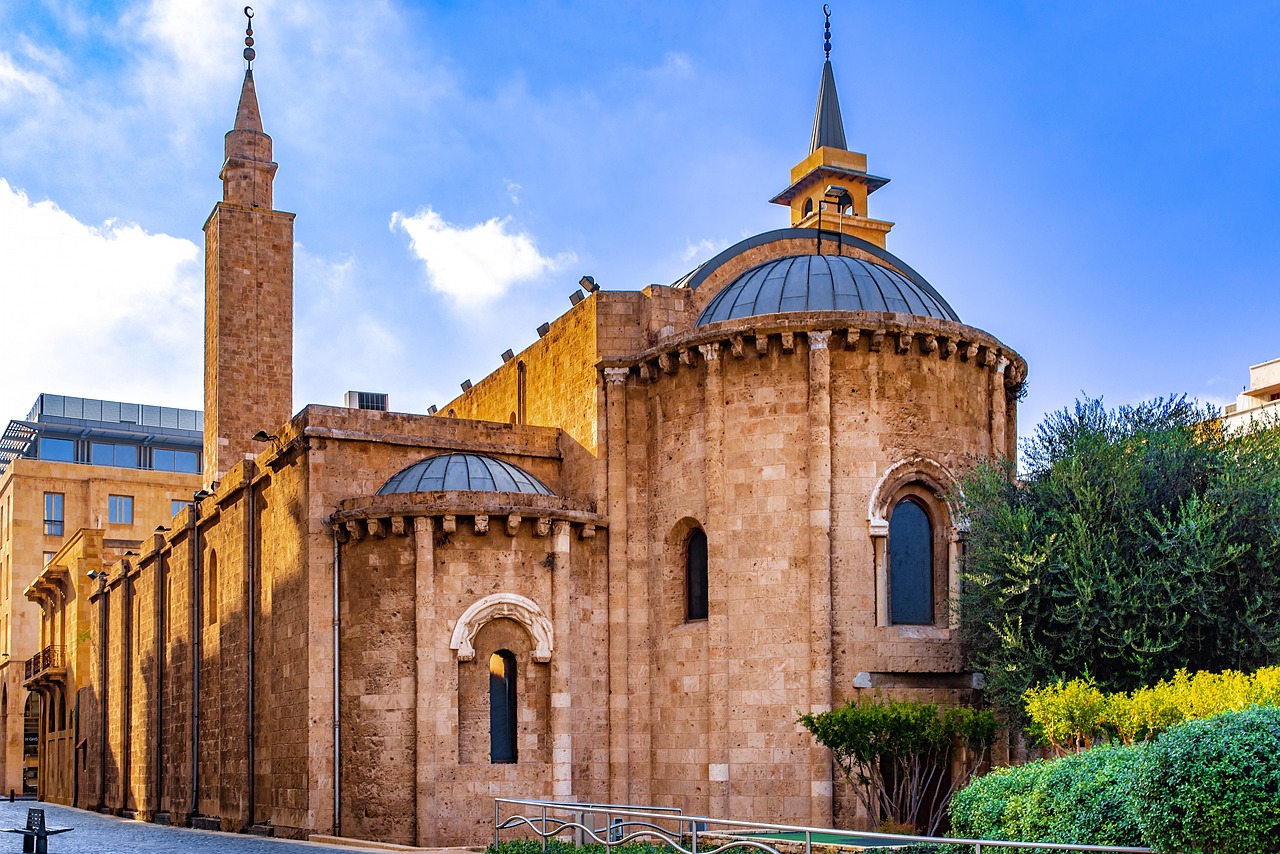
The Sulaymaniyya Takiyya Mosque, located in Aleppo, is a testament to Ottoman architectural ingenuity. Built during the rule of Sultan Suleiman the Magnificent, it combines mosque and takiyya (Sufi lodge) elements. Its intricate façade and meticulous tilework mirror Ottoman aesthetics.
- Address: Sulaymaniyya Takiyya, Aleppo.
- Capacity: Welcomes a sizable congregation.
- It remains a mosque, embodying Aleppo’s spiritual diversity.
- Visiting hours vary.
- No entry fee is imposed, making it accessible to all.
- Pictures capture the mosque’s captivating details.
- Since its completion in 1557, the mosque has been a beacon of faith and artistic brilliance.
Nabi Habeel Mosque
The Nabi Habeel Mosque, found in Aleppo, holds religious significance for Muslims and Christians alike.
Tradition attributes it to Abel’s burial site. Its simple yet powerful design reflects its historical depth.
- Location: Nabi Habeel, Aleppo.
- The mosque preserves its original function, unifying diverse communities.
- Visiting hours align with prayers.
- No entry fee is mandated, promoting inclusivity.
- Images capture the mosque’s serene atmosphere.
- With origins rooted in shared reverence, the mosque bridges religious divides.
Sinan Pasha Mosque
The Sinan Pasha Mosque, situated in Damascus, stands as a testament to Ottoman elegance.
Designed by renowned architect Mimar Sinan, it showcases intricate details and harmonious proportions.
- Address: Sinan Pasha, Damascus.
- Capacity: Provides a space for worshippers to gather.
- A mosque since its inception, it commemorates Ottoman rule.
- Visiting hours correspond to prayer times.
- Entry is free, fostering accessibility.
- Images exhibit the mosque’s architectural finesse.
- Constructed in 1590, the mosque is an enduring emblem of Ottoman influence.
Aqsab Mosque
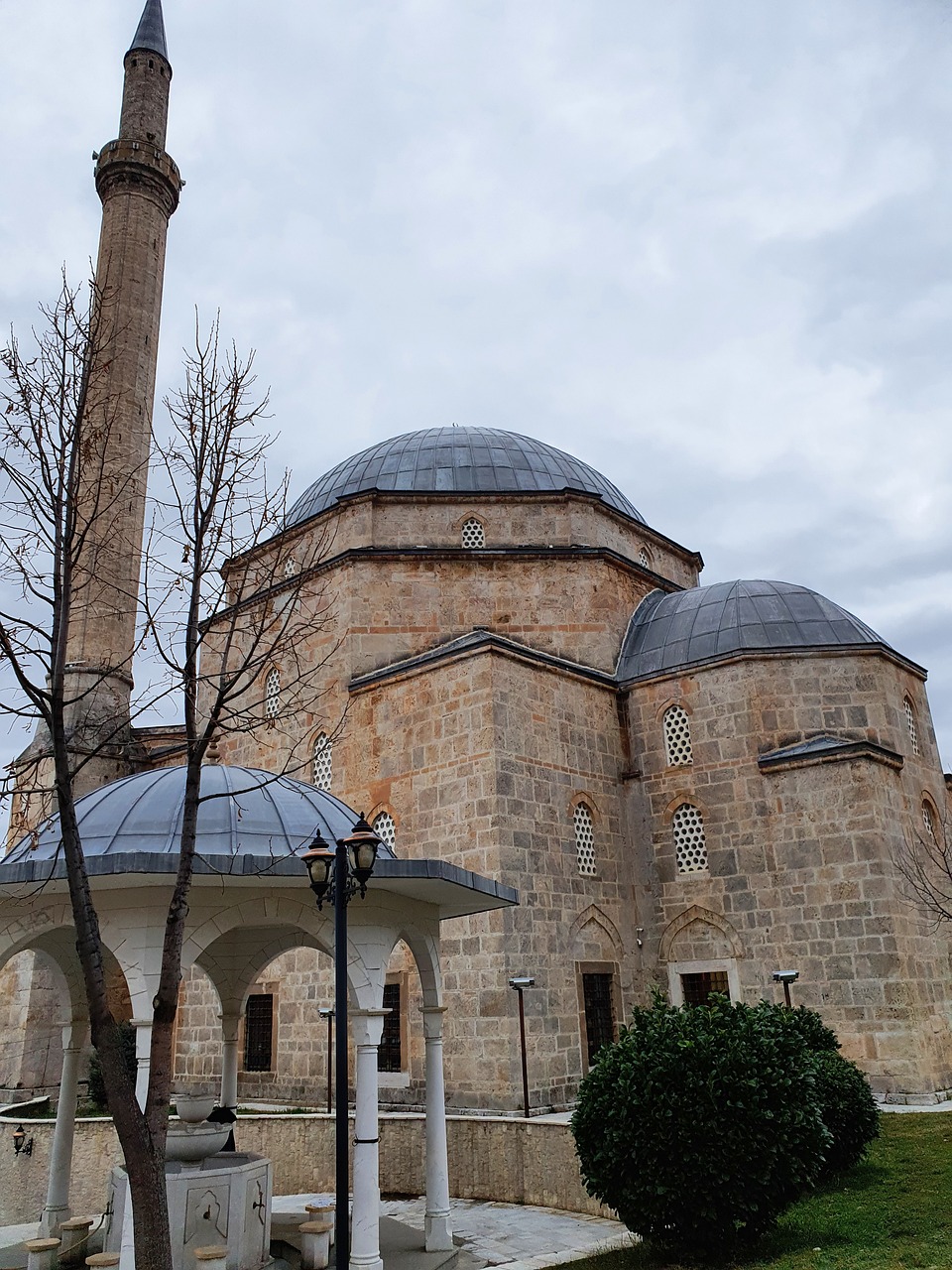
The Aqsab Mosque, located in Damascus, is a tranquil haven reflecting early Islamic architecture.
Built during the Umayyad era, its historical significance is palpable.
- Location: Aqsab Mosque, Damascus.
- Capacity: Welcomes worshippers and history enthusiasts alike.
- It remains a mosque, echoing the Umayyad legacy.
- Visiting hours coincide with prayers.
- No entry fee is enforced.
- Images showcase the mosque’s timeless charm.
- Since its establishment in the 8th century, the mosque whispers tales of an illustrious past.
Nur al-Din Mosque
The Nur al-Din Mosque, a gem of Aleppo’s skyline, honors the legacy of Nur al-Din Zangi, a medieval ruler.
Its construction in the 12th century marked a shift towards intricate architectural details.
- Address: Nur al-Din Mosque, Aleppo.
- Capacity: Provides a sacred space for worshippers.
- It stands as a mosque, embodying historical continuity.
- Visiting hours align with prayers.
- No entry fee is charged.
- Images capture the mosque’s eternal beauty.
- Since its establishment, the mosque has borne witness to Aleppo’s evolution, reflecting a blend of faith and history.
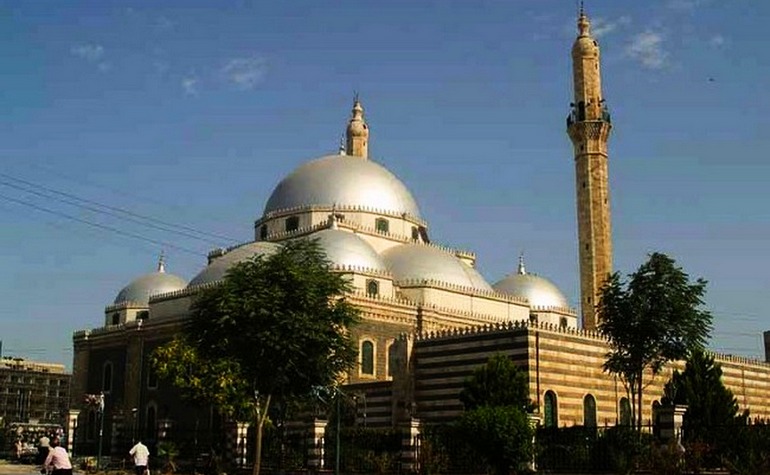
Khalid Ibn Al-Walid Mosque
The Khalid Ibn Al-Walid Mosque in Homs pays homage to the celebrated Muslim commander Khalid Ibn Al-Walid.
Its contemporary design embraces modern elements while preserving a deep reverence for his legacy.
- Location: Khalid Ibn Al-Walid Mosque, Homs.
- Capacity: Offers a haven for worshippers.
- It continues to function as a mosque, commemorating his achievements.
- Visiting hours accommodate daily prayers.
- No entrance fee is enforced.
- Pictures highlight the mosque’s distinctive design.
- This mosque, established in the 20th century, stands as a tribute to a revered military strategist.
Other Islamic Landmarks in Syria
- Minaret of Prophet Isa (AS): Rising from the enchanting landscapes, the Minaret of Prophet Isa (AS) holds an air of mystery. Linked to the prophet Jesus (AS), its presence speaks to the shared reverence between Islam and Christianity, embodying interfaith connections.
- Shrine of Yahya (AS): The Shrine of Yahya (AS), also known as the Shrine of John the Baptist, stands as a sacred site echoing stories of devotion. This revered location is a testament to the respect Islamic tradition holds for Yahya (AS) and his role in connecting faiths.
- Tomb of Bilal (AS): The Tomb of Bilal (AS), a companion of Prophet Muhammad (peace be upon him), is a cornerstone of Syria’s Islamic heritage. It serves as a tribute to Bilal’s unwavering commitment to the faith, symbolizing the values of equality and justice within Islam.
Summary – Mosques in Syria
We hope you enjoyed reading our guide on ‘Mosques in Syria’. To sum it up, Syria’s mosques embody a fusion of faith, history, and architecture.
From the grandeur of the Umayyad Mosque in Damascus to the intimate sanctuaries of Aleppo, these places of worship narrate tales of devotion and resilience.
Each minaret, mosaic, and dome carries the legacy of a nation woven with threads of faith.
]]>This somber chapter unearths a tale of unparalleled devastation, recounting a time when the bubonic plague wreaked havoc upon the companions of Amwas, leaving a trail of unimaginable death and sorrow in Syria.
This event would go down as one of the most catastrophic outbreaks of the bubonic plague in history, claiming a staggering toll of 25,000 lives. Read on to learn more about this tragedy that forever left its mark on the pages of time, reminding us of the cost of unchecked disease and the resilience of those who survived its deadly grip.
Bubonic Plague in Early Islamic History
As the Muslim world began to take shape under the leadership of the Prophet Muhammad (peace be upon him), a silent menace silently infiltrated the landscape.
The bubonic plague was a potent force. With its ability to thrive in unsanitary conditions, the plague found fertile ground in the crowded urban centers of the time. This devastating epidemic is particularly significant in Islamic history due to its impact on the early Muslim community.
What Was the Plague of Amwas?
The Plague of Amwas, also known as the Amwas Epidemic, was a deadly outbreak of the bubonic plague that occurred in the 7th century in the region of Amwas, located in present-day Palestine. The bubonic plague, caused by the bacterium Yersinia pestis, is transmitted through fleas that infest rodents like rats.
Fleas that carry the bacteria can also bite humans, transmitting the disease to them.
The impact of the Plague of Amwas was particularly profound due to the loss of a significant number of companions of the Prophet Muhammad (peace be upon him). These companions were revered individuals who had been close to the Prophet (PBUH) and played pivotal roles in the early Islamic community. Their loss had a lasting impact on the social and religious fabric of the Muslim community.
The Plague of Amwas serves as a reminder of the unpredictability of disease and its ability to shape the course of history. It also highlights the resilience of communities in the face of adversity and their ability to come together to support one another during times of crisis.

Origins of the Amwas Plague
The Plague of Amwas emerged in Syria during the early Islamic expansion when trade routes and urban centers facilitated the rapid spread of diseases. It is believed that the outbreak originated from these trade networks and rapidly swept through the region, leaving devastation in its wake.
How Did the Muslims Respond to the Outbreak?
In response to the Plague of Amwas in Syria, the Muslim community exhibited a range of reactions that reflected both the challenges of the epidemic and the teachings of Islam. The response was a complex interplay of religious beliefs, practical measures, and communal solidarity. Here are some key aspects of how Muslims responded to the outbreak:
- Faith and Resilience: Islamic teachings emphasise the importance of patience, faith, and submission to the will of Allah SWT during times of trial. Many Muslims turned to their faith for solace and strength in the face of the epidemic. They viewed the outbreak as a test from God.
- Care for the Sick: Despite the highly contagious nature of the plague, Muslims demonstrated remarkable compassion by caring for the sick. This act of selflessness was rooted in the teachings of Prophet Muhammad (peace be upon him), who emphasised the importance of caring for the sick and vulnerable.
- Quarantine and Isolation: Historical records suggest that during the Plague of Amwas, some Muslims implemented practices akin to quarantine. This was an early form of public health intervention aimed at reducing transmission.
- Reliance on Natural Remedies: The Islamic tradition values using natural remedies and encourages seeking medical treatment. During the outbreak, Muslims sought various herbal and natural remedies to alleviate the symptoms of the plague.
- Emphasis on Hygiene: Islamic teachings strongly emphasise personal hygiene and cleanliness. Maintaining cleanliness was seen as both a religious duty and a practical measure to reduce the risk of infection.
- Solidarity and Support: The Plague of Amwas united the Muslim community in a spirit of solidarity. Individuals supported one another emotionally and materially, recognising the need for collective action during times of crisis.
How Many People Died During the Amwas Plague?
The historical records vary, but it is estimated that the Plague of Amwas, a devastating outbreak of the bubonic plague that occurred in the 7th century, resulted in the deaths of approximately 25,000 people. This toll includes members of the Muslim community and others affected by the epidemic.
The numbers serve as a stark reminder of the scale of devastation that infectious diseases can bring upon plague stricken communities during times of crisis.
How Many Companions Died During the Amwas Plague?
Around 25,000 companions of the Prophet Muhammad (peace be upon him) died during the Plague of Amwas in Syria. It is widely acknowledged that a significant number of companions did fall victim to the epidemic.
It is evident from history sourcebooks that the deaths of companions during the outbreak contributed to the collective grief experienced by the early Muslim community. Their loss, along with the loss of other community members, serves as a reminder of the indiscriminate nature of infectious diseases and the challenges societies have faced throughout history in confronting such epidemics.
Plague Symptoms
The symptoms of the bubonic plague, including the Plague of Amwas, can be distressing and debilitating. The disease manifests in various stages, each marked by distinct symptoms that reflect the progression of the infection.
Initial Symptoms
The incubation period for the bubonic plague typically ranges from 2 to 6 days after exposure to the bacterium Yersinia pestis. During this time, an individual may not exhibit any noticeable symptoms. The onset of the disease is often sudden and characterised by a rapid deterioration of health. The initial symptoms may include:
- High Fever: The individual experiences a sudden and severe fever, often reaching temperatures of 101 to 105 degrees Fahrenheit (38.3 to 40.5 degrees Celsius).
- Chills: Accompanying the fever, the person may experience chills and shivering.
- Malaise: A general feeling of malaise, weakness, and fatigue sets in.
Development of Buboes
One of the hallmark features of bubonic plague is the appearance of painful, swollen lymph nodes known as buboes. These buboes often develop in the areas closest to the site of the bacterial entry. Symptoms at this stage may include:
- Painful Swelling: Buboes become swollen, inflamed, and exquisitely tender to the touch.
- Redness and Warmth: The skin over the buboes may become red and warm due to inflammation.
- Boil Formation: Buboes can develop into large, pus-filled boils that cause intense discomfort.
If left untreated, the infection can progress, which occurs when the bacteria enter the bloodstream. At this point, symptoms may worsen and include:
- Dissemination of Infection: The infection spreads throughout the body via the bloodstream, leading to a range of symptoms.
- Severe Weakness: Patients may experience profound weakness, fatigue, and dizziness.
- Nausea and Vomiting: Nausea, vomiting, and abdominal pain may occur.
- Skin Changes: Skin discoloration, such as purplish or bluish patches, may develop due to reduced blood circulation.
How Did the Ummah Respond to the Outbreak?
The outbreak prompted the Ummah to engage in introspection and spiritual reflection. Some saw the plague as a call to repentance and a reminder of the transient nature of life.
The experience encouraged individuals to reevaluate their priorities, strengthen their relationship with God, and seek forgiveness for their sins.
The Plague of Amwas tested the faith and resilience of the Muslim Ummah. While facing the grim realities of the epidemic, many Muslims found strength in their faith and the teachings of Islam.
The experience of overcoming challenges together reinforced their belief in the power of collective action and reliance on God’s guidance.
Abu Umar ibn al-Khattab, known as Umar the Second Caliph, also displayed exemplary leadership during the devastating Plague of Amwas.
Abu Umar’s initial response to news of the plague was one of concern, as he recognised the potential for widespread suffering. While some counselled caution, Abu Umar’s heart was moved by compassion.
Ultimately, as the Caliph, Abu Umar’s resolve prevailed. He decided to personally journey into the plague-stricken region, accompanied by a retinue of companions.
Abu Umar’s arrival brought solace to the afflicted, and his tireless efforts to aid the sick and provide comfort showcased his genuine care.
Abu Umar’s actions projected the essence of a true caliph— a leader who bears the weight of responsibility for his subjects.
His presence in the midst of the plague-ridden area exemplified the ideal of selfless leadership. Abu Umar’s dedication to the well-being of his people set a standard for future leaders to emulate.
Abu Umar’s response was not merely a pragmatic decision; it was a testament to his character as a caliph.
His legacy as Abu Umar, the compassionate caliph, remains etched in history, reminding us of the power of empathy and leadership during times of adversity.
Did the Amwas Plague Reemerge Again?
Historical records do not document a reemergence of the specific “Plague of Amwas” in the same manner or intensity as the initial outbreak. However, throughout history, various forms of plague, including bubonic plague, have continued to affect populations in different regions.
Notable historical instances of plague outbreaks include the Black Death in the 14th century, which devastated Europe and other parts of the world, and the third pandemic in the 19th and 20th centuries, which spread globally through trade routes.
In the modern era, due to advancements in medical knowledge, hygiene practices, and the availability of antibiotics, the bubonic plague is more controllable and treatable than it was in earlier times.
Aftermath
The aftermath of the Plague of Amwas left a deep impact on the Muslim community. Societal disruption and economic instability followed the loss of lives, including esteemed companions of the Holy Prophet Muhammad (peace be upon him), resulting in a period of mourning and reflection.
The epidemic prompted a renewed focus on public health and hygiene, fostering communal solidarity and prompting changes in cultural norms. While historical details may fade, the memory of the plague contributed to broader medical awareness, influencing responses to future challenges and shaping the cultural, social, and religious perspectives of the affected communities.
Plague Disease History
Plague’s origins trace back to antiquity, with accounts of disease outbreaks resembling the symptoms of bubonic plague found in various ancient civilisations. However, one of the earliest well-documented and widely recognised plague pandemics occurred during the reign of the Byzantine Emperor Justinian I in the 6th to 8th centuries.
What was the Justinian plague?
The Justinian Plague, named after the Byzantine Emperor Justinian I, was a devastating pandemic from the 6th to 8th centuries.
It is widely believed to have been caused by the same bacterium, Yersinia pestis, responsible for the bubonic plague.
The pandemic had far-reaching effects, including significant loss of life and societal disruption. The Justinian Plague weakened the Byzantine Empire, altered trade routes, and influenced historical events.
It serves as a historical precursor to later plague outbreaks, including the more famous Black Death of the 14th century.
Summary – The Plague of Amwas
The Plague of Amwas is a significant chapter in Islamic history, marked by the ominous shadow of the bubonic plague that cast a pall over the early Muslim community.
Emerging in the 7th century, this deadly epidemic spread through bustling trade routes, leaving a trail of devastation and loss in its wake.
The outbreak claimed several lives, including revered companions of the Prophet Muhammad, and tested the community’s faith, resilience, and compassion.
Muslims responded by turning to their faith for solace, caring for the sick despite the risks, and implementing measures like isolation and hygiene.
The Plague of Amwas underscores the unpredictability of disease and the lessons it imparts on the importance of unity, solidarity, and the pursuit of medical understanding.
While historical records provide a glimpse into the past, the legacy of the Plague of Amwas continues to reverberate, reminding us of the enduring human spirit in the face of adversity and the capacity to learn from history’s trials
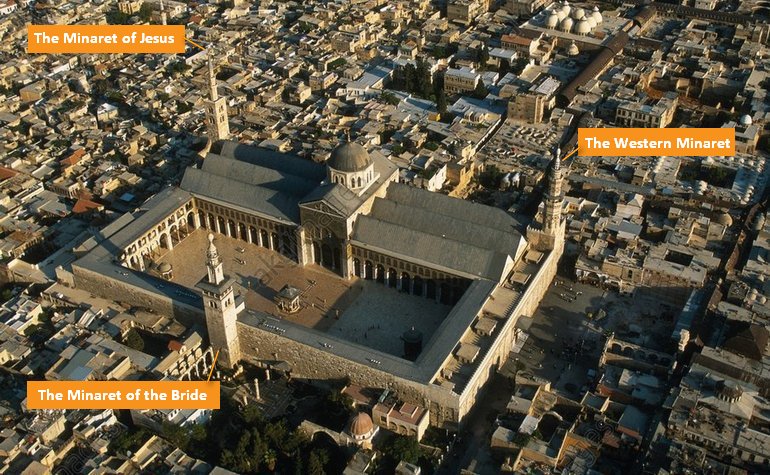
]]>- The spot where the mosque now stands was originally a temple dedicated to the idol Hadad in the Aramaean era about 3000 years ago. When the Romans ruled Damascus a temple was built for the worship of Jupiter. It then became a Christian church dedicated to John the Baptist in the Byzantine era towards the end of the fourth century.
- Following the Battle of Yarmouk in 636 CE, Damascus was conquered by the Muslims under the leadership of Khalid-bin-Waleed (رضي الله عنه). The Muslims shared the church building with the Christians for worship. The Muslims prayed in the eastern section of the structure and the Christians in the western side.
- This collective use continued until the reign of the Umayyad caliph al-Walid I, when the prayer space became inadequate both in terms of capacity and the need for an architectural monument to represent the new religion. The caliph negotiated with Christian leaders to take over the space, and in return al-Walid promised that all the other churches around the city would be safe, with the addition of a new church dedicated to the Virgin granted to the Christians as compensation. The church was purchased from the Christians before being demolished and between 706 and 715 CE the current mosque was built in its place.
- Construction of the mosque was based on the mosque of the Prophet Muhammad (ﷺ) in Madinah, which had many functions: it was a place for personal and collective prayer, religious education, political meetings, administration of justice, and relief of the ill and homeless. The caliph asked and obtained from the Emperor of the Byzantine Empire for 200 skilled workers to decorate the mosque, as evidenced by the partly Byzantine style of the building. The new mosque was the most impressive in the Islamic world at the time, and the interior walls were covered with fine mosaics. The building became one of the marvels of the world, because it was one of the largest of its time. The exterior walls were based on the walls of the temple of Jupiter and measure 100 by 157.5 m.
- The Umayyad Mosque holds special significance to Shi‘ah Muslims, as this was the destination of the descendents of the Prophet (ﷺ), made to walk here from Iraq, following the battle of Karbala.
- The prayer hall consists of three aisles, supported by columns in the Corinthian order. It was one of the first mosques (the other being al-Aqsa Mosque in Jerusalem) to have such a shape and in this way, the visitors could see the mihrab, the alcove indicating the direction of Makkah, and each other more easily.
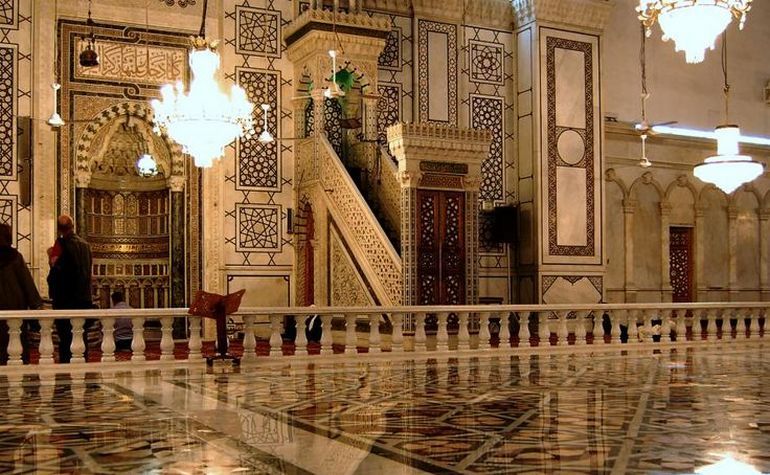
- In 2001 Pope John Paul II visited the mosque, primarily to visit the relics of John the Baptist. It was the first time a pope had paid a visit to a mosque.
References: Wikipedia, Archnet.org
]]>- Muslims believe that Isa (عليه السلام) did not die on the cross but Allah (ﷻ) raised him to heaven and he will return one day to defeat the Dajjal (Anti-Christ). According to a Hadith, he is on the second heaven. The Prophet (ﷺ) mentioned, “During the Me’raj (Ascension), I met Isa (عليه السلام) on the second heaven. I found him of medium stature, reddish white. His body was so clean and clear, that it appeared as though he had just performed ghusal (ablution, cleansing of the entire body) and come.”
- In another Hadith, the Prophet (ﷺ) mentioned, “Allah will send Maseeh ibne Maryam (Messiah son of Mary). Thus he will descend near the white eastern minaret of Damascus, clad in two yellow sheets, leaning on the shoulders of two angels.” [Sahih Muslim]
- The physical features of Isa (عليه السلام): He will resemble the famous sahabi Urwa bin Masoodi (رضي الله عنه). He will be of average height and red and white in colour. His hair will be spread to the shoulders, straight, neat and shining as after a bath. On bending his head, it will seem as if pearls are falling. He will have armour on his body. He will be wearing two pieces of cloth light yellow in colour.
- He will descend on a Jamaat (group) that will be righteous at the time and comprising of 800 men and 400 women. The people will be preparing for war at the time against Dajjal. It will be time for Fajr prayers, and Imam Mahdi will be the Amir (leader) of the Muslims. From the darkness of the dawn, a sound will suddenly be heard that “one who listens to your pleas has come” – the righteous people will look everywhere and their eyes will fall on Isa (عليه السلام). Briefly, at the time of Fajr, Isa (عليه السلام) will descend. When descending, Isa (عليه السلام)’s hands will be on the shoulders of two angels (according to another source (Ka’b Abrar), a cloud will carry him). On their insistence Isa (عليه السلام) will introduce himself. He will inquire about their enthusiasm and thoughts on Jihad against Dajjal. Isa (عليه السلام) will descend on the eastern side near the minaret in Damascus (or in Baitul-Muqaddus according to another narration). At the time Imam Mahdi will have proceeded forward to lead the Fajr Salaat. The Iqamat of the Salaat will already have been recited and Imam Mahdi will call Isa (عليه السلام) for Imamat (to lead the prayer), but he (Isa (عليه السلام)) will instead tell Imam Mahdi to lead the prayer since the Iqamat of that Salaat has already been said for him. Thus Imam Mahdi will lead the prayer, and Isa (عليه السلام) will follow him. After the ruku, he will make this statement: “Allah has killed Dajjal and the Muslims have appeared.”
- Isa (عليه السلام) will subsequently kill Dajjal and a great era of peace and harmony will come to the world. Isa (عليه السلام) will marry and have children and will live for 19 years after his marriage. He will then pass away and be buried next to the Prophet (ﷺ) in Majid-e-Nabwi, Madinah.
References: Major signs of Qiyamat – Mufti A.H.Elias
]]>- Yahya (عليه السلام) is mentioned by name 5 times in the Holy Quran. He is the only Prophet whose name was chosen for him exclusively by Allah (ﷻ).
- The Prophet Zakariyyah (عليه السلام) used to go to the temple daily (the current al-Aqsa Sanctuary) to deliver his sermons even though he had grown feeble with age. He was not a rich man, but he was always ready to help those in need. His one disappointment in life was that he had no children, for his wife was barren. This worried him, for he feared there was no one after him to carry out his work. The people needed a strong leader, for it they were left on their own, they would move away from Allah’s teachings and change the Holy Laws to suit themselves.
- During one of his visits to the temple, he went to check on Maryam (عليه السلام) [Mary], who was living in a secluded room of the temple. He was surprised to find fresh out of season fruit in her room. Besides him, no one had entry to her room. When he inquired, she told him that the fruit was from Allah which she found every morning. But why was he so surprised, she asked him. Did he not know that Allah provides without measure for whom He wills? This noble girl had opened his eyes to a startling idea. Could he not ask his Lord to bless him with a child in his old age? Even though his wife was past childbearing age, nothing was impossible for Allah (ﷻ).
- Allah (ﷻ) revealed in the Holy Quran in Surah Maryam:
“Kaf Ha Ya Ayn Sad (These letters are one of the miracles of the Quran, and none but Allah Alone knows their meanings). This is an account of your Lord’s grace towards His servant, Zachariah, when he called to his Lord secretly. saying, ‘Lord, my bones have weakened and my hair is ashen grey. But never, Lord, have I ever prayed to You in vain: I fear [what] my kinsmen [will do] when I am gone, for my wife is barren, so grant me a successor – a gift from You – to be my heir and the heir of the family of Jacob. Lord , make him well pleasing [to you].” [19:1-6] - (Allah said): “Zachariah, We bring you the good news of a son whose name will be John (Yahya). We have chosen this name for no one before him.” [19:7]
- The name Yahya literally means ‘he lives’ . Qatadah (may Allah show mercy on him) says this name was given to him because Allah had given him the inner life through Iman and Nubuwwah (i.e. belief and prophethood). Some say it was because Allah (ﷻ) brought people to life by guiding them through Yahya (عليه السلام). Yet others have said it was due to his mother’s womb being brought back to life after being barren until old age.
- Yahya (عليه السلام) was born six months before Isa (عليه السلام). His mother was the sister of Hanna, who was the mother of Maryam (عليها السلام). When supplicating for a child Zakariyyah had specifically asked for a ‘pure child’ (Quran 3:38). According to his wishes, Allah (ﷻ) granted him an extraordinary son.
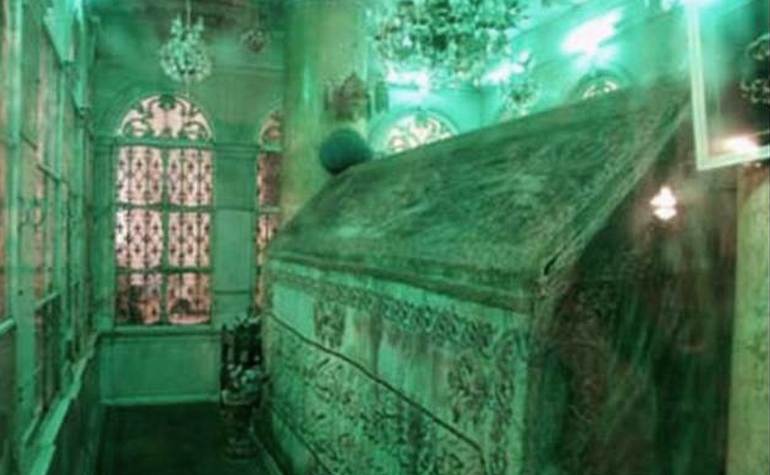
- In infancy, Yahya (عليه السلام) was instructed by Allah (ﷻ) to adhere and abide to the teachings of the Torah. He was also given the duty of propagating and communicating it to the people. Allah (ﷻ) granted him tremendous maturity and wisdom while he was still a child, and according to some historians, he was endowed with prophethood before the age of thirty.
- Yahya (عليه السلام) preferred solitude to company. He ate leaves of trees and sometimes locusts or grasshoppers and drank the water of springs. He wept much from the fear of Allah and was the epitome of chastity, remaining unmarried throughout his life.
- A conflict took place between Yahya (عليه السلام) and the authorities at that time. A tyrant king, Herod Antipas, the ruler of Palestine, was in love with Salome, his brother’s daughter. He was planning to marry his beautiful niece. The marriage was encouraged by her mother and by some of the learned men of Zion, either out of fear or to gain favour with the ruler. On hearing the ruler’s plan, Yahya (عليه السلام) pronounced that such a marriage would be incestuous. He would not approve it under any circumstance, as it was against the Law of the Torah.
- Yahya’s (عليه السلام) pronouncement spread like wildfire. Salome was angry, for it was her ambition to rule the kingdom with her uncle. She plotted to achieve her aim. Dressing attractively, she sang and danced before her uncle, arousing Herod’s lust. Embracing her, he offered to fulfill whatever she desired. At once she told him: “I would love to have the head of Yahya, because he has defiled your honour and mine throughout the land. If you grant me this wish, I shall be very happy and will offer myself to you.” Bewitched by her charm, he submitted to her monstrous request. Yahya (عليه السلام) was executed and his head was brought to Salome. The cruel woman gloated with delight. But the death of Allah’s beloved prophet was avenged. Not only she, but all the children of Israel were severely punished by invading armies which destroyed their kingdom. According to Biblical sources, Yahya (عليه السلام) died in the year 36 CE aged 42.
References: Atlas of the Quran – Dr. Shauqi Abu Khalili, Stories of the Prophets – Ibn Kathir, HUMA Travel guide to Palestine.
Note that this entry has been shown for information purposes only. On no account should anybody pray to a grave or seek supplication through them as this is tantamount to committing shirk, associating partners with Allah (ﷻ)
]]>- Salahuddin Ayyubi’s real name was Yusuf ibn Ayyub, the title of Salahuddin which he was given due to his extraordinary qualities means ‘the Righteousness of the Faith’. He was born in Tikrit, in modern-day central Iraq, His family was of Kurdish background and ancestry, Between 1187 and 1189 CE Salahuddin Ayyubi took 50 Crusader castles and much of the Crusader kingdom. However, even his enemies thought him chivalrous and honourable. During the siege of Kerak castle he refused to bombard a tower in which a honeymoon couple were staying.
- Baha ad-Din, one of Salahuddin’s officials wrote, “…Everyone who appeared before him was treated with honour, even an infidel … Once a Frankish prisoner was brought before him in whom the Sultan aroused such fear that the marks of terror and agitation were visible in his face. The interpreter asked him: ‘What are you afraid of?’ God inspired him to reply, ‘At first I was afraid of seeing that face, but after seeing it and standing in his presence, I am sure that I shall see only good in it.’ The Sultan was moved, pardoned him, and let him go free…”
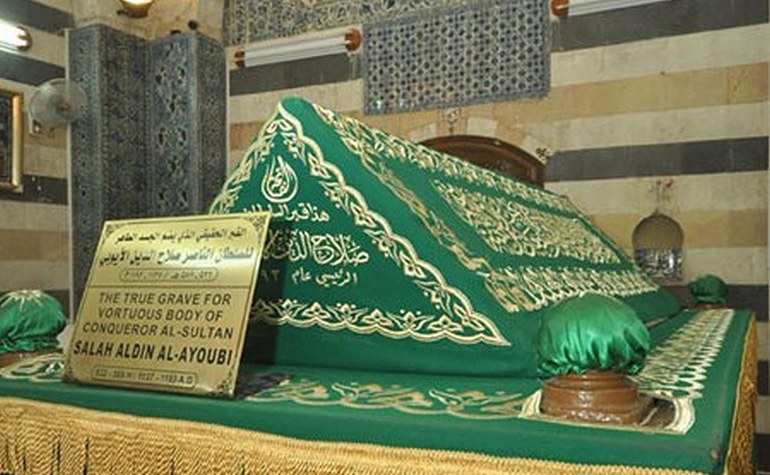
- He and Richard (the Lionheart) grew to respect one another as military leaders. When Salahuddin Ayyubi heard that Richard had fallen ill in Ascalon, he sent peaches and pears to help restore him to health. He also sent packs of snow from Mount Hermann to cool the King’s fever. At Arsuf, when Richard lost his horse, Salahuddin sent him two replacements. The Jewish philosopher Maimonides was one of Salahuddin Ayyubi’s personal physicians. When Jerusalem was recaptured, Salahuddin invited the Jews, who had been excluded by the Crusaders to come back, in particular the Jews of Ashkelon responded to his request. Salahuddin died of a fever on March 4 1193, at Damascus, not long after Richard’s departure. Since Salahuddin had given most of his money away for charity, when they opened his treasury they found there was not enough money to pay for his funeral.
References: Crusades – (Chris and Melanie Rice), A history of Jerusalem – Karen Armstrong, The Crusades – Christine Hatt, Wikipedia
Note that this entry has been shown for information purposes only. On no account should anybody pray to a grave or seek supplication through them as this is tantamount to committing shirk, associating partners with Allah (ﷻ)
]]>These are some of the personalities said to be buried here. This is based on knowledge passed down and has not been independently verified, Allah (ﷻ) knows best:
- Umm Kulthum, daughter of Ali (رضي الله عنه) and Fatima (رضي الله عنها)
- Bilal-bin-Rabah, the Muezzin (caller to prayer) of the Prophet (ﷺ)
- Muawiyah (رضي الله عنه)
- Tomb of Fidha, the maid of Fatima (رضي الله عنها), the daughter of the Prophet (ﷺ)
- Asma, wife of Jafar Tayyar (رضي الله عنه)
- Kamaid bin Aswad al-Kindi, companion of Ali (رضي الله عنه)
- Tomb of Obay ibn Ka’b (رضي الله عنه), husband of Halima, nursing mother of the Prophet (ﷺ)
Note that the tombs of two of the wives of the Prophet (ﷺ), Umm Salama and Ramlah bint Abi-Sufyan (aka Umm Habeebah) are present here but it is highly doubtful that they contain the actual bodies. The structures were likely to have been created to encourage ziyarat to the area. The vast majority of scholars are of the opinion that they are buried in Jannatul-Baqi in Madinah, along with most of the remaining wives (Ummahatul Mu’mineen) of the Prophet (ﷺ).
References: Local guide, Wikipedia.
Note that this entry has been shown for information purposes only. On no account should anybody pray to a grave or seek supplication through them as this is tantamount to committing shirk, associating partners with Allah (ﷻ)
]]>- Bilal (رضي الله عنه) was an Abyssinian (Ethiopian) slave of a disbeliever in Makkah. His conversion to Islam was, naturally, not liked by his master and he was, therefore, persecuted mercilessly. Ummayah-bin-Khalaf, who was the worst enemy of Islam, would make him lie down on the burning sand at mid-day and would place a heavy stone on his breast, so that he could not even move a limb. He would then say to him, “Renounce Islam or swelter and die.”
- Even under these afflictions, Bilal (رضي الله عنه) would exclaim: “Ahad” – The One (Allah), “Ahad” – The One (Allah).
- He was whipped at night and, with the cuts thus received, made to lie on the burning ground during the day to make him either forsake Islam or to die a lingering death from wounds. The torturers would get tired and take turns (Abu Jahl, Ummayah and others) and vie with one another in afflicting more and more painful punishment, but Bilal (رضي الله عنه) would not yield. At last Abu Bakr (رضي الله عنه) bought his freedom, and he became a free Muslim.
- Allah (ﷻ) rewarded his steadfastness. He was to have the honour of becoming the Prophet’s Muezzin. He was to always remain with him at home and abroad to call out the Azaan for his Salat. After the Prophet’s death it became very hard for him to continue his stay in Madinah where he would miss him at every step and in every corner. He therefore left Madinah, and decided to pass the rest of his life striving in the path of Allah. Once he beheld the Prophet (ﷺ) in his dream saying to him: “O Bilal! How is it that you never visit me?” .
- No sooner did he get up that he set out for Madinah. On reaching there, Hassan and Hussain (رضي الله عنهم), the Prophet’s grandsons, requested him to call out the Athan. He could not refuse them, for they were very dear to him. But as soon as the Athan was called, the people of Madinah cried openly out of their anguish at the memory of the happy old days of the Prophet’s time. Even the women came out of their houses weeping. Bilal (رضي الله عنه) left Madinah again after a few days and died in Damascus in 20 AH.
Note that this entry has been shown for information purposes only. On no account should anybody pray to a grave or seek supplication through them as this is tantamount to committing shirk, associating partners with Allah (ﷻ)
References: Fazail-e-Aamal – Sheikh Zakariyya Kandhalvi
]]>- Kathir bin Qais narrates: “I was sitting with Abu Darda (رضي الله عنه) in a masjid in Damascus, when a person came to him and said, ‘O, Abu Darda (رضي الله عنه), I have come all the way from Madinah to learn one Hadith from you, as I understand you have heard it directly from the Prophet (ﷺ)’.”
- Abu Darda (رضي الله عنه) asked: “Have you any other business in Damascus?”. The person:“No.” Abu Darda (رضي الله عنه):“Are you sure that you have no other work in Damascus?”. The person: “I have come to this place with the sole purpose of learning this Hadith”. Abu Darda (رضي الله عنه) responded:“Listen. I have heard the Prophet (ﷺ) saying, ‘Allah eases the way to Paradise for one who traverses some distance to seek knowledge.The angels spread their wings under his feet, and all things in heavens and earth (even the fish in the water) pray for his forgiveness. The superiority of a person possessing knowledge over a person doing worship is as the superiority of the moon over the stars. The Ulama are the inheritors of the Prophet (ﷺ). The legacy of Prophets (Alaihis-salaam) is neither gold nor silver. Their legacy is knowledge. A person who acquires knowledge acquired a great wealth.”
The entrance to the tomb:

- Abu-Darda (رضي الله عنه) is foremost among the Sahabah who possessed very sound knowledge in religion. He is called ‘Hakeem-ul-Ummah’ (The Sage of Islam). He once said: “Before Islam, I lived on trade. After accepting Islam, I tried to combine the service of Allah with my business,but I could not do so. I therefore gave up business and devoted myself solely to the service of Allah. Now if I have a shop at the gate of a masjid and have no fear of losing a single salah thereby, and even if the shop gives me a daily profit of 40 dinars to spend the whole lot in the path of Allah, even then I am not willing to turn to business.” Somebody inquired the reason. He replied: “Because of the fear of reckoning.”
- Abu-Darda (رضي الله عنه) narrated 179 ahadith.
- He passed away in 32 AH.
Note that this entry has been shown for information purposes only. On no account should anybody pray to a grave or seek supplication through them as this is tantamount to committing shirk, associating partners with Allah (ﷻ)
Reference: Wikipedia
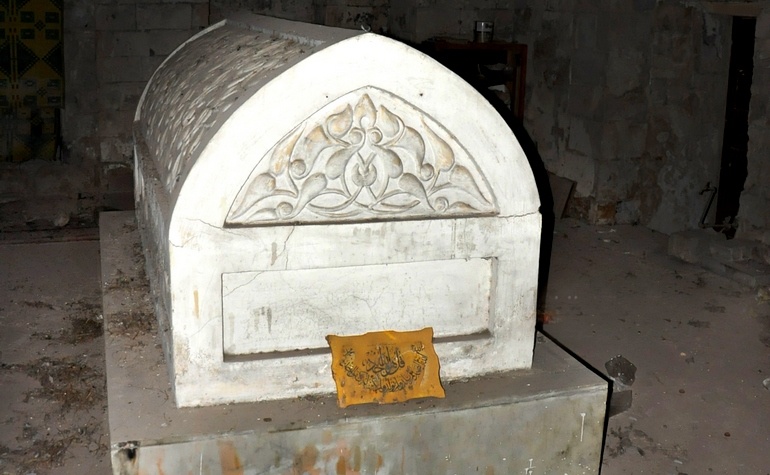
]]>
Reference: Wikipedia
]]>