But why is the Kaaba important? The Kaaba in Mecca serves as the focal point for Muslims from all corners of the world. During their daily prayers, Muslims face towards the Kaaba, symbolising unity and the universality of Islam. It represents the spiritual center of Islam and is considered the “House of Allah.”
What is the Holy Kaaba in Islam?
The Holy Kaaba is a sacred structure in Islam. It is a cuboid building located in the city of Mecca, Saudi Arabia. Muslims consider it the most religious site in Islam and believe it was built by the Prophet Ibrahim (AS) and his son Ismail (AS) as the first house of worship dedicated to Allah.
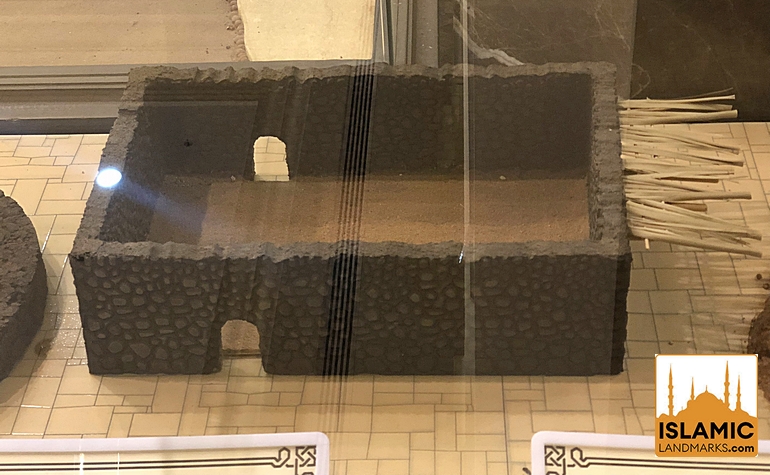
The Kaaba serves as the focal point for Muslims’ prayers, as they face it during their daily prayers, symbolising unity and the oneness of Allah. It holds immense religious significance and is a central site for the annual Hajj Pilgrimage, and Umrah pilgrimage, where millions of Muslim pilgrims gather to perform rituals around the Kaaba.
Why is the Kaaba important to Muslims in Islam?
The Kaaba holds great importance to Muslims in Islam due to its historical and religious significance. It is believed to be the first house of worship dedicated to the worship of Allah, built by the Prophet Ibrahim (AS) and his son Ismail (AS).
The Kaaba serves as the focal point for Muslims’ prayers, as they face it during their daily prayers, symbolising unity and the oneness of Allah. It represents Islam’s spiritual center, embodying monotheism and devotion principles.
Moreover, the Holy Kaaba is the main site for the annual Hajj and Umrah, a fundamental pillar of Islam. Umrah and Hajj Pilgrims from all over the world gather in Mecca to perform Umrah and Hajj rituals around the Kaaba, reaffirming their faith and fostering a sense of community and equality among Muslims.
The Quran mentions the Kaaba and its significance in several verses. Here are a few Quranic verses that highlight the importance of the Kaaba:
Surah Al-Baqarah (2:125)
“And [mention] when We made the House a place of return for the people and [a place of] security. And take, [O believers], from the standing place of Abraham a place of prayer. And We charged Abraham and Ishmael, [saying], ‘Purify My House for those who perform Tawaf and those who are staying [there] for worship and those who bow and prostrate [in prayer].'”
Surah Al-Imran (3:96)
“Indeed, the first House [of worship] established for mankind was that at Makkah – blessed and a guidance for the worlds.”
Surah Al-Hajj (22:26-27)
“And [mention] when We designated for Abraham the site of the House, [saying], ‘Do not associate anything with Me and purify My House for those who perform Tawaf and those who stand [in prayer] and those who bow and prostrate. And proclaim to the people the Hajj [pilgrimage]; they will come to you on foot and on every lean camel; they will come from every distant pass.”
Why is the Kaaba important during Hajj and Umrah?
The Kaaba holds immense significance during Umrah and Hajj, the annual pilgrimage in Islam. It is an integral part of the rituals performed by millions of Muslims during this sacred journey. During Hajj and Umrah, pilgrims circumambulate the Kaaba in a counterclockwise direction, known as Tawaf, as a symbolic act of devotion and unity.
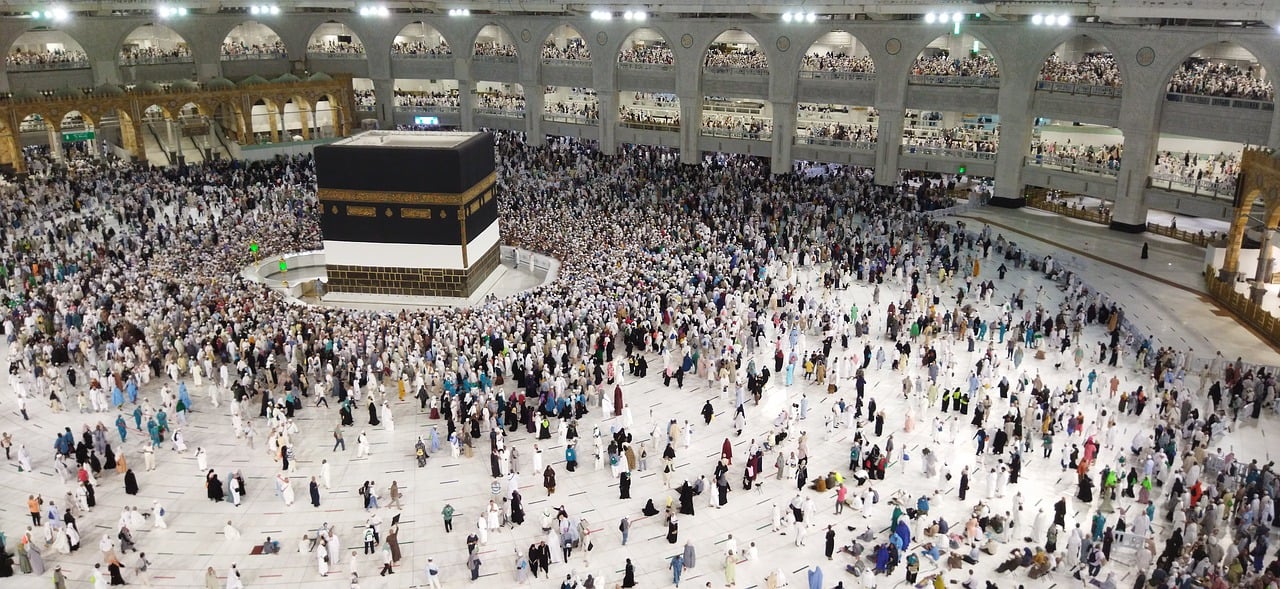
The Kaaba is a focal point for pilgrims, reminding them of their purpose and connection to the Muslim community.
It represents the House of Allah and acts as a spiritual compass, guiding and inspiring pilgrims throughout their Hajj and Umrah journey. The Kaaba’s presence during Hajj and Umrah reinforces Islam’s religious and cultural heritage, creating a profound sense of reverence and spirituality among the pilgrims.
A brief history of the Holy Kaaba
The Kaaba has a rich and ancient history. According to Islamic tradition, it was built by the Prophet Ibrahim (AS) and his son Ismail (AS) as the first house of worship dedicated to Allah. Over the centuries, it has undergone multiple reconstructions and renovations.
It has been a focal point of Umrah and Hajj pilgrimage and worship for Muslims since the time of the Prophet Muhammad PBUH. The Kaaba holds immense religious and historical significance as the holiest site in Islam.
Who built the Holy Kaaba?
According to Islamic beliefs, the Prophet Ibrahim (AS) and his son Ismail (AS) laid the foundation of the Holy Kaaba. Ibrahim (AS) received a divine command from Allah to build a house of worship at the location of the Kaaba in Mecca. Guided by Allah, Ibrahim (AS) and Ismail (AS) constructed the Kaaba as a sacred sanctuary dedicated to the worship of the One God.
The construction of the Holy Kaaba is believed to have occurred thousands of years ago. The precise historical details are not recorded, but the event holds great significance in Islamic tradition and is considered a pivotal moment in the history of monotheism.
Muslims regard Ibrahim (AS) as a revered prophet, and his acts of obedience and devotion to Allah, including the construction of the Kaaba, serve as examples of faith and righteousness.
The Kaaba has since become the spiritual center of Islam and the focal point for Muslims’ prayers and Muslim pilgrims performing Umrah and hajj holy pilgrimage, symbolising unity, devotion, and the monotheistic beliefs of the faith. These traditions have been followed since Prophet Muhammad PBUH taught them Muslims via the Quran.
Why was the Kaaba built?
The purpose of the Holy Kaaba’s construction was to establish a central point of worship for believers and to symbolise the unity of monotheism. It serves as a physical and spiritual focal point for Muslims around the world.
Muslims from all over the world face the Holy Kaaba during their prayers, emphasising the unity of the global Muslim community. The Holy Kaaba’s construction is rooted in the belief in the Oneness of Allah and the importance of dedicating a sacred space for His worship.
How did the Holy Kaaba come to be a holy site for Muslims?
The Holy Kaaba came to be a holy site for Muslims due to its rich historical and religious significance. According to Islamic belief, the Prophet Ibrahim (AS) and his son Ismail (AS) built the Holy Kaaba as the first house of worship dedicated to the worship of Allah.
The Kaaba became a symbol of monotheism and the central point of worship for believers.
Over time, the Holy Kaaba became recognised as a sacred and revered site in the Islamic tradition. The Prophet Muhammad PBUH considered Allah’s last and final messenger, further solidifying the significance of the Kaaba through his teachings and actions.
He emphasised the importance of the Kaaba as the spiritual center of Islam and made it the focal point for Muslims’ prayers.
What is inside the Kaaba?
The interior of the Holy Kaaba is not accessible to the public, and thus, only a limited number of individuals, mostly custodians, and officials, have direct access. The specific details of the interior are not widely known or documented due to its restricted nature.
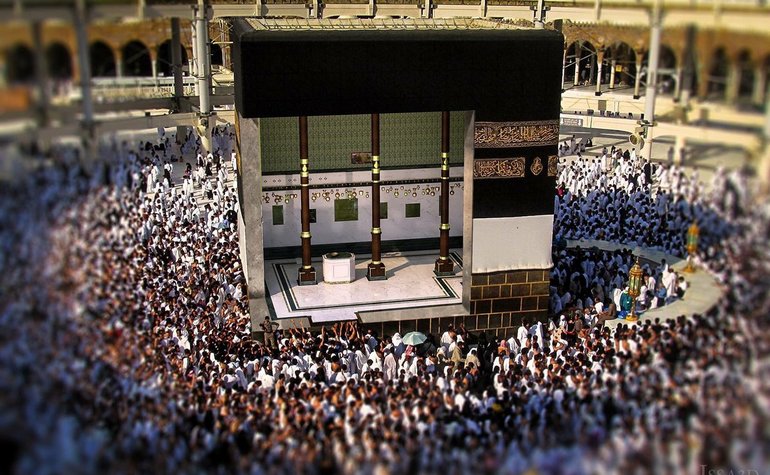
However, historical accounts and descriptions from those who have had the privilege of entering the Holy Kaaba suggest that its interior is relatively simple. It is believed to contain three pillars, a few lamps, and hooks used to hang religious artifacts and coverings.
The walls are reported to be plain and adorned with fabrics and Quranic verses. It is important to note that these details may vary over time due to renovations and maintenance.
Who can go inside the Holy Kaaba?
Access to the interior of the Holy Kaaba is highly restricted, and only a limited number of individuals are granted permission to enter. Generally, the custodians of the Holy Kaaba, whom the Saudi Arabian government appoints, have the authority to enter the Kaaba. These custodians, known as the Keepers of the Holy Kaaba, ensure the maintenance and cleanliness of the holy site.
There are also occasions when dignitaries or officials may be granted special access to the interior of the Holy Kaaba. However, such instances are infrequent and subject to specific circumstances and permissions. Usually, pilgrims cannot go inside the Kaaba during Hajj and Umrah.
What does the Holy Kaaba represent for Muslims?
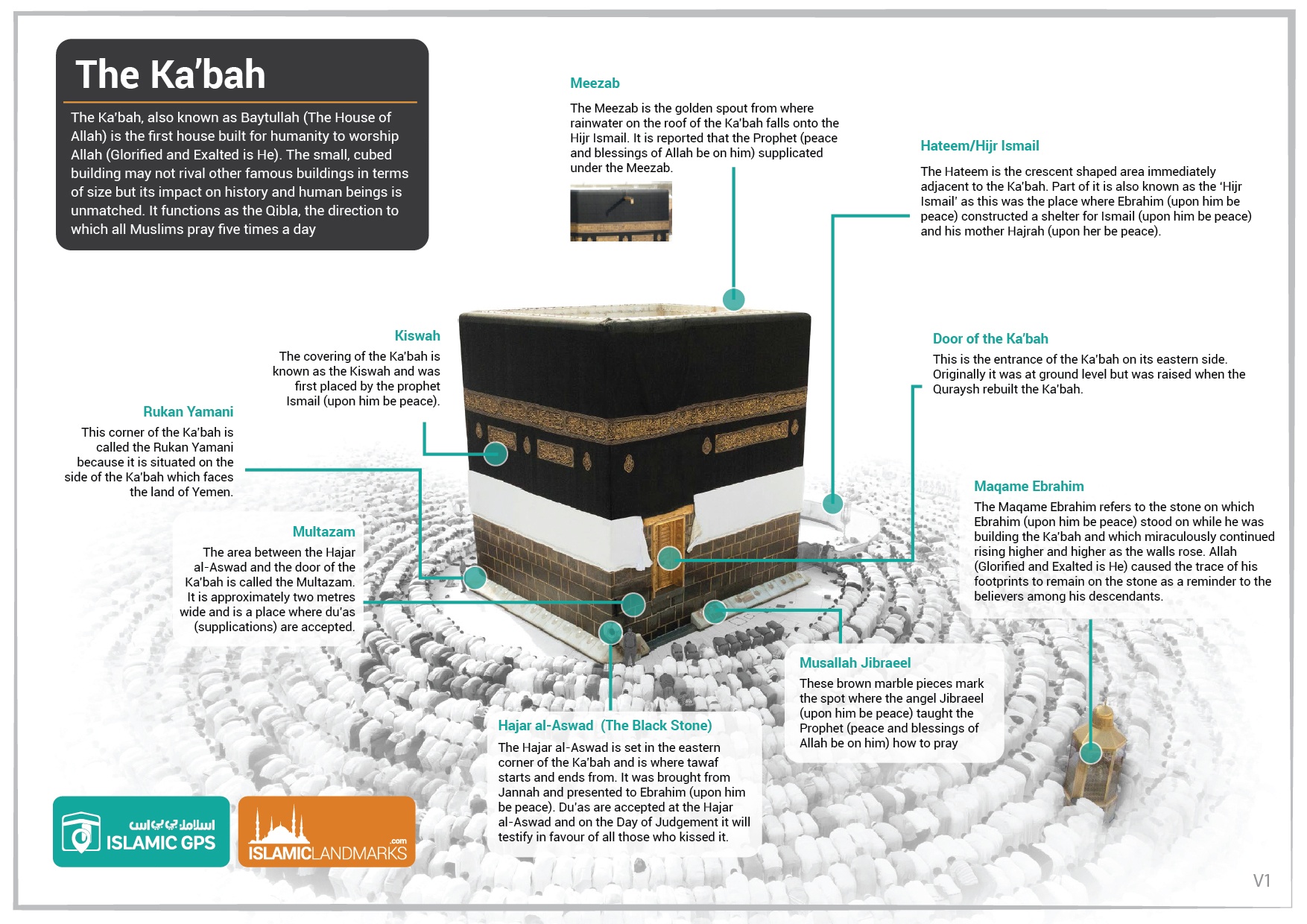
The Holy Kaaba holds profound significance for Muslims. It represents the spiritual center of Islam and is considered the House of Allah. The Kaaba serves as a symbol of unity, devotion, and the oneness of Allah.
For Muslims, the Holy Kaaba is the direction they turn in during their prayers, no matter where they are. This act, known as Qibla, signifies the unity of the Muslim community, irrespective of geographical location or cultural differences.
The Holy Kaaba also plays a central role in the annual pilgrimage, Hajj, one of the Five Pillars of Islam. Millions of Muslims from diverse backgrounds gather in Mecca to perform rituals around the Kaaba during Hajj and Umrah.
The pilgrimage serves as a profound spiritual journey, emphasising humility, equality, and the unity of believers.
It also holds significance in Umrah. Umrah, often referred to as the lesser pilgrimage, holds great significance for Muslims worldwide. The Umrah pilgrimage involves visiting the holy city of Mecca and performing a series of rituals focused on the Kaaba.
Every year, countless Muslims embark on the spiritual journey of Umrah, seeking closeness to Allah and the opportunity to cleanse their souls. Umrah is distinct from Hajj in terms of its non-obligatory nature, allowing Muslims to undertake the pilgrimage at any time of the year. This is why, muslims can perform Umrah any time of the year.
The rituals of Umrah revolve around the Kaaba, the sacred centerpoint of Islam, which holds immense spiritual symbolism for believers. The rituals of Umrah, including the Tawaf (circumambulation) and Sa’i (running between the hills of Safa and Marwa), are performed with utmost devotion and reverence.
Muslims partake in Umrah to seek spiritual renewal, draw closer to their faith, and experience the profound sense of unity that arises from joining fellow believers in this sacred journey to the Kaaba.
Other nearby holy places
In addition to the Kaaba, Mecca is home to several other holy places that hold significance in Islam. One notable site is the Masjid al-Haram, the Grand Mosque, which encompasses the Kaaba itself.
It is the largest mosque in the world and serves as a gathering place for Muslims during their pilgrimage and throughout the year. Another important site is the Well of Zamzam, located near the Holy Kaaba, which is believed to have provided water to the Prophet Ismail and his mother, Hajar. The hills of Safa and Marwa, where the Sa’i ritual is performed, are also considered sacred.
Black Stone
The Black Stone, known as “Al-Hajar al-Aswad” in Arabic, is a revered relic located in the east corner of the Kaaba. It is a smooth black stone that holds great significance in Islamic tradition.
Muslims believe that the Black Stone was sent down from heaven as a sign of the location of the Kaaba during its construction by the Prophet Ibrahim (AS) and Ismail (AS).
Pilgrims who perform the Tawaf ritual during Hajj or Umrah often strive to touch or kiss the Black Stone in the east corner as an act of devotion and to seek blessings.
It is considered a sacred object and a symbol of the unity and faith of the Muslim community.
Masjid Al Haram
Masjid Al Haram, also called the Grand Mosque, is located in Mecca, Saudi Arabia, where the Holy Kaaba is. Masjid Al Haram is the largest mosque in the world, capable of accommodating millions of worshippers during the peak times of Hajj and Umrah pilgrimages.
Umrah Packages have various packages available for pilgrims to visit the Holy Kaaba here.
The mosque holds a prominent place in Islamic history and serves as the focal point for Muslims’ prayers. It features several notable architectural elements, including the towering clock tower, known as the Abraj Al-Bait, which has become an iconic symbol of Mecca.
The mosque also houses the Black Stone in its eastern corner, which holds great value for Muslims.
Al Muallaa Cemetery (Jannat al-Mu’alla)
Al Muallaa Cemetery, also known as Jannat al-Mu’alla, is an important cemetery located in Mecca, Saudi Arabia. It holds immense historical and cultural significance for Muslims.
It is the final resting place of several prominent figures, including the Prophet Muhammad PBUH’s wife, Khadijah, and many of his companions, such as Abu Talib and Abdullah ibn Abbas.
The cemetery holds a special place in Islamic history, reflecting the close connection between the early Muslim community and Mecca. It serves as a reminder of the legacy and contributions of the Prophet Muhammad PBUH and his companions.
Exhibition of the two holy mosques’ architecture
The Exhibition of the Two Holy Mosques’ Architecture is an educational and informative display showcasing the architectural features and development of Masjid Al Haram in Mecca and Masjid an-Nabawi in Medina. The exhibition aims to provide visitors with insights into the history, design, and expansion of these two important mosques.
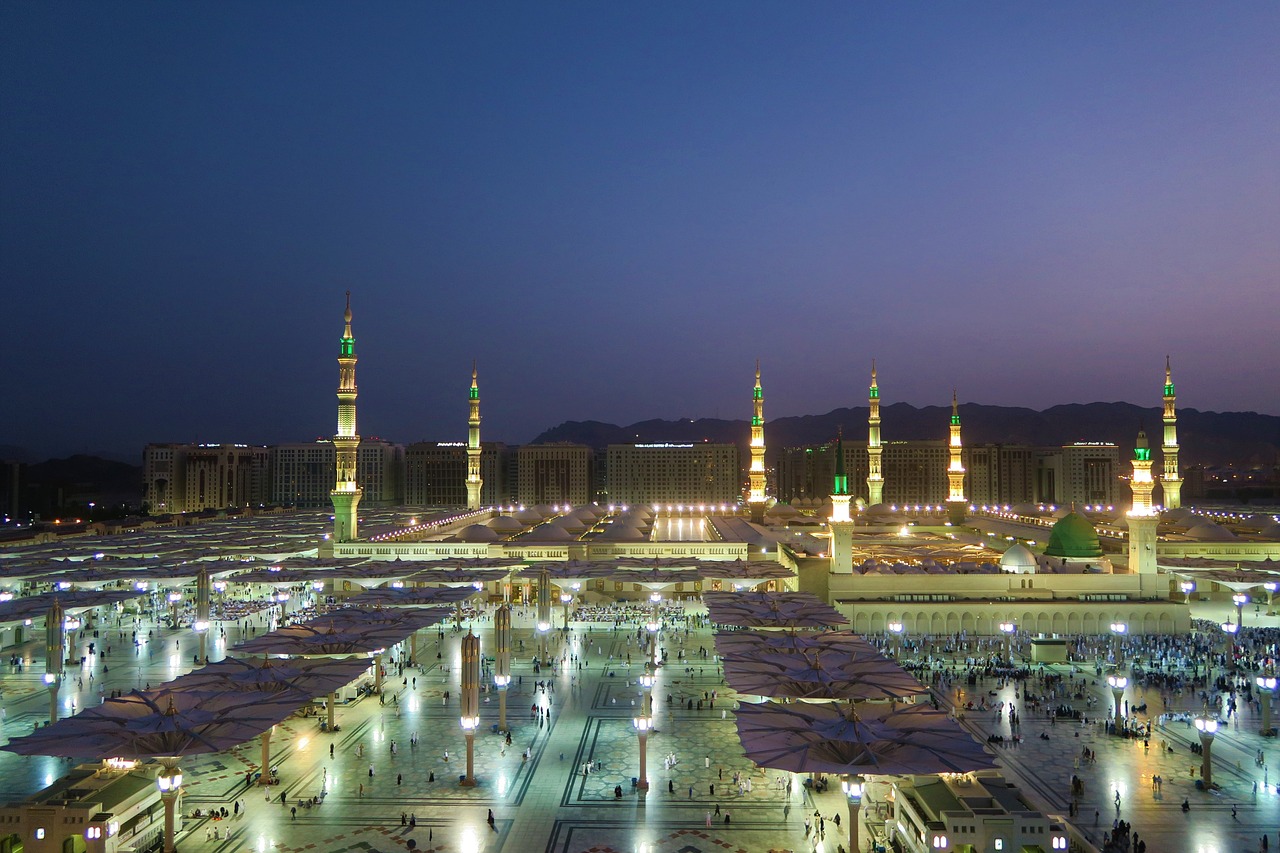
The exhibition highlights the evolution of the mosques’ architecture over time, starting from their humble beginnings to their current grand scale. It showcases various aspects, including the intricate detailing, designs, materials used, and technological advancements employed in their construction.
Summary – Why is the Kaaba important to Muslims
To sum it up, the Holy Kaaba is important to Muslims due to its historical and religious significance. It is believed to be the first house of worship dedicated to Allah, built by Prophet Ibrahim (AS) and his son Ismail (AS).
Muslims face the Kaaba during prayers, symbolising unity and the oneness of Allah. It is also the central site for the annual pilgrimage, Hajj, and Umrah, fostering a sense of community and reinforcing faith among Muslims
]]>With unwavering conviction, Muslims – five times a day – turn their faces, heart, and soul towards the Holy Kaaba to perform prayer. The Qibla doesn’t only signify individual devotion but also serves as a unifying symbol, fostering a sense of unity and identity among Muslims all around the world. Keep reading the article to learn why do Muslims pray towards the Mecca.
What Is the Kaaba?
Situated in the heart of Makkah, surrounded by believers from every corner of the Earth, stands the Holy Kaaba, a cube-shaped inspiring monument that embodies centuries of reverence and devotion. Believed to be the House of Allah SWT, the Holy Kaaba is a sanctuary of tranquillity and the destination of pilgrimage (Hajj and Umrah).
Muslims globally face the Holy Kaaba when they perform Salah. It is important to remember that Muslims pray to face the Kaaba and not to it. The Holy Kaaba was initially constructed by Prophet Adam (AS), then by Prophet Ibrahim (AS) and Prophet Ismail (AS) and lastly by Prophet Muhammad (PBUH).
“Lo! The first Sanctuary appointed for mankind was that at Mecca [i.e. Makkah], a blessed place, a guidance to the peoples; Wherein are plain memorials (of Allah’s guidance); the place where Abraham stood up to pray; and whosoever entereth it is safe.
And pilgrimage (Hajj or Umrah) to the House is a duty unto Allah for mankind, for him who can find a way thither. As for him who disbelieves, (let him know that) lo! Allah is Independent of (all) creatures.” [Holy Quran, Al Imran, 3:96-97]
Why Do Muslims Touch the Kaaba?
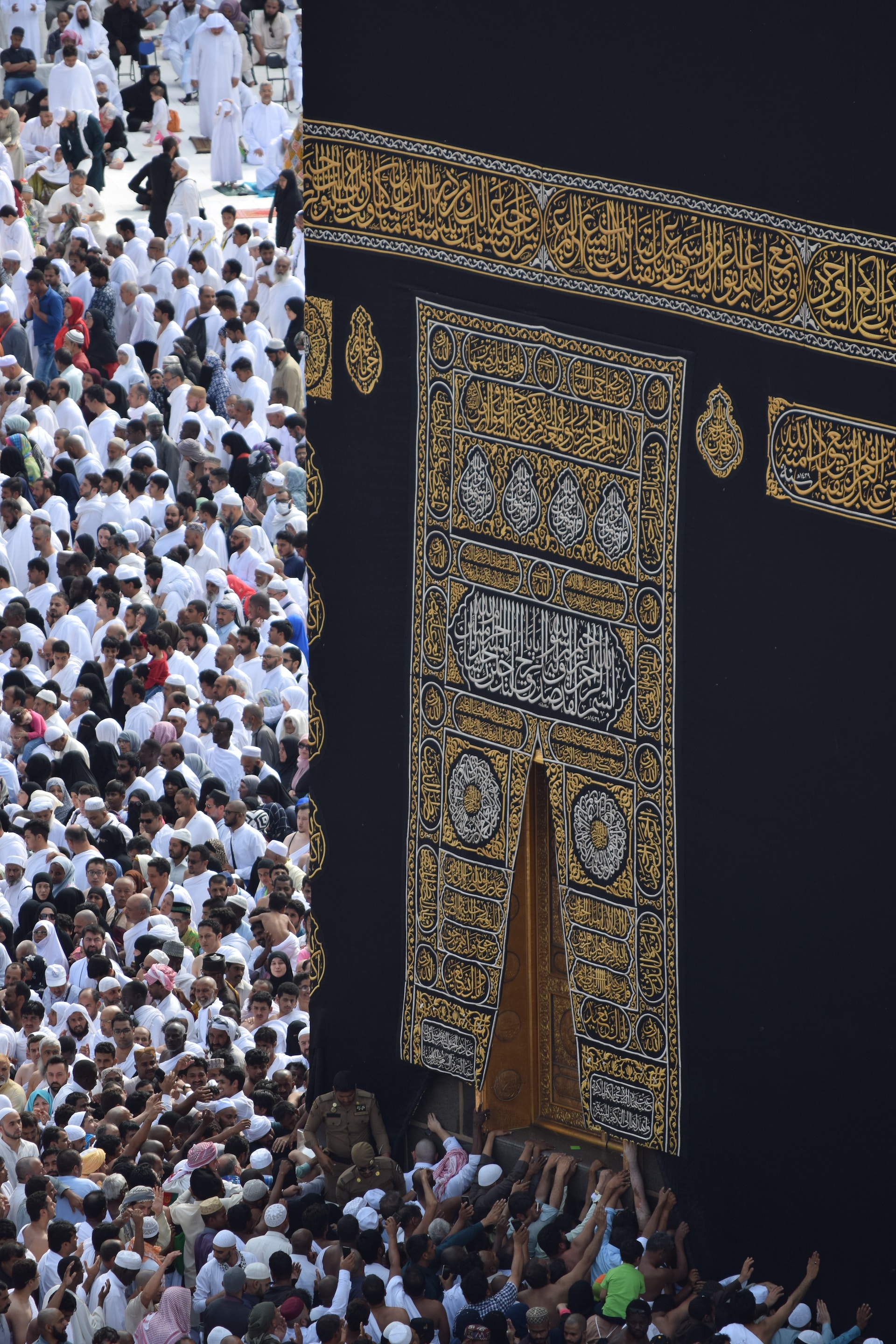
Even though there is no instruction by the Holy Prophet (PBUH) to do so, touching the Holy Kaaba instils within Muslims a profound sense of closeness to Allah SWT. However, according to Islamic scholars, touching any part of the Holy Kaaba with the intention of getting rewards aside from the Black Stone and Yemini Corner is considered Bid’ah.
Ibn Abbas (RA) narrated, “And I saw the Prophet (peace and blessings of Allah be upon him) touching the Yemeni Corner and the Black Stone.”
Why Do Muslims Face Towards the Qibla When Praying?
The Qibla carries profound significance in the lives of Muslims worldwide. Irrespective of their whereabouts, Muslims turn towards the Qiblah, the direction of the Holy Kaaba in Mecca, while offering obligatory prayers.
In the early years of prophethood and after migration to Madinah, Prophet Muhammad (PBUH) received a revelation instructing him to change the Qiblah from Masjid al-Aqsa to the Holy Kaaba. Prophet Muhammad (PBUH) said, “The best direction to face is towards the Kaaba. So face it when you pray.” (Sunan Abi Dawud)
In another instance, it was reported that “Prophet Muhammad (PBUH) used to offer his prayers towards the Kaaba, and whenever he wanted to pray facing towards other than the Kaaba, he would turn his upper body towards it.” (Sahih Bukhari)
Constructed by Prophet Ibrahim (AS) and Prophet Ismael (AS), the Holy Kaaba is believed to be the centre of monotheism and the most sacred site in the world. Thus, all the mosques are built facing the Qibla, and all worshippers stand in the same direction while performing Salah.
The Qibla is represented by an ornamental indication (Mihrab), and the Imam stands in front of it to ensure that all worshippers are oriented accordingly. Having a Qiblah also helps Muslims focus amidst Salah and reminds them they are worshippers of Allah Subhanahu and to Him shall they return.
Do Muslims Have to Face Mecca When Praying?
Yes, it is compulsory for Muslims to face the Holy Kaaba in Mecca, Saudi Arabia, during supplication, as failing to do so will invalidate the prayer (Salah). The Messenger (PBUH) of Allah SWT instructed the Muslim community, “When you pray, do not face towards the east or the west, but face towards the direction of the Kaaba.” (Sahih Bukhari)
Al-Bara bin Azib reported, “When the Prophet (PBUH) came to Medina, he stayed first with his maternal uncles from Ansar. He offered his prayers facing Baitul-Maqdis (Jerusalem) for sixteen or seventeen months, but he wished that he could pray facing the Kaaba (in Mecca). The first prayer which he offered facing the Kaaba was the ‘Asr prayer in the company of some other people.
Then one of those who had offered that prayer with him came out and passed by some people in a mosque who were bowing during their prayers (facing Jerusalem). He addressed them, ‘By Allah, I testify that I have prayed with Allah’s Apostle facing Mecca (Kaaba).’ Hearing that, those people changed their direction towards the Kaaba immediately.
Jews and the People of the Scriptures used to be pleased to see the Prophet (PBUH) facing Jerusalem in prayers, but when he changed his direction towards the Kaaba, during the prayers, they disapproved of it.” (Sahih Bukhari; Book 2, Hadith 39)
Why Do Muslims Pray 5 Times a Day?
In order to live a rightful life, Muslims are obligated to follow the teaching of the Holy Quran and the Sunnah of Prophet Muhammad (SAW). According to Islamic history, during Miraj (Night Ascension – The Journey to the Seven Skies), Allah SWT commanded Prophet Muhammad (PBUH) to inform the Muslims that they must pray Salah.
Initially, Muslims were directed to pray 50 times a day. However, on Prophet Muhammad’s (PBUH) request, Allah SWT reduced the number of obligatory prayers to five times a day. The Muslim prayers include Fajr, Zuhr, Asr, Maghrib, and Isha.
Stating the significance of praying 5 times a day, Prophet Muhammad (PBUH) said, “If there was a river at your door and you took a bath in it five times a day, would you notice any dirt on you? That is the parable of the five prayers by which Allah removes sins from one’s soul.” (Ibn Babawayh)
Thus, if one wants to live a good life, praying five times a day is the best way to have a peaceful and blessed life in this world and hereafter.
Verses from the Quran
Allah SWT in Surah Al-Baqarah in the Holy Qu’ran says:
“To Allah belongs the East and the West. Wherever you turn, there is the presence of Allah. For Allah is all-Pervading, all-Knowing.” [Holy Quran 2:115]
“The foolish among the people will say, ‘What has turned them away from the Qiblah they were following?’ Say, ‘To Allah belong the East and the West. He guides whomever He wishes to a straight path.” [Holy Quran 2:142]
“And [mention] when We made the House a place of return for the people and a place of safety. And take, [O believers], from the standing place of Abraham a place of prayer. And We charged Abraham and Ishmael, [saying], ‘Purify My House for those who perform Tawaf and those who are staying [there] for worship and those who bow and prostrate [in prayer].'” [Holy Quran 2:125]
“And from wherever you come out, turn your face toward al-Masjid al-Haram. And wherever you [believers] may be, turn your faces toward it so that the people will not have any argument against you, except those of them who do wrong; so fear them not but fear Me. And [it is] so I may complete My favour upon you and that you may be guided.” [Holy Quran 2:150]
Know that every word in the Holy Quran is chosen by Allah SWT Himself, and the above-mentioned verses clearly state that Muslims should face the Qiblah (Holy Kaaba) while performing congregational and daily prayers (Salah) five times a day.
How Do Muslims Know They Are Facing Mecca?
While there is a common misconception that Qiblah is always in the East, it changes as you move around the world. For example, the Qiblah in South Africa is in the north-northeast; in Japan, it is in the west-southwest, and in the UK, it is in the east-southeast.
Allah SWT in the Holy Quran says, “For every nation there is a direction to which they face (in their prayers). So hasten towards all that is good. Wheresoever you may be, God will bring you together (on the Day of Resurrection).
Truly, God is able to do all things. And from wheresoever you start forth (for prayers), turn your face in the direction of Al-Masjid-al-Haram (at Mecca); that is indeed the truth from your Lord. And God is not unaware of what you do.” [Holy Qu’ran 2:148-149]
Facing the Holy Kaaba is essential for Muslims in order to offer Namaz in the right way. Use the below-mentioned ways to find the Qiblah from your location:
- Sun: Rising from the East and setting in the West, the sun has been used to determine the direction of Qiblah since the beginning of Islam. All you need to know is the direction of Makkah in relation to your current location, and you can use the sun’s positioning to find the Qiblah.
- Compass: Using the compass is the simplest way to determine cardinal directions. If you know the direction of Makkah from your location, you can use it to locate the Qiblah accurately.
- Sundial: Find a stick or vertical object about 1 metre (3 feet) in height and use it to mark the centre point and draw a circle around it. As time passes, you will see that the stick’s shadow gets shorter and then will start getting longer. Note the point where the circle meets the shadow and draw a straight line. Mark the first side west and the other East, north, and south accordingly. You can then use the sundial to locate the Qiblah.
- Technology and Applications: The easiest way for Muslims to find Kaaba’s direction is via mobile applications. These applications use the smartphone’s built-in compass and GPS to point the correct Qiblah direction.
Summary – Why Do Muslims Pray Towards Mecca?
Known as the House of Allah SWT, Muslims face the Holy Kaaba while praying (performing Salah) because the Almighty commands it, and Prophet Muhammad (PBUH) instructs Muslims to do the same.
In addition to being the site for the pilgrimage (Hajj and Umrah), the Holy Kaaba is believed to be at the centre of the world, physically and spiritually. It also represents unity and showcases that all Muslims are one in the eyes of Allah SWT.
During his lifetime, the Messenger (PBUH) of Allah SWT guided the Muslims to turn towards Mecca and face the Holy Kaaba when praying, and since then, the Muslim community has been following the Sunnah. Therefore, no matter where they are in the world, Muslims always turn toward the Holy Kaaba while offering Salah
]]>Located in the narrow valley, Mecca is over 275 meters above sea level and is around 70 km inland from Jeddah in Saudi Arabia.
Undoubtedly, Muslims around the world may already possess a lot of information about Mecca’s location, history and significance. But amazingly enough, several famous facts about Mecca aren’t known to many.
And that’s what we look at below. Here are ten interesting facts about Mecca that you need to discover.
What is Mecca in Islam?
Mecca, also known as Makkah or ancient Bakkah City, holds a special significance in Islam.
The city is the birthplace of the last Prophet Muhammad (P.B.U.H.) and is home to Kaaba, the center of the Great Mosque in Mecca, which is universally considered to be the most sacred place on Earth for Muslims.
Muslims around the world pray facing the Kaaba in Mecca five times a day. Moreover, Mecca is the city for a deeply spiritual journey for Muslims all over the world, which is the Hajj or pilgrimage to Islam’s holiest sites in Mecca.
Hajj is the fifth pillar of Islam which is mandatory for Muslims once during their lifetime whose health and finances permit. The pilgrim’s circumambulation around the Kaaba marks the completion of the Hajj.
Mecca has a long, rich history, even before the birth of Prophet Muhammad (P.B.U.H.). According to the Quran, the Kaaba was built by Prophet Ibrahim (AS) and his son Ismail (AS). Together, they raised the foundation of the House of Allah.
“And when Ibrahim and Ismail were raising the foundations of the House, (Ibrahim prayed): Our Lord! Accept from us (this duty). Lo! Thou, only Thou, art the Hearer, the Knower.” – Surat Al-Baqarah: 2:127.
Moreover, the well of Zamzam, located 20 meters away from the Kaaba, has been flowing for 5,000 years.
It shows that the city has a long history, even before Prophet Muhammad (P.B.U.H.).
Why Is Mecca Important to Muslims?
Mecca holds a special place in every Muslim’s heart. And there are many good reasons for it.
Makkah is home to the Holy Kaaba, which features the black stone as a symbolic representation of Allah (S.W.T.)’s home in this world. According to Islamic tradition, the black stone is known to be a stone from Jannah which was originally white.
While the Muslims don’t worship the building itself, they perform the pilgrimage and pray five times a day facing the Kaaba.
Kaaba, which is the representation of Allah’s Supremacy and Oneness, is located in Mecca. Apart from praying five times a day, Muslims bury their dead in the direction of the Kaaba which makes another important reason why Mecca is important to Muslims.
Hajj, the fifth pillar of Islam, which is mandatory for every physically and financially abled Muslim once in a lifetime, is performed in Mecca and surrounding areas.
“And [due] to Allah from the people is a pilgrimage to the House – for whoever is able to find thereto a way. But whoever disbelieves – then indeed, Allah is free from need of the worlds.” – Surah Al – Imran: 3:97
When pilgrims travel to Mecca, they gather in Masjid Al-Haram, around the Kaaba to perform Tawaf, the seven rounds of walking around the Kaaba. Moreover, they perform the Sai and complete their Umrah.
Furthermore, one of the compulsory acts of Hajj, Tawaf Al – Ziayarah, is performed in Mecca.
Apart from the location of the Holy Kaaba, there are many more reasons why Mecca is important for Muslims.
It is the birthplace of the Prophet Muhammad (P.B.U.H.). As the last Prophet of Islam, Prophet Muhammad (P.B.U.H.) holds a special place in the hearts of Muslims.
Moreover, Prophet Muhammad (P.B.U.H.) spent his early life in this city and also received the first revelation in Mecca. When he was around 40 years old, the Prophet was meditating in Cave Hira at Mount an-Nour when he received his first revelation of the Quran.
Mecca is also mentioned in the Quran as the place where Prophet Ibrahim (AS) left his son and young wife, Hajar as per Allah’s commandment. Later, he returned to Mecca, on Allah’s directions, only to find his son had grown into a man while his wife Hajar (AS) passed away during his absence.
All of these reasons make Mecca important for Muslims in the world.
10 facts about Mecca
 Here are some interesting facts about Mecca.
Official name of Mecca
Mecca, or Makkah, is officially known as Makkah Al-Mukarramah. The name translates as “Makkah, the Honoured!” or “The Holy City of Makkah.”
How old Is Mecca?
It is recorded that Prophet Muhammad (P.B.U.H.) was born in Mecca in 570. However, the city is considered to be one of the most ancient inhabited cities in the world.
The beginning of life in Mecca is attributed to Prophet Ibrahim (AS) who left his son and wife Hajar (AS) in the holy city. The verse “And (remember) when Abraham said: ‘My Lord, make this city secure and distance me and my children from worshipping the idols’.” – Surah Al – Ibrahim: 14:35 mentions Mecca.
Moreover, the well of Zamzam, which is believed to have existed for over 5,000 years, signifies that the city has an ancient history.
Mecca used to be called Bakkah City
Bakkah city is thought to be an old name for Mecca.
The word Bakkah is used in the Quran to describe the location of the first mosque, which according to Islam is the Holy Kaaba.
“The first House (of worship) appointed for men was that at Bakka: Full of blessing and of guidance for all kinds of beings.” Surah Al – Imran: 3:96.
Many interpretations of this verse consider Bakkah as Mecca. However, the alternative name isn’t mentioned anywhere in the Quran, which leaves doubt about whether Mecca and Bakkah refer to the same city.
3 facts about Masjid Al Haram (Great Mosque of Mecca)
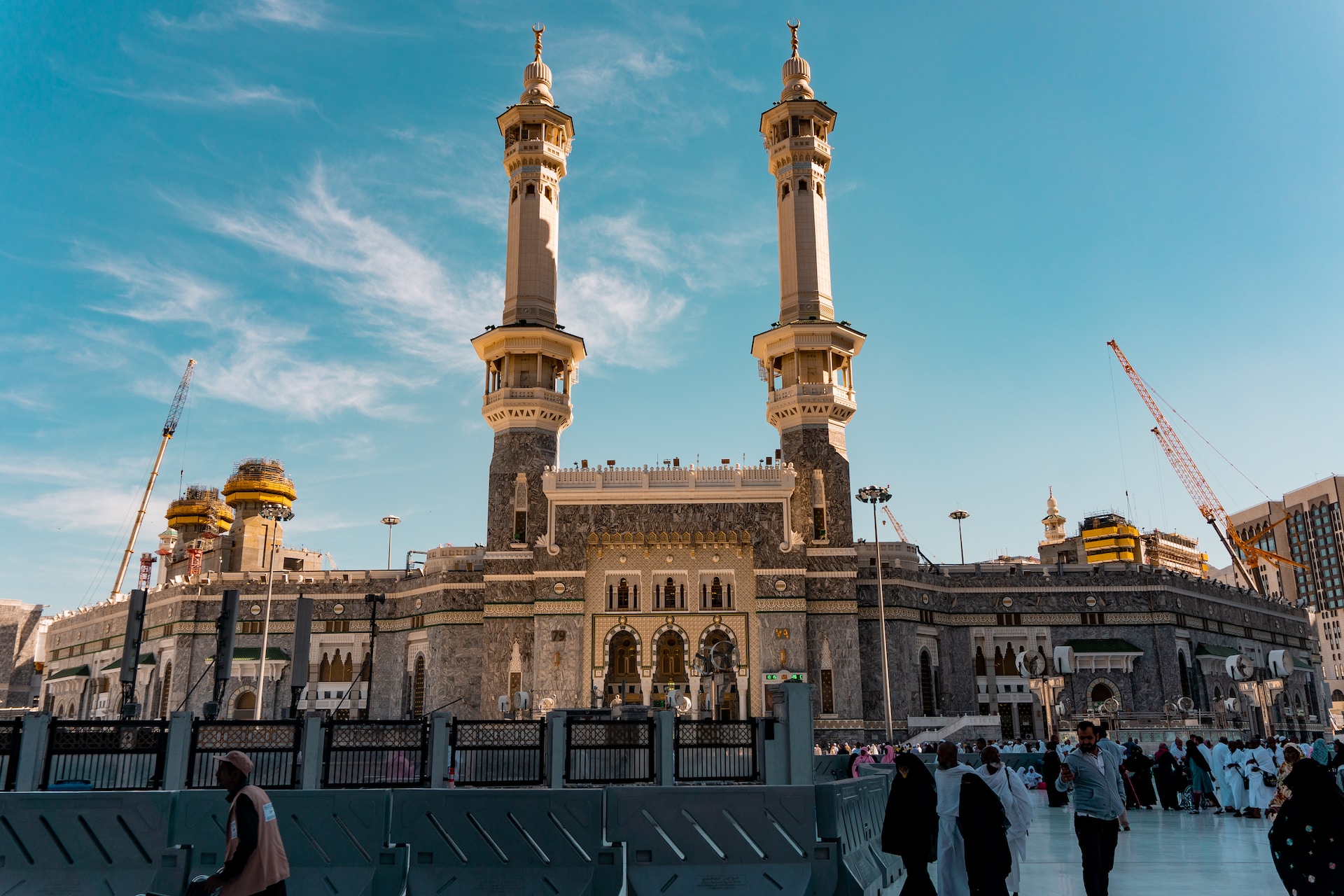
Masjid Al Haram, the Great Mosque of Mecca, is one of the oldest and largest mosques built in history. With the Holy Kaaba being the epicentre of the mosque, the mosque is designed to accommodate millions of pilgrims from all over the world throughout the year.
Here are a few facts about Masjid Al Haram.
- Masjid Al-Haram is the oldest and largest mosque in Islamic history, with an area of 356,000 square meters,
- The virtues of praying in Masjid Al Haram are explained through several ahadith. It is narrated by Hazrat Abu Hurairah (AS) that the Prophet Muhammad (P.B.U.H.) said, “A prayer in this mosque of mine is a thousand times greater than a prayer in other than it, except for the Masjid Al-Haram.” – Imam Bukhari.
- The Quran mentions Masjid Al Haram multiple times.
Mecca never remained the capital of the Islamic Empire
While Mecca holds special significance in Islam and Islamic history, the city never remained the capital of any Islamic Empire.
Islamic Empires were found in the Mediterranean and Iran which were known as the Ottomon and Safavid empires. However, Mecca was never the capital of these Islamic empires.
Moreover, when Islam reached South Asia and the Mughal Empire was founded, Mecca never remained the capital of the Mughal Empire as well.
Prophet Muhammad (P.B.U.H.) spent most of his life in Mecca
Madina is known to be the city of the Prophet. However, Prophet Muhammad (P.B.U.H.) spent most of his life in Mecca.
Prophet Muhammad (P.B.U.H.) was born in Mecca in 570 A.D. and continued to live there until the age of 53. The Holy Prophet migrated to Madina in 632 A.D., which marks the beginning of the Hijri calendar.
Mecca records the world’s largest human gathering
Hajj is one of the pillars of Islam that requires Muslims to perform a pilgrimage to the Kaaba at least once in their lifetime.
The pilgrims visit the Holy City of Mecca during the month of Dhu-al-Hijjah to perform Hajj, which results in the world’s largest human gathering.
The pilgrimage is performed by all physically and financially devout Muslims from around the world.
So far, the largest gathering for Hajj took place in 2012, when over 3 million Muslims visited Mecca to perform the ritual.
Can Non-Muslims go to Mecca?
The country follows strict laws regarding the entry of non-Muslims to Mecca.
Individuals who don’t follow the Islamic religion cannot enter Mecca. Moreover, practicing any religion other than Islam by non-Muslims is prohibited in Mecca.
The world’s largest clock is located in Mecca
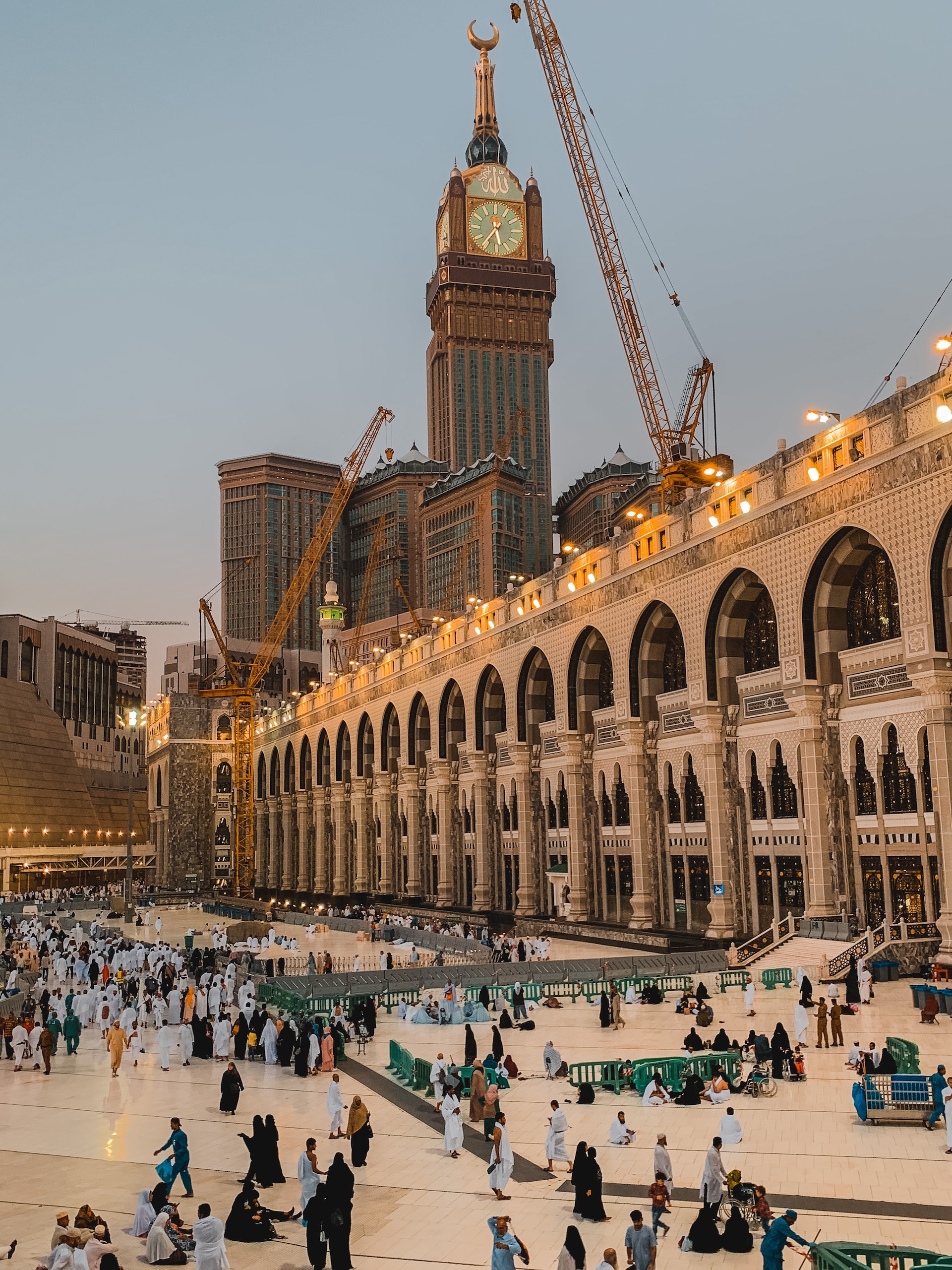
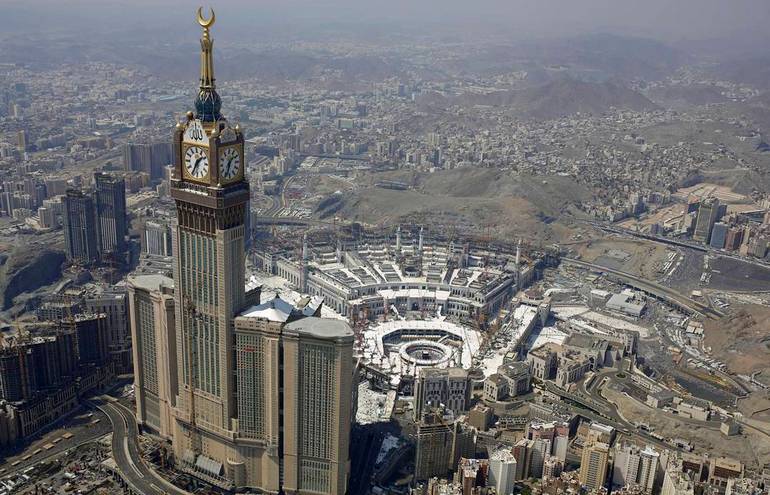
The Makkah Royal Clock Tower, which is part of the Abraj Al-Bait complex in Makkah, is home to the largest clock in the world. The diameter of the clock is 141 feet.
The building was completed in 2012 and is the third-tallest building in the world.
The clock is installed on the top eight-storeys of the building. It also features a prayer center (which is the highest prayer center in the world), an observation deck and a scientific center.
The clock issues a call for worship five times a day using its green and white L.E.D. lights and speakers. The sound of the call to prayer can be heard from over four miles away.
Mecca is expected to host over 30 million visitors annually by 2030
Following the pandemic, there was a significant drop in the number of pilgrims visiting the Holy Site for Hajj.
However, as the world returns to normal, Mecca is expected to host pilgrims visiting to participate in Hajj and Umrah.
It is expected that the city will host 30 million visitors by 2030.
Read related articles
Interested in finding out more about the Holy Kaaba and Madina?
Learn more about these special places
Summary – Facts about Mecca
Mecca is the holiest site for Muslims around the world.
The city is the birthplace of the Prophet Muhammad (P.B.U.H.) and holds great significance in Islam due to its significance in Prophet Ibrahim’s (AS) life.
It is home to the Holy Kaaba and the world’s largest mosque (and clock face), which accommodates millions of pilgrims every year.
As the extension of the Grand Mosque continues, Mecca is expected to hold over 30 million visitors annually by 2030.
]]>The Holy Kaaba is the spiritual centre of Islam. Thus, gathering in the House of the Almighty makes us feel united and equal, gives a sense of uniformity, and teaches us about our true purpose in life. In this article, we will be looking at ten amazing facts about Kaaba
Keep reading to learn more about the House of Allah SWT and its significance in Islam.
What Is the Kaaba in Islam?
Meaning cube in Arabic, Kaaba is a square-shaped monument beautifully draped in a black-coloured cotton and silk veil with gold inscriptions from the Holy Quran, also known as the Kiswah. It covers all the walls of the House of Allah SWT.
The Holy Kaaba is located in the middle of Masjid Al Haram (The Great Mosque) in the Hejaz Region of Mecca, Saudi Arabia. It is the most venerated site in Islam.
In accordance with the command of Allah SWT and following the Sunnah of Prophet Muhammad (PBUH), Muslims orient themselves towards the Kaaba during the five congregational prayers and relish the ambition of visiting the Holy Kaaba to perform the pilgrimage (Hajj). The Kaaba is also called Bait-al-Atiq, Bait-al-Haram, Bayt Allah, and Khana Kaaba.
Why Is the Kaaba Important in Islam?
Also called Khana Kaaba, the Holy Kaaba isn’t the actual residence of Allah SWT but a metaphorical representation of the Almighty’s home. It is the Qibla (direction of prayers) and the centre point for Hajj and Umrah.
The Holy Kaaba represents the oneness of Allah SWT and that all Muslims are equal in the eyes of the Almighty. Allah SWT in the Holy Quran says, “God has appointed the Ka’bah, the Sacred House, support for mankind, and the Sacred Month and the offerings and the garlands. That is so that you may know that God knows whatsoever is in the heavens and whatsoever is in the Earth, and that God is Knower of all things.” [Holy Kaaba 5:97]
“And [mention] when We made the House a place of return for the people and [a place of] security.” [Sunrah Al-Baqarah: 125]
“Allah has made the Kaaba, the Sacred House, a [means of] sustentation for mankind, and [also] the sacred month, the offering and the garlands, so that you may know that Allah knows whatever there is in the heavens and whatever there is in the earth, and that Allah has knowledge of all things.” [Holy Kaaba 5:97]
Why Do Muslims Kiss the Black Stone?
When it comes to the rituals of pilgrimage – Hajj and Umrah – every pilgrim is instructed to follow the Sunnah of Prophet Muhammad (PBUH) from performing the act of Tawaf to kissing or touching Hajr e Aswad (Black Stone), reciting Nalf at Maqam-e-Ibrahim, Sai between Safa and Marwa, Rami of the Jamaraat, and Halq and Nasir.

Kissing Hajr e Aswad is not obligatory but optional. It is believed to be the act of worshipping Allah SWT. When pilgrims touch or kiss the Black Stone, they have no connection with the stone itself but are carrying out the Sunnah of Prophet Muhammad (PBUH), knowing that the stone is sacred and came from Jannah (Heaven).
Umar (RA) once came to Hajr e Aswad, kissed it, and said, “I know that you are only a stone which can neither bring benefit nor cause harm. Were it not that I had seen the Prophet Muhammad (PBUH) kiss you, I would not have kissed you.” [Narrated by al-Bukhari, 1520; Muslim, 1720]
10 Interesting Facts about the Kaaba
The Holy Kaaba is the most sacred, special, and holiest place for Muslims worldwide. It is the House of Allah SWT and the Qibla – the prayers’ direction. Without further ado, let’s look at ten flabbergasting facts about Kaaba that you might have or might not have known.
There Are Two Holy Kaabas
Did you know that there are actually two Holy Kaabas? The one we see is located in Makkah, Saudi Arabia, whereas the other one is situated right above this Kaaba in the seven skies and is known as ‘Bait Al Mamoor.’
The Messenger (PBUH) of Allah, after returning from Miraj (Night Journey), said, “Then I was shown Bait-ul -Mamur (the Frequented House). I asked Angel Jibreel about it, and he said, “This is Al Bait-ul-Ma’mur, where 70,000 angels perform prayers daily, and when they leave, they never return to it (but always a fresh batch comes into it daily till the Day of Judgment”. [Sahih Bukhari]
What Is the Black Stone Made Of?
Located at the southeastern corner of the Holy Kaaba, Hajr e Aswad (Black Stone) is a combination of different types of rock cemented together. These fragments are believed to be made up of smaller pieces of unique rocks and tied together in a pure silver frame.
While the exact composition of the Black Stone is unknown, some say it is a stony meteorite, agate, basalt stone, or a piece of natural glass.
How Old Is the Kaaba?
The Holy Kaaba is originally more than 5000 years old. The foundation of the Kaaba was laid by Prophet Ibrahim (AS). However, the Quraysh rebuilt it in 608 CE (6th Century) to protect the Kaaba from floods in the future.
Who Can Go Inside the Kaaba?
Every Muslim is allowed inside the Holy Kaaba. However, not everyone can enter the House of Allah SWT. Only people who are authorized by the Al-Shaibi family, guardians of the Kaaba, are allowed to pray inside the sacred monument twice a year. These include government officials, exclusive guests, and dignitaries.
Another interestin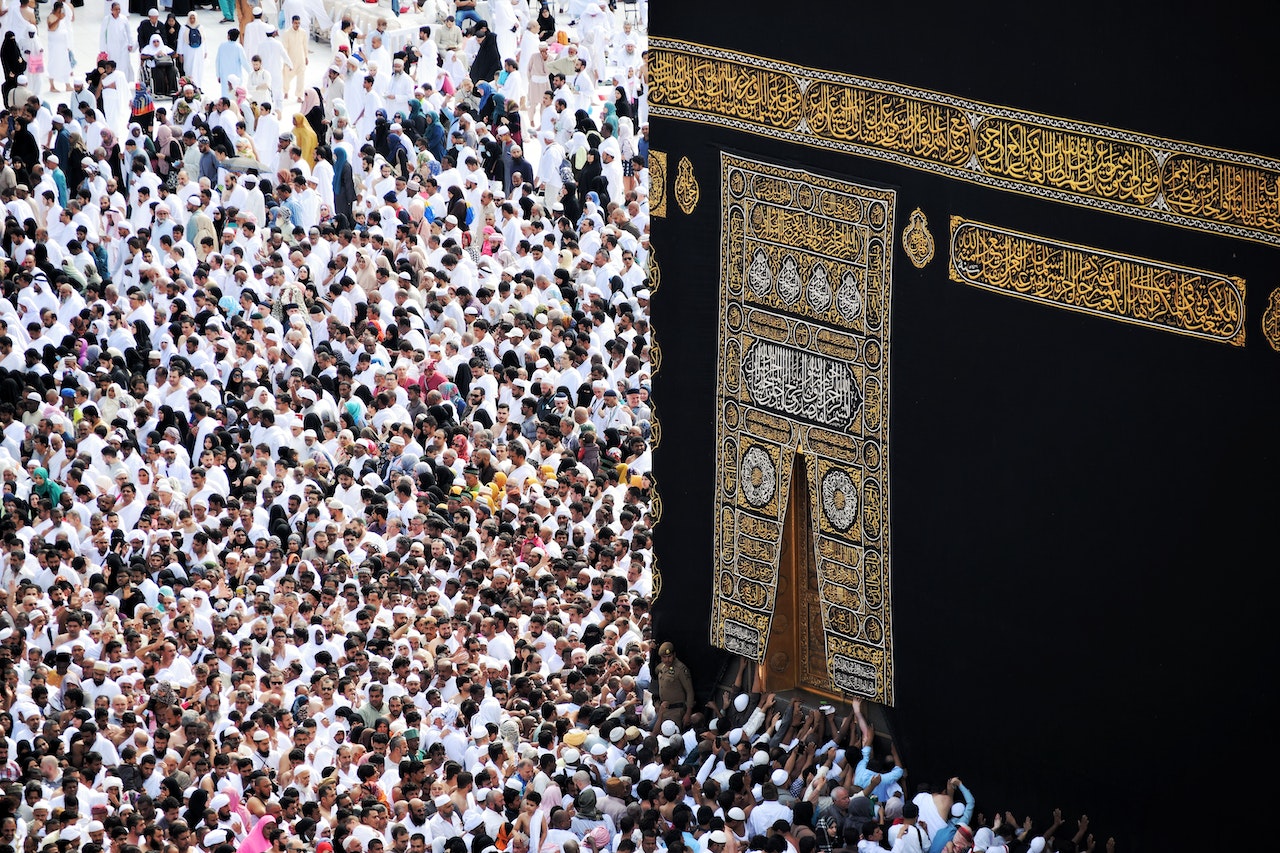 g fact about going inside the Holy Kaaba is that once you step in, you can pray Salah in any direction you like.
Lined with green coloured cloth and marbles, the interior of the Kaaba has three wooden pillars, several silver and gold lamps, a golden door (Bab al-Tawbah), and eight sacred stones featuring Arabic calligraphy.
Who Built the Kaaba?
Even in pre-Islamic times, the Holy Kaaba was a sanctuary. According to some scriptures, it is believed that the original Kaaba was first built either by angels or by Prophet Adam (AS).
However, when Prophet Ibrahim (AS) arrived in Makkah along with his son, Prophet Ismail (AS), Allah SWT commanded the Messenger to build the Holy Kaaba. The father-son duo worked devotedly to reconstruct the walls of the Holy Kaaba with their own hands. Describing this event, Allah SWT in the Holy Quran says:
“Remember We made the House a place of assembly for men and a place of safety; and take ye the station of Ibrahim as a place of prayer, and We covenanted with Ibrahim and Isma’il, that they should sanctify My House for those who compass it round, or use it as a retreat, or bow, or prostrate themselves (therein in prayer).
And remember Ibrahim (AS) said: “My Lord, make this a City of Peace, and feed its people with fruits, such of them as believe in God and the Last Day.’ He said: ‘(Yea), and such as reject Faith, for a while will I grant them their pleasure, but will soon drive them to the torment of Fire, an evil destination (indeed)!”
And remember Ibrahim and Isma’il raised the foundations of the House (with this prayer): ‘Our Lord! Accept (this service) from us: For Thou art the All-Hearing, the All-knowing.” [Holy Quran 2:125-127]
“Behold! We gave the site to Ibrahim, of the (Sacred) House, (saying): ‘Associate not anything (in worship) with Me; and sanctify My House for those who compass it round, or stand up, or bow, or prostrate themselves (therein in prayer).” [Holy Quran 22:26]
When Was the Kaaba Built?
After being constructed by Prophet Ibrahim (AS) and Prophet Ismail (AS) over 5000 years ago, the Holy Kaaba was rebuilt under the leadership of the Quraysh tribe in 608 CE. The latest reconstruction of Bayt Allah took place in 1996, during which many stones were replaced, and the foundation was made stronger.
What Is the Kaaba Built From?
Granite is used to make the structure of the Holy Kaaba. The floors within the Khana Kaaba are made from marble and limestone.
Scientific Facts about the Kaaba
The Holy Kaaba is a major aspect of the faith of Muslims globally for its symbolic representation as the House of Allah SWT and the centre of the religion of Islam. Listed below are two eye-opening facts about the Holy Kaaba:
The Holy Kaaba Was Never Meant to Be a Cube
The original dimensions of the Holy Kaaba included a semi-circle area known as Hijr Ismail (Hateem). Because the Holy Kaaba is located in the deep valley of Farhan, it was flooded almost every year.
Considering this, the Quraysh leaders decided to rebuild the revered monument just a few years before Prophet Muhammad (PBUH) received the first revelation.
The Quraysh leaders agreed to use income from pure sources only for the reconstruction, so they could only renovate the cubic structure. Today, the height of the Holy Kaaba is 43 ft (13.1 metres) and can be seen from outer space.
There’s a High Magnetic Force Around the Holy Kaaba
A lesser-known fact about the Holy Kaaba is that birds and planes cannot fly over the Bayt Allah because of the high magnetic attraction in the area. This is precisely why despite the popularity and significance of Mecca, there is no airport in the city.
Summary – Facts about Kaaba
Every day, millions of Muslims all around the world prostrate five times a day to pray in the direction of the Holy Kaaba, the cube-shaped House of Allah SWT. Bayt Allah, situated in the valley of Hejaz region in Makkah, Saudi Arabia, is one of the holiest places on Earth.
It is a dream of every Muslim and an obligation of all physically and financially stable followers of Islam to visit the Holy Kaaba at least once in their lifetime in order to perform Hajj.
We hope that this article helped you learn some surprising yet interesting facts about Kaaba. When visiting the House of Allah SWT, use the opportunity to seek forgiveness, cleanse your soul, and strengthen your connection with the Almighty.
]]>Names for Makkah in the Quran
- Allah (ﷻ) has called Makkah by five names in the Quran: Makkah, Bakkah, Al-Balad, Al-Qaryah and Ummul-Qura.
- In Surah Al-Imran, Allah (ﷻ) states: “The first House [of worship] to be established for people was the one at Bakkah (Makkah). It is a blessed place; a source of guidance for All people.” [3:96]
Praise of Makkah by the Prophet (ﷺ)
- When the Muslims conquered Makkah. The Prophet (ﷺ) said,“Allah had made this city sacred the day He created the heavens and the earth and it’s sanctity shall remain until the Day of Qiyamah (Day of Judgement). Its thorns cannot be broken, its animals cannot be harmed and things fallen on its ground cannot be picked up unless with the intention of returning it to its owner or making public announcements (to locate the owner). It is also forbidden to cut the grass that (naturally) grows here.” [Muslim]
- The Prophet (ﷺ), sitting on his camel in the Al-Hazwarah market, addressed Makkah saying, “By Allah, you are the best land of Allah, the most beloved land of Allah to Allah. Had I not been driven out of you, I would not have left you.” [Zaadul Ma’aad]
Reward of praying in Masjid al-Haram
- The reward of prayer offered in Masjid al-Haram is multiplied many times. Jabir bin Abdullah (رضي الله عنه) narrates that the Prophet (ﷺ) said:“A prayer in this mosque of mine is better than one thousand prayers anywhere else, except for al-Masjid al-Haram. A prayer in al-Masjid al-Haram is better than one hundred thousand prayers (anywhere else).” [Ahmad]
- The Prophet (ﷺ) once remarked: “There is no city in which Dajjal will be unable to enter besides Makkah and Madinah. Every street will be lined with angels standing in rows to protect them.” [Bukhari]
Location of Makkah
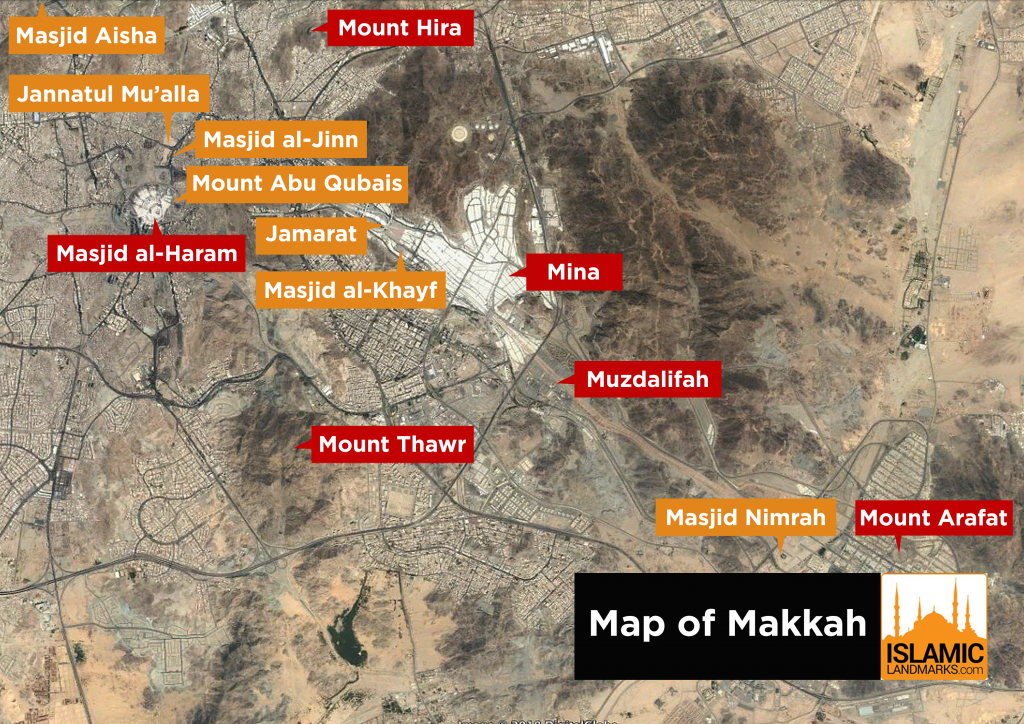
- In the time of the Prophet (ﷺ), camel caravans were a major part of Makkah’s bustling economy. Alliances were struck between the merchants in Makkah and the local nomadic tribes, who would bring goods – leather, livestock, and metals mined in the local mountains – to Makkah to be loaded on the caravans and carried to cities in Syria and Iraq. Historical accounts also provide some indication that goods from other continents may also have flowed through Makkah.
- Muslim scientists have provided evidence to show that Makkah is the true centre of the Earth, one argument being that unlike other longitudes, Makkah’s is in perfect alignment to magnetic north.
References: The History of Makkah Mukarramah – Dr. Muhammad Ilyas Abdul Ghani, Holy Makkah – Shaikh Safiur-Rahman Mubarakpuri, Wikipedia
]]>Praying in Masjid al-Haram
- Abu Hurairah (رضي الله عنه) narrated that the Prophet (ﷺ) said, “A prayer in this mosque of mine is a thousand times greater than a prayer in other than it, except for the Masjid al-Haram.” [Bukhari; Muslim]
- Allah the Almighty has made special rulings which pertain to the Sacred Mosque of Makkah. Inside, a Muslim is not allowed to fight, hunt birds or animals, cut off grown plants and flowers, or pick up something not his/hers unless he/she can ascertain the ownership of the object. One of the greatest merits of praying in the Sacred Mosque is that a Muslim will have his/her reward multiplied.
Development of Masjid al-Haram through history
Below is a timeline of how the Masjid al-Haram has been expanded and by who from the era of the Quraysh to the present day. Note that there are some disagreements among historians on the exact details of expansions and dates.
1. In the time of the Quraysh
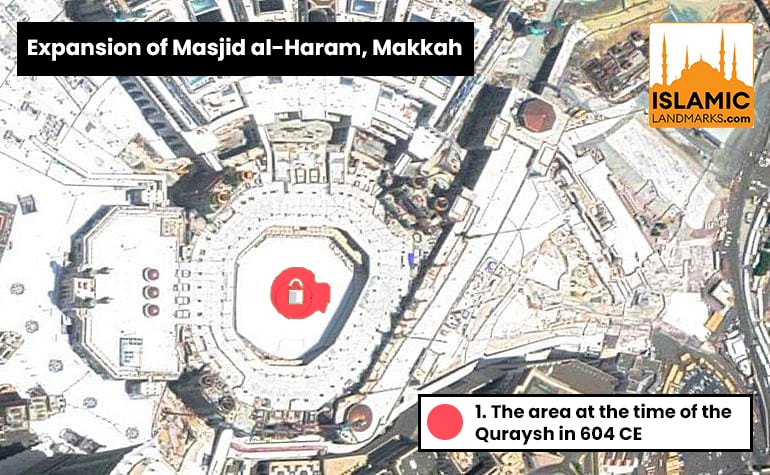
- The Quraysh rebuilt the Ka’bah in 604/605 CE. The highlighted area shows the approximate open area around the Ka’bah at the time. This was 5 years before the Prophet (ﷺ) received the first revelation of the Quran.
2. Expansion by Umar (رضي الله عنه)
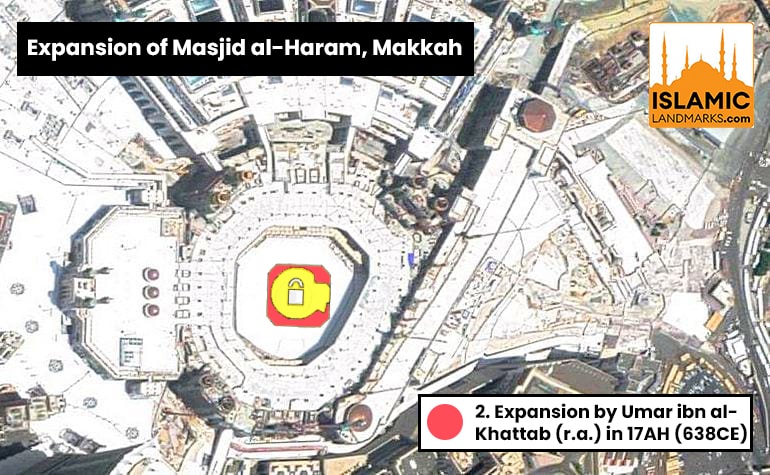
- During his Caliphate, Umar (رضي الله عنه) purchased and then demolished the houses immediately around the Ka’bah to enlarge the space. A low wall was built around to demarcate the area and torches were placed on it.
3. Expansion by Uthman (رضي الله عنه)
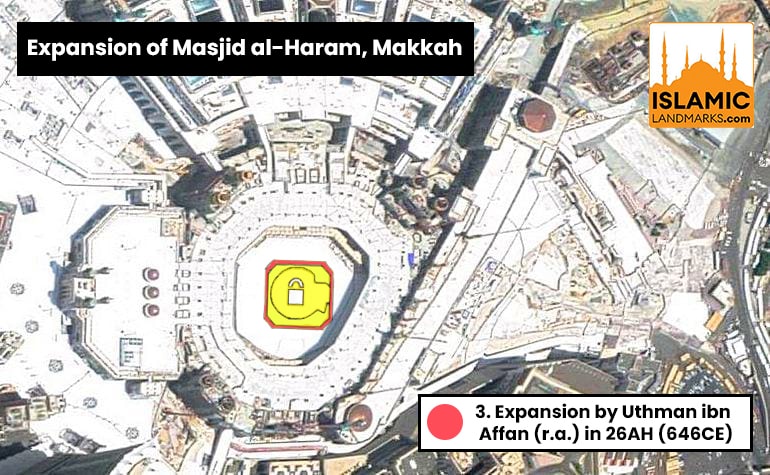
- During his Caliphate, Uthman (رضي الله عنه) purchased more of the neighbouring houses and demolished them to increase the Haram area. The section behind the Maqame Ebrahim was covered with a wooden roof as this was where salah took place.
4. Expansion by Abdullah Ibn al-Zubair (رضي الله عنه)
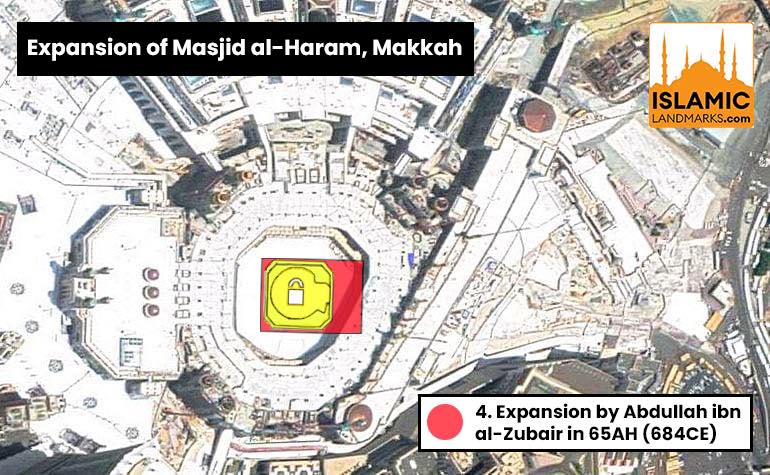
- Abdullah Ibn al-Zubair (رضي الله عنه) further extended the Haram behind the Maqame Ebrahim. He also reconstructed the Ka’bah on the foundations of Ebrahim (عليه السلام), after it had been damaged by the first Umayyad siege.
5. Expansion by al-Walid ibn al-Malik
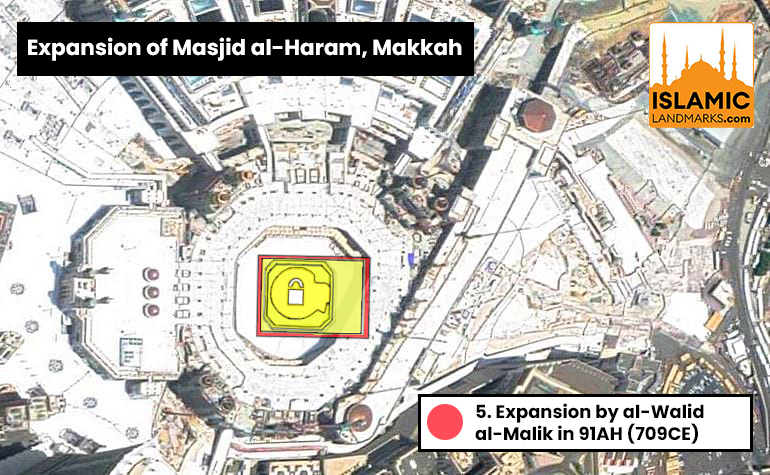
- During the Umayyad era, the outer walls of the Haram were raised. All four sides of the Kab’ah started being used for congregational prayers with prayer lines (sufuf) encircling the Ka’bah. A minaret was added for the first time.
6. Expansion by Abu-Jafar al-Mansur
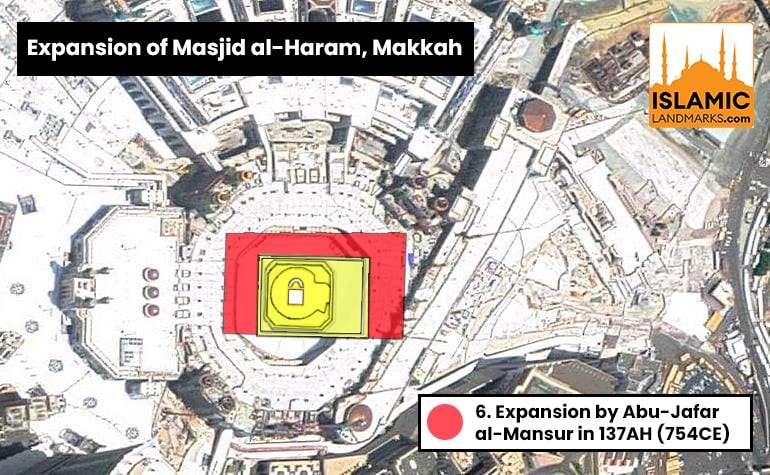
- The Abbasid Caliph, Abu-Jafar al-Mansur further enlarged the Haram in the mid-8th century CE. Some historians are of the view that his expansion was only a little on the northern side.
7. Expansion by al-Mahdi al-Abbasi
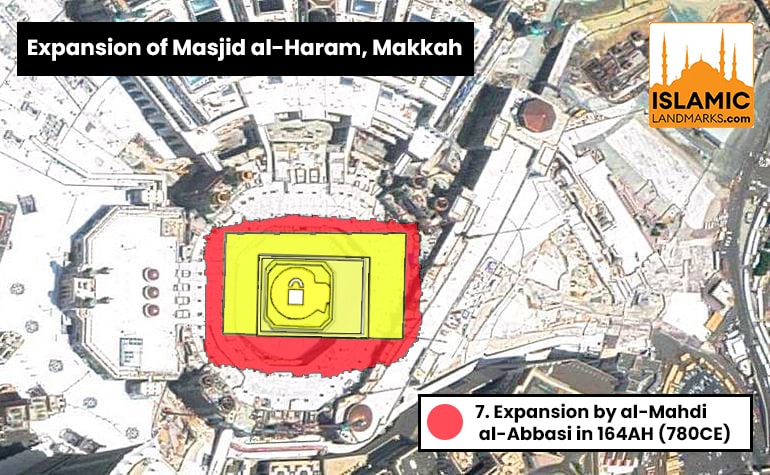
- Abbasid Caliph al-Mahdi made a large expansion all around the Haram after acquiring neighbouring houses and demolishing them. His son Musa succeeded him and completed the work during his reign.
8. Expansion by al-Mu’tadid al-Abbasi
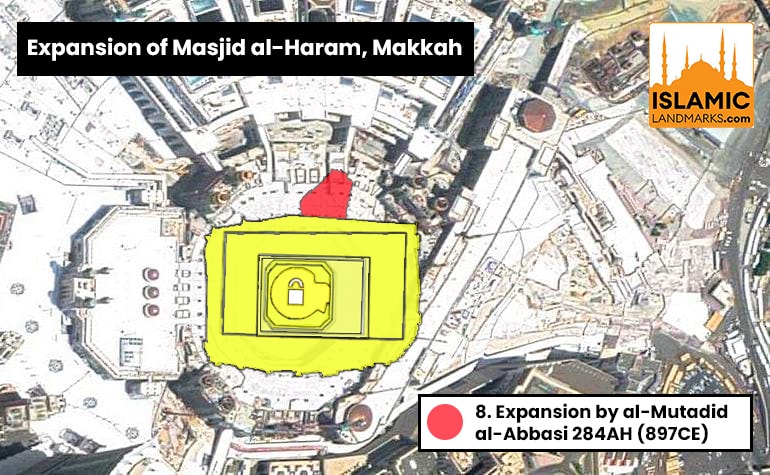
- Abbasid Caliph al-Mu’tadid built a place of residence for Hajj pilgrims on the side of the Haram facing the Hateem.
9. Expansion by al-Muqtadir al-Abbasi
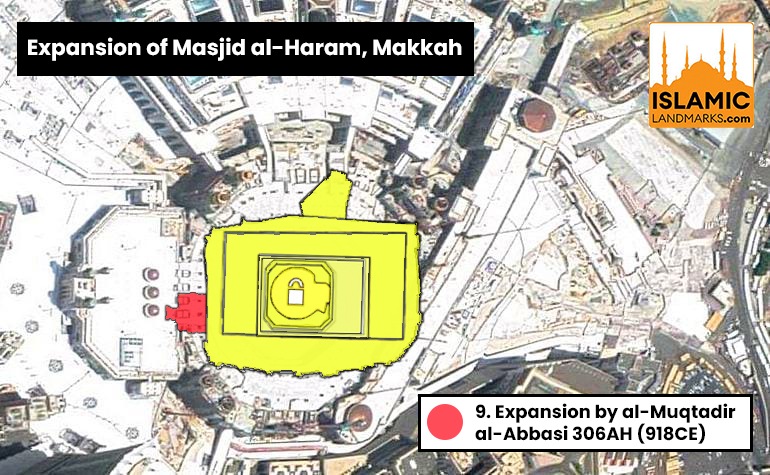
- Abbasid Caliph al-Muqtadir Billah made a small extension on the side where the Bab-e-Ebrahim (the Gate of Ebrahim) was located.
Ottoman era
- In the Ottoman era, the Haram underwent major renovations. In 1571, Sultan Selim II directed the court architect Sinan (who designed many of the mosques in Istanbul) to make improvements. He built the support columns around the Mataf and replaced the flat roof with small domes.
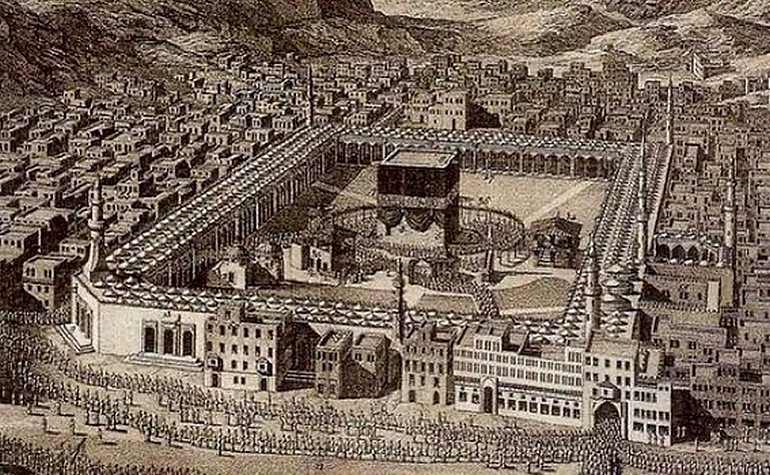
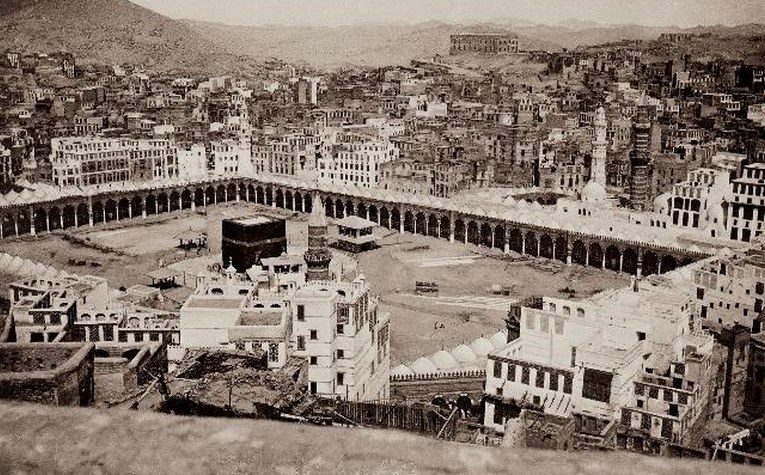
- The changes made by Sinan are the oldest surviving features of the present Masjid al-Haram. Another renovation was undertaken by Sultan Murad IV in 1630, who also rebuilt the Ka’bah. After this the Haram remained largely unchanged until the Saudi era in the 20th century.
10. Expansion by King Saud
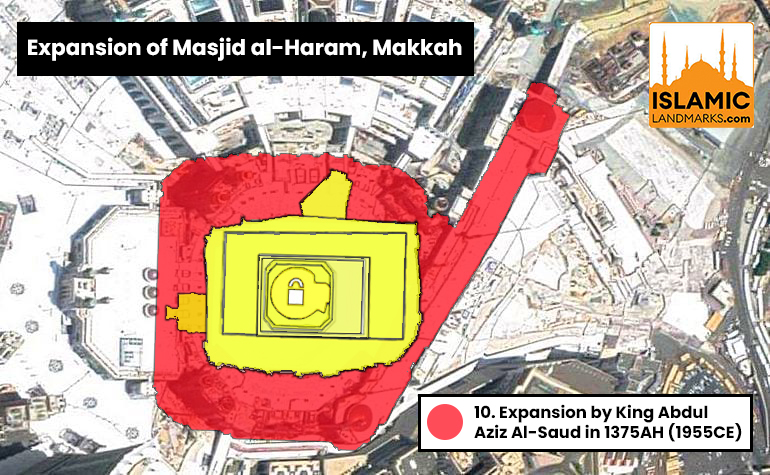
- The first Saudi expansion of the Haram began in 1955 during the reign of King Saud. Four more minarets were added, the flooring was replaced but many of the historical features built by the Ottomans were removed. The work was completed in 1973.
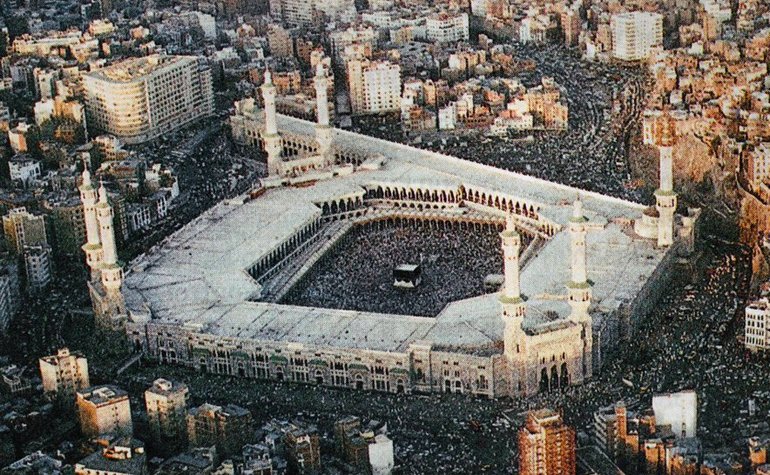
- The first Saudi expansion integrated the Mas’aa (the walkway between As-Safa and Al-Marwah) within the Haram. It increased the total area of Masjid al-Haram from around 27,000 square meters to 152,000 square meters. This increased its maximum capacity to 500,000 worshippers.
11. Expansion by King Fahd

- The second Saudi expansion, under King Fahd, was done between 1982-1988 to accommodate the increasing number of pilgrims to Masjid al-Haram. Surrounding buildings were razed to create a new wing and outdoor praying space.
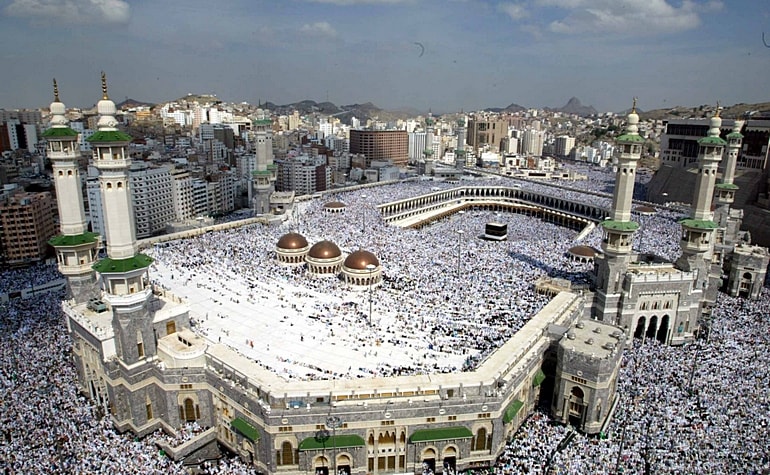
- As part of the expansion work, the Haram was fitted with escalators and pedestrian tunnels. An advanced indoor and outdoor air-conditioning system was also introduced. After the enlargement, Masjid al-Haram covered 356,800 square meters and could accommodate 820,000 worshippers.
12. Expansion by King Abdullah
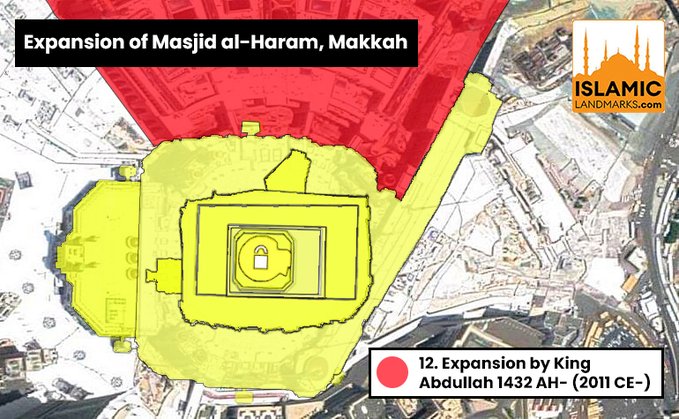
- The third Saudi expansion was initiated in 2011 by King Abdullah, the largest in the history of the Haram. More of the neighbouring buildings were to be razed to increase the indoor and outdoor praying space. The Mataf area was also to be enlarged.

References: The History of Makkah Mukarramah – Dr. Muhammad Ilyas Abdul Ghani, IslamiCity.com, Britannica.com, Wikipedia. Mecca the Blessed, Medina the Radiant: The Holiest Cities of Islam – Seyyed Hossein Nasr
]]>Mention in the Quran
- Regarding the Ka’bah, Allah (ﷻ) mentions in the Quran in Surah Al-Ma’idah: “Allah has made the Ka’bah – the Sacred House – a means of support for people.” [5:97]
The development of the Ka’bah

- The Ka’bah has been built or adjusted on several occasions throughout history. There are differences in opinion between scholars about the builders but the general view in order is:
1. The angels
2. Prophet Adam (عليه السلام)
3. Prophet Sheeth (عليه السلام)
4. Prophet Ebrahim (عليه السلام) with his son Ismail (عليه السلام) – (c.2000 BCE)
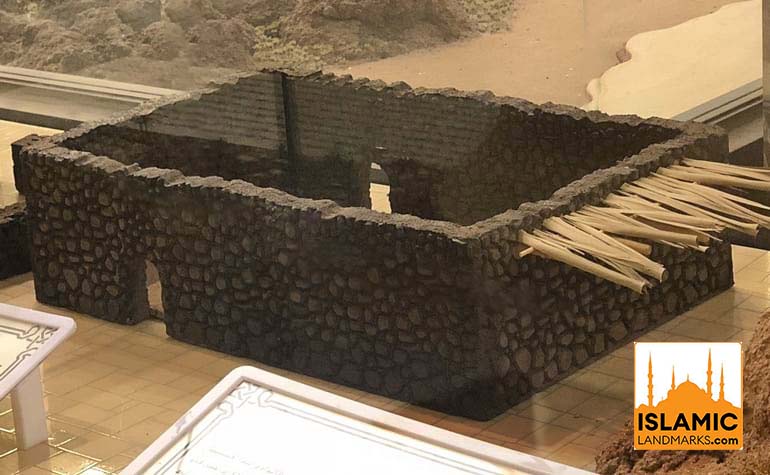
- The original Ka’bah that was built by Adam (عليه السلام) had been destroyed by the Great Flood during the era of Nuh (عليه السلام). Almost no trace of it was left, except for a small hill that covered its foundations.
- It remained like this until the time of Ebrahim (عليه السلام). Allah (ﷻ) commanded Ebrahim (عليه السلام) to rebuild the Ka’bah along with his son Ismail (عليه السلام). They built it again on the same foundations.
- Ebrahim (عليه السلام) stood on a stone known as the Maqame Ebrahim while he was building the Ka’bah. As Ismail (عليه السلام) would pass stones to continue the build the Maqame Ebrahim miraculously continued rising higher as the walls rose. Allah (ﷻ) caused the trace of his footprints of Ebrahim (عليه السلام) to remain on the stone as a reminder to the believers among his descendants.
- The construction made by Ebrahim (عليه السلام) was rectangular in shape and did not have a roof. It had two openings at ground level, one on the easter wall, the other on the western wall. There were no actual doors, people would enter the Ka’bah, pray and then leave.
5. The Amaaliqah people
6. The Jurhum tribe
7. Qusay bin Qilab
8. The Quraysh – (605 CE)
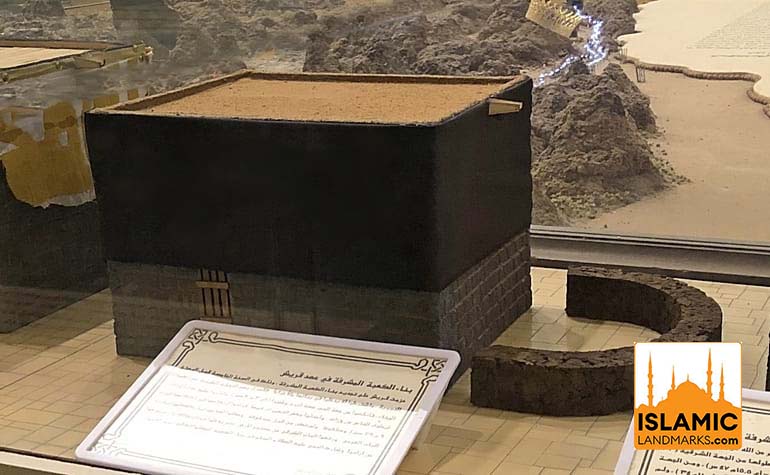
- The Ka’bah had become eroded over time and as a result of regular flooding in Makkah, it had also sustained severe water damage.
- In addition, people would place their valuables inside as it was considered a very sacred place that nobody would dare violate. However, instances had occurred where thieves had looted the treasure that had been placed inside.
- Due to these factors, the Quraysh decided to raze the Ka’bah and do a full renovation. Even though they were staunch idol worshippers they greatly valued the sanctity of the Ka’bah and vowed to only use lawful sources of money for the construction work. However, the money ran short, resulting in an area of approximately three meters that could not be included within the walls. They demarcated this area by building the low semi-circular wall called the Hateem.
- The Quraysh raised the eastern side door high above the ground to prevent people entering at will. The door on the opposite side was sealed off. They also added a roof and a water outlet called the Meezab-e-Rahmah. The height was raised to approximately 8.64m.
9. Abdullah bin Zubair (رضي الله عنه) – (685 CE)
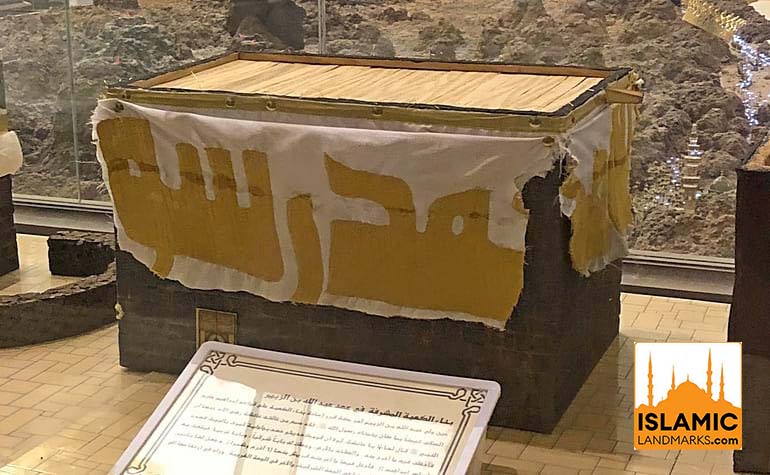
- During the era of Abdullah bin Zubair (رضي الله عنه) the Ka’bah was damaged by catapult fire in 64 AH when the army of Yazeed-bin-Muawiyyah laid siege to Makkah. One of Abdullah bin Zubair’s companions lit a fire, a spark flew off and set alight the kiswah (covering) of the Ka’bah. The wooden portions were burned which necessitated its demolition and reconstruction.
- Abdullah bin Zubair (رضي الله عنه) reconstructed it on the foundations of Ebrahim (عليه السلام), thus fulfilling what the Prophet (ﷺ) had wished for, as the construction made by the Quraysh was about three meters short because they had run out of lawful earnings to finance the build.
10. Hajjaj bin Yusuf – (693 CE)
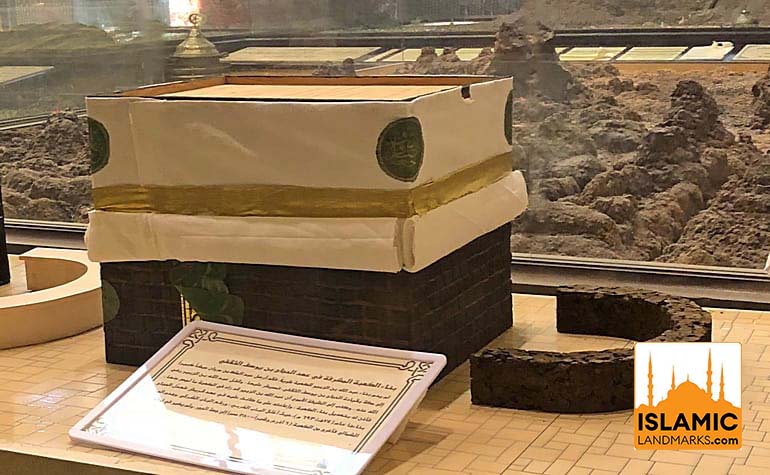
- When Hajjaj-bin-Yusuf had the governership over Makkah he informed the Ummayad Khalifah Abdul Malik Ibn Marwan that Abdullah bin Zubair had changed the Ka’bah to something that was different to how it was in the lifetime of the Prophet (ﷺ). He gave permission to change it again and in 73 AH it was changed to its previous state.
- The Ka’bah reverted back to a cube shape, the Hateem was reinstated and the door on the western side was blocked again.
- However, when Abdul Malik came to know the Hadith of the Prophet (ﷺ) of how he had desired the Ka’bah to have been on the original foundations of Ebrahim (عليه السلام) he was full of remorse about what he had done.
11. Sultan Murad IV – (1630 CE)
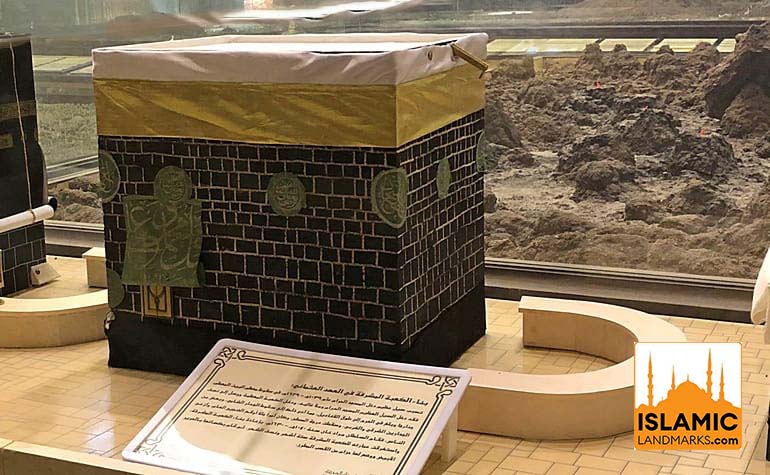
- Torrential rain fell in Makkah in Sha’ban 1039 AH resulting in heavy flooding in Masjid al-Haram to a point where the water level reached halfway up the walls of the Ka’bah. The stones had deteriorated over the centuries and the pressure of the water eventually led to the eastern and western walls to collapse.
- After the flood receded there was a clean-up operation in Masjid al-Haram and a meeting was held to discuss the rebuilding of the Ka’bah. The Ottoman ruler of the Hijaz at the time was Sultan Murad IV. and the reconstruction started under his guidance in Ramadhan that year.
- The Ka’bah was rebuilt in the same manner as had been done by the Quraysh and Hajjaj bin Yusuf. The cube shape was retained as well as the semi-circle for the Hateem. However, the height was increased to maintain its prominence among all the surrounding buildings. A plaque was displayed inside the Ka’bah in which the name of Sultan Murad and the date of the construction were inscribed.
12. King Fahd – (1995)
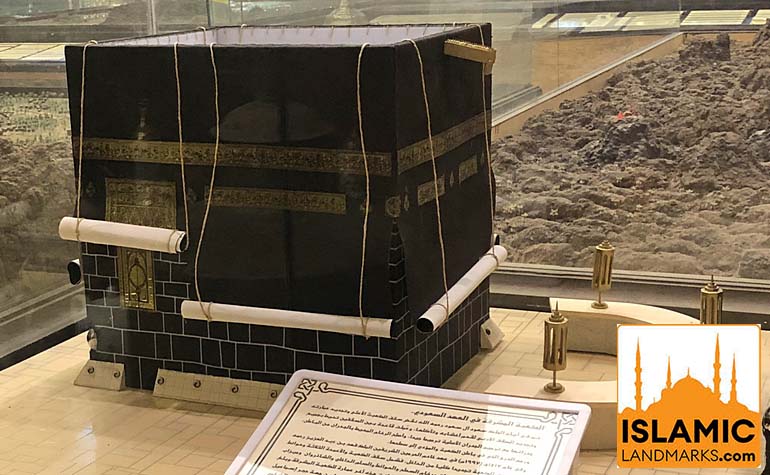
- Over the past few centuries there had been deterioration to the structure of the Ka’bah due to the effect of weather, wear and tear and the passage of time.
- This resulted in an extensive renovation during the reign of King Fahd in 1995. This has been the last major alteration of the Ka’bah.
- The external brickwork was repaired, cleaned and smoothed. Most of the work was done inside the Ka’bah. New marble was laid on the floor and walls, the three pillars from the time of Abdullah bin Zubair (رضي الله عنه) were replaced and a new green coloured cloth was laid on the walls and ceiling.
Baytul Ma’moor
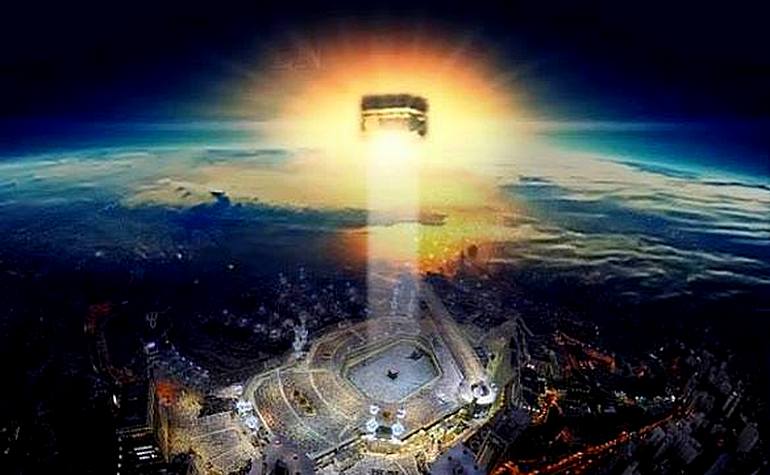
- Directly above the Ka’bah, at its zenith, there is a corresponding place in the heavens called the Baytul Ma’moor which holds the same status there as the Ka’bah does here on earth. Each day seventy thousand angels engage in worship there and none of them get a second opportunity to present themselves there again. The Baytul Ma’moor is such a sacred and honoured place that Allah (ﷻ) takes an oath on it in the Holy Quran in Surah Toor:“ And I swear by the Baytul Ma’moor. (The much visited house)” [52:4]
- During the Night of Ascension (mi’raj) when the Prophet (ﷺ) reached the seventh level of heaven, he met the Prophet Ebrahim (عليه السلام) resting against the Baytul Ma’moor. Ebrahim (عليه السلام) returned the greeting of his descendant and testified that Muhammed (ﷺ) was the Prophet of Allah.
Virtues of the Ka’bah
- Hadhrat Abdullah bin Abbas (رضي الله عنه) reports that the Prophet (ﷺ) said:“One hundred and twenty mercies descend upon the Ka’bah every day and night; sixty for those performing tawaf, forty for those engaged in salah and twenty for those who are merely looking at the Ka’bah.” [Bayhaqi]
- The noblest shade on earth is that of the Holy Ka’bah. Khabbab (رضي الله عنه) reports, “We once approached the Prophet (ﷺ) with a difficulty and found him sitting in the shade of the Ka’bah, leaning on his shawl.”
Size of the Ka’bah
- Although the Ka’bah may look like a cube, all the sides and height are of differing sizes. This image shows the sizes of each side, the height is approximately 13.1m.

Orientation of the Ka’bah
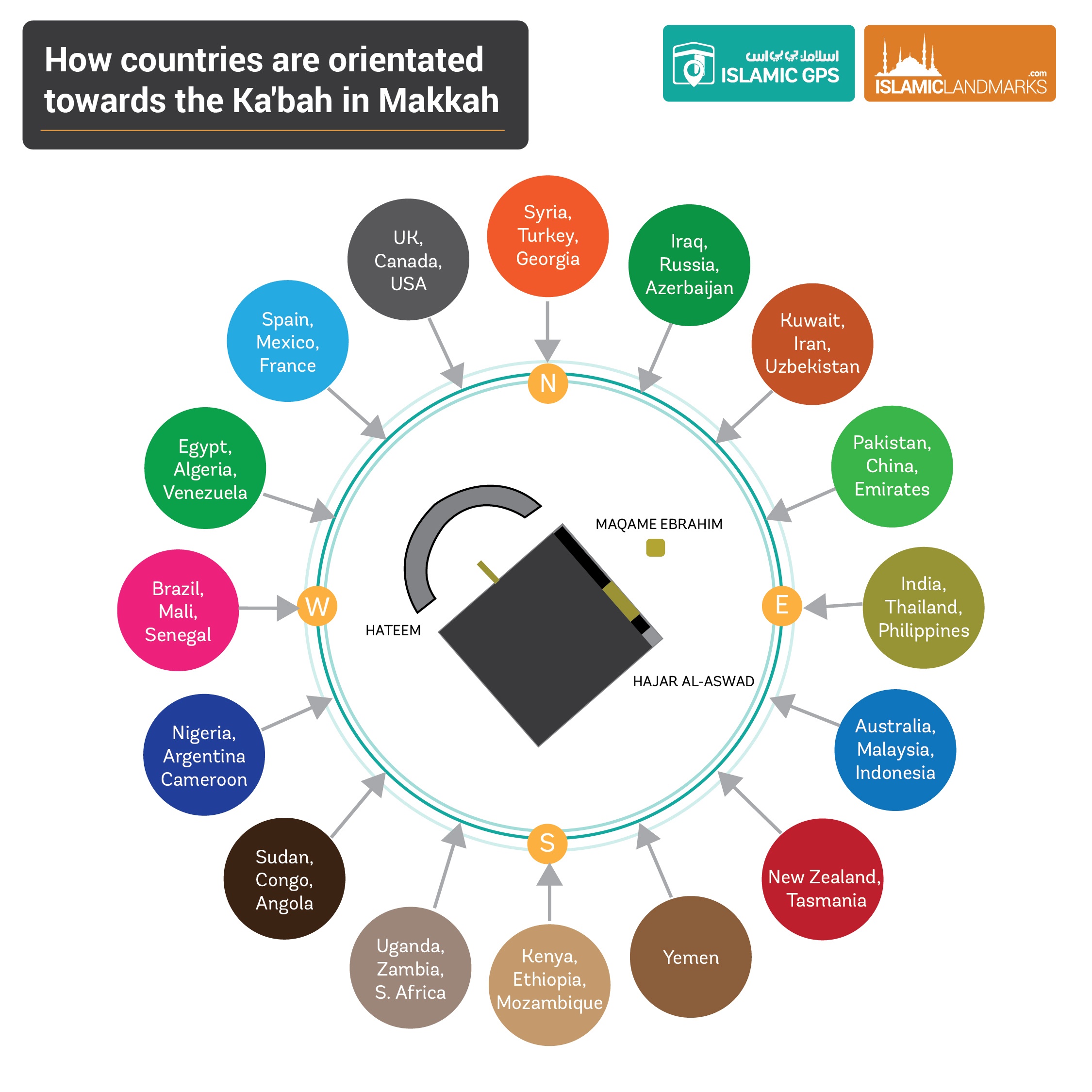
- The north corner of the Ka’bah faces towards Syria, Jordan and Palestine; the east corner (where the Hajar al-Aswad is) faces towards Oman, India and Malaysia; the south corner (Rukun Yamani) faces towards Yemen, Mauritius and Kenya; and the west corner faces towards Egypt, Morocco and Spain.
- The infographic below shows how some of the main countries around the world are approximately orientated towards the Ka’bah:
- The covering of the Ka’bah is known as the Kiswah and was first placed by the prophet Ismail (عليه السلام).
Function of the Ka’bah
- Muslims do not pray to the Ka’bah, it functions merely as a unifying direction point. During his time in Makkah, the Prophet Muhammad (ﷺ) used to pray towards Bayt-al-Maqdis (Jerusalem), with the Ka’bah in front of him.
- When he (ﷺ) migrated to Madinah, he prayed towards Jerusalem for 16 months, but he hoped it would be changed to the Ka’bah. Allah (ﷻ) then revealed the following verse in the Quran in Surah al-Baqarah: “Verily, We have seen the turning of your (Muhammad’s) face towards theheaven. Surely, We shall turn you to a Qibla (prayer direction) that shall please you, so turn your face in the direction of al-Masjid al-Haram (at Makkah). And wheresoever you people are, turn your faces (in prayer) in that direction.” [2:144 ]
The Ka’bah will be destroyed towards the end of times
- There are Ahadith that confirm that the Ka’bah will be destroyed towards the end of time. Abu Hurairah (رضي الله عنه) narrated that the Prophet (ﷺ) said: “The Ka’bah will be destroyed by Dhus-Suwaiqatain (a man with thin legs) from Abyssinia (Ethiopia).” [Bukhari]
Infographic of the Ka’bah
- Click on the image to enlarge.
References: The History of Makkah Mukarramah– Dr Muhammad Ilyas Abdul Ghani, Holy Makkah – Shaikh Safiur-Rahman Mubarakpuri, Kabahinfo.com
]]>The Ka’bah during the time of the Quraysh
- At the time of the Qurash the Ka’bah had two doors at ground level, one on the eastern side, the other on the west. People would come and deposit their valuables inside the Ka’bah. Up until that point, the Ka’bah did not have a roof.
- The Quraysh rebuilt the Ka’bah about five years before the Prophet (ﷺ) commenced his Prophethood. They closed the western door and raised the eastern one in order to better control who entered inside. They also made a roof for the first time. The Prophet (ﷺ) helped in the construction.
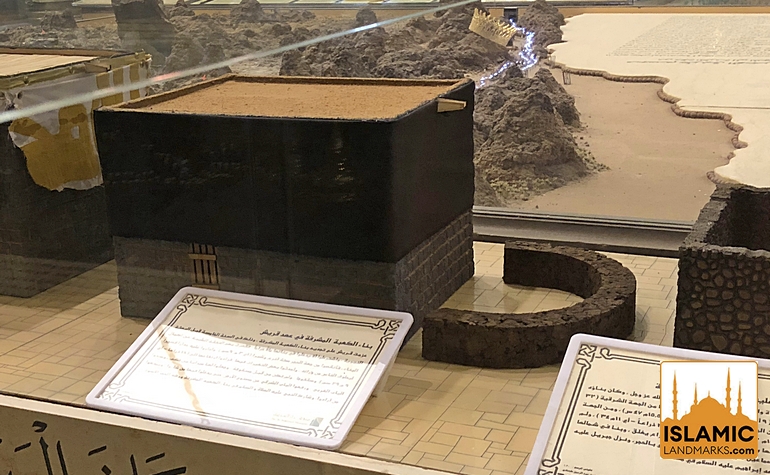
- The Quraysh had erected their chief idol, Hubal, within the centre of Ka’bah. It was made of red carnelian and shaped like a human with the right hand broken which the Quraysh had replaced with gold. In front of the idol were seven arrows of fate and when the pagan Arabs were undecided on a matter they would go to Hubal and throw the arrows in front of him and took ‘advice’ based on how the arrows appeared.
Incident in the time of Jahiliyyah
- During the period of Jahiliyyah (Ignorance), a man and woman from the Yemenite tribe of Jurhum called Isaf and Na’ilah committed adultery inside the Ka’bah. Allah (ﷻ) turned them into stones. When they were found the next day, they were carried outside and were set up at the Ka’bah as a warning. Over time these two stones were worshipped along with the other idols. One of the stones was placed right next to the Ka’bah; the other one was set up at the spring of Zamzam. Finally, the Quraysh ordered that the stone next to the Ka’bah to be carried to the other one at Zamzam. From then on, people slaughtered their sacrificial animals at that spot.
Declaration of the boycott of the Muslims was hung inside the Ka’bah
- When Islam began to spread, the Quraysh became more embittered and could not tolerate the Prophet (ﷺ) any longer. The chiefs drew up a document which called for the social and economic boycott of the Prophet (ﷺ) and all those who supported him and his family. All of them signed this document on 1st Muharram of the seventh year of the Prophethood and the scroll was hung up inside the Ka’bah to give it full sanctity.
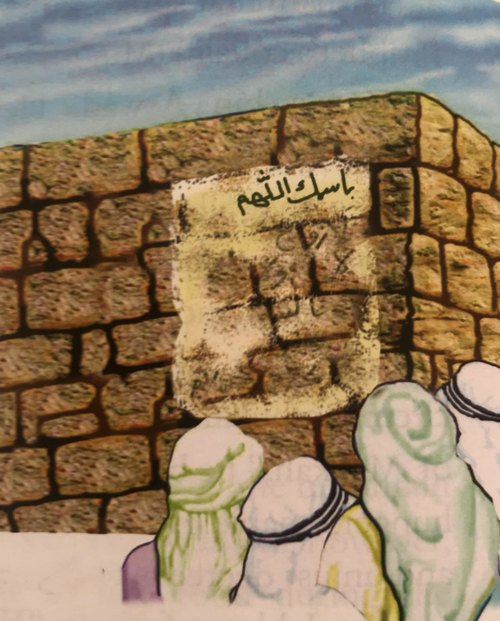
- For three long years the Prophet (ﷺ) and his kinsmen were ostracised in the She’eb Abi Talib, a narrow valley in Makkah. Food was so scarce that they had to resort to eating leaves of trees and their children’s cries could be heard all over the valley. At last by the Grace of Allah, the scroll was eaten up by white ants save for the name of Allah and the boycott was uplifted.
The Prophet (ﷺ) goes inside the Ka’bah in the conquest of Makkah
- When the Prophet (ﷺ) arrived in Makkah on the day of victory, he made tawaf around the Ka’bah seven times and touched the Hajar al-Aswad with his staff. He then had the door of the Ka’bah opened and went inside. Accompanying him were Usama bin Zaid and Bilal (رضي الله عنهم). He (ﷺ) closed the door, performed prayer and stayed for some time.
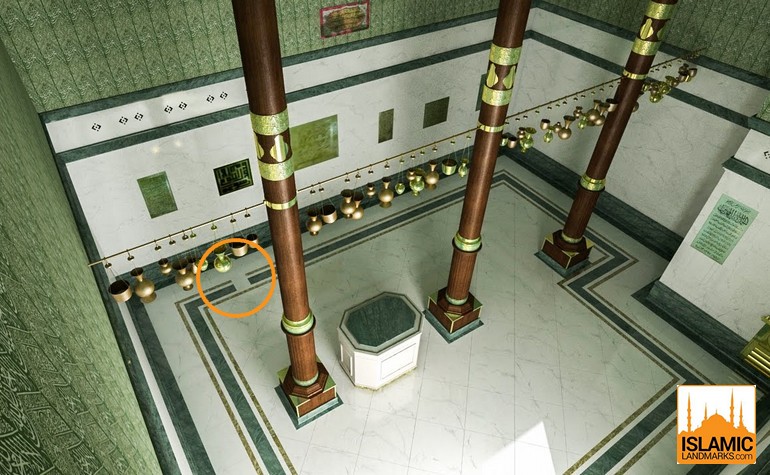
- Inside the Ka’bah were statues of Ebrahim (عليه السلام) and Ismail (عليه السلام), along with pictures of angels and a picture of Ebrahim (عليه السلام) with divining arrows in his hand. It has also been reported that there was an icon painting of the Virgin Mary and the child Christ which had been done by a Christian. The Prophet (ﷺ) ordered all of them to be destroyed.
- The Prophet (ﷺ) also had the ‘chief’ idol Hubal destroyed as well as all the other idols surrounding the Ka’bah.
Renovations throughout history
- The interior of the Ka’bah has been maintained by different rulers throughout history. Abdullah bin Zubair (رضي الله عنه) added the three support pillars we see inside.
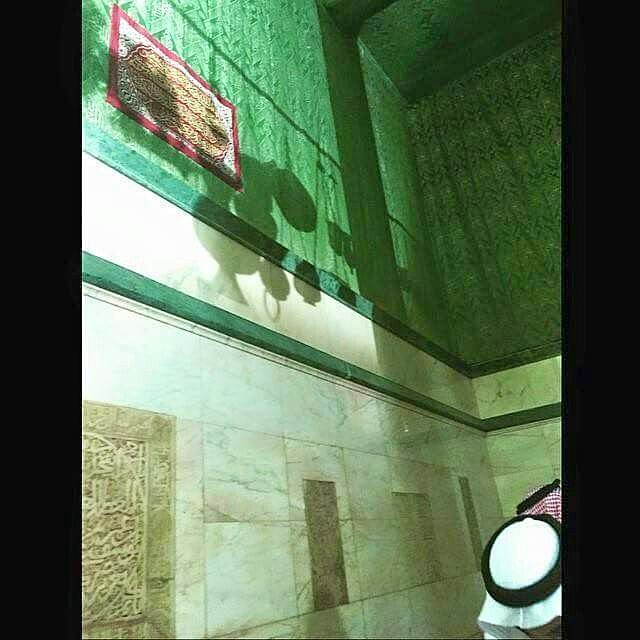
- Along the walls of the Ka’bah are plaques commemorating the work done on the Ka’bah by different rulers.
The inside of the Ka’bah today
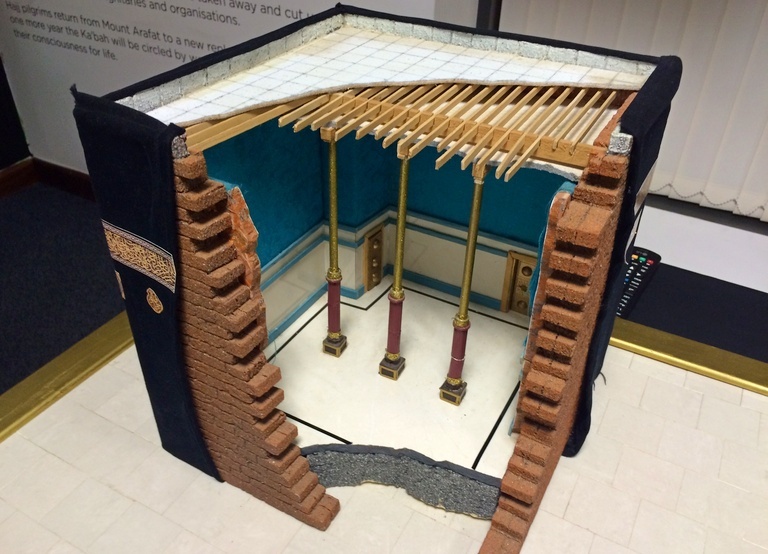
- In 1995 an extensive renovation of the Ka’bah took place during the reign of King Fahd. As well as cleaning the external brickwork a complete restoration of the interior was undertaken.
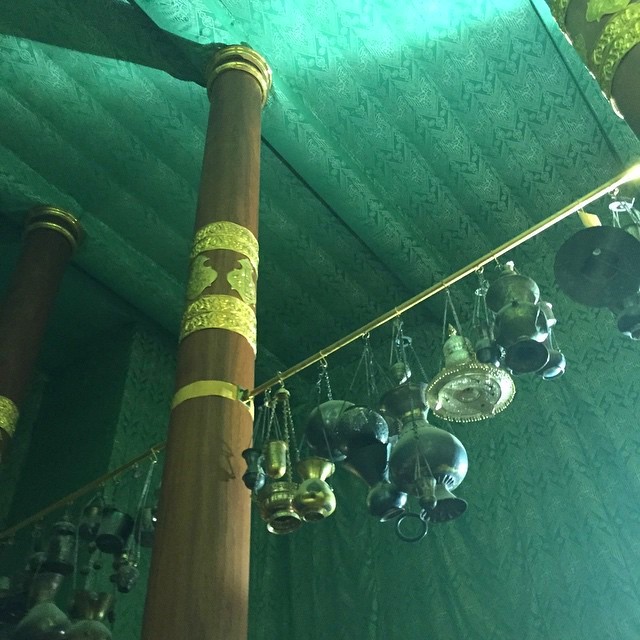
- New marble was laid on the floor and walls, the three pillars from the time of Abdullah bin Zubair (رضي الله عنه) were replaced and a new green coloured cloth was laid on the walls and ceiling.
- This view of the interior shows the three pillars and the golden ‘Bab ut-Taubah’ (Door of Repentance) on the right. This door opens to the stairway leading to the roof of the Ka’bah.
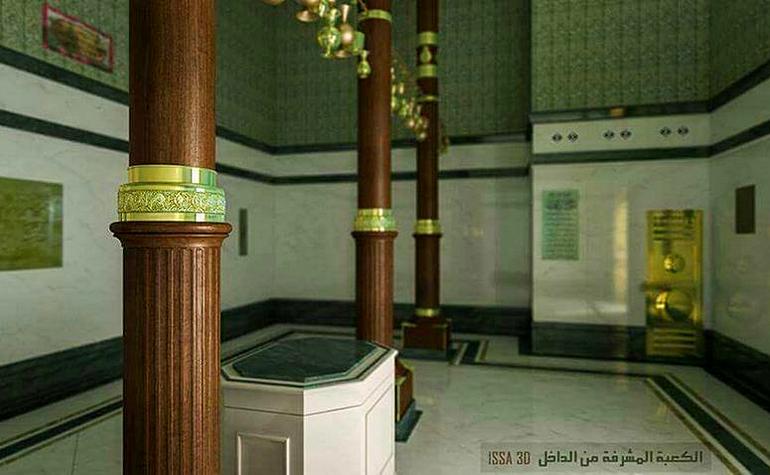
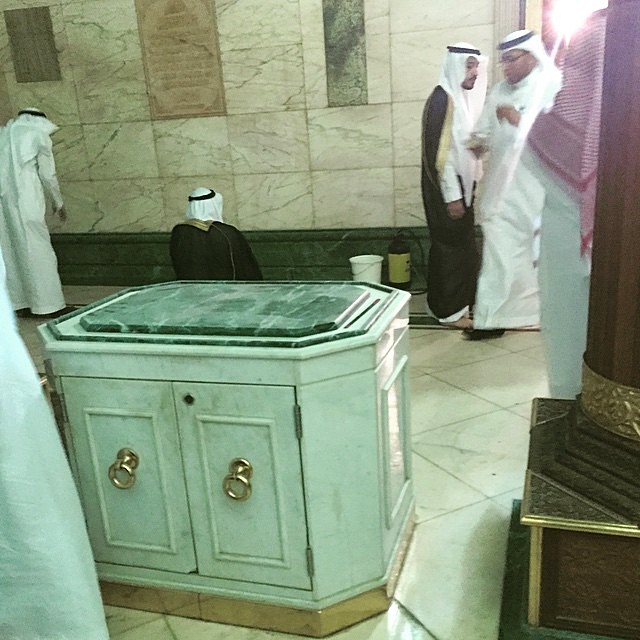
- This white cupboard is where various scents and gifts are kept within the Ka’bah. Bakhoor (fragrance) is placed on here.
- The ceiling of the Ka’bah is covered in the same green material as the upper parts of the walls.
- There are plaques along the walls commemorating the various rulers who have renovated the Ka’bah throughout history.
Other interesting facts about the inside of the Ka’bah
- The two horns of the ram which Ebrahim (عليه السلام) slaughtered were hung inside the Holy Ka’bah. When Abdullah bin Zubair (رضي الله عنه) demolished the Ka’bah to rebuild it, he found the horns had disintegrated due to previous damage and age.
- Hadhrat Khaarija bin Mus’ab (رحمه الله) narrates that four people completed the Quran inside the Kaaba in a single rak’at. [1] Hadrat Uthmaan (رضي الله عنه) [2] Hadhrat Tamim Daari (رضي الله عنه) [3] Hadhrat Sa’eed bin Jubayr (رضي الله عنه) [4] Imam Abu Hanifa (رحمه الله).
References: Kabahinfo.com, Symbols of Islam – Tanja Al-Hariri-Wendel, Muhammed the last Prophet – Sayyed Abul Hasan Ali Nadwi, When the Moon Split – Safiur Rahman Mubarakpuri, Muhammad – Martin Lings, Astonishing Facts about The Qur’an – Mufti AH Elias
]]>Reconstruction of the Ka’bah by the Quraysh
- The Quraysh made the decision to reconstruct the Ka’bah as it had become eroded over time as a result of regular flooding in Makkah and had sustained severe water damage.
- In addition, people would place their valuables inside the Ka’bah as it was considered a very sacred place that nobody would dare violate. However, instances had occurred where thieves had looted the treasure that had been placed inside.
- In order to deter thieves, they made some changes to the structure of the building. They removed one door, elevated the remaining door off the ground and installed a roof.
The Ka’bah contains two roofs
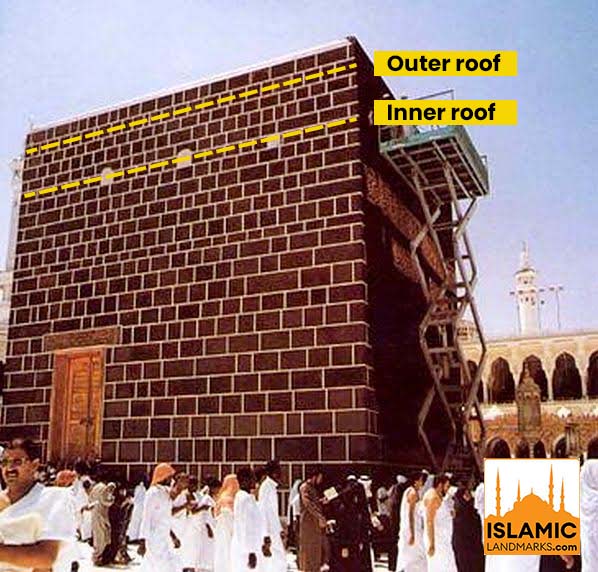
- There are actually two roofs on the Ka’bah, an inner and outer one. The extra one was created to further strengthen the structure.
- The gap between them is just over a meter. This photo below shows the gap between them.
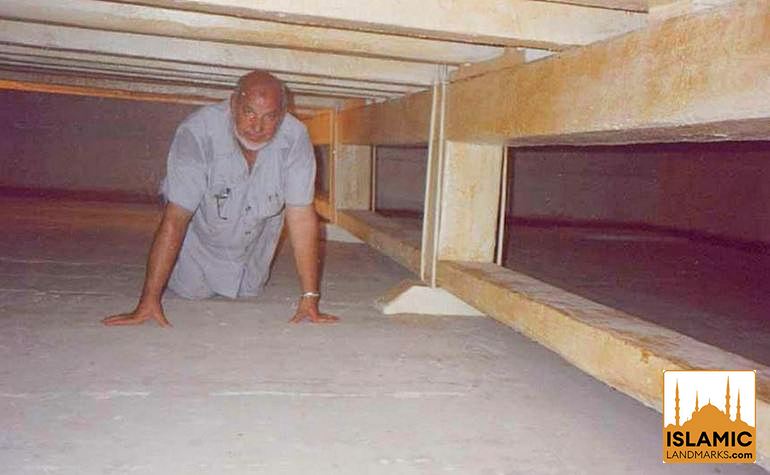
- The first roof can be accessed from the stairway built inside the Ka’bah. then there a few extra steps which leads to the outer roof.
The internal door containing the stairs
- This golden door, inside the Ka’bah, is known as the ‘Bab ut-Taubah’ (the Door of Repentance). It is in the right corner of the entrance into the Ka’bah. The door opens to an enclosed staircase which leads to the roof of the Ka’bah.
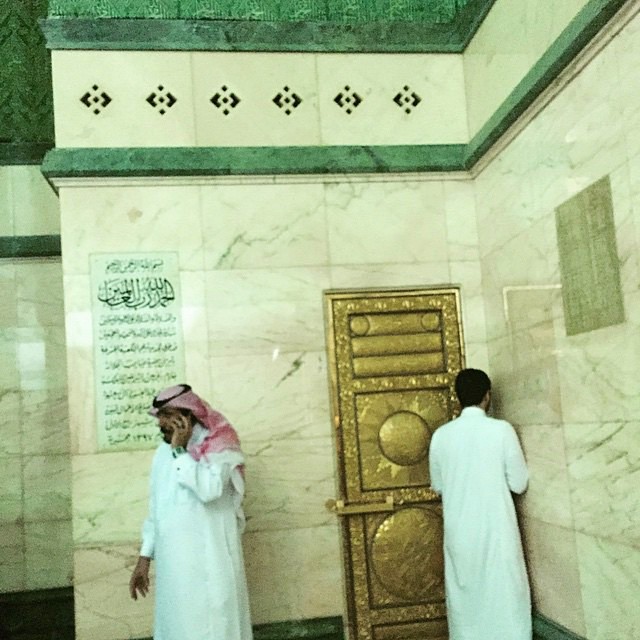
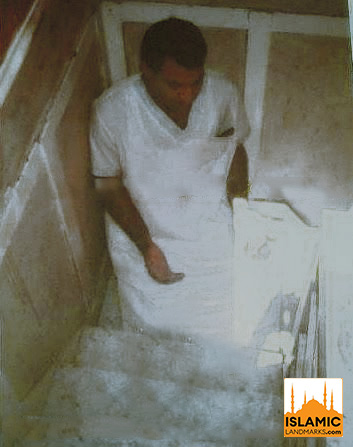
The stairs leading to the roof
- This rare photo shows the stairway inside the Ka’bah which lead to the first roof. Originally the stairs were made from wood but in 1977 were replaced by a circular aluminium staircase with fifty steps.
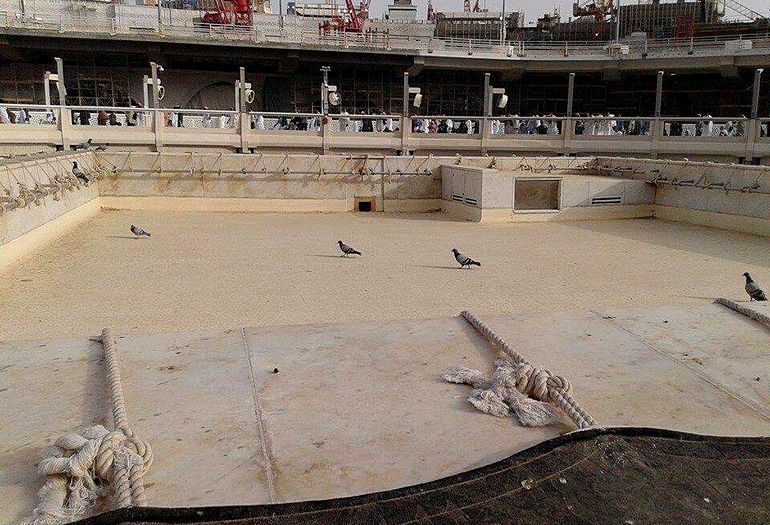
Close-up of the roof of the Ka’bah
- The photo below shows a close-up of the roof as it exists today. On the right is the opening to the roof from the stairs. The rectangular hole is the drainage hole of the Meezab-e-Rahmah. The metal rod surrounding the roof is used to secure the top of the Kiswah, the cloth of the Ka’bah.
Repairs to the roof of the Ka’bah
- In 1957, in the era of King Saud, the Ka’bah was renovated which included repairs to the roof. This was necessary as the structure of the Kab’ah had deteriorated because of the passage of time.
- Wooden fencing was erected all around the Ka’bah while the repairs took place.
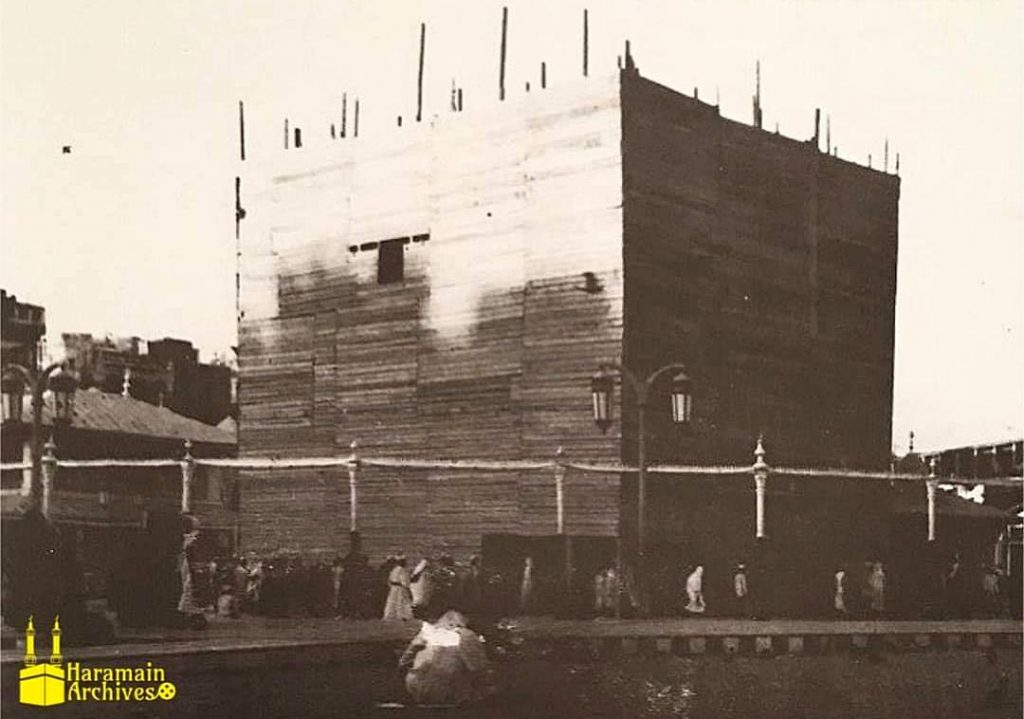
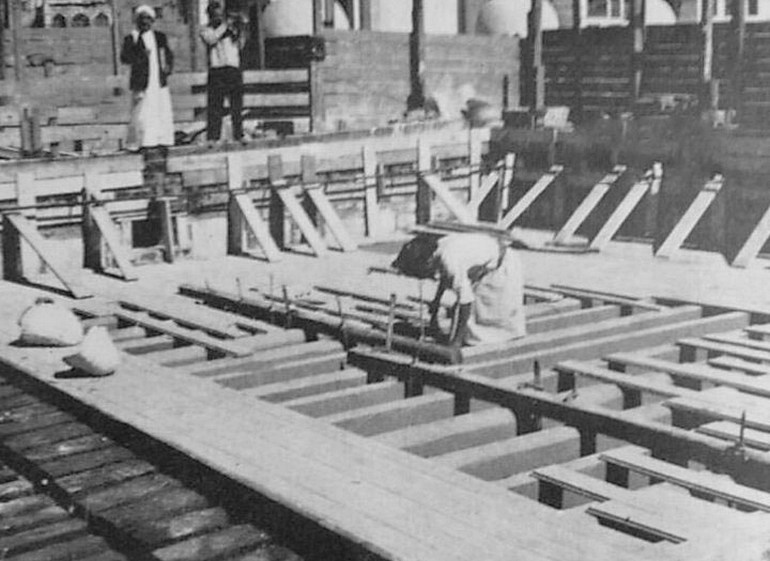
- The wood holding the outer roof was completely renewed. The requirement was to have a type of wood that would be extremely strong and would be able to resist factors such as heat, humidity and water.
- The wood chosen was teak wood that grows in Burma and is used in ship-building because of it’s strong resistance properties. The wood was imported in, cut into beams and fixed into the Ka’bah. This photo shows the new beams being laid.
References: Makkah at the time of Prophet Muhammad (PBUH) – BinImad Al-Ateeqi, The History of Makkah Mukarramah – Dr. Muhammad Ilyas Abdul Ghani
]]>Where did the Hajar al-Aswad come from?
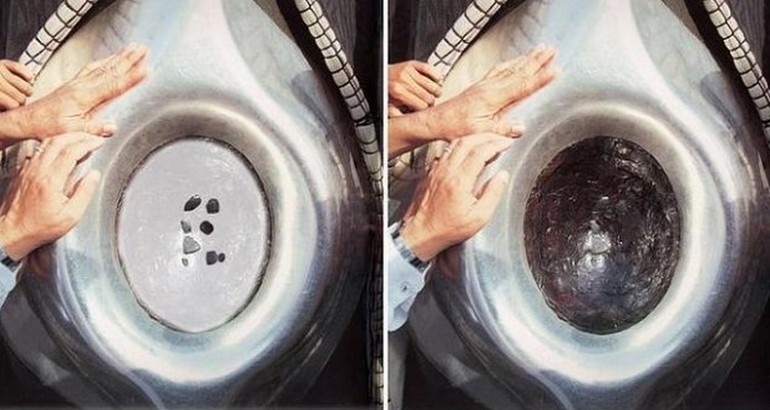
- The Hajar al-Aswad was brought from Jannah and presented to Ebrahim (عليه السلام) to be placed on the corner of the Ka’bah. Ibn Abbas (رضي الله عنه) narrated that the Prophet (ﷺ) said: “The Black Stone came down from Paradise and it was whiter than milk, but the sins of the sons of Adam turned it black.” [Tirmidhi]
- Du’as are accepted at the Hajar al-Aswad and on the Day of Judgement it will testify in favour of all those who kissed it. The Prophet (ﷺ) said: “By Allah! On the Day of Qiyamah, Allah will present the Hajar al-Aswad in such a manner that it will have two eyes and a tongue to testify to the Imaan (faith) of all those who kissed it.” [Tirmidhi]
Placing of the Hajar al-Aswad when the Quraysh rebuilt the Ka’bah
- When the Quraysh demolished the Holy Ka’bah in order to reconstruct it, a dispute arose when the building reached the level of the Black Stone. They differed on the issue of who was eligible to restore the Black Stone to its original place. A civil war was about to break out. Banu Abdu’d-Dar brought a bowl full of blood and all of the tribes inserted their hands in it, which meant that they had made up their minds to fight one another. But Abu Umayya Ibn al-Mugheera , their elder, asked Quraysh to agree on the judgement of the first person to come through the Bani Shaybah Gate and they all agreed on this suggestion.
- The first to come through this gate was the Prophet (ﷺ). This was five years before his mission. He put the Black Stone in the middle of a piece of cloth, and asked a representative of each tribe to hold one of the edges of the cloth and raise it close to its place. Then the Prophet (ﷺ) picked it up with his own noble hands and restored it to its original place. This was how the Prophet (ﷺ) prevented a war from breaking out among the Quraysh by a supreme demonstration of wisdom.
Ahadith relating to the Hajar al-Aswad
- Ibn Abbas (رضي الله عنه) relates that the Prophet (ﷺ), while leaning against the Ka’bah said:“The Hajar al-Aswad and al-Maqam (Ebrahim) are two jewels from the jewels of Paradise. Had Allah (ﷻ) not concealed their radiance, they would illuminate everything between the East and the West.” [Tirmidhi]
- Umar (رضي الله عنه) once kissed the Hajar al-Aswad and said, “I know well that you are just a stone that can do neither good nor harm. Had I not seen the Prophet (ﷺ) kiss you, I would not have done so.” Umar (رضي الله عنه) made the statement because there were many people who were newly converted to Islam and he did not want them to get the impression that Muslims also revered stones as the Arabs revered and worshipped stone idols during the Period of Ignorance. Umar (رضي الله عنه) made it clear that he was following the Sunnah practice of the Prophet (ﷺ) and that although the stone is blessed, it can do neither harm nor good.
The Hajar al-Aswad was once stolen
- The Hajar al-Aswad was stolen from the Ka’bah around 930 CE by Qarmatian warriors who were an Ismaeeli Shia sect. They ransacked Makkah, desecrating the Well of Zamzam with Muslim corpses and carried the Black Stone away to their base in Ihsaa, in medieval Bahrain. According to the historian Al-Juwayni, the stone was returned in around 952 CE and restored to its original location.
The stone is now in pieces
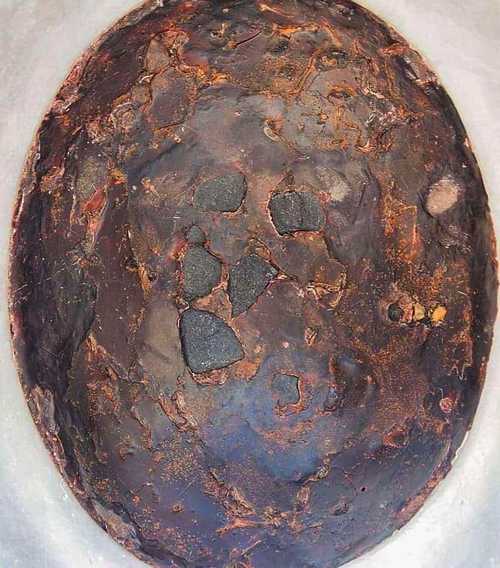
- The Hajar al-Aswad was originally a complete stone but due to various historical incidents now consists of eight pieces of varying sizes affixed to a large stone and encased in a silver frame. The silver frame was first made by Abdullah bin Zubair (رضي الله عنه) and replaced by later Khalifas as the need arose.
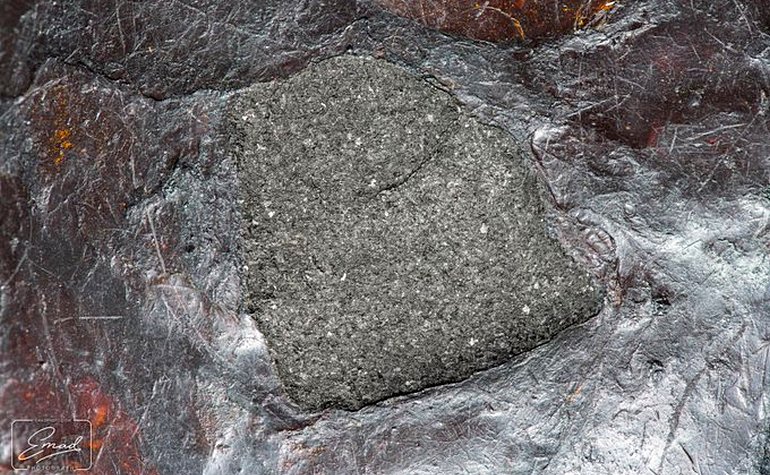
- Six (additional) pieces are claimed to be in Istanbul, Turkey. One is displayed in the mihrab of the Blue Mosque, one above the entrance of the tomb of Sulaiman the Magnificent and four in the Sokullu Mehmet Pasa Mosque (one over the mihrab, one below the lower pulpit, another is above the upper pulpit and the last is over the entrance door). The authenticity of these additional pieces has been questioned, although the Turks did rule over what is now Saudi Arabia for many years and hold many historical Islamic relics. And Allah (ﷻ) knows best.
Manner of kissing the Hajar al-Aswad
- Note that when kissing the Hajar al-Aswad, one should neither push people nor harm anyone because while kissing the Hajar al-Aswad is Sunnah, causing harm to people is a forbidden act (haram). When the area is crowded, it will suffice to merely point towards the Hajar al-Aswad with one’s hand or a stick while reciting the Takbeer and then to kiss the hand or stick. Although the Prophet (ﷺ) kissed the Hajar al-Aswad directly, he also pointed towards it when the area was crowded, it is therefore clear that both kissing it and pointing towards it are Sunnah.
References: The History of Makkah Mukarramah– Dr Muhammad Ilyas Abdul Ghani, Holy Makkah – Shaikh Safiur-Rahman Mubarakpuri, Wikipedia
]]>