During the journey, the Prophet (SAW) and his companion Abu Bakr al-Siddiq (RA) stopped to rest in a garden near the Ethiq Well, known as the Shade Garden. In the intense heat, Abu Bakr (RA) shaded the Prophet (SAW) with his robe, signaling to the people of Madinah that they were in the presence of the Messenger of Allah. Filled with joy, the people of Madinah greeted him with water and gifts.
]]>During the time of the Prophet Muhammad (SAW), there was a water shortage in Madinah, and the only well providing fresh water was owned by a Jewish man who sold it at high prices. Uthman ibn Affan, known for his generosity, purchased the well for the benefit of the Muslim community.
After acquiring the well, Uthman (RA) made its water free for everyone, turning it into a public resource. This act of charity earned him great respect among the Muslims, and it became one of his most well-known contributions to the early Islamic community.
]]>Initially, the well’s water was bitter and salty, causing illness for many who drank from it. It is reported that the Prophet Muhammad (SAW) was informed of this, and after placing his blessed saliva in the water, it miraculously became sweet and healthy by God’s will. Today, visitors can still stop by this well, located off the main highway, and taste the water’s sweetness.
]]>
Masjid al-Manaratain is named due to being located between two yellow hills which once existed here. It is reported that the Prophet (peace and blessings of Allah be upon him) prayed in this location.
a

References:
]]>The following guide covers everything there is to know about the Dar Al-Madinah Museum:
What is Dar Al-Madinah Museum?
Dar Al-Madinah Museum is an institution of cultural and historical significance located in the heart of Medina, Saudi Arabia.
The museum’s door opened to the public in 1983 and gave in-depth information about Prophet Muhammad’s (PBUH) mosque.
Dar Al-Madinah Museum Ticket Prices
The ticket prices for the Dar Al-Madinah Museum entrance are as follows:
- 25 SAR for adults
- 15 SAR for children
Where is the Dar Al-Madinah Museum Located?
Safwan Ibn Malik Al Tamimi, Medina Saudi Arabia
Dar Al-Madinah Museum is located in the Knowledge Economic City near Madinah Airport (Prince Mohammad Bin Abdulaziz International Airport) and the Haramain Madinah Railway Station in the Madinah province.
Dar Al-Madinah Museum Opening Times
Dar Al-Madinah Museum is open 6 days a week:
- Monday – 11:00 AM – 7:00 PM
- Tuesday – 11:00 AM – 7:00 PM
- Wednesday – 11:00 AM – 7:00 PM
- Thursday – 11:00 AM – 7:00 PM
- Friday – Closed
- Saturday – 11:00 AM – 7:30 PM
- Sunday – 11:00 AM – 7:00 PM
Dar Al-Madinah Museum Contact Information
Phone: +966 53 477 9997
You can dial the above-mentioned phone number to know about any changes in the opening times of the Madinah Museum, book tours for a large group, or other queries.
Who is the Owner of Dar Al-Madinah Museum
Dar Al-Madinah Museum near Masjid Nabawi is owned by Abdul-Aziz bin Abdul-Rahman bin Ibrahim Kaki.
What is Inside Dar Al-Madinah Museum?
The Dar Al-Madinah Museum is divided into several sections dedicated to different aspects of Medina’s history and the early Islamic era. These include:
- The Prophet’s Life and Times
- Islamic Art and Calligraphy
- Archeological Discoveries (From the pre-Islamic era to the early Islamic period.)
- Interactive Exhibits
- The Battle of Uhud Gallery
- Medina’s Architecture and Urban Development
- Medinah’s Manuscripts
- Hajj and Pilgrimage (Its history and the various rituals involved.)
- Cultural Events and Festivals
- The Medina of Today
Tours of Dar Al-Madinah Museum
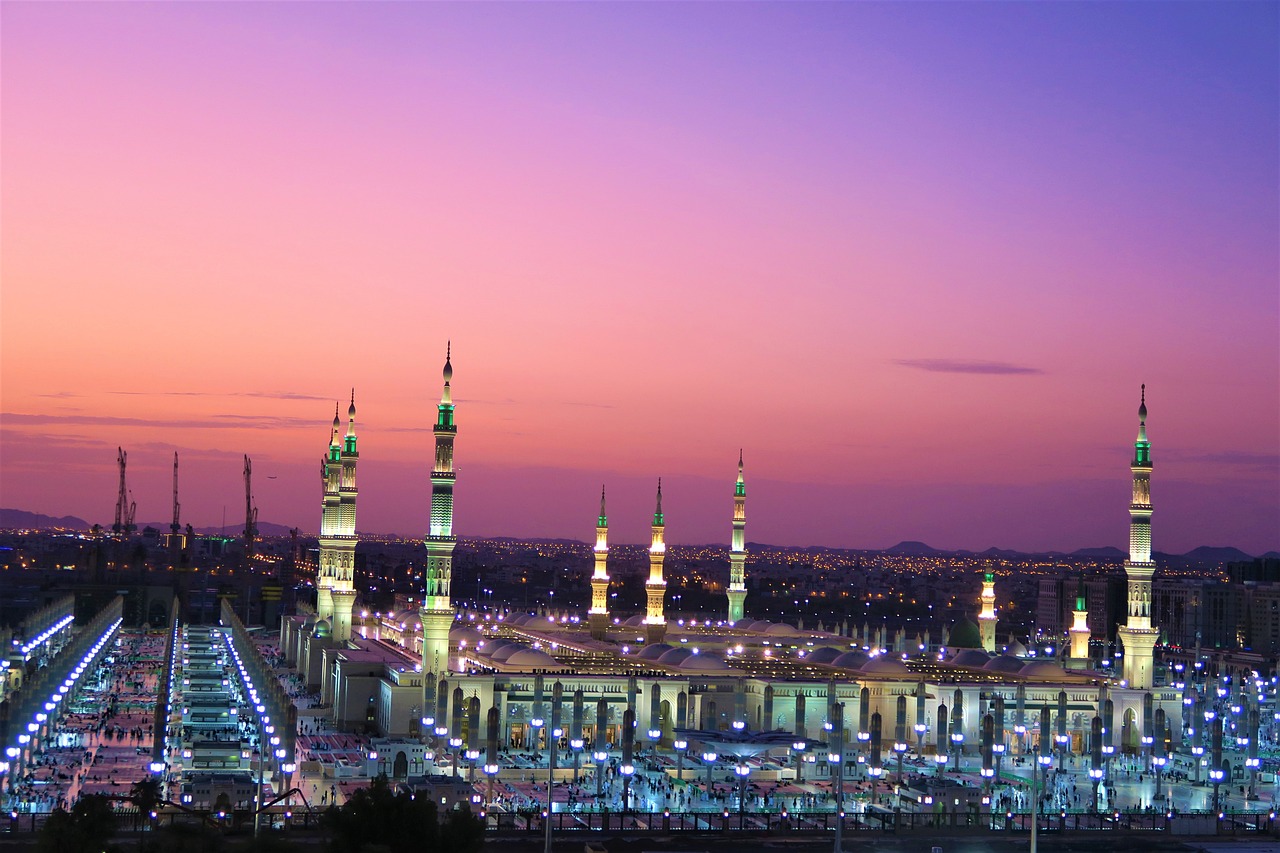
There are professional and trained staff members on the ground of Dar Al-Madinah who communicate with tourists in seven languages, including Arabic, English, and Urdu.
They cite sources and references to provide detailed and credible information on different subjects.
Upon entering the museum, you will find a visitor’s center where you can obtain information about the museum’s layout and any temporary exhibitions on display.
The main exhibition area of Dar Al-Madinah is divided into several sections, each representing a different era in the history of Madinah and the Islamic world.
The tour begins with the pre-Islamic period, where you learn about the Arabian Peninsula and the religious and cultural context that existed before Islam’s arrival.
The displays include artifacts, maps, and informative panels that provide a comprehensive overview of this era.
Moving forward, you will enter the section dedicated to the rise of Islam. Here, you will discover Prophet Muhammad’s (PBUH) life and the early Islamic community.
The exhibits showcase the Prophet’s personal belongings, replicas of key historical sites, and manuscripts of the Quran.
The museum provides an in-depth look at the expansion of the Islamic empire and the various caliphs who played vital roles in its development.
The museum also dedicates a section to the Ottoman Empire’s influence in Madinah
The exhibition that displays Masjid Nabawi’s history depicts multiple eras throughout Islamic history.
It provides visuals to help visitors understand how the Prophet’s Mosque changed over the years, starting from when the first stone was laid down for its foundation to the time when Prophet Muhammad (PBUH) migrated to Madinah, ending with Saudi’s Second Expansion.
Another exhibition takes visitors on a tour of Prophet Muhammad’s (PBUH) life, which includes his sealed tomb’s interior layout on display.
Artifacts on Display at Madinah Museum
The Dar Al-Madinah Museum near Haram boasts a wide range of exhibits that showcase the city’s multifaceted history. It has more than 2,000 artifacts on display.
Here are some of the halls in the museum that display artifacts related to the history of Madinah:
- Museum Lobby
- Al-Madinah in the Prophetic Era
- Al-Madinah Heritage
- Al-Madinah (Under King Abdul Aziz Reign)
- Al-Madinah Nature, History, and Environment
- Mohajreen (Migrants)
- Ansar (Supporters)
- Al-Madinah – First Saudi State Reign
- Prophet Muhammad’s Family
- Prophetic Mosque
- Al-Madinah (Caliphs Reign)
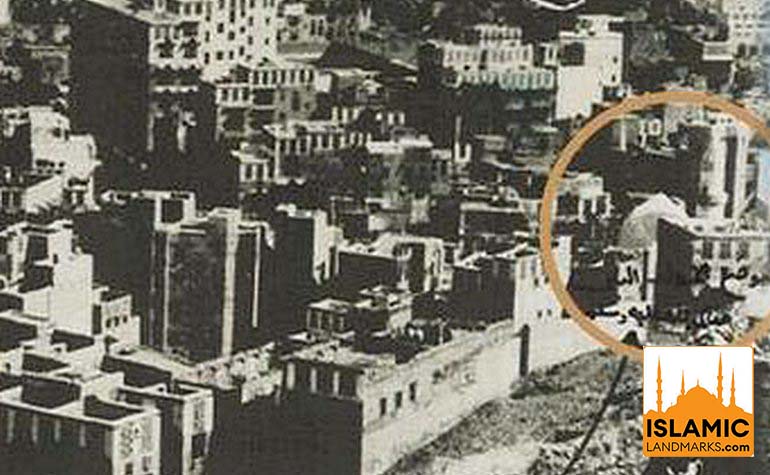
There are four other halls that are used to conduct national and international seminars for the public and businesses. Three main halls cover Madinah’s urban history, Prophet Muhammad’s (PBUH) life, and the story of Islam.
The outdoor halls have artifacts on display that provide information about Madinah’s ancient architecture belonging to the era when Islam was first introduced.
These include unique items, ancient Qur’anic manuscripts, calligraphy, and rare paintings.
For an immersive experience, the museum includes intricate models and replicas of important Islamic landmarks, including the Prophet’s Mosque, Uhud Mountain, and Quba Mosque.
There are also models of Haram Al-Sharif and Masjid Al-Aqsa, with a few elements missing.
One of the most important artifacts is Sa’d ibn Abi-Waqas’s bow. He was a famous archer and the Prophet Muhammad’s (PBUH) companion.
Another prized artifact is the original black and red ceremonial hajj palanquin – Ottoman mahmal, which dates back to 1792.
Photos of Dar Al-Madinah Museum
Reviews of Dar Al-Madinah Museum
Google has 4,580 reviews on Dar Al-Madinah Museum. Some of the top ones include:
Jawad Afzal
10/1/2023
“Must visit place. If you want to know the history about the Makkah and Madinah and also how the cities changed with time, must visit this museum. All the history is preserved, and you can also see the summits of both the cities. Translators are available in Arabic, English and Urdu languages”
Jawad Sadiq
5 Months Ago
“Amazing museum. Must visit for everyone in Madinah. They have got excellent models of some ghazwas and Masjid-e-Nabawi. Also, cool artefacts from the time of the prophet Muhammad (PBUH). They also offer guided tours in English, Urdu and Arabic!”
Shahid Waheed
5 Months Ago
“This 30-minute walk in the world of miniatures models would take you to so many events from the lifetime of Prophet Muhammad (PBUH). As well as you would be able to see the amazing expansion of the prophet’s mosque. You can have a tour in English, Urdu and Arabic and will learn something new for sure. Tickets can be bought at the entrance (25 SAR for adults and 15 SAR for children), but it’s a place to visit and cherish.”
TripAdvisor has 97 reviews on Dar Al-Madinah Museum. Some of the top ones include:
Nazerah
Toronto, Canada
Dioramas Bring the Seerah to Life
May 11, 2023
“You can read the books and watch the videos, but nothing beats handmade dioramas of the life of our Nabi ﷺ with a knowledgeable and kind guide. Quite different from the high-tech version at the International Fair and Museum of the Prophet’s Biography and Islamic Civilization in the Haram, but truly worth the trip out. Easily accessible by Uber.”
Arif HasanLondon, UK
Must Visit Museum
May 9, 2023
“Excellent information, a must-visit. Guide is included in the price. The models are very well built and represent the history.”
Rashedazd
Huddersfield, UK
Amazing Tour with Visuals and Commentary
April 14, 2023
“The tour was amazing and brought to life by our English-speaking guide Ahmed, who had a lot of subject knowledge and took his time to explain everything and let the group ask questions – would highly recommend and gave a good historical and religious perspective on the Prophets life in Madina and Mecca and brought meaning of the places to my visit.”
Hotels Near Dar Al-Madinah Museum
Anwar Al Madinah Movenpick Hotel
Anwar Al Madinah Movenpick Hotel is one of the most famous hotels in Madinah and is 11 km away from Dar Al-Madinah Museum.
It will take you around 18 minutes by car to reach the museum from the hotel. The reason people prefer this hotel when coming for Umrah is because it is very close to the Prophet’s Mosque.
The hotel offers comfortable rooms, including suites and a studio apartment with modern amenities. Its dining options serve international and local cuisine.
There’s free Wi-Fi in every room, and guests even get a Pillow Menu. Other facilities include a shuttle service to Masjid Nabawi and tourist sites.
Marriott Executive Apartments Madinah
Marriott Executive Apartments Madinah is 11 km away from Dar Al-Madinah Museum. It will take you 5 minutes to reach the museum from the hotel.
The apartments offer a blend of comfort and luxury. With various room types, including studios, one-bedroom, and two-bedroom apartments, there is a choice to suit different needs.
The interiors are tastefully designed, with modern furnishings and a soothing color palette that creates a calm and welcoming atmosphere.
Each apartment features a well-equipped kitchen, allowing guests to prepare their meals if they wish. The living areas are spacious, making it an excellent choice for families and large groups.
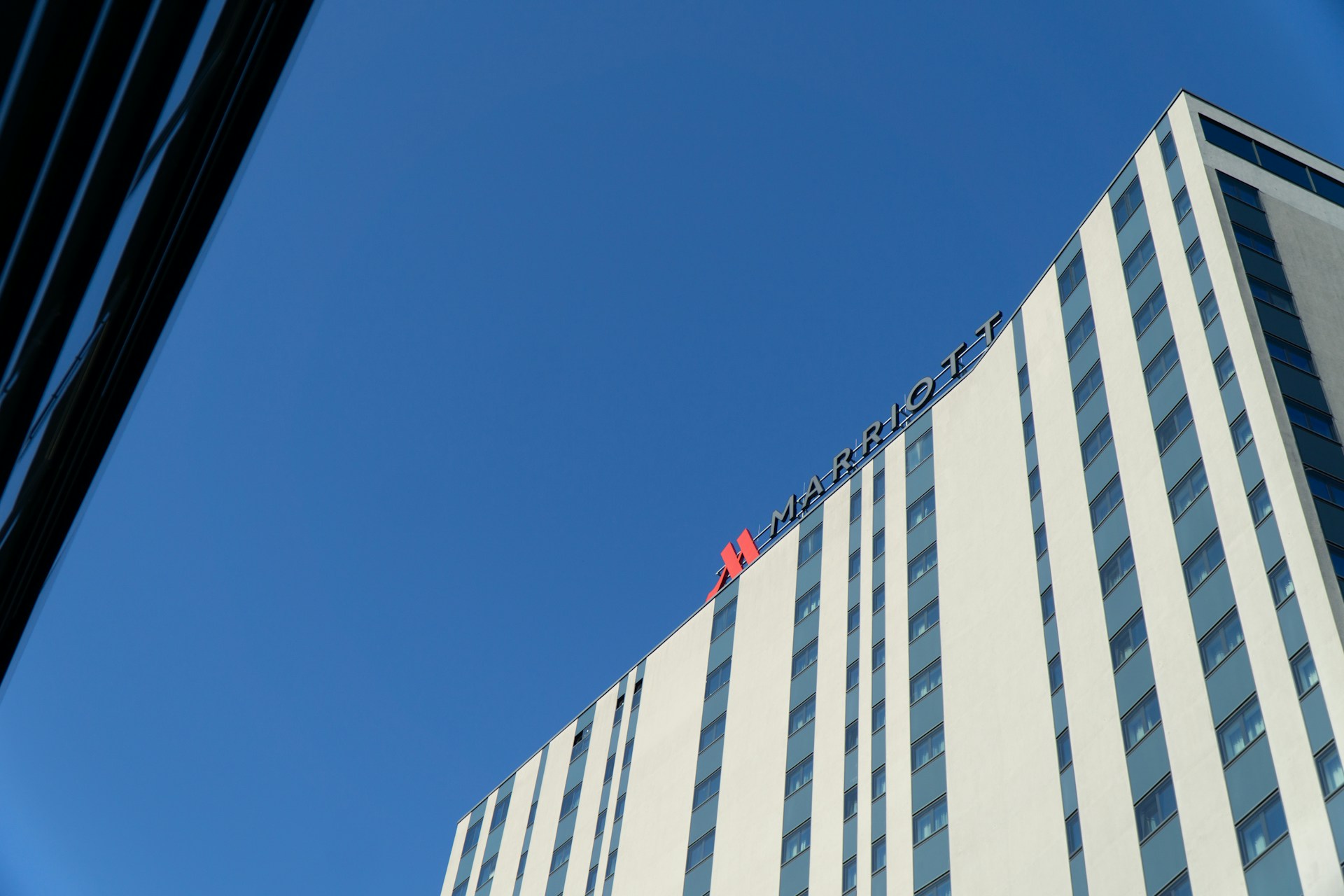
Here are some of the on-site amenities that the hotel offers:
- Free Wi-Fi
- Restaurant
- Free Hot Breakfast and Continental Buffet
- Indoor Pool
- Spa
- Fitness Center
- Meeting Space
- Dry Cleaning Service
- Gift Shop
- Laundry
- Wake up Calls
- Room Service
- Daily Housekeeping
- Kitchenette
Rahabah Hotel
Rahabah Hotel is 4.9 km away from Dar Al-Madinah Museum. It will take you 6 minutes to reach the museum from the hotel.
The hotel boasts a range of well-appointed rooms and suites, each designed with modern amenities to ensure a comfortable and memorable stay for its guests. The rooms are spacious, clean and offer a peaceful environment for rest and relaxation.
It offers on-site dining options, 24/7 room service, concierge services, a business center, free parking, laundry services, and complimentary Wi-Fi.
Hafawah Suites
Hafawah Suites is 6.6 km away from Dar Al-Madinah Museum. It will take you 8 minutes to reach the museum from the hotel. The hotel offers a peaceful atmosphere and multiple room types for individual travelers and families.
Apart from the usual amenities, such as free tea service, free Wi-Fi, 24/7 concierge, and daily housekeeping, the hotel also offers a sauna and hot tub for adults, a water park for kids, and wellness and business centers.
Is Dar Al-Madinah Museum Near Masjid al Nabawi?
Dar Al-Madinah Museum is 16 minutes (10.3 km) away from Masjid Nabawi and can be reached via King Abdul Aziz Road.
You can also use the Al-Madinah Hop-On Bus to visit the Dar Al-Madina and other nearby tourist sites.
Summary – Dar Al Madinah Museum
In conclusion, the Dar Al Madinah Museum stands as a testament to the enduring legacy of Madinah. It serves as a beacon of Islamic knowledge for locals and tourists.
The artifacts on display, from ancient manuscripts to archaeological finds, offer valuable insight into the evolution of the Prophet’s Mosque over the centuries.
The exhibits within the museum are carefully curated to offer a comprehensive understanding of Madinah’s history and culture. From the life of the Prophet Muhammad to the golden era of Islamic civilization, these displays provide a chronological journey through time
]]>This historic mosque holds a special place in the hearts of Muslims, not only for its religious importance but also for its rich history.
Following is a short guide that will educate on the history of Masjid Quba:
What is the Quba Walk?
The Quba Walk is known as the Path of the Prophet. It is the path that the Prophet Muhammad (PBUH) took to reach the Quba Mosque and offer prayer.
Today, the new Quba Road, Madinah, is lined with restaurants, cafés and hotels, making it more of a tourist attraction.
However, its significance still holds, and many pilgrims make the journey on foot from Masjid Nabawi to the mosque.
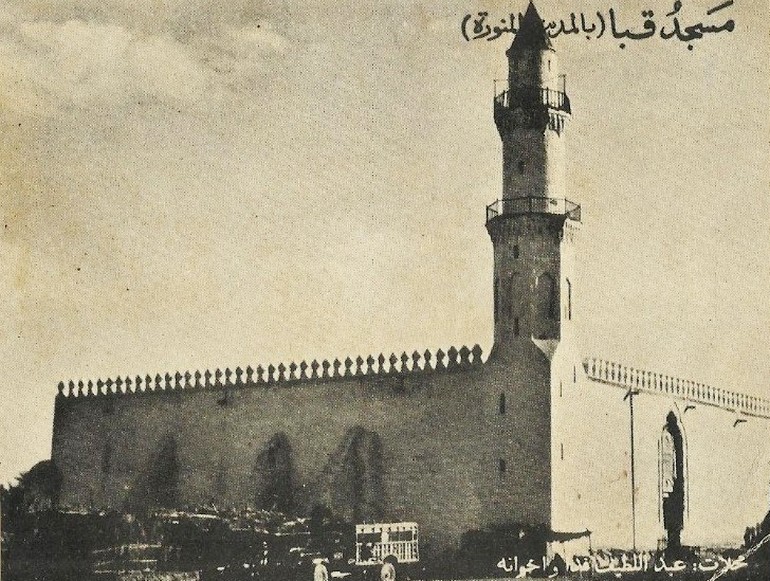
What is Quba Mosque?
The Quba Mosque in Madinah, accessed through Jeddah, Saudi Arabia, is not just a place of worship but also a symbol of the strong bond between the early Muslim community and the Prophet Muhammad (PBUH).
The mosque was constructed on the foundation of piety, unity, and brotherhood among the Muslims.
The Prophet himself actively participated in building the mosque, laying the foundation stones, and establishing it as one of the places for spiritual and communal activities.
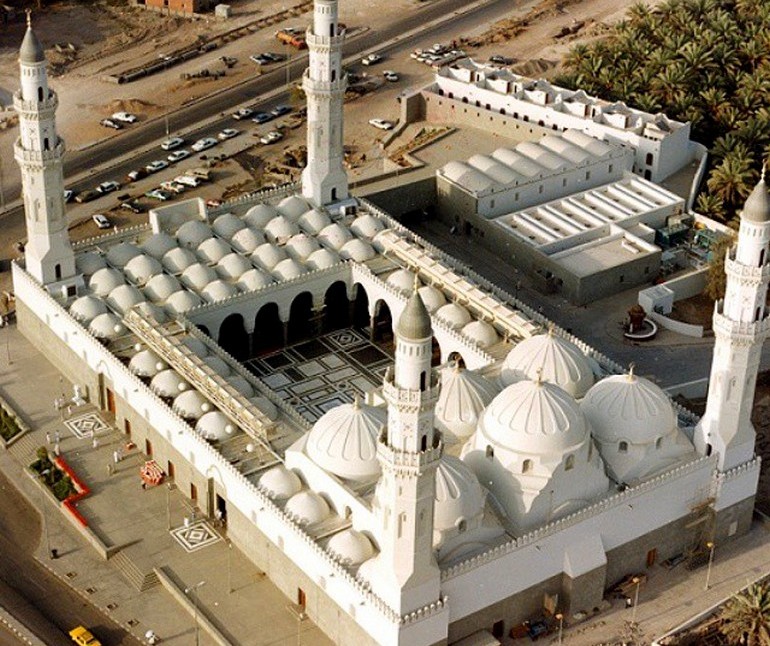
Why is Masjid Quba Special?
Prophet Muhammad (SAW) positioned the first stone for constructing Masjid Quba in Madinah, Saudi Arabia. The construction occurred during the first year of the Islamic calendar, known as 1 AH (After Hijra).
The Hijra marks the migration of the Prophet Muhammad (peace be upon him) from Makkah to Madinah, a pivotal event in Islamic history.
The people of Yathrib had long awaited the arrival of the Prophet. Every day, they would go into the field, beyond the palm groves, hoping to catch a glimpse of Him. They only left when it was no longer possible to stand in the sun’s intense heat.
One day, as they were returning home and, once again, waiting for Prophet Muhammad’s arrival, a Jew caught a glimpse of him amongst a group of white-robed travelers.
He called out: “O people of Arabia! What you have been waiting for has arrived!”
The reason Masjid Quba in Madinah is considered special is because it is where The Prophet Muhammad (PBUH) stayed for three days with his companion Abu Bakr.
During his stay, the camel the Prophet was riding on knelt on the ground and drank water from a well belonging to Hazrat Abu Ayyub Al-Ansari.
The Prophet used to visit Masjid Quba in Madinah every Saturday by walking or riding his camel to offer two Rakats.
Masjid Quba was the first mosque built in Islam’s history. It is said that this mosque is where the first Friday Prayer (Jumma Namaz) was held.
Quba Mosque Opening Times
Masjid Quba in Madinah, Saudi Arabia is open only for prayer five times daily.
Pilgrims are allowed to enter the mosque 15 minutes before prayer time. Late attendees are not allowed entrance. The mosque’s door closes 15 minutes after the prayer.
What Did the Prophet Say About Masjid Quba?
The Prophet (ﷺ) said
“He who purifies himself at his home and comes to Masjid Quba and offers two rakats therein, will be rewarded the reward of an Umrah (lesser pilgrimage).”
Sunan ibn Majah
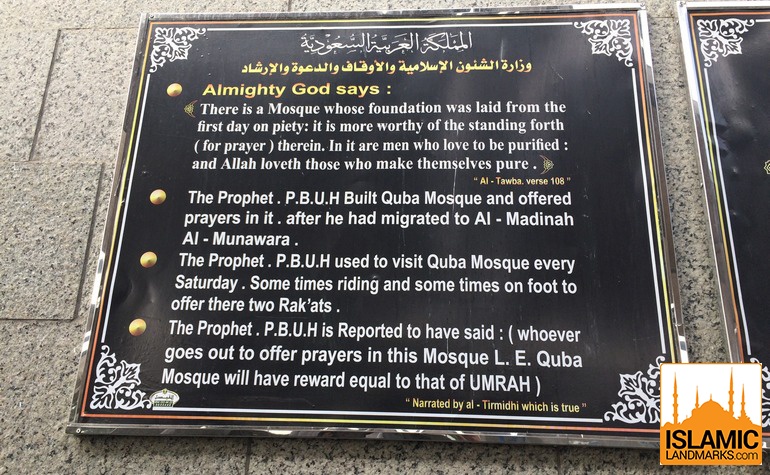
Is Praying in Masjid Quba Equal to Umrah?
Praying in Masjid Quba in Madinah is a significant and highly esteemed act of worship in Islam. Sahl ibn Hunayf reported that the Messenger of Allah – Prophet Muhammad (SAW), told the people of Madinah that whoever prays in Masjid Quba will be rewarded the same reward of performing an Umrah.
Quba Mosque Walking Track
The Quba Mosque walking track is located at the Quba Square in Saudi Arabia. It starts from Masjid Nabawi and connects to Quba Mosque in Madinah, Jeddah, Saudi Arabia.
It takes around 45 minutes to complete the walk. Pilgrims can enjoy cafés and small restaurants on the walking track or have a small picnic in the Quba Walkway Park.
The Importance of the Quba Walk Route
“The Prophet used to go to the Mosque of Quba (sometimes) walking and sometimes riding. He then would offer two Rakat (in the Mosque of Quba).”
Ibn ‘Umar
The construction of the Quba Mosque in Madinah, Saudi Arabia, marked a momentous occasion in Islamic history.
It was the first mosque the Prophet Muhammad (PBUH) and his companions built upon their arrival in Madinah.
The importance of the route from Masjid Nabawi to the Mosque cannot be overstated. It was “THE” path the Prophet took to pray two Rakat.
After passing a few hotels, when you come out of Masjid Nabawi, you arrive under the King Faisal Ring Road and arrive at the Quba Front.
This is known as the Al Jummah Neighborhood Gateway, where the new walkway passes.
The Quba Walk allows Muslims to follow in the footsteps of the Prophet himself, as he used to travel from his house to Masjid Quba.
Quba Square
Quba Square and the Quba Mosque in Madinah have profound spiritual significance for Muslims worldwide.
It is a place of immense blessings, and a single prayer offered in this mosque is said to carry the reward of performing an Umrah.
It is no wonder that Quba Mosque and Square are visited by thousands of pilgrims and tourists annually.
Masjid Nabawi to Masjid Quba Distance
It takes 11 minutes by car to cover the 4.4 km track of the Quba walk in Madinah.
There are three routes you can take to reach your destination, including Abdul Muhsin Ibn Abdul Aziz Road, Ali Ibn Abi Talib Road, or Imam Ahmad ibn Hanbal Road.
On foot, it takes around 45 to 55 minutes via the same routes.
Masjid Nabawi to Masjid Quba by Bus
Al Haram-Quba-Al Haran is a Green Bus that pilgrims can take near Gate 22 at the Clock Tower to visit Masjid Quba for 5 Riyals (subject to change according to season). It takes about an hour to reach the destination.
You can also take the Red Hop. However, this bus offers a complete tour that includes breakfast, visiting several historical sites, such as Masjid Al-Dirar, and then arriving at Masjid Quba in Madinah. It is four times the price of taking the Green Bus.
Hotels Near Masjid Quba
Sidrathul Aaliya Hotel
Sidrathul Aaliya Hotel is 3 minutes away from Masjid Nabawi and 1.1 miles from Quba Mosque.
It offers single and double bedrooms and amenities, including an elevator, multilingual staff and a 24-hour front desk.
There’s also complimentary parking available nearby, a designated smoking area, and bellhop services.
There are a total of 20 rooms available with attached bathrooms (with complimentary toiletries), and all of them are air-conditioned and come with a flat-screen TV.
You can even prepare meals in the communal kitchen. Despite the few reviews, the hotel is often full because of its proximity to Masjid Nabawi.
Al Andlus Palace 2 Hotel Kurban
Al Andlus Palace 2 Hotel Kurban is a 3-star hotel. It is 1.4 miles away from Masjid Nabawi and 1.6 miles from Masjid Quba.
It’s only 10 miles away from Prince Mohammad bin Abdulaziz International Airport, making it an ideal hotel for travelers.
The hotel offers air-conditioned rooms with different levels of amenities. All rooms contain a flat TV screen and offer access to free Wi-Fi.
Some rooms even have a safety deposit box. You can make meals in the shared kitchen and tea in your room using the electric pot. There are no reviews posted about the hotel’s service on any website.
Pullman Zamzam Madina
Pullman Zamzam Madina is a 5-star hotel. It is 5 minutes away from Masjid Nabawi and 1.7 miles from Masjid Quba. It has 835 upscale luxury rooms and suites.
The hotel stands at the threshold of the Prophet’s Mosque. It offers a business center with internet access, free Wi-Fi in rooms, complimentary indoor parking and 4 restaurants on the premises.
You will find dozens of positive reviews about the hotel on TripAdvisor.
Crown Plaza Madinah
Crown Plaza Madinah is a luxurious 5-star hotel. It is located 2 minutes away from Masjid Nabawi and 1.7 miles from Masjid Quba. The hotel has 506 rooms and suites, some of them facing Masjid Nabawi.
There are plenty of onsite facilities, including a café, a gym, a lounge area and free parking space.
In-room amenities are designed keeping in mind a guest’s comfort. These include blackout curtains, a minibar, a TV, an attached bathroom with a bidet, and air conditioning. To know more about the hotel’s service, check out their reviews.
Restaurants Near Masjid Quba
Al Fatheh Restaurant
Al Fatheh is a Middle Eastern restaurant that is known for its Kabli Rice, Bukhari and Kuzi Meat. It is located in Al Jummh District and is 0.4 miles away from Masjid Quba.
Many people have left positive reviews about the restaurant’s food and service on TripAdvisor.
Al Baik Restaurant
Al Baik is a fast-food restaurant located on King Faisal Road. It is 1.4 miles away from Masjid Quba and is open late night.
It is known for offering freshly fried crunchy chicken and seafood.
Arabesque Restaurant
Arabesque Restaurant is a 3-star eatery located on King Fahad Road. It is 2.3 miles away from Masjid Quba.
The restaurant offers various delicacies from North Africa, Southeast Asia and Iran that professional chefs prepare. In the evening, the restaurant turns into a dining hall lit by Mashrabiya-inspired lamps.
Kyoto
Kyoto is located in the Oberoi Hotel. It is the first-ever Japanese restaurant in Madinah. It is 2.2 miles away from Masjid Quba and overlooks Masjid Nabawi.
One of the best things about this restaurant is that it offers private dining rooms with a personal chef who prepares sushi and other dishes according to your taste.
Al Modeef Restaurant
Al Modeef Restaurant offers halal Italian and Indian cuisine. It is located 2.3 miles away from the Quba Mosque on Sa’ad bin Muath Road.
The restaurant is known for its pizza and pasta and quality service. If you are in the mood for something sweet, don’t forget to try their Movenpick ice cream.
How Far is Masjid Quba from Haram?
Masjid Quba is 445.9 km away from Mecca, Saudi Arabia. It will take around 4 hours and 17 minutes to reach Haram by road.
Summary – Quba Walk
The Quba Mosque has a long tradition of providing hospitality to travelers and visitors because the Prophet stayed here after migrating from Mecca.
His travel tells a story of hardship when he and his followers were forced to leave Mecca. Since then, many people have walked on foot to Masjid Quba and offered prayer there to receive sawab, which is equal to that of performing an Umrah
]]>In these trying times, Prophet Muhammad (SAW) helped his followers access clean and sweet water.
What is the Well of Arees?
Also known as Bir Al-Aris, Bir Al-Khatam, and Well of the Ring, Well of Arees was one of the wells that Prophet Muhammad (PBUH) loved visiting. It was named after the ring the Prophet (SAW) wore.
It is said that the Prophet (SAW) used to sit upon the Well’s brink with bare legs and talk about its significance with his companions.
He would describe the incredible scene of Paradise for Uthman, Umar, and Abu Bakar (RA).
Arees Well was discovered when construction was being done for Masjid Quba. People at the time were astonished at the depth of the Well and had no idea where the water was coming from and going.
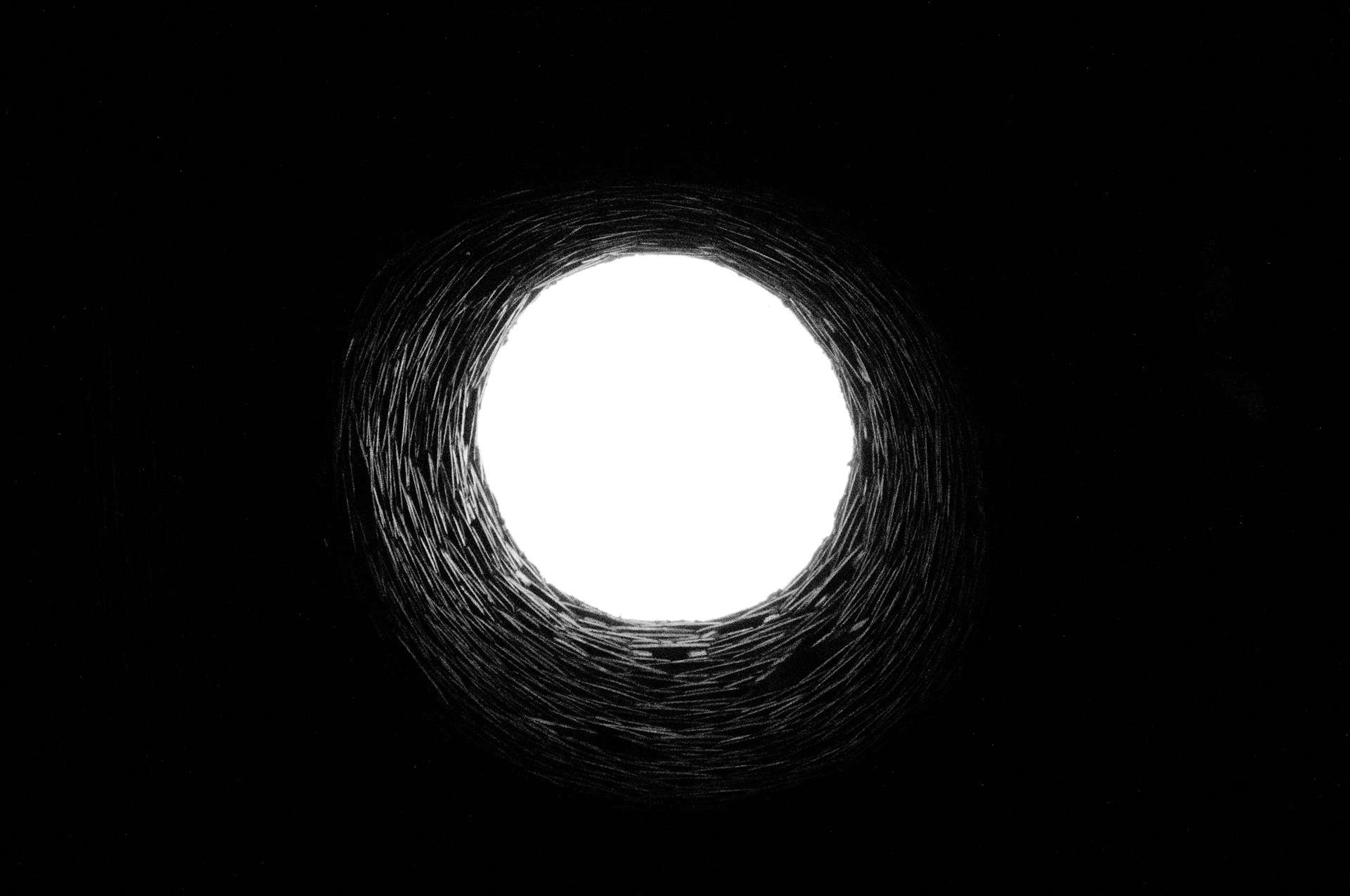
Where is the Well of Arees Located?
Masjid Quba is located in Madinah, in the Arabian Peninsula. Its exact location is near a small garden inside the mosque’s fence.
When it comes to the Well of Arees, people often ask how to do Ziyarat in Madinah. Visits to the place Prophet Muhammad (SAW) frequented begin with doing Ghusl, wearing clean clothes, and praying in Masjid Nabawi.
There are quite a few historical sites to explore in Madina.
Here are some places to visit in Badr:
- Visit Masjid Al-Areesh
- Explore the Badr Battlefield Area
- Visit the Dar Al Madinah Museum
Another historical place to visit on Ziyarat is Masjid Musabbih. It is the Mosque where Prophet Muhammad (SAW) prayed Fajr when he visited Madinah for the first time.
Try the Khyber Fort and its nearby caves if you want something adventurous. They are one of the best places to visit in Khyber, Saudi Arabia.
Facts About the Well of Arees
Following are five facts about the Well of Arees, some of which are mentioned in hadiths:
Fact 1 – Well of Arees Was Discovered by Chance
The Well of Arees was discovered while the ground was being dug to build a foundation for Masjid Quba. It was named after a Jew and changed names multiple times based on the incidents that happened.
Fact 2 – Prophet Muhammad’s (SAW) Saliva Changed the Water’s Taste from Salty to Sweet
Well of Arees was once called Bi’ru Tufla because its water was salty. However, during one of his visits, Prophet Muhammad (SAW) spat into the Well, and its water became sweet and refreshing.
It is believed that the Prophet did this after his Ummah complained that they couldn’t use the well’s water for drinking.
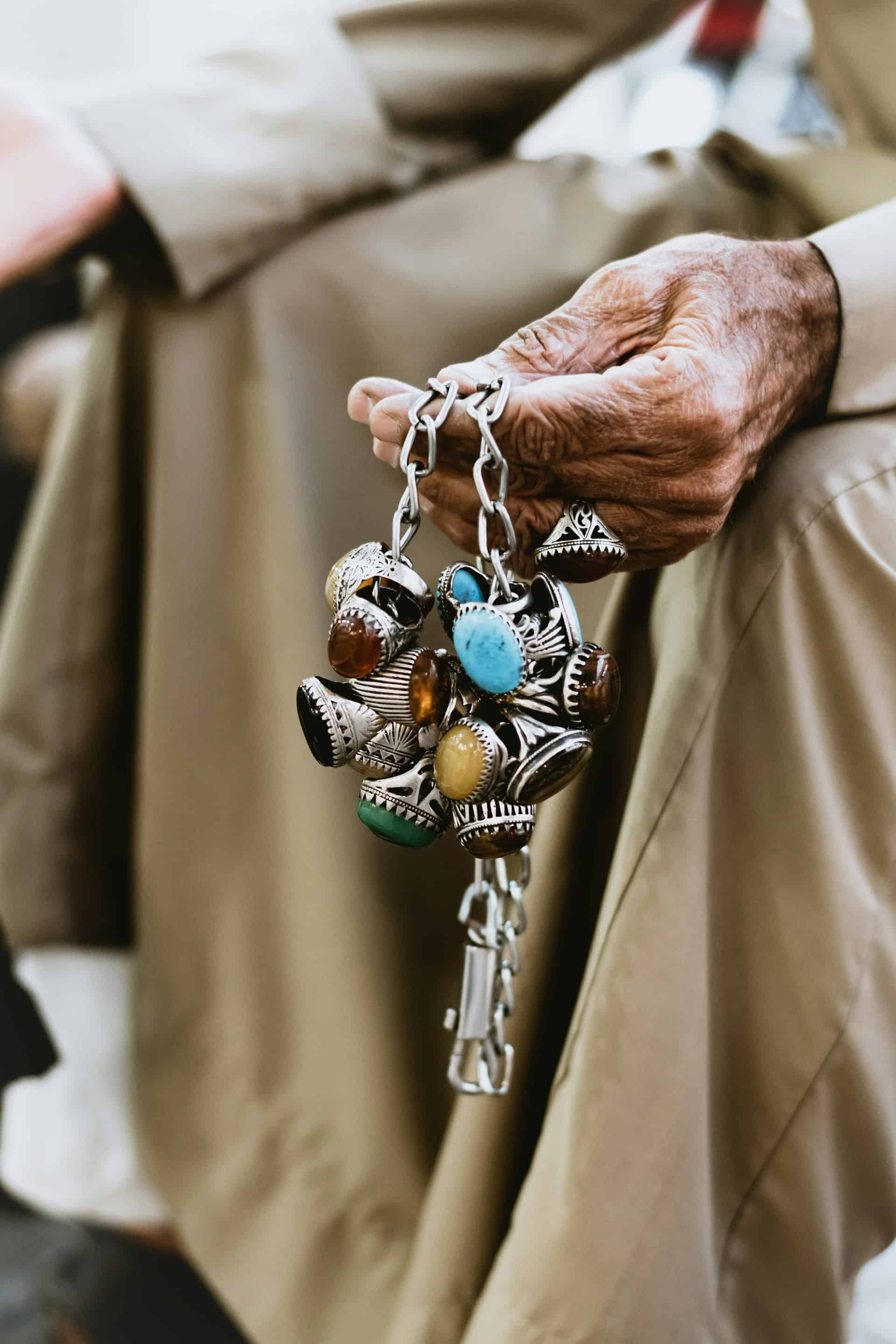
Fact 3 – Abu Bakr (RA), Umar (RA) and Uthman (RA) wore the ring
According to a hadith, the Prophet (SAW) used to wear a silver ring, which he passed to Abu Bakr (RA), who then gave it to Umar (RA), and it finally landed in the hands of Uthman (RA).
Fact 4 – Water from the Well of Arees Was Used to Make Masjid Quba
The Well’s water was also used to make mud-brick structures for Masjid Quba.
Fact 5 – Prophet Muhammad (SAW) Was the First One to Perform Ghusl from the Well of Arees
Prophet Muhammad (SAW) journeyed from Mecca to Madina (Hijrah) in 622 CE. He and his followers performed Ghusl from the Well of Arees.
What Are the Famous Wells of Madina?
- Ethiq Well
According to another hadith, when Prophet Muhammad (SAW) migrated to Madinah after facing persecution in Makkah, the tribes of Khazraj and Al-Aws, along with others, welcomed him with open arms, singing, and celebrations.
He was resting in the Shade Garden, where the Ethiq Well with his companion Abu Bakr Al-Siddiq (RA) on a hot day. Upon seeing him, the people of Madinah were overjoyed and brought him water from the Well.
The Ethiq Well is located west of Mosque Quba in Al Usbah.
- Bir Al-Shifa
Bir Al-Shifa, also known as Beer-e-Shifa, was dug to help Muslim travelers going to Umrah remain hydrated on their journey. However, the well’s water was unhealthy and bitter.
Many pilgrims fell ill after drinking it. Upon hearing about the water’s condition, Prophet Muhammad (SAW) spat into the well, which changed its taste to sweet.
Bir Al-Shifa is located 97 km from Masjid Nabawi on the route of the Badr Battleground.
- Uthman Bin Affan Well
Uthman Bin Affan, also known as the Well of Rummat, was bought by Uthman Bin Affan (RA) 14,000 years ago from a Jew called Rummat Al-Giffari. The man would charge the people of Madina for water, which caused a huge inconvenience.
When Prophet Muhammad (SAW) heard about this, he announced that whoever would buy this Well and offer people water for free would receive a great reward.
When Uthman offered the Jew money to buy the well, he refused. Uthman approached the Jew again and said he would buy half the Well and use it on alternate days. That way, he can still sell water.
The Jew thought he had made a lucrative offer but realized his mistake when people only fetched water when it was Uthman’s turn to operate the Well. He then asked Uthman to purchase the rest of the Well from him.
The Well of Rummat is located 6 km from Masjid Nabawi.
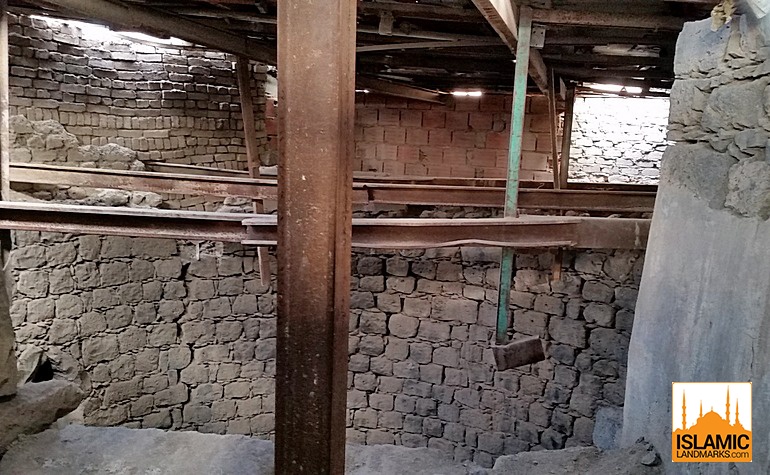
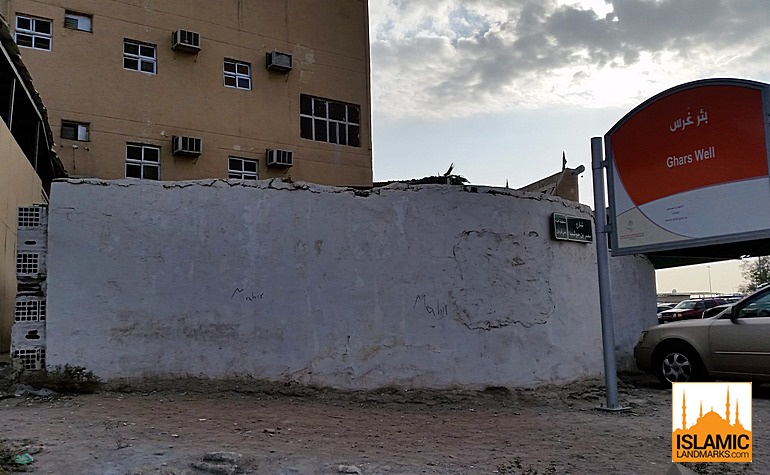
- Al-Ghars Well
According to history, the Ghars Well was dug by the grandfather of Sa’ad bin Khaythamah bin al-Haris – Malik bin al-Nahhat. The latter owned the well and welcomed the Prophet Mohammad (SAW) when he migrated from Mecca to Madinah.
The Prophet drank from this Well once and requested that he be washed with its water after he passed away.
Al-Ghars Well is located in the al-Awali district, 4 km from Masjid Nabawi.
Summary – Well of Arees
When Masjid Quba was being expanded, Bir Arees was demolished. In its place, the Mosque’s courtyard was built.
To this day, Prophet Muhammad’s (SAW) ring was never retrieved.
Today, the Well can no longer be accessed. However, plenty of other wells are still open to the public.
People can drink water at some sites, while other landmarks are for show and tell.
]]>