Jordanian architectural heritage includes a multitude of mosques that not only reflect the country’s beauty but also stand as a symbol of its deep-rooted connection to Islam.
With their stunning architecture and peaceful ambience, the mosques of Jordan provide both locals and visitors with a place for prayer, contemplation, and connection to the city’s history and spiritual essence.
Continue reading to learn about the beautiful mosques in Jordan.
How Many Mosques in Jordan?
According to the Minister of Awqaf and Islamic Affairs, there are approximately 7600 mosques in Jordan.
These include Abu Darweesh Mosque, Ali bin Abi Talib Mosque, King Abdullah I Mosque, King Hussein Mosque, Prophet Shuaib Shrine, Prophet Jadur Shrine, and Nabi Harun Shrine.
However, a 2017 Jordan Times article stated that out of the 6000 mosques in Jordan, 3000 don’t have officially assigned imams. Another article from 2020 reported that 1284 of the 7100 mosques are without imams.
Famous Mosques in Jordan
The country of Jordan is home to some of the most popular Islamic landmarks in the world, including King Abdullah I Mosque, King Hussein Mosque, Abu Darweesh Mosque, Prophet Jadur Shrine, and Nabi Harun Shrine.
The Most Famous Mosque in Jordan: King Abdullah 1 Mosque
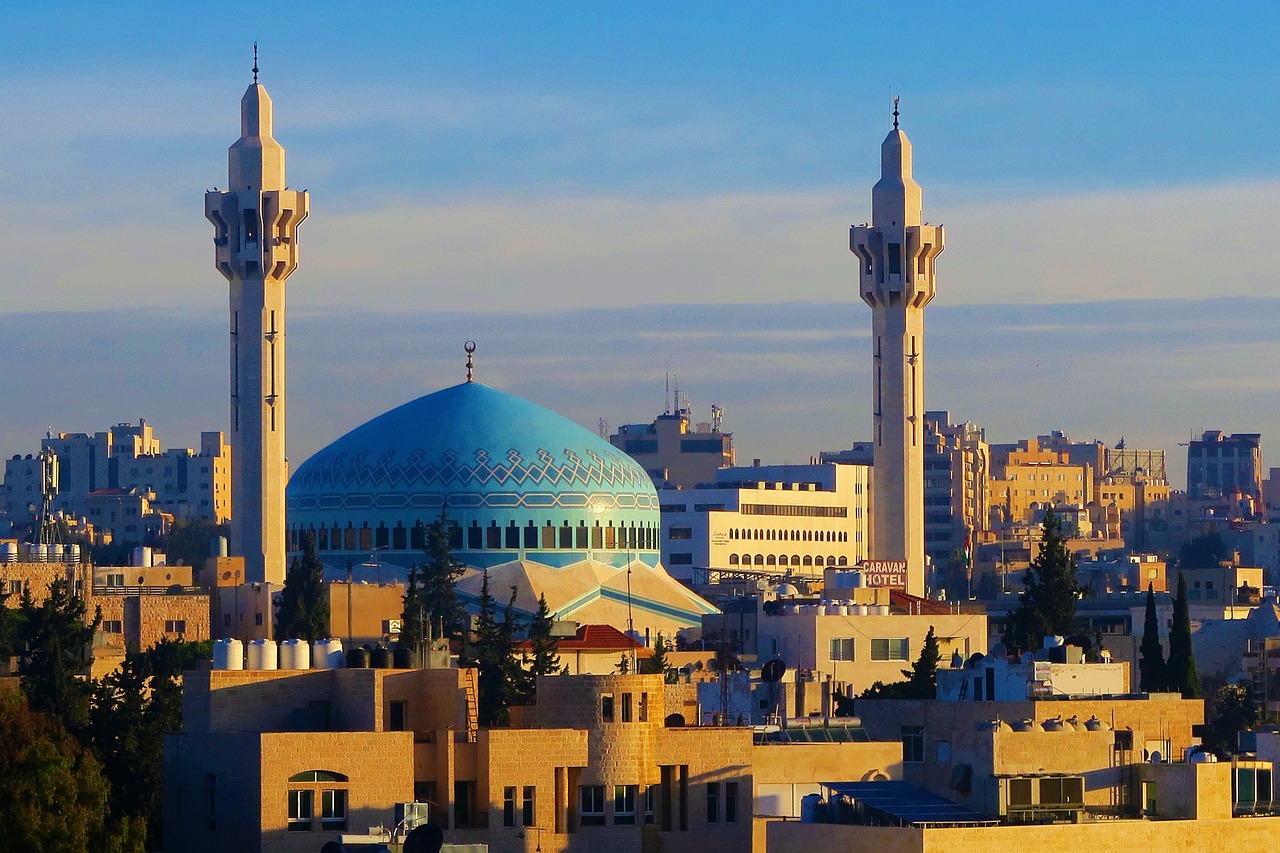
King Abdullah I Mosque is the most famous Masjid in Jordan. Completed in 1989 as a memorial by the late King Hussein to his grandfather, King Abdullah I Mosque is the largest Masjid in the state.
King Abdullah I Mosque is known for its beautiful architecture and distinctive blue dome that can be seen from afar.
The mosque’s octagonal courtyard can accommodate over 3000 worshippers, and the hall can provide space for 7000 people.
King Abdullah 1 Mosque has a small women’s section and private royal enclosure, accommodating up to 200 – 300 people.
In addition to the vast blue dome, the walls of King Abdullah 1 Mosque are decorated with Quranic inscriptions.
King Abdullah 1 Mosque is the only Masjid in Amaan where non-Muslims are allowed.
Other features of King Abdullah 1 Mosque are a library with 20,000 books, a reception area, Dar al-Quran, roofed lounges and halls, an Islamic museum, and a charity market.
If you want to visit a Jordan museum, this is the place to go!
What Can You Wear to the King Abdullah Mosque?
When visiting King Abdullah 1 Mosque, it is important to dress modestly and respectfully. If you are a man, wear long trousers or pants and a shirt that covers your shoulders.
However, women are advised to wear either a full-length dress or loose clothing that covers their bodies.
Wearing long pants and sleeves is essential, and any revealing dress is strictly prohibited.
Women must also wear a headscarf before entering King Abdullah 1 Mosque.
Biggest Mosque in Jordan
King Hussein Bin Talal Mosque is the largest Masjid in Jordan. Also known as King Hussein Mosque, the Masjid covers 60,000 square metres of area and can accommodate up to 5500 worshippers.
The square-shaped mosque features marble floors and four minarets.
King Hussein Bin Talal Mosque’s structure perfectly combines classic and modern architecture, making it the perfect place for halal travel..
Name of the Biggest Mosque in Jordan
The name of the biggest mosque in Jordan is King Hussein Bin Talal Mosque.
King Hussein Mosque is located at King Abdullah II Street in Al Hussein Public Parks near King Hussein Medical Centre.
Oldest Mosque in Jordan
In this section, we will discuss some of the oldest mosques in the history of Jordan that you can discover as you travel through the beautiful country.
Ali bin Abi Talib Mosque
Developed in Irbid, Jordan, Ali bin Abi Talib Mosque was originally built during the Ottoman Empire era and then renovated and expanded in 1998.
Named after the son-in-law of Prophet Muhammad (PBUH), Ali bin Abi Talib Mosque is a place of profound significance for millions of Muslims worldwide.
Ali bin Abi Talib Mosque has a simple architectural design and features one minaret and a grand dome.
The Grand Hussein Mosque
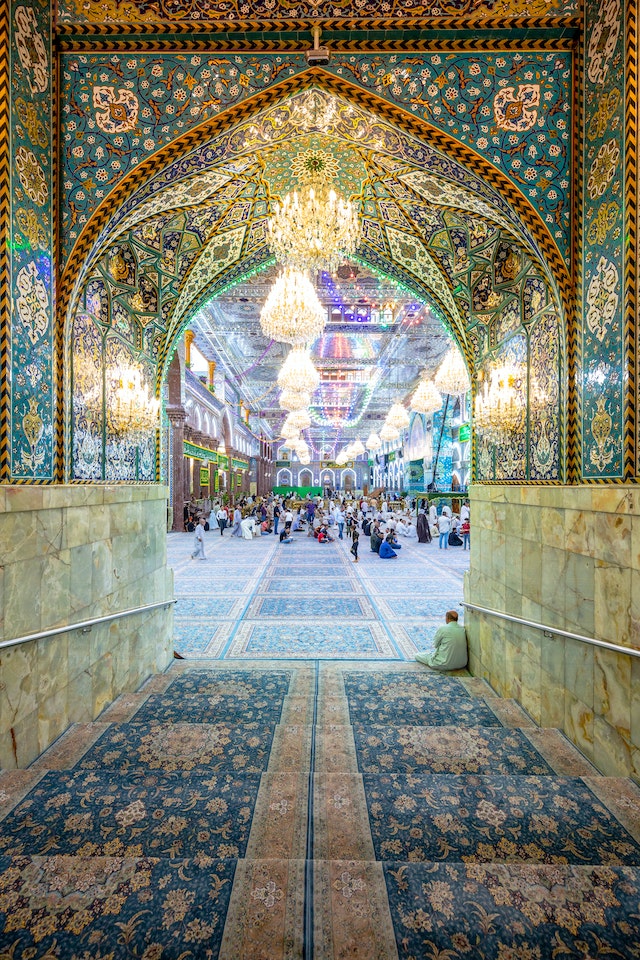
Constructed over 80 years ago, the Grand Hussein Mosque is the oldest Masjid in Amman.
This mosque was one of Jordan’s kingdom’s biggest architectural projects.
According to the religious committee members, the Grand Hussein Mosque is one of the highly visited Amman attractions and receives approximately 1500 worshippers for Zuhr prayer
Thousands of people travel to the mosqye every year to marvel at its grandeur.
However, for senior citizens, visiting the Grand Hussein Mosque is a trip down memory lane.
The Grand Hussein Mosque has a domed fountain, a prayer hall, a courtyard, and walls decorated with Quranic verses.
The Grand Hussein Mosque currently covers 2000 square metres of land and can accommodate 2600 worshippers.
Mosques in Amman
Amman, the capital city of Jordan, is home to various beautiful and historically significant mosques and the perfect place to travel.
These mosques reflect the rich cultural and religious diversity of the region.
How Many Mosques in Amman?
The exact number of mosques in Amman is not known. However, three popular masjids in Amman are King Abdullah 1 Mosque, Ali bin Abi Talib Mosque, and King Hussein Bin Talal Mosque.
King Hussein Mosque

One of the oldest mosques in Amman, King Hussein Mosque, was re-constructed by King Abdullah 1 in 1932 on the exact site of the one built by Umar (AS) during his Caliphate in 640 AD.
The Ottoman-style mosque is located at an altitude of 1013 metres (3323 feet/ 0.62 miles) above sea level.
King Hussein Bin Talal Mosque has a capacity of 5500 worshippers, marble floors, one large centred dome and four minarets.
The mosque has a fort-like architecture and can be seen from afar.
Abu Darweesh Mosque
Featuring striking and distinctive black and white stone architecture, Abu Darweesh Mosque is situated on the top of Jebel al-Ashrafiyeh, the highest hill in Amman, Jordan.
Abu Darweesh Mosque was built in 1961 with financial support from Abu Darweesh (also called Hasan Mustafa Sharkas. Abu Darweesh Mosque covers roughly 2500 square metres of land.
Inside the mosque, the intricate calligraphy and delicate patterns that adorn the walls are a testament to the craftsmanship of local artisans.
Other Historic Islamic Places in Jordan
Want to learn more about the historical monuments in Jordan before you travel? In this section, we will be discussing three of Jordan’s most famous and significant religious sites.
Umayyad Palace
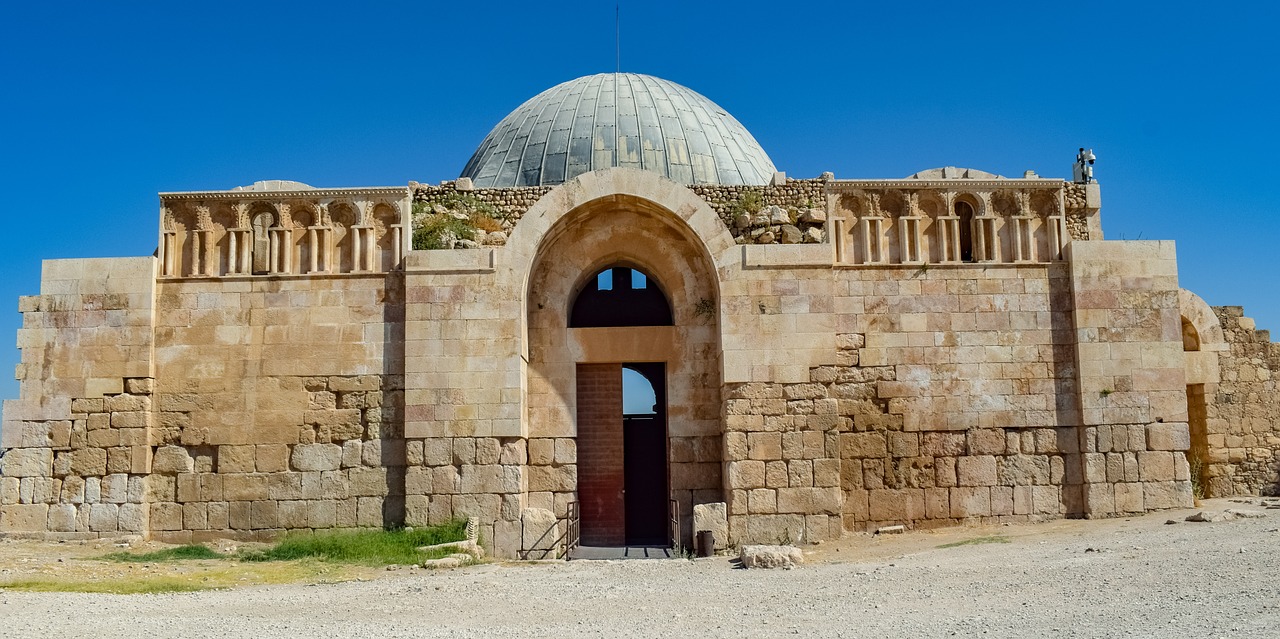
Umayyad Palace is located on Jabal al-Qal’a (Citadel Hill) of Amman, Jordan. The Umayyad Palace was constructed in the first half of the 8th century and used to be the residence of the governors during the Umayyad Dynasty.
The palace comprises three areas; a large area for people to gather, a well-decorated and preserved audience hall, and nine independent buildings that represent the destroyed part of the palace.
Today, the Umayyad Palace features a restored domed entrance chamber called the “monumental gateway” or “kiosk.”
The stucco ornaments and geometric designs make Umayyad Palace’s architecture stand out from other regional palaces.
Dead Sea

Situated between Jordan, West Bank, and Israel, the Dead Sea is a saltwater lake. Known for its extremely high salt concentration, the Dead Sea is the lowest point in the world, about 1412 feet (400 metres/0.26 miles) below typical sea level.
According to Islamic history, the Dead Sea is a reminder of Allah SWT’s punishment of the wicked evildoers and ignorant people of Sodom city, the Ummah of Prophet Lut (AS).
The Prophet of Allah SWT preached the message of God in every way possible. Despite his endless tries, even Prophet Lut’s (AS) wife didn’t convert. As a result, Allah SWT destroyed the city.
“Turn the cities upside down, and rain down on them brimstones hard as baked clay, spread layer on layer, marked from your Lord.” [Holy Quran 11:82–83]
Prophet Muhammad (PBUH) strictly advised people from visiting a place of God’s punishment, such as the Dead Sea. He said,
“Do not enter the place of those who were unjust to themselves unless you are weeping, lest you should suffer the same punishment as was inflicted upon them.”
However, if you get a chance to travel to the Dead Sea, use the time to remember the story of Prophet Lut (AS) and how he fought for Islam. Allah SWT in the Holy Quran says,
“Surely! In this are signs for those who understand. And verily, they [the cities] are right on the high road. Surely! Therein is indeed a sign for the believers.” [Holy Quran 15:75–77]
“And to Lut, too, We gave wisdom and knowledge; We saved him from the town which practised abominations. Truly they were a people given to evil, a rebellious people. And We admitted him to Our mercy; for he was one of the righteous.” [Holy Quran 21:74–75]
Cave of Ashabe-Kahf
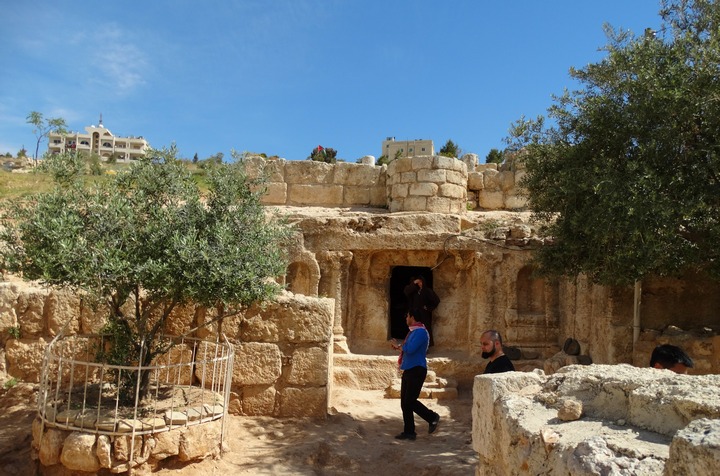
The cave of Ashabe-Kafh is located in the suburb of Abu Alanda, Amman, Jordan.
According to Islamic and Christian tradition, this is the same cave where six believers and one of their dogs found refuge after escaping the persecutions of the cruel Roman king.
Allah SWT in the Holy Quran states, “[Some] say, ‘The sleepers were three, and their dog made four,’ others say, ’They were five, and the dog made six’- guessing in the dark – and some say,’ They were seven, and their dog made eight.’ Say [Prophet], ‘My Lord knows best how many they were.’ Only a few have real knowledge about them, so do not argue, but stick to what is clear, and do not ask any of these people about them.” [Holy Quran 18:22]
The seven slept for over 300 years and miraculously woke up like no time had passed away.
It is said that these people eventually died in 550 AD after sharing the story with the world. Later, the seven were buried inside the Cave of Ashabe-Kahf.
Tomb of Aaron
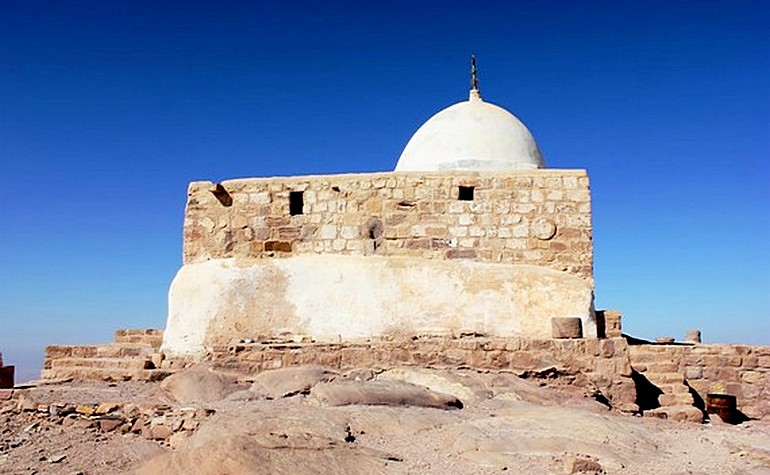
Located in Petra, Jordan, the Tomb of Aaron was constructed in the Mamluk era in the early 14th century and comprised a small courtyard and a room.
The prayer hall of the white-domed mosque is on the ground floor.
Summary – Mosques in Jordan
A country in the middle east with diverse cultural heritage and rich history, Jordan offers unique excursions to visitors worldwide.
From the majestic beauty of King Abdullah I Mosque in Amman and King Hussein Bin Talal Mosque to the historical significance of the Cave of Ashabe-Kahf and Umayyad Palace, every religious site tells a tale of Jordan’s intricate past and its blend of traditions.
Exploring the mosques in Jordan gives you a chance to witness the coexistence of the ancient and modern while instilling peace in your heart and soul.
Remember to stay modest and respectful as you travel through these historic landmarks
]]>The evil-doers robbed, conned, and betrayed passersby. They would sell you milk but mix it with water, lie about their products to oversell, and tax travellers.
To end the culture of dishonesty and lying, Allah SWT sent Prophet Shuaib (AS) to call the Midianites to worship the Almighty and follow His commandments. But it wasn’t as easy as it sounds.
While some accepted Islam, most of the Midianites paid no heed. Instead, they made fun of Prophet Shuaib (AS) and pushed him and the believers out of town only to face the punishment of Allah SWT.
In this article, we will walk you through the story of Prophet Shuaib (AS). Keep reading to learn more about the prophet of the Madyan community and his role and significance in the history of Islam.
Who Was Prophet Shuaib (AS)?
Also known as Jethro in biblical history, Prophet Shuaib (AS) was sent upon the community of Midiantes, the worshippers of Ashab al-Aykah (a large tree). Prophet Shuaib (AS) was a good man, a great preacher, and a devoted messenger of Allah SWT.
He was blessed with the gift of speaking and effortlessly conveying the message of Allah SWT. Prophet Shuaib (AS) is one of the four Arabian prophets alongside Prophet Hud (AS), Prophet Saleh (AS), and Prophet Muhammad (PBUH).
Meaning/Title of Prophet Shuaib (AS)
Shuaib, Shu-ayb, Shuayb, or Shoaib is an Arabic name that means “who knows to show the right path.” Prophet Shuaib (AS) was known as the “eloquent preacher amongst the prophets.” In biblical history, he is also referred to as Jethro – father-in-law of Prophet Musa (AS).
Prophet Muhammad (PBUH) describes Prophet Shuaib (AS) as “Khateeb ul-Anbiya,” the speech deliverer of the Messengers and Prophets of Allah SWT. Narrating a hadith, Abu Dhar (RA) stated that Prophet Muhammad (PBUH) once said, “O Abu Bhar, four from the Prophets are Arab, Hud, Saleh, Shuaib, and your Prophet O Abu Dhar.”
Where Was Prophet Shuaib (AS) Born?
Prophet Shuaib (AS) was born in a small town named Madyan (Madian) situated on the outskirts of the Hejaz region but within the borders of Syria and not far from the Red Sea. However, today, Madyan is part of Jordan.
Prophet Shuaib (AS) and the People of Madyan
The people of Madyan practised many things prohibited in Islam, including idolatry, collecting interest, cheating customers in business transactions by lying about the services and products, and robbery.
The Midianites were known as “Companions of the Wood” (Ashab al-Aykah) as they used to worship a large tree. Allah SWT sent Prophet Shuaib (AS) to guide the tribes between Shaam and Hijaz.
Prophet Shuaib (AS) was an excellent speaker and devotedly worked towards spreading the message of Allah SWT and guiding the Midianites to do good deeds and to worship no one else but the God Almighty.
Allah SWT narrates the story of Prophet Shuaib (AS) and the people of Madyan in Surah Al-A’raf in the Holy Quran. He (SWT) says, “O my people, worship Allah; you have no deity other than Him. There has come to you clear evidence from your Lord.
So fulfill the measure and weight and do not deprive people of their due and cause not corruption upon the earth after its reformation. That is better for you if you should be a believer. And do not sit on every path, threatening and averting from the way of Allah those who believe in Him, seeking to make it [seem] deviant. And remember when you were few and He increased you. And see how was the end of the corrupters.
And if there should be a group among you who has believed in that with which I have been sent and a group that has not believed, then be patient until Allah judges between us. And He is the best of judges.” [7:85-87, Holy Quran]
How Did the People of Madyan Respond to Prophet Shuaib (AS)?
In reply to Prophet Shuaib (AS), the arrogant Midianites said, “O Shuaib, does your prayer [i.e., religion] command you that we should leave what our fathers worship or not do with our wealth what we please? Indeed, you are the forbearing, the discerning!” [11:87, Holy Quran]
Prophet Shuaib (AS) responded, “Even though we hate it!? We would have invented against Allah a lie if we returned to your religion after Allah had saved us from it. And it is not for us to return to it except that Allah, our Lord, should will.
Our Lord has encompassed all things in knowledge. Upon Allah, we have relied. Our Lord, decide between us and our people in truth, and You are the best of those who give decision.” [7:88-89, Holy Quran]
He later added, “O my people, have you considered: if I am upon clear evidence from my Lord and He has provided me with a good provision from Him…? And I do not intend to differ from you in that which I have forbidden you; I only intend reform as much as I am able. And my success is not but through Allah. Upon Him, I have relied, and to Him, I return.” [11:88, Holy Quran]
However, the people of Madyan refused to entertain the words of Prophet Shuaib (AS) and threatened to drive him and his followers out of the land if they didn’t stop. The Midianites showed no interest in worshiping Allah SWT and giving up their wrongful earning methods.
In spite of it all, Prophet Shuaib (AS) stood firm with his message and told the disbelievers he wouldn’t bow down to falsehood. Prophet Shuaib (AS) turned towards Allah SWT and asked the Almighty to decide between the believers and the disbelievers.
Warnings of a Severe Punishment
The disbelievers of Madyan refused to fear Allah SWT, accept His message, and continued showing resistance. Seeing this, Prophet Shuaib (AS) warned Midianites by giving examples of the punishments of Prophet Nuh (AS) and the people of Saleh and Hud.
However, because the disbelievers were arrogant and stubborn and showed no inclination toward change, Prophet Shuaib (AS) gave a warning of an upcoming painful punishment:
“And O my people, let not [your] dissension from me cause you to be struck by that similar to what struck the people of Noah or the people of Hūd or the people of Ṣāliḥ. And the people of Lot are not from you far away.
And O my people, let not [your] dissension from me cause you to be struck by that similar to what struck the people of Noah or the people of Hūd or the people of Ṣāliḥ. And the people of Lut are not from you far away.” [11:89-90, Holy Quran]
People of Madyan Destroyed
Despite several warnings, the people of Madyan didn’t accept the message of Prophet Shuaib (AS). In fact, they asked Prophet Shuaib (AS) to tell Allah SWT to inflict any punishment upon them and forcefully banished Prophet Shuaib (AS) and his followers from Madyan.
However, as stated in the Holy Quran, Allah SWT planned to protect the believers, “We will surely evict you, O Shuaib, and those who have believed with you from our city, or you must return to our religion.” [7:88, Holy Quran]

Once Prophet Shuaib (AS) and the believers were at a safe distance, the messenger asked Allah SWT for help, and the Almighty answered his plea by sending down an azaab (terrible punishment) as described in the following verses of the Holy Quran:
“So the earthquake seized them, and they became within their home [corpses] fallen prone. Those who denied Shuaib – it was as though they had never resided there. Those who denied Shuaib – it was they who were the losers.” [7:91-92, Holy Quran]
“And when Our command came, We saved Shuaib and those who believed with him, by mercy from Us. And the shriek seized those who had wronged, and they became within their homes [corpses] fallen prone as if they had never prospered therein. Then, away with Madyan as Thamūd was taken away.” [11:94-95, Holy Quran]
“And they denied him, so the punishment of the day of the black cloud seized them. Indeed, it was the punishment for a terrible day. Indeed that is a sign, but most of them were not to be believers.” [26:189-190, Holy Quran]
Allah SWT states that Azaab were sent upon the Midianites to punish them for not obeying the command of the Almighty. It all started with unbearable hot weather, which the disbelievers suffered silently.
The next day, a huge dark black cloud filled the sky. Seeing this, the Midianites thought it would be the end of the scorching heat. The disbelievers gathered under the cloud, hoping it would bring refreshing and cool rain.
Little did they know, a huge thunderstorm, followed by an earthquake, ended the lives of all Madyan disbelievers. It is also said that the hurling thunderbolts, cloud bursts, and fire took over the cries of the people of Madyan, and they became lifeless in their own homes.
When Prophet Shuaib (AS) and his followers returned to Madyan, they were shocked to see the fate of the disbelievers. However, they didn’t feel any regret as Prophet Shuaib (AS) had already fulfilled his duty to warn the Midianites, but they chose not to listen.
Miracle of Prophet Shuaib (AS)
While there are many miracles of Prophet Shuaib (AS), one of the most famous miracles is that whenever Prophet Shuaib (AS) wanted to climb a mountain, the mountain would magically lower its height, allowing Prophet Jethro to climb upon it.
It is also believed that the miraculous staff of Prophet Musa (AS) was a gift from Prophet Shuaib (AS).
Dua of Prophet Shuaib (AS)
Prophet Shuaib (AS) made the following dua asking Allah SWT for help and guidance in the time of adversity:
Rabbana iftah baynana wabayna qawmina bilhaqqiwaanta khayru alfatiheen
Translation: “Our Lord, decide between us and our people in truth, and You are the best of those who give decision.” [7:89, Holy Quran]
Where in the Quran (Which Surah) Is Prophet Shuaib (AS) Mentioned?
Prophet Shuaib (AS) is one of the four Arab prophets mentioned in the Holy Quran with Prophet Hud (AS), Prophet Saleh (AS), and Prophet Muhammad (PBUH). Allah SWT has mentioned the name of Prophet Shuaib (AS) 11 times in the Holy Quran in Surah Al A’raf, Surah Qasas, Surah Hud, Surah Al-Hijr, Surah Ash-Shura, and Surah Al-Ankabut.
Family Tree of Prophet Shuaib (AS)
When it comes to the family background of Prophet Shuaib (AS), every school of thought has a different story. According to most of the narrations, Prophet Shuaib (AS) was the grandson of Prophet Ibrahim (AS).
Others believe that Prophet Shuaib (AS) didn’t belong to the family of Prophet Ibrahim (AS), but his father had accepted Islam at the time of Prophet Ibrahim (AS).
Who Is the Father of Prophet Shuaib (AS)?
Nuwayb Madyan b. Ibrahim was the father of Prophet Shuaib (AS). While Nuwayb was the name of the Prophet Shuaib’s (RA) father, Madyan b. Ibrahim was his grandfather.
Who Is the Mother of Prophet Shuaib (AS)?
While we don’t know the exact name of the mother of Prophet Shuaib (AS), we know that she was the daughter of Prophet Lut (AS).
Prophet Shuaib (AS) Wife
No information is provided related to the name and identity of the wife of Prophet Shuaib (AS). However, we know that Prophet Shuaib (AS) had a loving wife, and Allah SWT blessed their union in the form of two modest, pious, and loving daughters.
Names of Prophet Shuaib’s (RA) Daughters
Prophet Shuaib (AS) had two daughters, and one of them was named Safura.
Who Married the Daughter of Prophet Shuaib (AS)?
According to Islamic scriptures, Prophet Musa (AS) escaped from Egypt and found refuge in Madyan. It is where he (Prophet Musa (AS) met Prophet Shuaib (AS) and married one of his daughters.
Allah SWT narrates the blessed union event in Surah Qasas of the Holy Quran, “Then one of the two women approached him, walking bashfully. She said, ‘Indeed, my father invites you to pay you the wages for watering [our flock] for us.’ So when he came to him and recounted the story to him, he said, ‘Do not be afraid. You have been delivered from the wrongdoing lot.'” [Surah Qasas, Holy Quran]
Even though the name of Prophet Shuaib (AS) isn’t mentioned in these verses. However, exegetes state that when Prophet Musa (AS) went to Madyan, Prophet Shuaib (AS) was very old and needed someone to help him.
Thus, Prophet Shuaib (AS) not only hired Prophet Musa (AS) to take care of his sheep for 8 years and 10 additional years but also gave one of his daughters (Safura) to Prophet Musa (AS) in marriage.
Summary – Story of Prophet Shuaib (AS)
The people of Madyan were arrogant and selfish disbelievers. They lived sinful lives and were willing to do anything possible for their own benefit. Armed with many miracles, Allah SWT had sent Prophet Shuaib (AS) to be the beacon of light in the world of darkness.
Prophet Shuaib (AS) devotedly preached the message of Allah SWT, begged the Midianites to fear Allah SWT and be mindful of His favours, and warned them about the consequences of their evil deeds.
However, the disbelievers didn’t listen. Instead, they seized the belongings of Prophet Shuaib (AS) and the believers and drove them out of the town. Prophet Shuaib (AS) turned to Allah SWT and asked him for help.
Allah SWT punished them with scorching heat and a dangerous thunderstorm, perishing the evil-doers forever.
The story of Prophet Shuaib (AS) shows us the importance of obeying Allah SWT. Had the disbelievers of Madyan listened to the message of Prophet Jethro and stopped doing wrongful deeds, they wouldn’t have faced the punishment of Allah SWT and would have lived happily in the world and hereafter.
Thus, we must remember that Allah SWT has created us with the sole purpose to worship Him and obey His commandments. We must do this by following the way of the Quran and the Sunnah of Prophet Muhammad (PBUH).
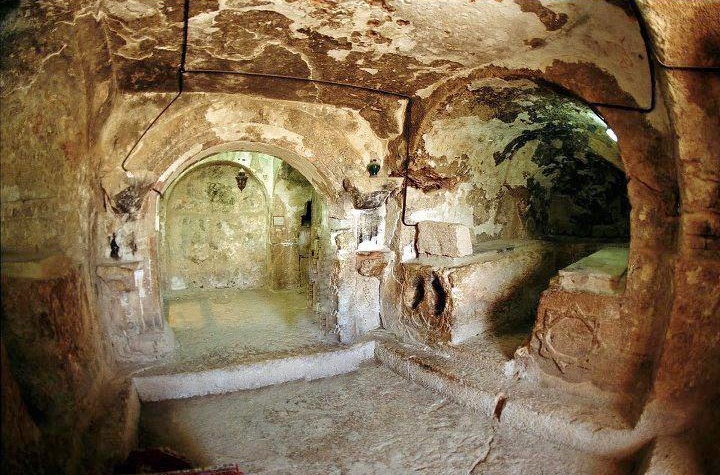
]]>- In around 250 CE there ruled a Roman king called Daqyanoos (Decius) who would annually hold a gathering dedicated to the worshipping of idols. Many people would attend, dressed in their best clothing. However, one youth believed in the oneness of Allah (ﷻ), the teachings of Isa (عليه السلام) and shunned pagan worship. He rebelled against the practices that were happening in the society. He attracted another youth and then another to form a small group.
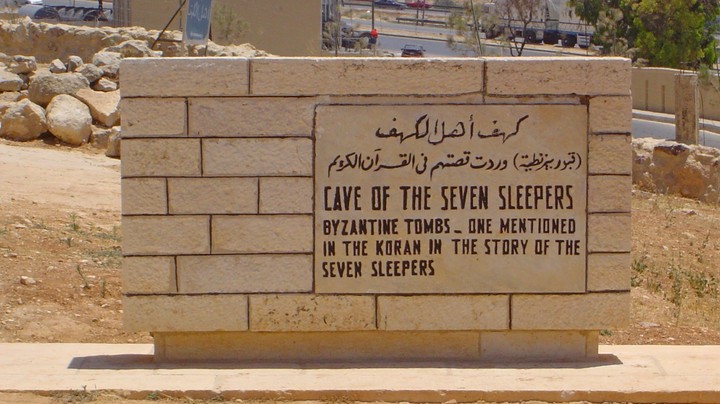
- When the king heard of their rebellion he became very angry and issued a command for them to be killed. In order to save their iman (faith) they fled and went into hiding. On their escape route they met a young farmer who owned a dog; they gave him da’wah, he accepted and decided to also join them. Eventually they came to a cave in which they made dua to Allah (ﷻ) for ease. They decided to take rest there for a while, leaving the dog (named Qitmir) near the entrance as a guard. Allah (ﷻ) caused them and the dog to sleep for 300 years.
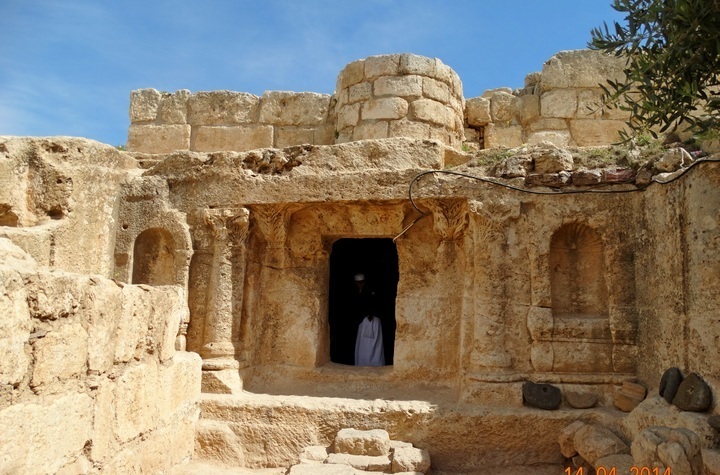
- Allah (ﷻ) describes their sleeping in the Holy Quran in Surah Kahf: “You would have thought they were awake, though they lay asleep. We turned them over, to the right and the left, with their dog stretching out its forelegs at the entrance. If you had seen them, you would turn and run away, filled with fear of them.” [18:18]
- The Quran further states that the period of time these sleepers spent in the cave was 300 years during which the calendar of their people was changed from solar to lunar and, as a result, the period of their sleep was 309 years.
- When they woke up, they had no idea they slept for centuries and thought they had only slept a few hours. When they sent one of them to buy food, the shopkeeper was amazed to see such old coins and the reality of the time they had spent in the cave gradually came to light. The present ruling king, whom some scholars have identified as Tandoosees, was a believer who came on foot to see them and seek their blessings. When these young men died they were buried in the cave along with their dog. The bones of these youth and the dog are visible to see inside.
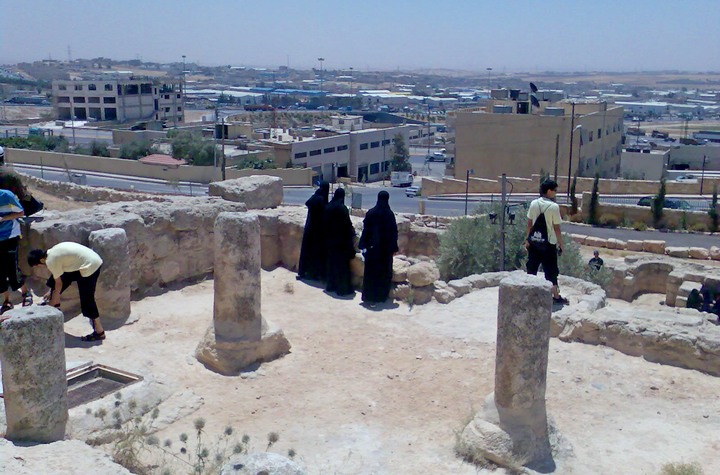
- To the left of the entrance is an ancient olive tree. At one time a small church was built on top of the cave; this was converted to a mosque with the mihrab still being visible above the entrance.
- Apart from Amman in Jordan, the location of the cave is also claimed to be in Turkey (see below). And Allah (ﷻ) knows best.
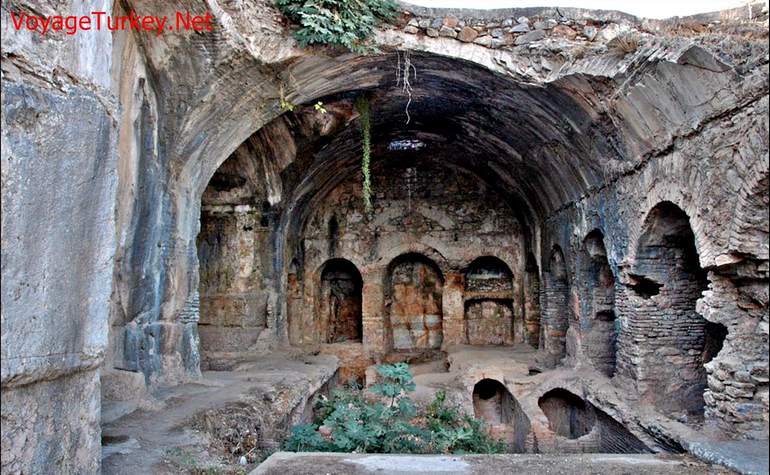
References: Stories of the Prophets – Ibn Kathir, Wikipedia, The Rough Guide to Jordan.
]]>- The Prophet (ﷺ) was challenged by the Quraysh of Makkah who did not believe in his message to answer three questions passed onto them by the Jews. One of the questions was, “Who were the youth who disappeared, and how many were they?” The Jews knew that the Prophet (ﷺ) would only be able to tell the story if he was indeed a prophet.
- The Prophet (ﷺ) had no clue and said that he would answer them tomorrow, hoping for the answer to be revealed to him through Jibraeel (عليه السلام) but forgetting to say ’Inshallah’ (if Allah wills). No revelation came to the Prophet (ﷺ) for 15 days, leading the Quraysh to greatly abuse and revile him.
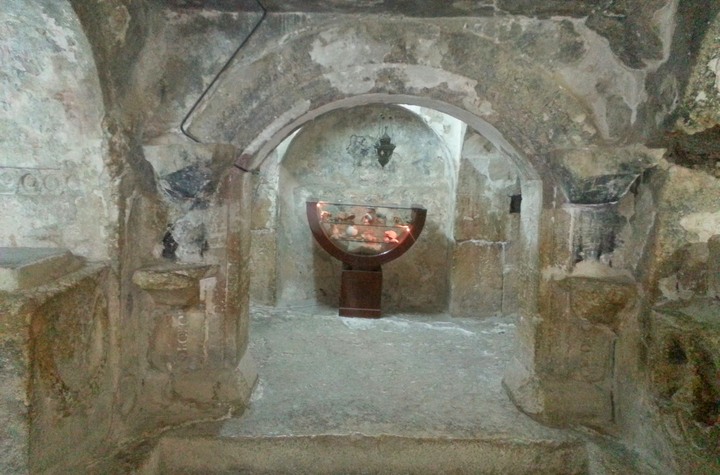
- The answer, however, was eventually revealed to the Prophet (ﷺ) in a Surah named after the cave (Al-Kahf) of the sleepers. The Quran revealed the exact story that the Jews knew of, and it answered the questions similarly to the information they had. The Quran confirmed that they slept for 309 years, which the Jews knew of. The Quran however did not give an exact answer as to how many they were. Allah (ﷻ) revealed: “[Some] say, ‘The sleepers were three, and their dog made four,’ others say, ’They were five, and the dog made six’- guessing in the dark – and some say,’ They were seven, and their dog made eight.’ Say [Prophet], ‘My Lord knows best how many they were.’ Only a few have real knowledge about them, so do not argue, but stick to what is clear, and do not ask any of these people about them.” [18:22]
- The Jews themselves did not know exactly how many there were (whether 3,5 or 7) and were astonished when the Quran gave all the possible numbers they had suspected for the number of sleepers.
References: Stories of the Prophets – Ibn Kathir, Wikipedia
]]>- Of the epistles (letters) that the Prophet (ﷺ) despatched to various kings, inviting them to Islam, one was sent to the King of Bursa through Haris-bin-Umair Azdi (رضي الله عنه). When Haris (رضي الله عنه) reached Mu’ta, he was killed by Sharjeel Ghassani, one of the governors of the Qaiser. The murder of the envoy was against all laws of inter-tribal morality. The Prophet (ﷺ) was naturally very much upset when the news reached him. He collected an army, 3,000-strong, to advance against the enemy. This was the first time the Muslims would fight the Byzantines (The Roman Empire during the Middle Ages).
- While nominating Zaid-bin-Haritha (رضي الله عنه) to command the army, the Prophet (ﷺ) said: “If Zaid is killed, then Jafar-bin-Abi Talib will be your Amir and if he is also martyred, then Abdullah-bin-Rawahah will take the command. If he also dies, then you can select a commander from among yourselves.” A Jew, who was listening to this, said: “All the three must die. This is exactly how the earlier Prophets used to prophesy.”
- The Prophet (ﷺ) gave Zaid a white flag made by himself. He then accompanied the army for some distance out of Madinah and prayed for them saying: “May Allah bring you back safely and triumphantly, May He guard you against all evils.”
- When Sharjeel received intelligence about this army, he prepared an army 100,000 strong and another army of 100,000 was raised by the Qaiser himself to meet the Sahabah. When the Sahabah heard the rumour of the impending army they hesitated whether they should face such heavy odds or inform the Prophet (ﷺ). Abdullah bin Rawahah (رضي الله عنه) exhorted them to advance and they faced the army in the battlefield of Mu’ta.
- A fierce battle raged in which, as prophesised, Zaid-bin-Haritha (رضي الله عنه), followed by Jafar-bin-Abi Talib and Abdullah-bin-Rawahah were martyred. After the last leader had fallen, Thabit bin Aqram (رضي الله عنه) ran to receive the flag and rose it high, so that the Muslims would not disperse in chaos. Thabit (رضي الله عنه) then handed the flag to Khalid-bin-Waleed (رضي الله عنه) and called the Muslims publicly to accept his leadership. They unanimously agreed and for the first time Khalid-bin-Waleed (رضي الله عنه) headed a Muslim army.

- Back in Madinah the Prophet (ﷺ) was fully informed of the happenings of the war. One morning, he (ﷺ) addressed the Sahabah saying, “Zaid has taken up the flag and now he has been martyred. Jafar has now taken it and he has also been martyred. Ibn Rawahah has taken it and he has also been martyred.” Saying this, tears welled up in the eyes. Thereafter he mentioned, “Now the flag has been hoisted by a sword from among the swords of Allah Ta’ala and Allah Ta’ala has granted the Muslims victory on his hands.”
- Khalid-bin-Waleed (رضي الله عنه) reported that the fighting was so intense that he used nine swords which broke in the battle. Seeing that the situation was hopeless, he prepared to withdraw the army. He continued to engage the Byzantines in skirmishes, but avoided pitched battle. One night he completely changed his troop positions and brought forth a rearguard that he had equipped with new banners; all this was intended to give the impression that reinforcements had arrived from Madinah. He also ordered his cavalry to retreat behind a hill during the night, hiding their movements, and then return during daytime when the battle resumed, raising as much dust as they could. This also was intended to create the impression that further reinforcements were arriving. The Byzantines believed in the fictitious reinforcements and withdrew, thus allowing the Muslim force to safely retreat to Madinah.
- Today, those Muslims who fell at the battle are considered martyrs (shaheed). Far from being a defeat, this battle was a strategic success; the Muslims had challenged the Byzantines and had made their presence felt amongst the Arab Bedouin tribes in the region.
References: Fazail-e-Aamal – Sheikh Zakariyya Kandhalvi, Men around the Messenger – Khalid Mohammed Khalid.
]]>Warning: Undefined array key "file" in /home/wtim8wecc6jt/public_html/overhaul.islamiclandmarks.com/wp-includes/media.php on line 1763
Deprecated: preg_match(): Passing null to parameter #2 ($subject) of type string is deprecated in /home/wtim8wecc6jt/public_html/overhaul.islamiclandmarks.com/wp-includes/media.php on line 1763
- Zaid (رضي الله عنه) was the first to embrace Islam after Ali (رضي الله عنه). He was the first slave to accept Islam.
- When still a small child he was travelling in a caravan when it was attacked by the tribe of Banu Qais. He was taken as a slave and sold in Makkah to Hakim-bin-Hizam who purchased him for his aunt Khadijah (رضي الله عنه), who offered him as a present to the Prophet (ﷺ) at the time of her marriage to him.
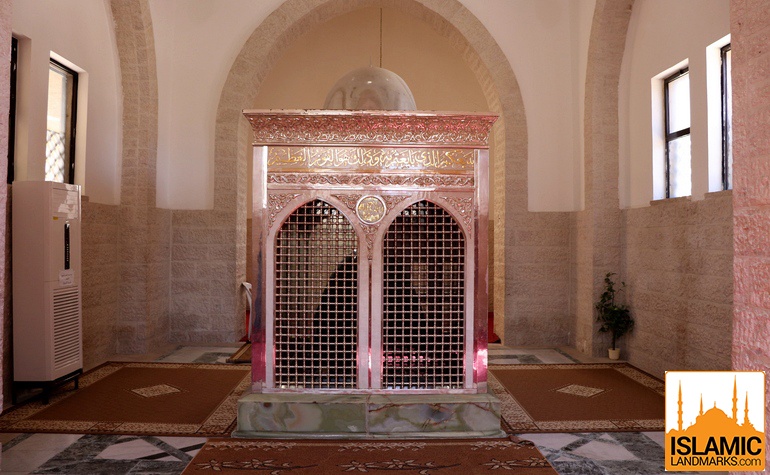
- Zaid’s father was in immense grief at the loss of his son and roamed about in search of him. Zaid met some people of his clan during their pilgrimage to Makkah and sent a letter to his father assuring him that he was quite well and happy with his noble master. Zaid’s father and uncle came to Makkah with sufficient money to ransom Zaid and approached the Prophet (ﷺ) to free him so they could take him back. The Prophet (ﷺ) gave Zaid the free choice to go back with his father but he refused saying, “How can I prefer anybody else to you? You are everybody for me, including my father and uncle.” On this the Prophet (ﷺ) took Zaid in his lap and said, “From today, I adopt Zaid as my son.” Zaid’s father and uncle were quite satisfied with the situation and gladly left Zaid with the Prophet (ﷺ).

- Zaid (رضي الله عنه) is the only companion (Sahabi) of the Prophet (ﷺ) mentioned by name in the Quran which concerned his divorce from Zainab (رضي الله عنها): “When Zaid no longer wanted her, We gave her to you in marriage.” [33:37]
- Zaid (رضي الله عنه) died at the age of 55.
References: Fazail-e-Aamal – Sheikh Zakariyya Kandhalvi, The Holy sites of Jordan – TURAB Publishing, In the Blessed Lands: Jamiatul Ulama KZN
Note that this entry has been shown for information purposes only. On no account should anybody pray to a grave or seek supplication through them as this is tantamount to committing shirk, associating partners with Allah (ﷻ)
]]>
- Jafar (رضي الله عنه) was the paternal cousin of the Prophet (ﷺ) and the older brother of Ali (رضي الله عنه).
- He had a special love for the poor and often mingled and associated with them.
- He was amongst the first of the companions to emigrate to Abyssinia (Ethiopia) during the persecution of the Quraysh. He was the spokesman of the Muslims who successfully defended the emigrants in the court of the King Negus against the Quraysh who had come to force them back to Makkah.
- He returned to Madinah at the occasion of Khaybar. The Prophet (ﷺ) came out to welcome him and kissed him on his forehead and mentioned, “I am not sure whether I am happier with the arrival of Ja’far or with the conquest of Khaybar.” This took place in 7 AH, one year before the battle of Mu’ta.
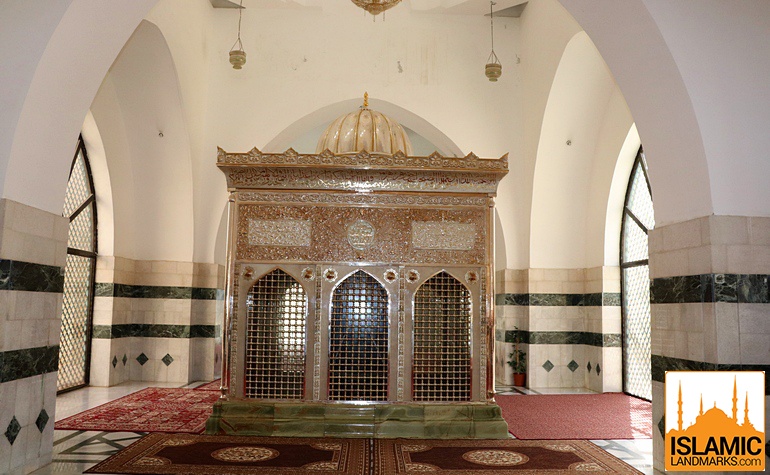
- When Zaid (رضي الله عنه) had been killed, the flag of the Muslims was taken by Jafar (رضي الله عنه). He intentionally disabled his horse to dispel any idea of returning home from the battlefield. With flag in one hand and sword in the other, he jumped into the enemy lines. The enemy cut his right hand, which held the flag. He at once transferred it to his left. When that was cut off, he held the flag in his teeth and supported it with his bleeding arms. His body was cut into two by somebody from behind and he fell dead, he was around 33 at the time.
- On hearing the news of his death, the Prophet (ﷺ) went to his house to condole with his family. Asma bint-e-Umais (رضي الله عنها), the wife of Jafar (رضي الله عنه) mentions that she was at home bathing and changing her children when the Prophet (ﷺ) entered and hugged the children. She saw tears streaming down his mubarak eyes and asked him, “O Prophet of Allah, may my parents be sacrificed for you, why are you crying like this? Has information regarding Jafar and his companions reached you?” The Prophet (ﷺ) replied, “Yes, today Jafar has been martyred.” Asma (رضي الله عنها) says, “When I heard this I shrieked and all the women began gathering at my home to console me” The Prophet (رضي الله عنها) then left the house, went home and instructed his family to prepare food for the household of Jafar (رضي الله عنه).
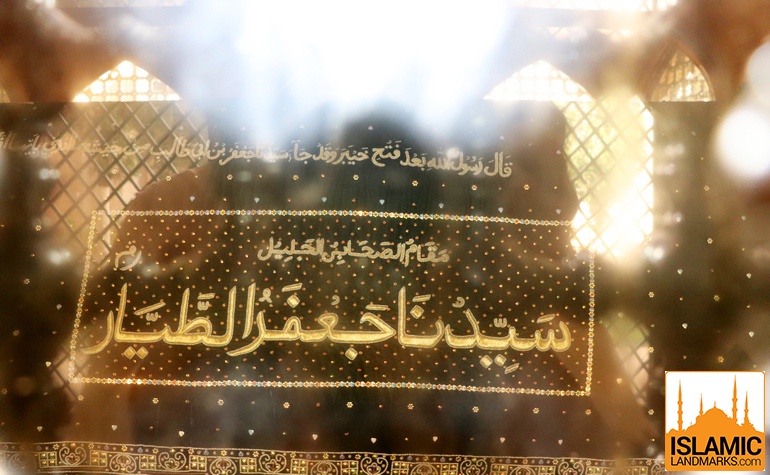
- It was on this occasion, the Prophet (ﷺ) mentioned, “In Jannah, Allah Ta’ala has given Jafar wings in place of his hands with which he flies around as he wishes and where he wishes”. It is for this reason that he became famously known as Jafar ‘al-Tayaar’ (One who flies).
References: Fazail-e-Aamal – Sheikh Zakariyya Kandhalvi, In the Blessed Lands: Jamiatul Ulama KZN
Note that this entry has been shown for information purposes only. On no account should anybody pray to a grave or seek supplication through them as this is tantamount to committing shirk, associating partners with Allah (ﷻ)
]]>- Abdullah-bin-Rawahah (رضي الله عنه) was originally a Christian scribe from Madinah and was also known as Abu Amro’ Al-Ansari Al-Khazraji Al-Badri. He was one of the most active persons from among the Ansar to support the faith of Islam and strengthen its structure.
- During the Battle of Badr, he was left behind by the Prophet (ﷺ) in charge of Madinah.
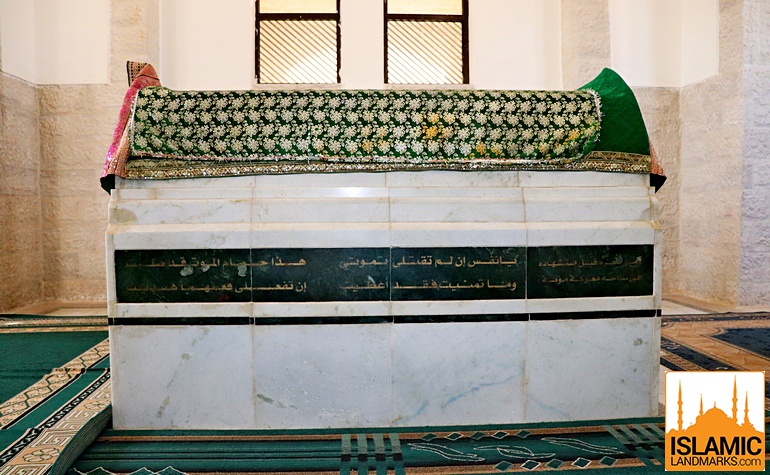
- When Jafar (رضي الله عنه) was killed in Mu’ta, Abdullah-bin-Rawahah (رضي الله عنه) was eating a piece of meat in a corner of the battle-field. He had been hungry for three days. On hearing of Jafar’s death, he threw away that piece of meat, saying to himself, “Abdullah! You are busy in eating, while Jafar has reached Paradise.” He then took the flag and began to fight. His finger was severely injured and hung loose. He put the hanging finger under his foot and tore it off from the hand, and then rushed forward, striking with his sword till he was martyred.
References: Fazail-e-Aamal – Sheikh Zakariyya Kandhalvi, The Holy sites of Jordan – TURAB Publishing
Note that this entry has been shown for information purposes only. On no account should anybody pray to a grave or seek supplication through them as this is tantamount to committing shirk, associating partners with Allah (ﷻ)
]]>
- Shoayb (عليه السلام) is mentioned in the Holy Quran 11 times, he is known as Jethro in the Bible. The people of Madyan were originally true followers of Ebrahim (عليه السلام) but gradually over the centuries had become involved in disobedience and sin. In particular they were involved in:
1. Idol worship and polytheist customs
2. Cheating when giving measure but claiming in full or more than entitled
3. Falsehood in all matters and robbing people - Allah (ﷻ) makes mention in the Holy Quran in Surah Al-A’raf: “And to Madyan (We sent) their brother Shoayb. He said, ‘My people, serve God: you have no god other than Him. A clear sign has come to you from your Lord. Give full measure and weight and do not undervalue people’s goods; do not cause corruption in the land after it has been set in order: this is better for you, if you are believers’.“ [7:85]
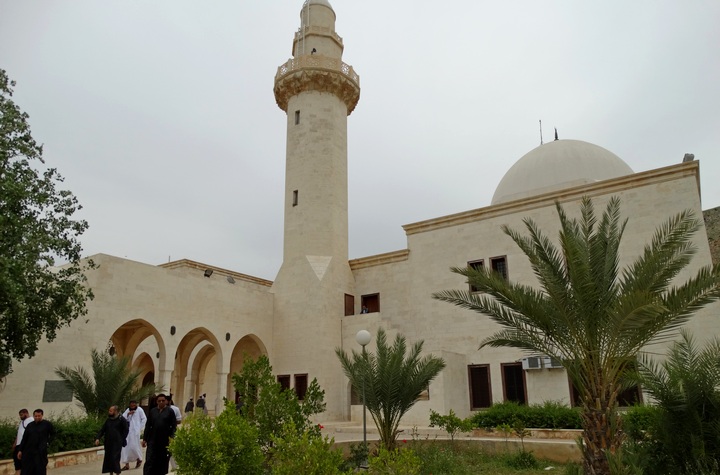
- Shoayb (عليه السلام) was very upset on seeing his people practice bad deeds. He advised them to seek forgiveness of Allah. Alas, they desisted and were destroyed by an earthquake.
- Shoayb (عليه السلام) was renowned for his eloquence and good speech. According to Ibn Abbas (رضي الله عنه), whenever the Prophet (ﷺ) mentioned him, he said, “he was the orator of the Prophets”.
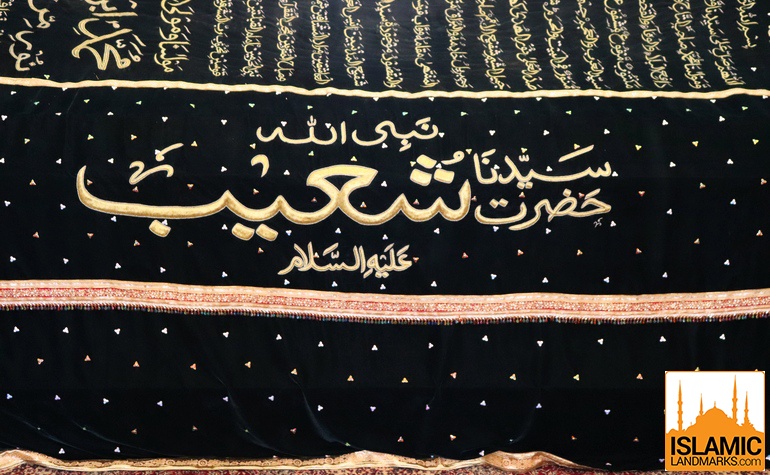
- Shoayb (عليه السلام) was ethnically an Arab. In a hadith narrated by Abu Zarr (رضي الله عنه) it is stated, “Four are from the Arabs. Hud, Salih, Shoayb and your Prophet, O Abu Zarr!”.
- The tomb of Shoayb (عليه السلام) is also claimed to be in Hadramawt, Yemen.
References: Stories of the Prophets – Ibn Kathir, Atlas of the Quran – Dr. Shauqi Abu Khalili
Note that this entry has been shown for information purposes only. On no account should anybody pray to a grave or seek supplication through them as this is tantamount to committing shirk, associating partners with Allah (ﷻ)
]]>- Harun (عليه السلام) is mentioned by name in the Holy Quran 20 times. In the Bible he is known as Aaron.
- When Musa (عليه السلام) was commanded by Allah (ﷻ) to go to Firawn (Pharoah) he made dua for Prophethood to be bestowed on his brother Harun so he could help him. Allah (ﷻ) reproduces this dua in the Holy Quran in Surah Ta Ha:
“Musa (Moses) said, ‘Lord, lift up my heart and ease my task for me. Untie my tongue, so that they may understand my words, and give me a helper from my family, my brother Harun (Aaron) – augment my strength through him. Let him share my task so that we can glorify You much and remember You often: You are always watching over us.” [20:25-35]
- Harun (عليه السلام) was a gifted speaker, and would often speak for Musa (عليه السلام) who suffered from a speech impediment. He was largely responsible with teaching the Israelites the way of worship as it was laid out in the Torah of that time.
- Islam holds that Harun (عليه السلام) held no part in causing the Israelites to worship the golden calf. Rather, he was overpowered and was threatened with being killed by his people. When Musa (عليه السلام) returned from the mount, he immediately blamed Harun (عليه السلام) and seized him by his beard, but Harun (عليه السلام) then gave his explanation, after which Musa (عليه السلام) prayed to Allah to forgive both of them.
- Amir bin Sa’d bin Abi Waqqas (رضي الله عنه) reported (on the authority of his father) that the Prophet (ﷺ) said: “You are in the same position with relation to me as Harun was in relation to Musa but with (this explicit difference) that there is no prophet after me.“ [Muslim]
- Harun (عليه السلام) is said to have lived for 122 years.
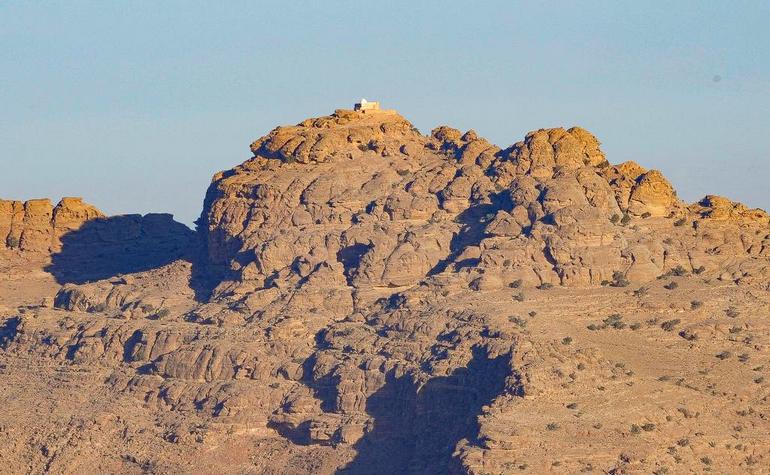
References: Stories of the Prophets – Ibn Kathir, Atlas of the Quran – Dr. Shauqi Abu Khalili
Note that this entry has been shown for information purposes only. On no account should anybody pray to a grave or seek supplication through them as this is tantamount to committing shirk, associating partners with Allah (ﷻ)
]]>