These architectural wonders stand as testaments to the country’s rich Islamic heritage and the enduring faith of its people.
In this detailed article, we will take you on a virtual tour of some of the most notable mosques in Egypt, exploring their history, architecture, and significance.
Read on to learn about the magnificent mosques in Egypt, their locations, and related tour packages.
How Many Mosques Are There in Egypt?
Mosques play a central role in the religious and social life of people. Egypt’s landscape is dotted with mosques, ranging from small neighborhood prayer locations to grand historic mosques with rich architectural significance.
According to estimates, there are over 140,000 mosques in Egypt. Among them, a remarkable 100,000 were classified as large mosques, emphasising the country’s deep-rooted religious and cultural significance.
This extensive network of places of worship reflects the central role that mosques play in Egypt’s social and spiritual fabric.
It also plays a significant role in Egypt’s tourism industry as thousands of people book tour packages to visit these mosques every year.
How Many Muslims Are There In Egypt?
Egypt is predominantly a Muslim-majority country, with Islam as the state religion. It is estimated that around 90% to 95% of the population identifies as Muslim.

Biggest Mosque in Egypt
The biggest mosque in Egypt is the Mosque of Muhammad Ali, also known as the Alabaster Mosque.
It is a captivating masterpiece that adorns the skyline of Cairo’s Citadel, standing as one of Egypt’s most iconic and grandest architectural wonders.
The Mosque of Muhammad Ali

Built by the famed ruler Muhammad Ali Pasha, who reigned over Egypt in the early 19th century, this mosque is an enduring symbol of religious devotion and cultural significance in a central location in Cairo.
Construction of the Mosque of Muhammad Ali began in 1830 and was completed in 1848, marking the culmination of almost two decades of meticulous craftsmanship and architectural ingenuity.
The mosque’s design, inspired by the majestic mosques of Istanbul, is a breathtaking fusion of Ottoman and Islamic architecture, leaving visitors in awe of its splendor.
Upon approaching the mosque, one’s eyes are drawn to the impressive twin minarets that flank its entrance, soaring gracefully into the sky.
As visitors step inside the vast courtyard, they are greeted by a serene ambiance.
The polished marble floors, gleaming under the golden sunlight, lead the way to the central prayer hall, its grandeur befitting the reverence of worship.
Today, the Mosque of Muhammad Ali in Egypt remains a cherished place of worship and pilgrimage for both locals and tourists alike.
Its open doors welcome people from all walks of life, inviting them to witness the seamless blending of art, history, and spirituality within its hallowed walls.
It has a capacity of 10,000 people. Opening hours are from 9 AM to 5 PM. The ticket price is EGP 300 for foreigners (adults) and EGP 60 for Egyptians (adults).
Tour packages are also available. You can also visit the Al-Rifa’i mosque which is located nearby.
Oldest Mosque in Egypt
Egypt is known for some of the oldest mosques in the world that bear witness to the country’s rich Islamic heritage.
Read on to learn about the oldest Egyptian mosques and tour packages and prices.
Mosque of Amr Ibn Al-As
The Mosque of Amr ibn al-As is widely considered the oldest mosque in Egypt. It is also counted in some of the oldest mosques in the entire African continent.

This historic mosque is located in Old Cairo, a prominent location, near the city area known as Fustat, which was the first Islamic capital of Egypt.
This mosque in Egypt holds immense historical and religious significance. It was built in 642 AD, just a few years after the Islamic conquest of Egypt by Amr ibn al-As.
The construction of the mosque marked the establishment of Islam as the dominant religion in Egypt.
Over the centuries, the mosque has undergone several renovations and expansions, but it still retains its historical essence.
Today, the beautiful mosque remains an active place of worship in the city, attracting both local worshipers and tourists interested in exploring Egypt’s rich Islamic heritage.
The mosque is open 24 hours, and it is free of charge to visit. However, you can book a tour package for a guided tour.
You can also book one of the nearby hotels to make the best of your trip.
Most Famous Mosques in Egypt
Egypt is home to several iconic and famous mosques that hold significant cultural, historical, and architectural importance.
Thousands of visitors visit Egypt and stay in hotels and Airbnbs to explore some of the most renowned mosques in Egypt and their locations.
Ibn Tulun Mosque

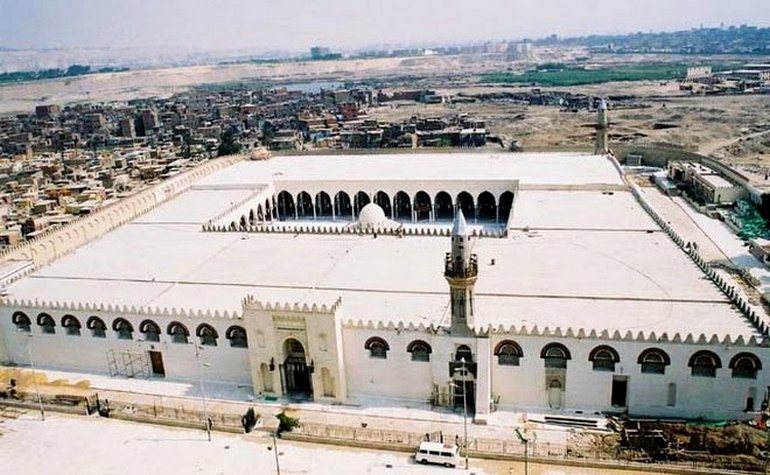
Dating back to the 9th century, the Ibn Tulun Mosque is one of Egypt’s oldest and largest mosques.
It was commissioned by Ahmad ibn Tulun, the founder of the Tulunid dynasty, who sought to create a place of worship that reflected the grandeur of his rule.
The mosque opened in 879. Its unique design, influenced by the architectural styles of locations like Iraq and Persia, sets it apart from other mosques in the region.
The mosque’s massive courtyard is surrounded by arched porticoes leading to the central prayer hall.
The iconic spiral minaret, reminiscent of the Great Mosque of Samarra in Samarra city, Iraq, adds to the mosque’s charm.
The interior is adorned with beautiful stucco decorations, exquisite wooden panels, and intricately designed mihrab and minbar. Entry to the mosque is free.
For a memorable visit, book a tour package and learn about the history and significance of this mosque.
Al-Azhar Mosque

Located in the Cairo city’s historic center, the Al-Azhar Mosque is not only a place of worship but also a renowned center of Islamic learning in Egypt.
Established in 970 AD, it is one of the oldest continuously operating universities in the world.
The mosque’s main prayer hall, with its impressive columns and carved wooden screens, can accommodate thousands of worshipers.
The courtyard is surrounded by arcades and leads to the intricately designed minarets.
Al-Azhar Mosque remains a vibrant center of learning, attracting students and scholars from all over the world to study Islamic theology, law, and philosophy.
It can accommodate up to 20,000 visitors. General entry is free but guided packages are available
Sultan Hassan Mosque
Adjacent to the Citadel, the Sultan Hassan Mosque stands as a prominent example of Mamluk architecture, a style characterised by its massive scale and grandeur. The mosque opened in 1363.
Built during the late 14th century by Sultan Hassan, the mosque’s construction aimed to rival the magnificence of the nearby Mosque of Ibn Tulun.
The mosque’s exterior features intricate stonework, including geometric designs, arabesques, and verses from the Quran. Its enormous courtyard leads to a grand entrance, which opens into the equally impressive prayer hall.
Inside, visitors can marvel at the soaring arches, stately columns, and an intricately carved wooden minbar (pulpit) that adds to the mosque’s regal charm.
Visitors can visit from 9 AM to 5 PM. The ticket price is EGP 120 for foreigners (adults), while locals can visit without purchasing a ticket.
Opt for a tour package in the city for a unique experience. The area also houses several hotels you can choose to stay at.

Al-Rifa’i Mosque
Adjacent to the Mosque of Sultan Hassan, the Al-Rifa’i Mosque is a blend of Neo-Mamluk and Neo-Gothic architectural styles, making it a unique landmark in Cairo city.
Built during the late 19th and early 20th centuries, the mosque serves as the final resting place of members of the Egyptian royal family, including King Farouk and other notable figures.
The mosque’s grand facade, featuring a series of arched windows and intricate stonework, is a sight to behold.
The interior boasts a spacious prayer hall adorned with chandeliers, colorful carpets, and beautiful Quranic inscriptions.
The central dome adds to the mosque’s grandeur, and visitors can also explore the royal tombs and mausoleums within the complex.
The mosque is open 24 hours. The ticket price is EGP 120 for foreigners (adults). Locals can visit the mosque free of charge but paid guided packages are available.
Al-Hussein Mosque
Built-in 1154, the Al-Hussein Mosque, situated in Cairo’s Khan El Khalili market, is one of the city’s most revered places of worship in Egypt.
Dedicated to Husayn ibn Ali, the grandson of Prophet Muhammad (PBUH), the mosque holds immense religious significance for Muslims, particularly those of the Shia sect.
The mosque’s history dates back to the 12th century. It can accommodate up to 2875 worshippers.
The architecture of Al-Hussein Mosque reflects traditional Islamic designs, featuring a central dome and four minarets.
The interior is adorned with beautiful Islamic calligraphy and intricate geometric patterns, creating a serene ambiance for prayer and reflection.
Surrounding the mosque, the lively atmosphere of the city’s Khan El Khalili market adds to its charm, making it a must-visit location for both locals and tourists.
General admission to the mosque is free. You can also choose a tour package to elevate your experience.
Mosque of Sayyida Nafisa
Located in the historic district of Old Cairo, the Mosque of Sayyida Nafisa honors Sayyida Nafisa, a respected descendant of Prophet Muhammad.
As one of the most revered mosques in the area, it attracts Muslims from all over the world who come to pay their respects.
The mosque’s architecture is characterised by its traditional style, with a central dome and minarets adorned with intricate stonework.
Inside, the prayer hall features exquisite Islamic decorations and a serene atmosphere conducive to prayer and meditation.
The courtyard provides a tranquil space for visitors to find respite from the bustling streets of Cairo.
The mosque’s historical and religious significance makes it an essential stop for those interested in Egypt’s Islamic heritage. It remains open from 3 AM to 9 PM for visit and tour packages.
New Mosques in Egypt
Egypt has seen the construction of several new mosques that reflect modern architectural designs and serve as centers of worship, education, and community gathering.
These new Egyptian mosques incorporate innovative features while maintaining the essence of Islamic heritage.
Here are some notable examples:
New Alamein Mosque (El Alamein)
The New Alamein Mosque, also known as the El Alamein Grand Mosque, is a significant religious and cultural landmark located in the coastal city of El Alamein on the Mediterranean coast.
This stunning mosque was inaugurated in 2019 and is part of the larger New Alamein City development project.
Designed with a modern touch, the mosque’s architecture reflects both traditional Islamic elements and contemporary aesthetics.
The mosque’s main prayer hall is capped with an impressive central dome, surrounded by smaller domes and several minarets.
The exterior facade features intricate geometric patterns, and the interiors are adorned with beautifully crafted Quranic calligraphy and Islamic motifs.
The mosque’s spacious courtyard allows for large congregations during Friday prayers and other religious events.
Al-Fattah Al-Aleem Mosque
Also inaugurated in 2019, the Al-Fattah Al-Aleem Mosque is a stunning Egyptian architectural achievement that exemplifies Egypt’s commitment to preserving its Islamic heritage.
Situated in the New Administrative Capital and built to accommodate 17,000 worshipers, the mosque’s design draws inspiration from traditional Islamic architecture with a touch of Ottoman influences.
The mosque’s main prayer hall is adorned with elegant calligraphy and geometric patterns, and its large dome is supported by stately columns.
The minarets provide a visual focal point for the surrounding area, while the courtyard offers ample space for community gatherings and special religious events.
These are some of the most famous mosques in Egypt. Booking a tour package to explore Egypt’s mosques is a smart choice for an enriching and hassle-free experience.
Egypt’s mosques hold profound historical and architectural significance, and with a guided tour package, you can delve into their captivating stories while appreciating their stunning designs.
Professional guide packages provide valuable insights, making the visit not only educational but also spiritually meaningful.
The convenience and safety of a tour package, which often includes hotels, transportation, and well-planned itineraries, ensure that you can fully immerse yourself in Egypt’s cultural and historical treasures.
The right package will help you create lasting memories while exploring the beautiful mosques of this remarkable country
Famous Masjids around the World
The world is adorned with a diverse array of mosques. These iconic places of worship showcase the rich heritage and cultural significance of Islam across different regions.
These revered structures not only exemplify the beauty of Islamic architecture but also hold immense spiritual importance for millions of believers.
Here are some of the most famous masjids around the world, where faith, art, and culture harmoniously converge to create awe-inspiring landmarks of global significance.
- The Blue Mosque (Sultan Ahmed Mosque) – Istanbul, Turkey: A majestic mosque with six minarets and a striking blue interior adorned with intricate tiles, drawing millions of visitors to Istanbul each year.
- Al Fateh Grand Mosque – Manama, Bahrain: Among the world’s largest mosques, featuring a massive fiberglass dome and capacity for over 7,000 worshippers, symbolising Bahrain’s rich Islamic heritage.
- Masjid Al Haram – Mecca, Saudi Arabia: The holiest mosque in Islam, encircling the Kaaba and hosting millions of pilgrims during the annual Hajj pilgrimage.
- Sheikh Zayed Grand Mosque – Abu Dhabi, UAE: A grand architectural marvel representing religious tolerance and cultural diversity, featuring opulent domes and intricate designs.
- Masjid Al Nabawi – Medina, Saudi Arabia: The second holiest mosque in Islam, housing the tomb of Prophet Muhammad and drawing visitors seeking spiritual reflection and devotion.

Summary – Mosques in Egypt
In conclusion, the mosques in Egypt stand as remarkable embodiments of the country’s rich history, culture, and deep-rooted Islamic heritage.
From the iconic Mosque of Muhammad Ali in Cairo to the ancient Mosque of Amr ibn al-As in Old Cairo, each mosque narrates a unique story of faith, art, and architecture.
Egypt’s mosques not only serve as places of worship but also as centers of community life, education, and cultural exchange.
These magnificent structures are symbols of devotion. As visitors and worshippers step inside these hallowed halls, they are transported through time, experiencing the enduring presence of faith and spirituality in the land of the Pharaohs.
As Egypt continues to progress, its mosques will undoubtedly remain, preserving the nation’s traditions and serving as a beacon of unity, spirituality, and cultural pride for generations to come.
]]>Prophet Musa (AS) was born during the reign of Firaun (Pharaoh) in a world plagued by oppression and tyranny, with a mission to free the children of Israel from enslavement and preach the message of Allah SWT.
Keep reading to learn about the life and miracles of Prophet Musa (AS).
Who Was Prophet Musa (AS) in Islam?
Allah SWT has sent messengers to deliver His message to the people of this world. Among them was Prophet Musa (AS), who was specifically tasked to show the people of Bani Israel the true light and guide them to worship Allah Almighty.
Prophet Musa (AS) was also bestowed with the Torah, a sacred scripture intended to guide the people of Egypt.
Moses was born in the year when the Firaun ordered the killing of every male child to protect his throne. Keeping her pregnancy a secret, the mother of Prophet Musa (AS) cradled him in her arms, placed the baby into a basket, and the divine currents of the Nile took him to the shore where Firaun’s wife Asiya bint Muzahim waited.
Desperate for a baby boy, Asiya took Prophet Musa (AS) in her arms and went straight to her husband to convince him to keep the child.
Thus, Prophet Musa (AS) grew under the protection of the Queen in the castle of the Pharaoh.
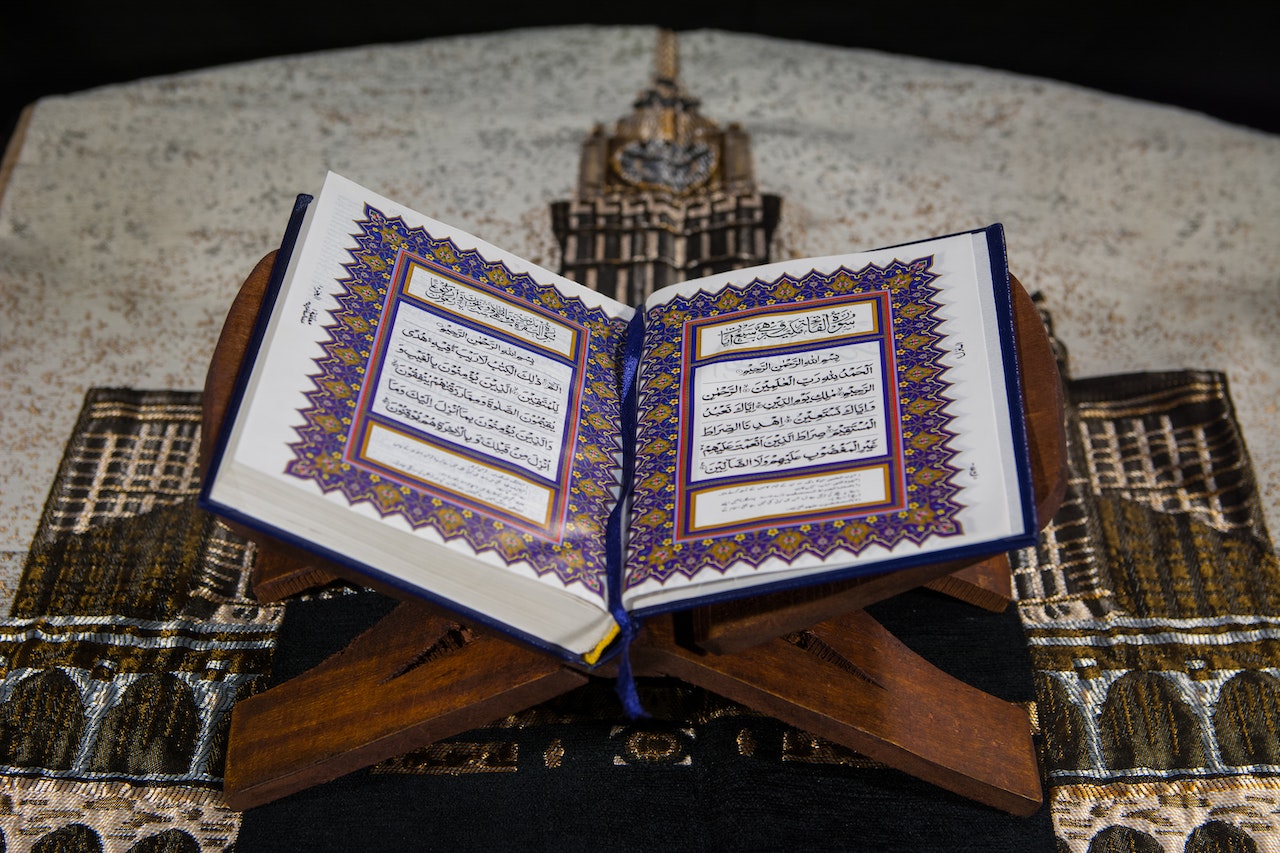
“And We inspired the mother of Musa, (saying): “Suckle him [Musa], but when you fear for him, then cast him into the river and fear not, nor grieve. Verily! We shall bring him back to you and make him one of (Our) Messengers.” [Holy Quran, 28:7]
“Then the household of Pharaoh picked him up, that he might become for them an enemy and a (cause of) grief. Verily! Pharaoh, Haman, and their hosts were sinners. And the wife of Pharaoh said: “A comfort of the eye for me and for you. Kill him not, perhaps he may be of benefit to us, or we may adopt him as a son.” And they perceive not (the result of that).” [Holy Quran, 28:8-9]
As Prophet Musa (AS) grew, the truth of his mission and heritage revealed itself, for he was the Messenger of Allah SWT, the Prophet of Egypt, and was chosen to guide the people towards the path of the Almighty.
Why Was Prophet Musa (AS) Important in Islam?
Prophet Musa (AS) is a revered figure in the religion of Islam, Christianity, and Judaism. He is one of the most important Prophets, and his name is mentioned in the Holy Quran over 100 times.
Allah SWT in the Holy Quran tells us the story of Prophet Musa (AS). Allah SWT directly spoke to Prophet Musa (AS) and gave him the Ten Commandments.
“Verily, We did send down the Torah to Moses therein was guidance and light, by which the Prophets, who submitted themselves to God’s Will, judged the Jews. And the rabbis and the priests too judged the Jews by the Torah for to them was entrusted the protection of God’s Book, and they were witnesses thereto.” [Holy Quran, 5:44]
The Firawn
Firawn, the Pharaoh in English, means the king of ancient Egypt. Named Musab Bin Walid, Firawn was one of the most powerful rulers of Egypt.
He considered himself God and was a merciless and cruel tyrant who persecuted and enslaved the children of Israel.
In fact, people say that the Firawn had created his own heaven and hell and decided the fate of the people according to his own wishes.
Who Was Firawn in Islam?
Firawn was unlike any ruler in the history of Islam. He was arrogant, incompetent, selfish, and cruel, bringing destruction wherever he went.
Upon hearing from his fortune tellers that a child is going to dethrone him, Firawn ordered his army to kill every boy that was to be born from that day onwards.
He enjoyed showing off his power and oppressing people based on religion, ethnicity, and race.
He refused to release the children of Israel despite witnessing several warnings from Allah SWT.
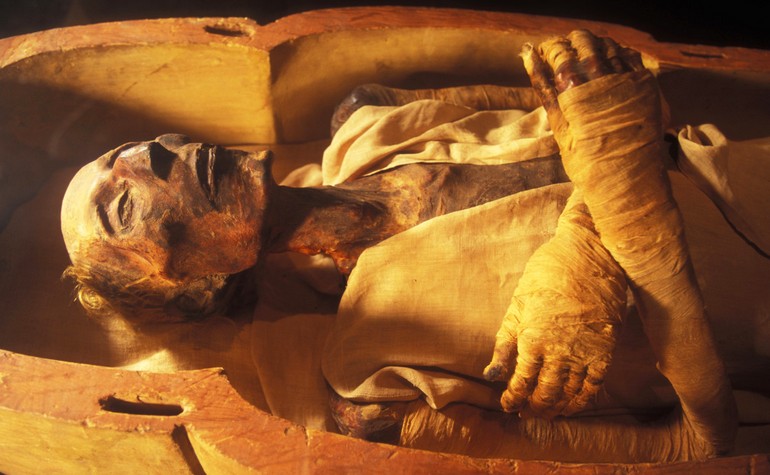
As a consequence of his transgression and disbelief, Firaun and his army were drowned in the sea, and his body is still kept as a sign for future generations.
Firaun Mentioned in the Quran
Did you know the word “Firaun” is mentioned 74 times in the Holy Quran? Some verses are mentioned below:
“And [recall] when We saved your forefathers from the people of Firaun, who afflicted you with the worst torment, slaughtering your [newborn] sons and keeping your females alive. And in that was a great trial from your Lord. And [recall] when We parted the sea for you and saved you and drowned the people of Firaun while you were looking on.” [Holy Quran, 2:49-50]
“Then We sent after them Mosses with Our signs to Firaun and his establishment, but they were unjust toward them. So see how was the end of the corrupters.” [Holy Quran, 7:104]
“[There is] like the custom of the people of Firaun and of those before them. They denied the signs of their Lord, so We destroyed them for their sins, and We drowned the people of Firaun. And all [of them] were wrongdoers.” [Holy Quran, 10:75]
“To Pharaoh and his chiefs, but they followed the command of Pharaoh, and Pharaoh’s command was not well guided. He will be before his people on the Day of Judgment and will lead them into the Fire. What an evil place to be led into!” [Holy Quran, 11:97-98]
“Today, we will preserve your body to set you up as a lesson for future generations.” [Holy Quran, Surah al Yunus, 10:92]
The Firawn’s Vision
Years passed, and Firaun heard about a dream according to which one of the children of Israel would dethrone him.
It is possible that the vision was nothing more than a daydream held within the hearts of the children of Israel or a prophetic glimpse foretold within their sacred books.
Ibn Abbas (AS) narrates another tradition: “Pharaoh saw in his vision a fire which came from Jerusalem and burned the houses of the Egyptians, and all Copts, and did not do harm to the children of Israel. When he woke up, he was horrified.
He then gathered his priests and magicians and asked them about this vision. They said: ‘This means a boy will be born of them, and the Egyptian people will perish at his hands.’ That is why Pharaoh commanded that all male children of the children of Israel be killed.”
In either case, from the day Firaun learned about the vision, the fear of being dethroned took his mind and soul and issued an order to slay all male children that would be born in Israel.
Murdering the Children of Israel
The Firawn summoned his army and told them to slaughter all male newborns. The incident is mentioned in the Holy Quran as follows:
“Indeed, Pharaoh exalted himself in the land and made its people into factions, oppressing a sector among them, slaughtering their [newborn] sons and keeping their females alive. Indeed, he was of the corrupters.” [Holy Quran, 28:4]
After hearing about Firaun’s command, the economic advisors of the state came to the Pharaoh and said, “The aged of the children of Israel die, and the young are slaughtered. This will lead to their annihilation.
As a result, Pharaoh will lose the manpower of those who work for him, those whom he enslaves, and the women whom he exploits.
It is better to regulate this procedure by initiating the following policy: males should be slaughtered in one year and spared to live the next year.”
Firaun, however, became fanatical and had assigned security agents and spies the duty to seek out pregnant women and kill them on the spot if they gave birth to a boy.
Prophet Aaron (AS)
Descended of Prophet Ibrahim (AS), Prophet Aaron (AS) (Harun AS) was born in the year when children were destined to be spared.
Thus, the mother of Prophet Musa (AS) gave birth to Prophet Harun (AS) safely and freely.
While Prophet Musa (AS) was away, Prophet Aaron (AS) led the Bani Israel for 40 days until the golden calf incident.
He stood by his brother’s side in all circumstances and helped Prophet Musa (AS) spread the message of Allah SWT.
Preaching the religion of Allah SWT to the disbelievers of Israel wasn’t easy. Prophet Musa (AS) asked Allah SWT for a partner, a helper, and so the Almighty bestowed him with a brother, Prophet Aaron (AS).
“And grant me a helper from my family, Aaron, my brother. Strengthen me through him, and let him share my task, so that we may glorify You much and remember You much, for truly You have always been overseeing us.” Allah responded, “All you requested has been granted, O Moses!” [Holy Quran, 20: 29-30]
“Then We sent after them Moses and Aaron to Firaun and his establishment with Our signs, but they behaved arrogantly and were criminal people.” [Holy Quran 10:79]
Allah’s Punishment Upon Egypt
Allah SWT told Prophet Musa (AS) to tell Firaun that the Egyptians would suffer a severe punishment if he wouldn’t release the children of Israel. The Pharaoh responded by stating that he didn’t care and that he was all-powerful and no strength could destroy him. To put an end to the harassment, oppression, and torture, Allah SWT afflicted a severe drought upon the Egyptians. The fertile valleys of the Nile began to dry, and no crops grew. The ministers and people came to Prophet Musa (AS) and appealed, “O Moses! Invoke your Lord for us because of His Promise to you. If you will remove the punishment from us, we indeed shall believe in you, and we shall let the children of Israel go with you.” [Holy Quran 7:134]
Everything turned to normal; the crops started to grow, however, the minorities were still enslaved. Allah SWT then sent a plague of locusts, swallowing everything that came in its way.
The pagan Egyptians once again rushed to Prophet Musa (AS) and asked for help. The Messenger prayed to Allah SWT, and the locusts departed, but things were still the same for slaves.
After a while came the plague of lice that spread deadly diseases, and then came the plague of frogs that harassed people until they shut themselves inside. Every time Allah SWT inflicted punishment upon Bani Israel, they begged Prophet Musa (AS) for forgiveness and mercy.
The final chastisement was when the Almighty turned the water of the Nile into thick red blood. Despite the punishments of Allah SWT, the enslavement of the children of Israel continued.
Allah SWT in the Holy Quran says, “And indeed, We punished the people of Pharaoh with years of drought and shortness of fruits (crops, etc.), that they might remember and take heed. But whenever good came to them, they said, “Ours is this.” And if evil afflicted them, they ascribed it to evil omens connected with Moses and those with him. Be informed! Verily, their evil omens are with God, but most of them know not.
They said to Moses, “Whatever signs you may bring to us, and to work therewith your sorcery on us, we shall never believe in you.” So We sent on them: the flood, the locusts, the lice, the frogs, and the blood, as a succession of signs, yet they remained arrogant, and they were of those people who were criminals, polytheists, and sinners.
And when the punishment fell on them, they said, “O Moses! Invoke your Lord for us because of His Promise to you. If you will remove the punishment from us, we indeed shall believe in you, and we shall let the Children of Israel go with you.” But when We removed the punishment from them to a fixed term, which they had to reach, behold! They broke their word! So We took retribution from them. We drowned them in the sea because they belied Our signs and were heedless about them.” [Holy Quran 7: 130-136]

The Death of Firawn
Despite the punishments, Firaun and the majority of the Bani Israelites refused to accept the message of Prophet Musa (AS). Only fake promises were made to cool down the storm so the disbelievers could return to their extravagant and dishonest lifestyles the next day.
After giving Bani Israel years of chances, Allah SWT asked Prophet Musa (AS) to lead his people (the righteous ones) out of Egypt.
Sensing that something wasn’t right, Firaun gathered his army and marched with them to stop the enslaved people from fleeing.
It wasn’t long before the Prophet Musa (AS) and the children of Israel could see the vicious army moving forward, leaving them no option but to run until they reached a dead end – the Red Sea.
With the Red Sea in the front and the avenging army at the back, Prophet Musa (AS) and his companions had no way out. Fear and stress started to spread when Allah SWT instructed Prophet Musa (AS) to strike the sea with his staff.
Prophet Musa (AS) did as He commanded. A fierce wind began blowing, dividing the sea into two paths, revealing a pathway dry enough for the Prophet Musa (AS) and the Children of Israel to walk across.
“And We took the children of Israel across the sea, and Pharaoh with his hosts followed them in oppression and enmity, till when drowning overtook him, he said, “None has the right to be worshipped but He, in whom the children of Israel believe, and I am one of the Muslims (those who submit to God’s Will). Now you believe while you refused to believe before, and you were one of the evildoers! So this day, We shall deliver your dead body out from the sea that you may be a sign to those who come after you! And verily, many among humankind are heedless of our Signs.” [Holy Quran, 10:90-92]
Recounting the death of Firawn, Ibn Kathir said, “The curtain fell on Pharaoh’s tyranny, and the waves threw his corpse up to the western seashore. The Egyptians saw him and knew that the God whom they worshipped and obeyed was a mere man who could not keep death away from his own neck.”
During his reign, the Firaun possessed strength, good health, wealth, and power, yet he stubbornly refused to accept the religion and believed in Allah SWT. However, when confronted with the approach of death, the Firawn cried out to Allah SWT in horror and fear.
This serves as a reminder that if humanity remembers God during times of abundance and ease, Allah SWT will, in turn, remember us even in the most sinful humans in times of distress.
People of Bani Israel and Their Transgressions
The children of Israel bore the deep scars of oppression. After enduring years of unrelenting fear and humiliation, they became ignorant and obstinate.
Many among them had been deprived of luxuries and comforts for the rest of their lives, leaving them yearning for signs of materialism and wealth.
Despite witnessing undeniable signs and amazing miracles of Allah SWT, some among the children of Israel succumbed to coveting an idol that they had encountered while escaping from Egypt.
How Old Was Prophet Musa (AS) When He Died?
According to narrations, Prophet Musa (AS) died at the age of 120, three years after the death of his brother Harun (AS). (Tarikh al-Yaqoubi, Vol. 1, Pg. 62; Tarikh Tabari, Pg. 347; Bihar al-Anwar, Vol. 12, Pg. 368; al-Tahzib, Vol. 1, Pg. 32)
Abu Huraira (RA) reported, “The angel of death was sent to Musa, and when he went to him, Musa slapped him severely, spoiling one of his eyes. The angel went back to his Lord and said, “You sent me to a slave who does not want to die.” Allah restored his eye and said, “Go back and tell him (i.e., Musa) to place his hand over the back of an ox, for he will be allowed to live for several years equal to the number of hairs coming under his hand.” (So the angel came to him and told him the same). Then Musa asked, “O my Lord! What will be then?” He said, “Death will be then.” He (Musa) said, “(Let it be) now.” He asked Allah that He bring him near the Sacred Land at a distance of a stone’s throw. Allah’s Messenger (SAW) said, “Were I there, I would show you the grave of Musa by the way near the red sand hill.” (Sahih Al Bukhari)
Miracles Prophet Musa (AS)
The Holy Quran tells us that Allah SWT bestowed Prophet Musa (AS) with nine miracles to help him face the pagan people of Bani Israel and the Pharaoh.
Perfectly timed, each miracle proved that we must worship Allah SWT, the whole soul creator, and Prophet Musa (AS) is the Messenger of the Almighty.
“And Moses had certainly brought you clear proofs. Then you took the calf [in worship] after that while you were wrongdoers.” [Holy Quran, 2:92]
Listed below are the three greatest miracles awarded to Prophet Musa (AS) to restore the Iman of Bani Israel and revert to Allah SWT:
Miracle 1: Turning the Stick into a Snake
Prophet Musa (AS) went to the Firaun’s (Pharaoh’s) castle to invite him to Islam and stop the enslavement of the people of Bani Israel. However, as expected, Firawn rejected the invite and called the miracles of Prophet Musa (AS) magic.
To prove himself right, the Firawn invited the greatest magicians of his land and asked them to compete against Prophet Musa (AS).
The stage was set, the people of Bani Israel were gathered in the courtyard, the Pharaoh sat on his throne, the magicians stood on one side, and Prophet Musa (AS) faced them bravely on the other.
The Messenger of Allah SWT humbly gave the magicians the first chance to show their tricks. The great magicians of Egypt threw some ropes on the ground. murmured a spell, and the ropes bewitchingly started to move like snakes.
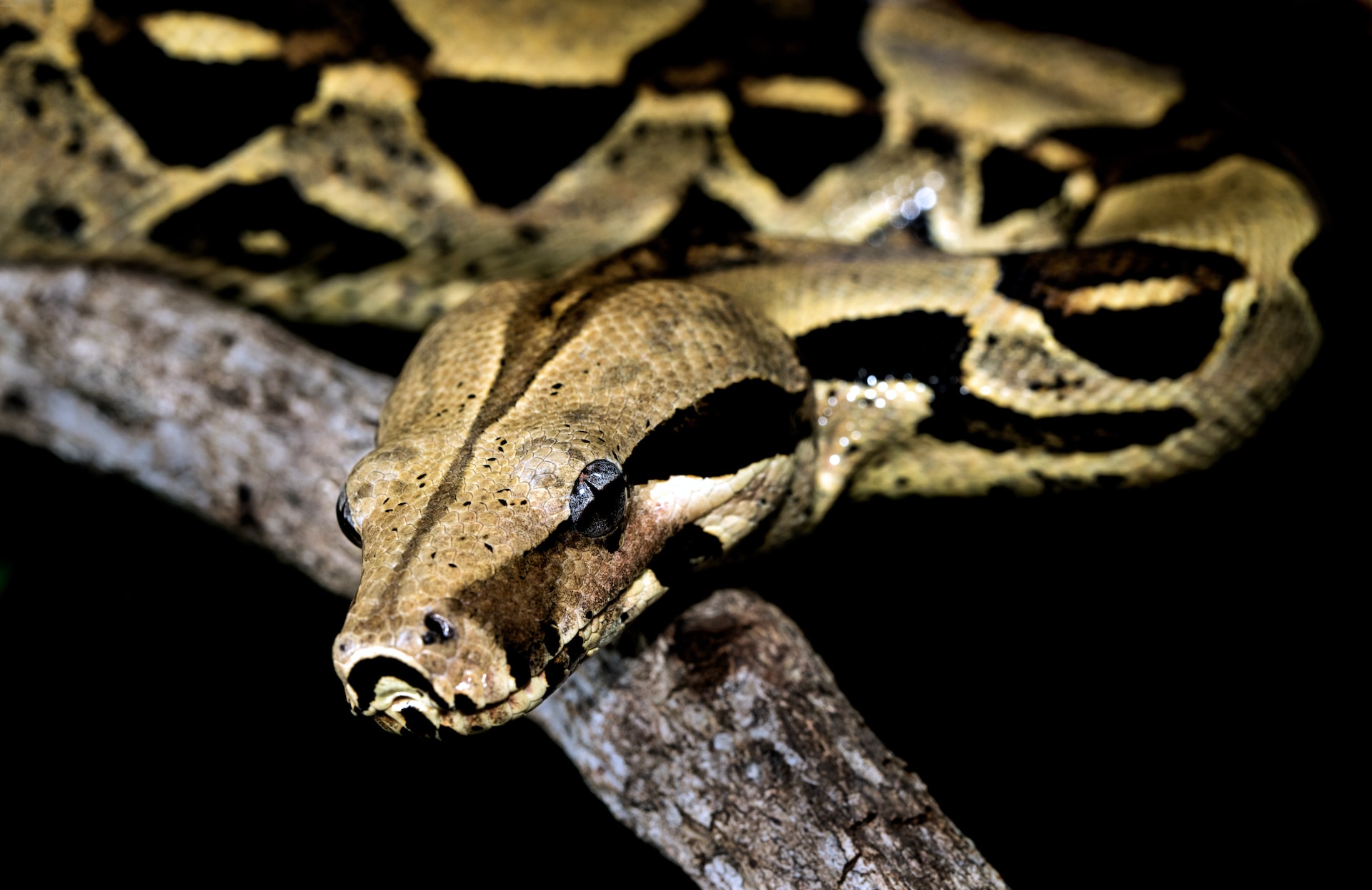
To counter their trick, Prophet Musa (AS) threw his staff (stick) on the ground, and it magically turned into a huge snake that crawled forward and ate all the little snakes made by the magicians.
Upon witnessing the extraordinary spectacle, the magicians immediately knew that this transcended the realm of magic; it was indeed a divine miracle.
In a resounding declaration, the magicians wholeheartedly announced their faith in the Almighty and embraced the religion that Prophet Musa (AS) revealed.
Allah SWT in the Holy Quran says, “And [he was told], “Throw down your staff.” But when he saw it writhing as if it were a snake, he turned in flight and did not return. [Allah said], “O Moses, fear not. Indeed, in My presence, the messengers do not fear.” [Holy Quran, 27:10]
Miracle 2: The Radiant Hand
Allah SWT asked Prophet Musa (AS) to place his hand into his cloak under his arm. When Prophet Musa (AS) pulled out his hand, it shone white and bright, like the moon.
The event is described in Surah Taha in the Holy Quran, “And put your hand under your armpit, it will come out ˹shining˺ white, unblemished, as another sign, so that We may show you some of Our greatest signs. Go to Pharaoh, for he has truly transgressed ˹all bounds.˺ [Holy Quran, 20:22-24]
The incident is also mentioned in Surah An-Naml, “Now put your hand through ˹the opening of˺ your collar, it will come out ˹shining˺ white, unblemished.1 ˹These are two˺ of nine signs for Pharaoh and his people. They have truly been a rebellious people.” [Holy Quran, 27:12]
Did you know that Prophet Musa (AS) had a speech impediment that caused him to speak with a stammer? He prayed to Allah SWT, asking Ar-Rahman to heal him so he could preach properly. Allah SWT answered his prayers and gave him the support of Aaron (Haroon (AS)).
“Moses prayed, “My Lord! Uplift my heart for me, make my task easy, and remove the impediment from my tongue so people may understand my speech.”
Miracle 3: Mann O Salwa
Mann O Salwa was a gift from Allah SWT to the righteous people of Bani Israel. According to narrations, the Bani Israelites requested the Prophet to ask Allah SWT to send them a special meal to satisfy their hunger.
Send from Jannah, “Mann” was a dew drop-shaped sweet that was whiter than snow and tasted like honey. Whereas “Salwa” (Quail) was a bird that people used to roast and eat. Mann O Salwa was indeed a blessing and a treat for the believers.
“O children of Israel, we delivered you from your enemy, summoned you to the right side of Mount Sinai, and sent you down to Mann and Salwa.” [Holy Quran, 20:80]
“And recall when you said: “O Moses, surely we cannot put up with one sort of food, so pray to your Lord to bring out for us what the earth produces – its herbs and its cucumbers and its corn and its lentils and its garlic and its onions.” Then Moses said: “Will you take a meaner thing in exchange for what is better?” [Holy Quran, 2:61]
Summary – The Story of Prophet Musa (AS)
The story of Prophet Musa (AS) isn’t a bedtime story or a tale that we must tell for amusement but is actually a lesson; a reminder that Allah SWT is the Creator, the ruler of the seven skies; He reigns over all things, He has no father nor a son, and there is nothing comparable to Him.
Allah SWT is Al-Baasit (the One who enlarges, releases, gives in abundance, extends, and outspreads), and He is Al-Qaabid (the One who clutches, suppresses, seizes, and withholds).
So, you never really know if Allah SWT is giving you for the ultimate take or taking everything from you for ultimate gain; because it is only Him who knows what’s best for us.
Almighty intervened and separated Prophet Musa (AS) from his mother, but He ensured that the child was returned safely.
He relocated Prophet Musa (AS) from Egypt only to appoint him as His Messenger. Allah SWT empowered Prophet Musa (AS) with miracles that amazed the people of Bani Israel.
Allah SWT has sent Mann O Salwa to satiate the hunger of the righteous, transformed the staff of Prophet Musa (AS) into a vicious snake, made the Messenger’s hand glow as bright as the moon, and orchestrated a situation where the Bani Israel found themselves trapped between Firaun’s army and the sea.
Yet, the ocean miraculously split open, providing the believers a safe way to the other side and eradicating the enemies.
Thus, no matter how hard life gets, always have faith in Allah SWT and have hope as a greater future is yet to unfold.
Let’s discover the inspiring legacy of Hajar (AS) in Islam, gain a deeper understanding of this remarkable woman’s journey and how her story continues to impact us today.
Who is Hajar (AS)?
Hajar (AS) is a revered figure in Islam. She was the wife of the patriarch and Islamic prophet Ibrahim (AS) (Abraham (AS)) and the mother of Ismā’īl (Ishmael) (AS).
She is mentioned in the Quran, but not by name. Her story is told in the hadith, the sayings and traditions of Prophet Muhammad (Peace Be Upon Him).
What nationality is Hajar (AS)?
According to Islamic tradition, Hajar (AS) was a slave woman from Egypt who was given to Sarah, Ibrahim (AS)’s wife, as a concubine.
Sarah was unable to conceive, so she gave Hajar (AS) to Ibrahim (AS) in the hope that she would be able to bear him a child. Hajar (AS) eventually gave birth to Ishmael (AS).
Why is Hajar (AS) important in Islam?
Hajar (AS), also known as Hagar, is a significant figure in Islam who is mentioned many times in the Quran and in Islamic historical sources.
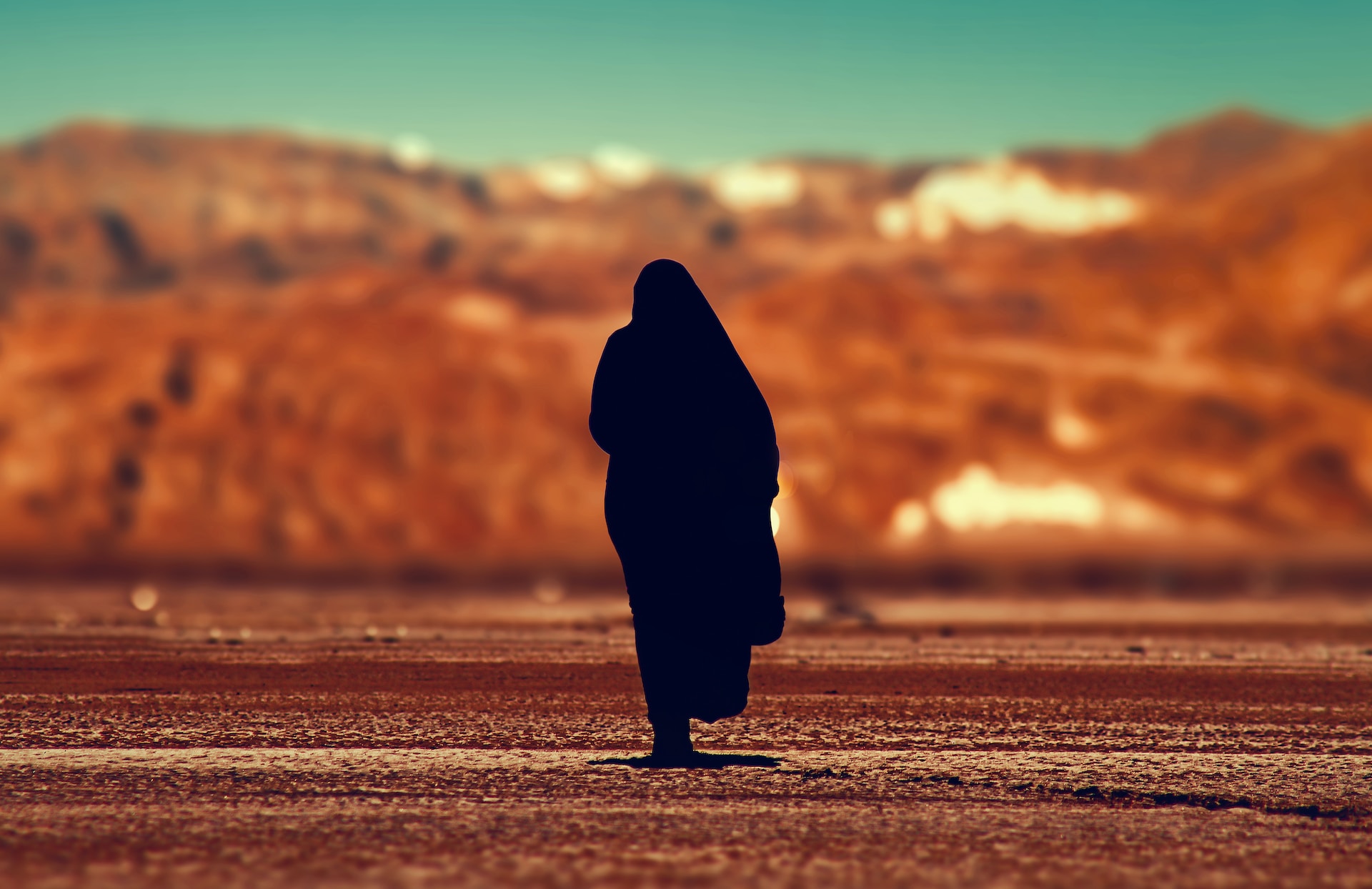
She is remembered for her faith, perseverance, and devotion, and her experiences serve as a reminder for Muslims to have patience and trust Allah Subhanahu wa ta’ala (SWT) in times of difficulty and turmoil.
Hajar (AS) and her son, Ismael (AS), played a pivotal role in the history of Islam. According to the Quran and Islamic tradition, she and her son were sent by Allah (SWT) to the Valley of Mina to find water to save their community.
After searching for years without any success, she became tired and thirsty, and almost gave up hope. However, Allah SWT sent an angel, Jibreel (AS), to guide her to a spring of water, known as Zamzam, which saved their lives.
Muslims believe that Hajar’s (AS) devotion and faith in Allah (SWT) led to her becoming an important figure in Islamic history.
Her story serves as a reminder to have faith, patience, and perseverance in times of difficulty, and that Allah SWT cares for His servants and will provide for them in their times of need.
The wife of Prophet Ibrahim (AS)
Hajar (AS) was the second wife of Prophet Ibrahim (AS). Prophet Ibrahim’s first was Sarah (AS).
Hajar (AS) name meaning
The word “Hajar” is derived from the Arabic word “هاجر”, which means “to migrate or emigrate”. The name is also the basis of the word Haj, the annual pilgrimage to Mecca performed by Muslims.
Hajar (AS) alone in the desert
Allah SWT commanded Ibrahim (AS) to take to take his wife Hajar (AS) and Ishmael (AS) to a barren land in what is now Mecca, and he left Hajar (AS) and Ishmael (AS) in the desert with only a small amount of food and water.
Hajar (AS) and Ishmael (AS) were left to fend for themselves in the desert. They were very thirsty, and Hajar (AS) ran back and forth between two hills, Safa and Marwah, seven times in search of water.
Finally, Allah (SWT) sent the angel Jibril (Gabriel) to guide her to the well of Zamzam, a well that still exists today.
Hajar (AS) and Ishmael (AS) lived in Mecca for many years. Ishmael (AS) grew up to be a strong and pious man. He married a woman from the tribe of Jurhum, where he worked and had many children.
One of Ishmael’s (AS) descendants was prophet Muhammad (PBUH), the final and seal of all prophets of Islam.
How did Hajar (AS) put her trust in Allah (SWT)?
According to Islamic tradition, when Ibrahim (AS) was commanded by Allah (SWT) to leave Hajar (AS) and their infant son Ismail in the barren desert of Mecca, Hajar (AS) demonstrated her unwavering trust in Allah (SWT) in several ways:
Acceptance of Allah’s (SWT) Decree: When Ibrahim (AS) informed Hajar (AS) of Allah’s command, she immediately accepted it without hesitation. She recognised that it was Allah’s will and trusted that He would take care of her and her son.
Tawakkul (Reliance on Allah (SWT) : Hajar (AS) placed her complete reliance on Allah The Most Glorified, the Most High. She trusted that He would provide for her and her son. She knew that Allah’s mercy and protection were sufficient for them in the harsh desert environment.
Seeking Allah’s (SWT) Help: When Hajar (AS) and her son ran out of water, she did not despair. Instead, she turned close to Allah (SWT) in supplication and prayer. Her faith and trust in Allah’s mercy and power were so great that Allah (SWT) sent the angel Jibril (Gabriel) to guide her to the well of Zamzam, which miraculously sprang forth to provide her with water.
Hajar’s (AS) trust in Allah (SWT) was demonstrated by her acceptance of Allah’s (SWT) decree, reliance on Allah’s (SWT) mercy and protection, and seeking Allah’s help during times of difficulty. Her unwavering faith and trust in Allah (SWT) serve as an example for Muslims to follow in their own lives.
Running between Safa and Marwa
One of the rituals Muslims perform the pilgrimage to Mecca, known as Hajj or Umrah, is “Sa’ee” (Sa’i). The term refers to the act of rushing or running back and forth between the two hills of Safa and Marwa.
In Islamic tradition, Hajar (AS) had to run back and forth between Safa and Marwa in search of water for her and her young son, Ismail (AS).
The practice of Sara has become a significant part of the Hajj rites, as Muslims re-enact the trials of Hajar (AS) and her son in search of water.
The act of running between Safa and Marwa is not just a simple physical exercise. It symbolises the trials and challenges that Hajar (AS) and her son had to face in order to find water in the desert.
It also serves as a reminder for Muslims to strive in the sake of Allah Almighty, regardless of the hardships and difficulties they may face.
Sa’ee or Sa’i is a symbolic ceremony that serves as a reminder for Muslims to be resilient and perseverant in their lives, just as Hajar (AS) demonstrated in her search for water. It also fosters unity and solidarity among Muslims, as they perform the rites of Hajj together.
Hajar (AS) and Zamzam
In Islam, Zamzam is a blessed and holy water source that holds great significance. It is believed to have originated from a miracle involving the Prophet Ibrahim (Abraham) and his wife Hajar (AS) (Hagar) in the valley of Mecca.
Who dug the Zamzam well?
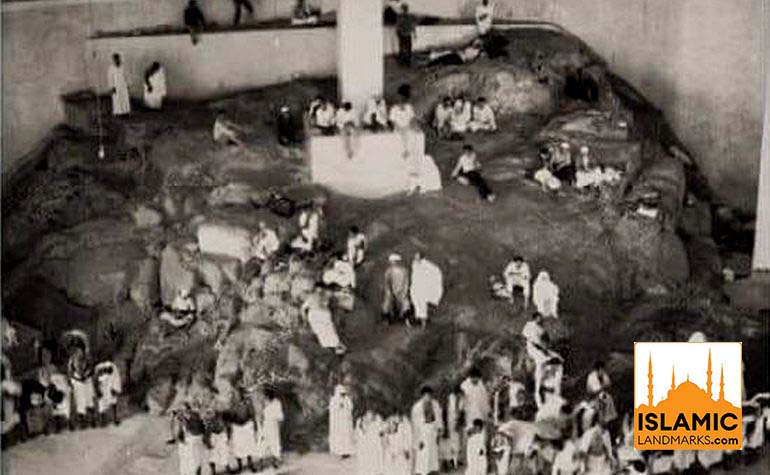
Hajar (AS) and her infant son Ismail (AS) were left in the desert valley of Makkah by Prophet Ibrahim, and when their water supply ran out, Hajar (AS) desperately searched for water for Ismail (AS).
According to tradition, the Angel Jibril (AS) appeared and struck the ground, causing a spring of water to gush out which became known as the Zamzam well.
Is Zam Zam water a miracle?
Muslims believe that this water is a gift from Allah and has healing properties.
Drinking Zamzam water is considered to be a blessed act, and many Muslims drink it during the Hajj and Umrah pilgrimages to Mecca.
It is also commonly consumed by Muslims on other occasions and is believed to have many benefits, both physical and spiritual.
According to Islamic tradition, Prophet Muhammad (PBUH) is reported to have once said, “The water of Zamzam is for whatever it is drunk for.”
This statement highlights the belief that Zamzam water can provide blessings and fulfill needs, both worldly and spiritual.
Why hasn’t the Zamzam well dried up?
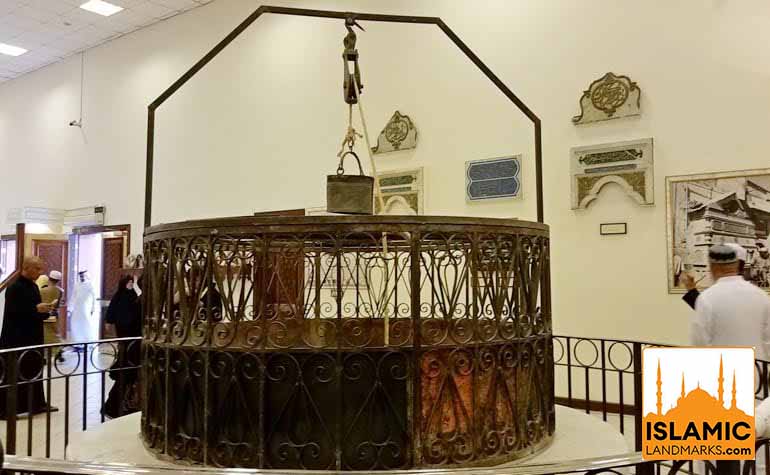
The Zamzam well has never run dry, even during prolonged droughts for over 4000 years.
The reason for the Zamzam Well’s perpetual flow of water is not fully understood scientifically. Some believe that the well is fed by an underground aquifer or by groundwater fed through fractures in the underlying rock.
Others attribute its perpetual flow to the spiritual power that stems from the well’s connection to the Prophet Muhammad (PBUH) and the Hajj rituals.
Regardless of the explanation, the Zamzam Well is highly treasured by Muslims and is considered one of the most sacred places in Islam.
The sacredness of the well is reflected in the millions of pilgrims who visit it every year during Hajj and Umrah, and in the large number of Muslims who drink from its water to this day.
Who was Hajar’s (AS) spouse?
Hajar (AS) was the wife prophet Ibrahim (AS).
Name of Hajar (AS) children
Hajar (AS) gave birth to a baby son for Prophet Ibrahim (AS) named Ismail (AS). She didn’t have any other child other than Prophet Ismail (AS) who was the eldest son of prophet Ibrahim (AS).
Ismail (AS)
Ismail (AS) the son of Ibrahim (AS), Ishmael (AS) who lived in the valley of Makkah. In Islam, Ishmael (AS) is considered one of the Prophets and Messengers of Allah (SWT) and is believed to be the son of the Prophet Ibrahim (AS).
Prophet Ismail (AS) who is the eldest son of Prophet Ibrahim (AS) is highly regarded in Islam as a symbol of Arab ancestral heritage and as the progenitor of the Arab people.
Ismail (AS) is a prophet for people living in the Arab valley who was granted the honor of building the Kaaba, the holy site in Makkah that is a central spiritual focus for Muslims.
Lessons we can learn more Hajar (AS)
Hajar’s (AS) story is an inspiration to us all. She is a reminder that people can overcome any challenge if we have faith in Allah (SWT) and trust in His plan for our lives. Here are some of the lessons we can learn from the story of Hajar (AS).
Perseverance
Hajar (AS) faced many challenges in her life, but she never gave up. She was a strong and determined woman who never lost faith in God.
Trust in Allah (SWT)
Hajar always trusted in Allah (SWT) and His plan for her life. She knew that He would never abandon her, even when things were tough.
Optimism
Even when things were at their worst, Hajar (AS) always remained optimistic. She never lost hope that Allah (SWT) would help her and her son.
Selflessness
Hajar (AS) was a selfless woman who always put the needs of others before her own life. She was willing to sacrifice her own comfort and safety for the sake of her son.
Devotion
Hajar (AS) was a devout woman who was always devoted to Allah (SWT). She prayed to Him for guidance and strength, and she always obeyed His commands.
- Patience
Hajar (AS) was a patient woman. She waited patiently for Allah (SWT) to provide her with water, and she waited patiently for her son to grow up.
- Kindness
Hajar (AS) was a kind and compassionate woman. She was always willing to help others, even when she was in need herself.
- Resilience
Hajar (AS) was a resilient woman. She was able to bounce back from adversity and continue to work live her life with strength and determination in Makkah.
- Fortitude
Hajar (AS) was a woman of fortitude. She was able to endure hardship and pain without giving up.
Summary – The story of Hajar (AS) in Islam
Hajar’s (AS) historical and religious significance makes her an important figure in Islamic history, and the lessons we learn from her story continue to serve as a reminder to have faith, patience, and perseverance in times of trial.
She is known for her perseverance and faith in Allah Almighty during her struggles in the desert, and her story serves as a reminder to Muslims to have patience and trust in Allah (SWT) during difficult times.
Hajar’s (AS) story is a reminder that we can all be strong, resilient, and compassionate people. We can all learn to trust in Allah (SWT), have faith in His plan for our lives, and persevere through any challenge.
]]>References: ClassicalIslam.com by graduate of Darul-Uloom London, Wikipedia
]]>(more to follow)
References: Cairo – Cardogan guides
]]>(more to follow)
References: Cairo – Cardogan guides
]]>
References: ClassicalIslam.com by graduate of Darul-Uloom London, Wikipedia
]]>(more to follow)
Video from YouTube documenting a climb to the summit (contains music)
References: Wikipedia
]]>(more to follow)
References: Eyewitness Travel: Egypt, Wikipedia
]]>- Fir’awn was a mighty tyrannical ruler who greatly persecuted the Bani Israil (Children of Israel). Musa (عليه السلام) was sent to invite him towards the truth but he rejected his teachings, considering himself to be God. Musa (عليه السلام), accompanied by his brother Harun (عليه السلام) and Yusha (عليه السلام) led the Bani Israil out of Egypt, Fir’awn and his army pursued them but were drowned in the Red Sea.
- There is great debate as to the identity of the Pharoah in the time of Musa (عليه السلام) with some identifying him as Merneptah. However, most of the evidence backed up by verses of the Holy Quran point towards him being Rameses II. The Quran and the Bible [Exodus 14:21-30 and Exodus 15:19-21] state that the Pharaoh was drowned in the sea. However, the Qur’an differs from the Bible and it makes a very unique statement that the body of the drowned Pharaoh was saved as a sign for future generations. The Quranic statement about rescuing Pharaoh’s body would be in total agreement with the fact that the body of Rameses II has survived in a mummified form. It was discovered in 1881 among a group of royal mummies that had been removed from their original tombs for fear of theft. Priests of the 21st Dynasty had reburied them in a cache at Deir al-Bahari on Luxor’s west bank. Nothing whatsoever was known at the time of the revelation of the Quran about the mummy of Rameses II.
- With regards the end point of his life, Allah (ﷻ) makes mention in the Holy Quran in Surah Yunus: “We brought the tribe of Israel across the sea, and Pharaoh and his troops pursued them out of tyranny and enmity. Then, when he was on the point of drowning, he [Pharaoh] said: ‘I believe that there is no god but Him in Whom the tribe of Israel believes. I am one of the Muslims’.” [10:90]
- However, this last-minute conversion was not accepted, for it was not sincere. According to the Quran, Allah (ﷻ) further exclaimed: “What, now! When previously you rebelled and were one of the corrupters? Today we will preserve your body so you can be a Sign for people who come after you. Surely many people are heedless of Our Signs.” [10:91-92]
References: Islamic-awareness.org
]]>