The enlightening period didn’t only introduce Spain to Islam, but it also inspired many cultural, agricultural, scientific, and architectural formations and discoveries.
Among these destinations, the Alhambra in Granada and the Great Mosque of Cordoba stand as masterpieces, representing the brilliance of the Arab mind.
Keep reading to learn about fifteen Islamic historical places in Spain.
History of Muslim Spain

The Islamic history of Muslims in Spain is a rich and complex tale that spans several centuries. Beginning in 711 CE, Muslim forces led by Tariq ibn Ziyad crossed the Strait of Gibraltar and quickly established their presence on the Iberian Peninsula.
The Muslim-led area was called Al-Andalus. Over the subsequent centuries, Al-Andalus flourished as a centre of cultural exchange, intellectual innovation, and architectural marvels.
It wasn’t only an area where the native Jews, Christians, Muslims, Arabs, and Amazighs (Berbers) connected, but it also bore witness to the rise of important religious personalities, pivotal urban centres, and the ascent and decline of several ruling dynasties.
The Umayyad Caliphate in Cordoba reached its zenith in the 10th century, showcasing advanced developments in fields like science, art, and philosophy.
However, the region eventually fractured into smaller states, which were later conquered by Christian forces during the period known as the Reconquista.
In 1492, the fall of Granada marked the end of Muslim rule in Spain, leading to the expulsion of Muslims who chose to remain steadfast in their faith.
Despite the end of their political dominance, the legacy of Muslims in Spain endures through architecture, language, and cultural influences that have left an indelible mark on the country’s history.
The Great Mosque of Cordoba (Mosque-Cathedral of Córdoba)
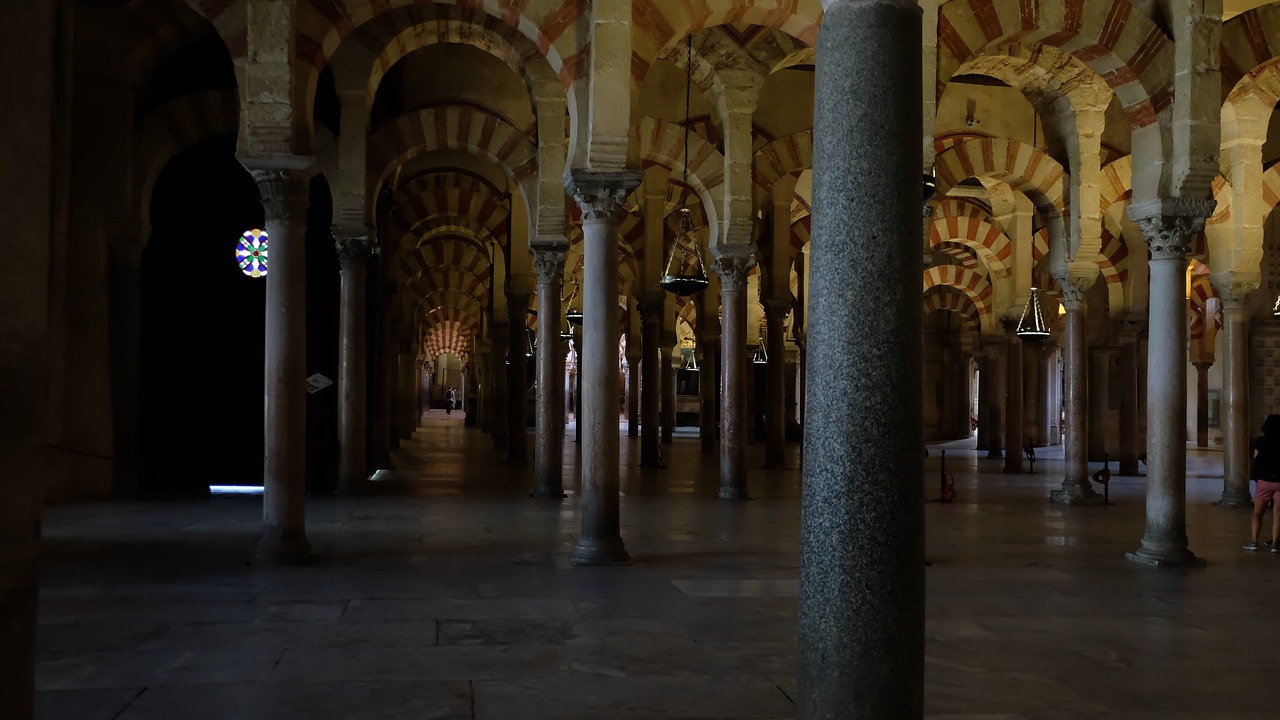
Constructed between 785 and 897 CE, the Great Mosque of Cordoba is one of the iconic and historically significant landmarks in Spain.
Situated in the southern Andalusia region within the boundaries of the city of Cordoba, Mosque-Cathedral of Cordoba features an expansive 856-column hypostyle prayer hall of onyx, porphyry, granite, marble, and jasper, and a beautiful Mihrab that is decorated with calligraphy and mosaics.
Over the centuries, the mosque underwent several expansions and modifications under different rulers.
The most notable expansion occurred under the rule of Abd al-Rahman II in the 9th century.
Additional sections, including new prayer halls and courtyards, were added to accommodate the growing Muslim population.
The mosque was converted into a cathedral after the Christian Reconquista of Córdoba in 1236.
This transition involved the construction of a Renaissance-style cathedral nave within the existing mosque structure.
Today, The Great Mosque of Cordoba offers exceptional Cordoba experiences. It is recognised as a UNESCO World Heritage Site.
The ticket price is 13 € per person. The perfect time to visit the Mosque-Cathedral of Cordoba is between 11 a.m. to 3 p.m.
Ancient Mosque in Spain
The Great Mosque of Cordoba is amongst the oldest, largest, and most special religious sites in the world after Masjid al-Haram (Makkah), Masjid al-Nabawi (Madinah), and the Blue Mosque (Istanbul).
The majestic architecture at this place symbolises Muslim empowerment during the Umayyad Era and the unique relationship between the Christians, Jews, and Muslims.
Mosque-Cathedral of Cordoba is known for its horseshoe arches, a red stone and brick column-filled prayer hall, a fountain-centred courtyard, and a minaret converted into a bell tower.
What Was the Capital of Muslims in Spain?
Originally ruled by Romans, Cordoba of Al-Andalus became the capital of Muslims (the Umayyad Caliphate) in Spain after the conquest.
The rich and diverse culture of Cordoba greatly contributed to establishing a flourishing Muslim civilisation.
Which City Was a Centre of Islamic Culture in Spain?
The city of Cordoba was a prominent centre of Islamic culture in Spain during the medieval period.
It reached its cultural zenith during the Islamic rule of the Iberian Peninsula, which lasted from the 8th to the 15th centuries.
Alhambra Palace
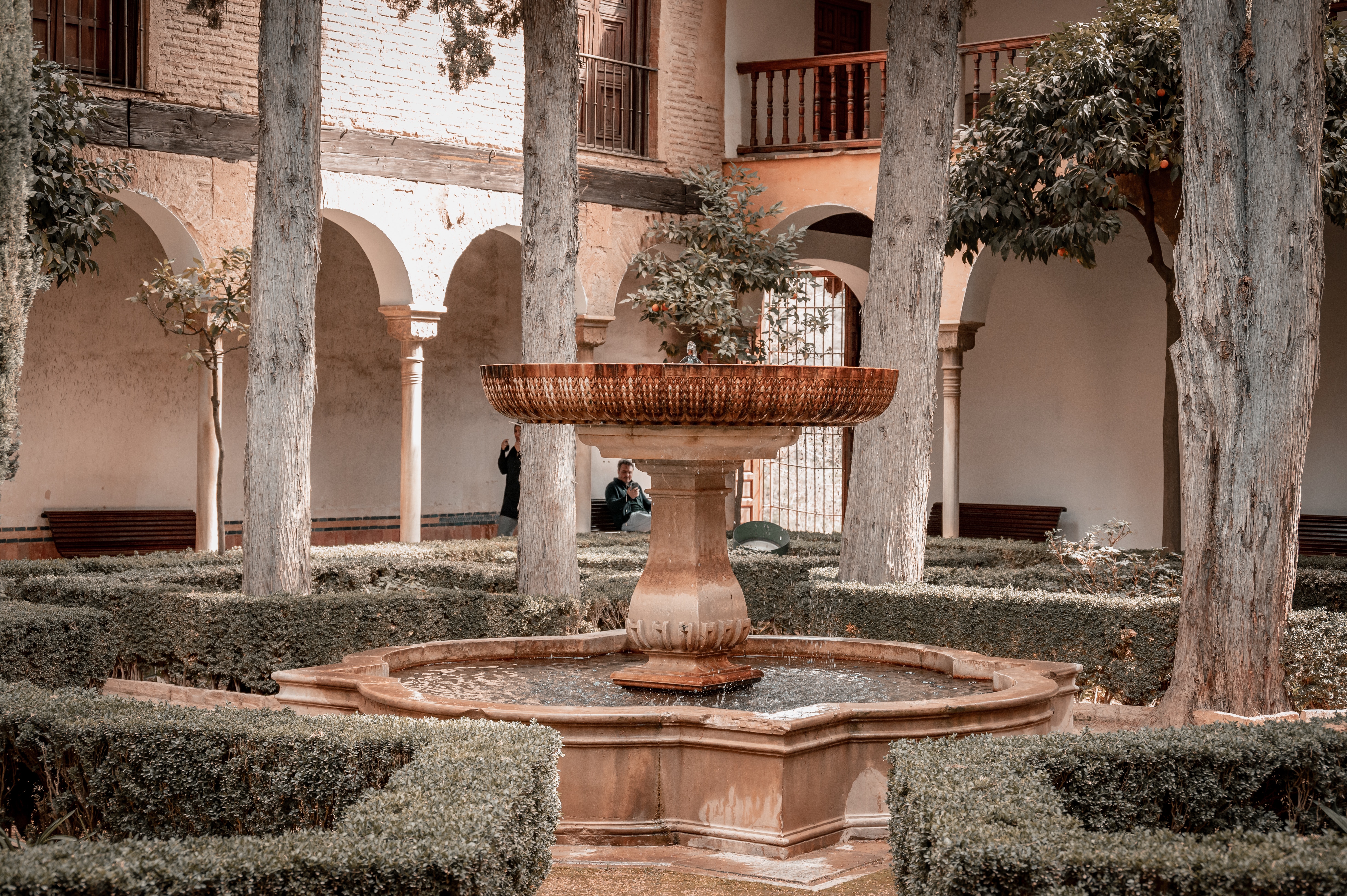
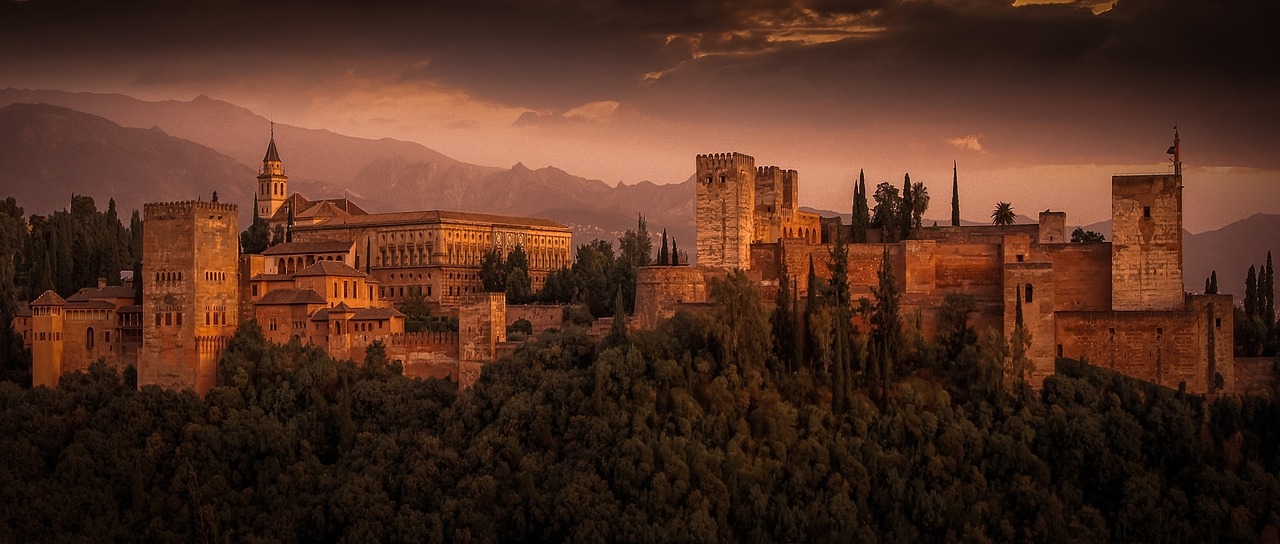
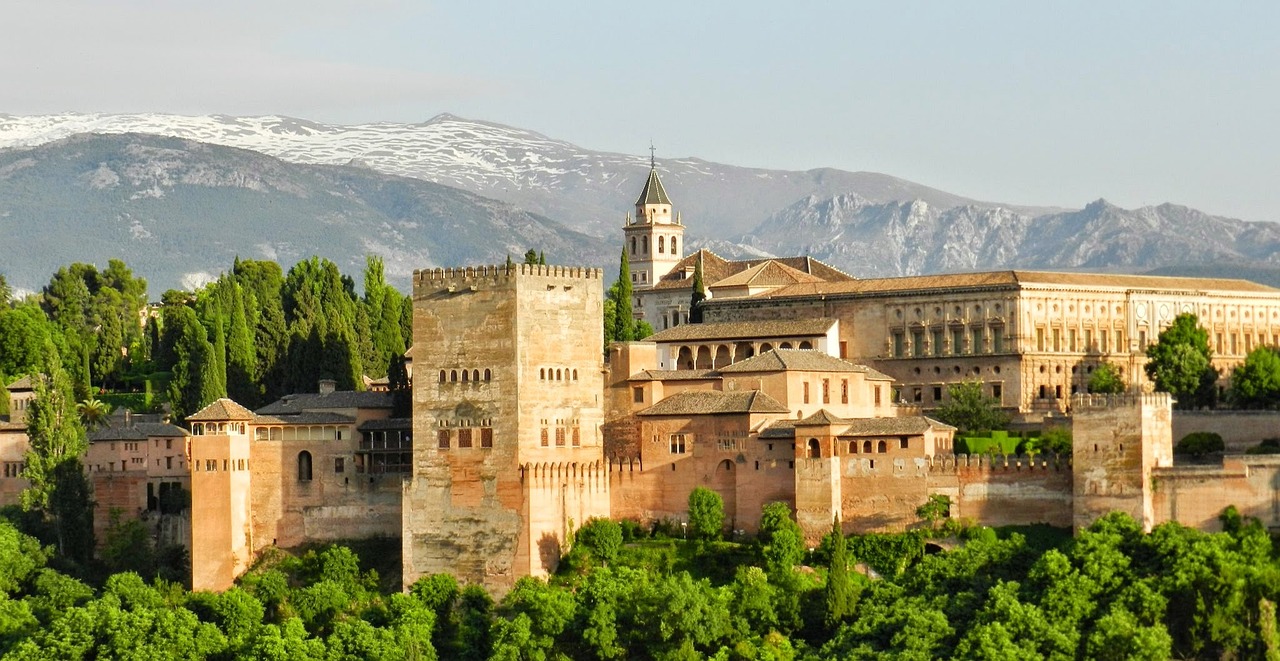
Situated in Granada, Spain, the Alhambra Palace is a 26 acres complex of gardens and fortifications originally built during the mid-13th century by the Nasrid Dynasty.
The name “Alhambra” is rooted in the Arabic words “al-qal’a al-hamra.” They translate to “the red fortress,” which likely references the reddish hue of the palace’s walls.
Featuring delicate geometric patterns, calligraphy, arabesques, and stunning decorative elements, the Alhambra Palace is a harmonious blend of different architectural styles, including Andalusian, Islamic, and Moorish influences.
In addition, the Alhambra Palace was a strategically important place as it allowed the rulers to have a bird’s eye view of the entire city.
It is a must-visit site. The ticket price is 19.09€ for adults. Some key sites of the Alhambra Palace that you must tour include:
- Nasrid Palaces: These palaces serve as the heart of the Alhambra complex. They feature well-decorated courtyards, stunning stucco work, colourful tiles, and beautifully carved wooden ceilings. The most famous of these courtyards is the Court of the Lions, known for its central marble fountain supported by twelve lion statues.
- Generalife Gardens: The Generalife Gardens are a series of terraced landscapes with lush greenery, vibrant flowers, and flowing water features. These gardens provide a peaceful retreat within the palace complex and offer stunning views of the surrounding area.
- Alcazaba: The Alcazaba is the oldest part of the Alhambra and serves as a fortress with defensive walls and towers. It offers panoramic views of Granada and the Sierra Nevada mountains.
- Palace of Charles V: This Renaissance-style palace was built within the Alhambra complex by the Holy Roman Emperor Charles V in the 16th century. Its architecture contrasts with the Islamic design of the Nasrid Palaces and showcases the evolving cultural influences in the region.
Which City of Arab Islamic Heritage Is in Spain?
Cordoba, a city located in the southern region of Islam, was an important centre of Arab Islamic heritage during the medieval period.
It was the capital of the Islamic Emirate and later the Caliphate of Córdoba, a significant cultural, intellectual, and economic hub in the Iberian Peninsula.
The city’s Great Mosque of Córdoba (also known as the Mezquita) is one of Spain’s most famous examples of Islamic architecture.
The Islamic influence is still visible in the architecture and layout of the city today.
Catedral De Sevilla
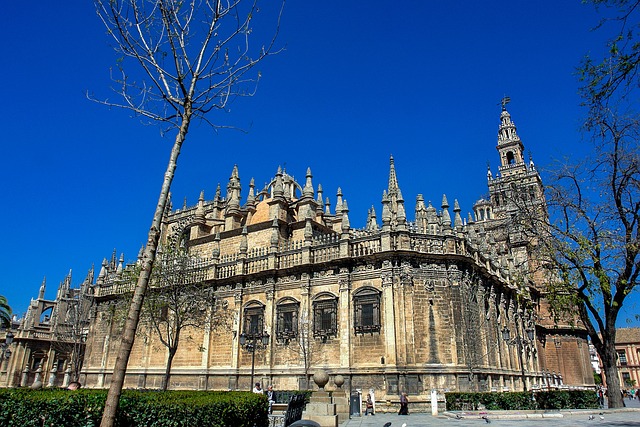
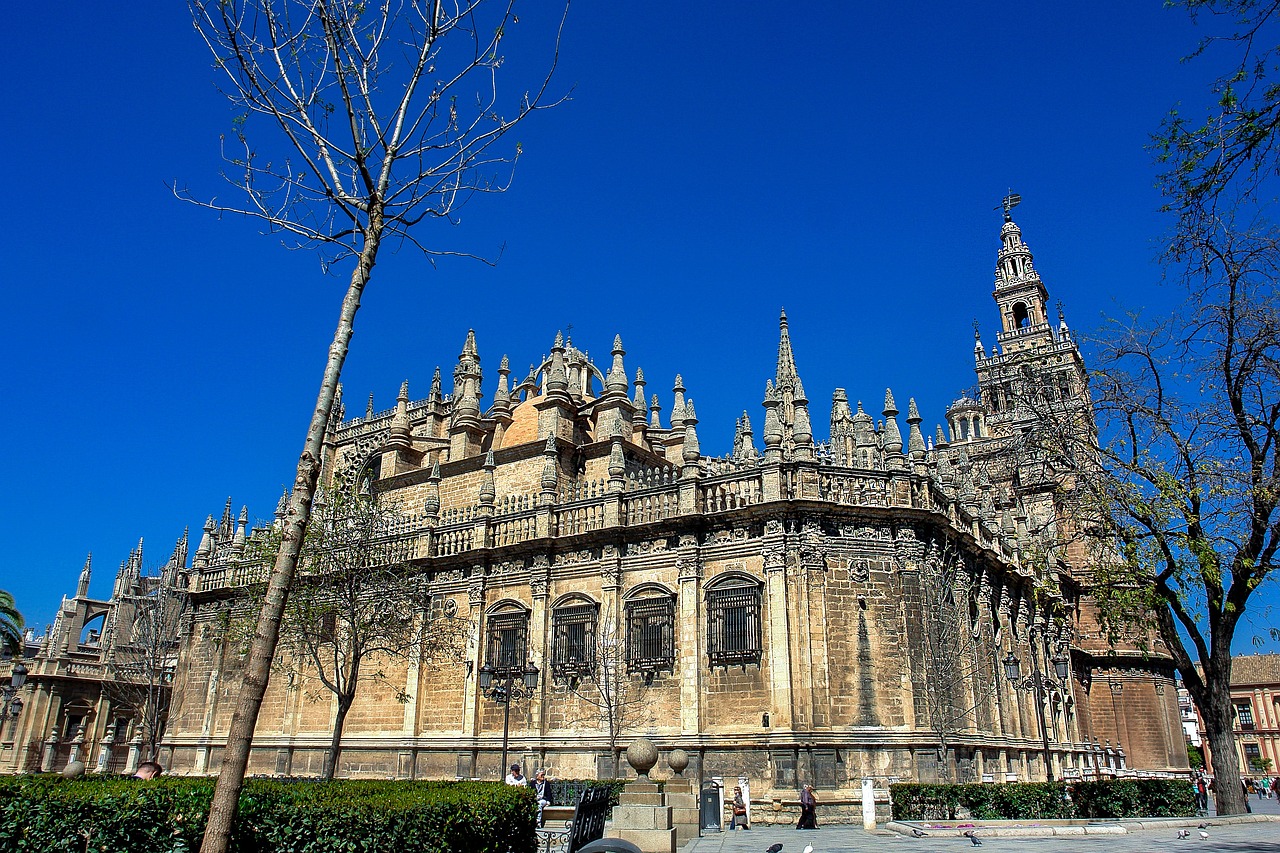
With an impressive architectural structure covering a total area of about 124000 square feet (11520 square metres), Catedral De Sevilla is the third-largest church in the world.
Nestled in the heart of Seville, Spain, Catedral De Sevilla is renowned for its grand, ornate interior, meticulously crafted glass windows, altarpieces, and numerous chapels.
The 341-foot (104 metres) tall Giralda Tower and the Tomb of Christopher Columbus are the most notable features of Catedral De Sevilla.
Beyond the entrance, within the grand monument is La Capilla Real, an area dedicated to the royal family of Spain that features beautiful sculptures, altarpieces, and tombs of various monarchs. The regular ticket price is 8 €.
The construction of the Seville Cathedral began in the 15th century after the Reconquista (the Christian reconquest of Spain) from the Moors.
It was built on the site of a former mosque. The cathedral’s construction incorporated elements of both Gothic and Renaissance architectural styles.
Which City in Spain Has the Most Islamic History?
Andalusia, a region in southern Spain, has the richest Islamic history in Spain due to its association with the Alhambra and Nasrid Dynasty.
Cities like Granada, Cordoba, and Seville have a rich Islamic heritage and offer opportunities for Muslim travellers to explore historical Islamic places in Spain.
Andalusia is home to some of the most iconic and well-preserved examples of Islamic historical places in Spain, specifically the Alhambra Palace.
Seville Islamic History
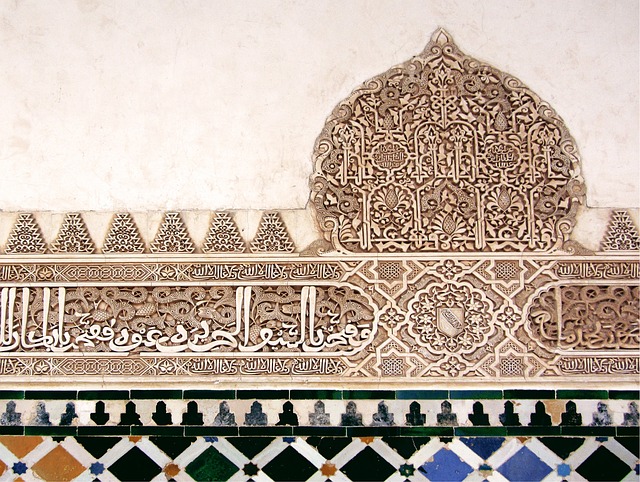
Commonly referred to as “Ishbiliyah” in Arabic, Seville, the inaugural capital of Al-Andalus, is one of the most Islamic historic places and holds significant importance in Islam.
During the Islamic rule of the Iberian Peninsula (711-1492), Seville became a centre of intellectual and cultural exchange.
Scholars from the Muslim world gathered in the city’s universities and libraries, translating ancient Greek, Roman, and Persian texts into Arabic.
In addition, Seville was known as a place of high religious tolerance as all religions (Jewish, Christianity, and Islam) co-existed peacefully.
Some fascinating Islamic heritage sites in the Spanish city include The Alcazar, The Giralda, and Torre Del Oro.
Royal Alcázar of Seville
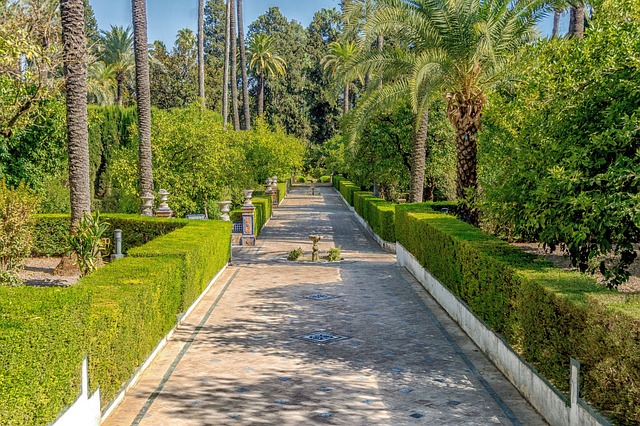
Royal Alcázar of Seville is a historic palace complex developed for the Castilian King Peter in 913 CE.
Over the centuries, it underwent various expansions, renovations, and additions by different rulers, resulting in a blend of architectural styles, including Moorish, Gothic, Renaissance, and Mudejar influences.
This makes the Alcázar a unique testament to the cultural interactions and architectural evolution that have shaped the history of Andalusia and Spain.
Some unique features of the Royal Alcázar comprise decorative plasterwork, beautiful courtyards, lush green orchards, and exquisite tilework.
The “Patio de las Doncellas” (Patio of the Maidens) is a particularly famous courtyard known for its stunning Mudejar architecture and the reflecting pool at its centre.
Today, the Royal Alcázar serves as a residence to the royal family of Spain.
Which Part of Spain Is Best for Muslims?
When it comes to Muslim-friendly travel in Spain, look beyond the famous Madrid experiences.
Cities like Cordoba, Granada, Seville, and Barcelona provide believers with a rich cultural experience, historical sites, and opportunities for prayer and halal dining.
Medina Azahara
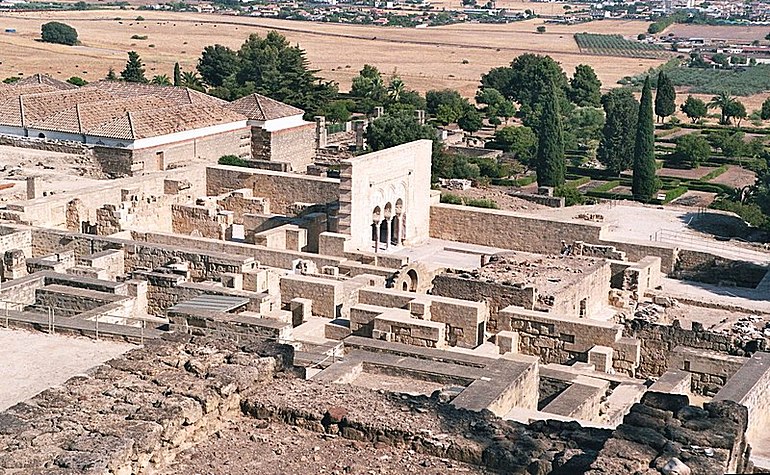
The “Shining City,” Medina Azahara, is an archaeological site situated on the outskirts of Cordoba, Spain. The fortified palace is one of the most prominent Islamic monuments.
It was constructed by Abd ar-Rahman III and served as a political, administrative, and cultural centre of the Umayyad Caliphate of Córdoba.
It featured palaces, administrative buildings, gardens, and other artistic structures that reflected the cultural fusion of the time’s Islamic, Byzantine, and Visigothic influences.
However, due to the persisting economic challenges and political instability, Medina Azahara fell into a decline.
The site was then rediscovered in the early 20th century and was preserved by the UNESCO World Heritage Site. Today, thousands of visitors to the Shining City every year.
Aljafería Palace
The Aljafería Palace (Palacio de la Aljafería) is a historic palace in Zaragoza, Spain. The palace’s construction began in the 11th century during the period of Muslim rule in the Iberian Peninsula.
It was built during the Taifa era, when the region was divided into various small Muslim kingdoms.
The Aljafería Palace was constructed as a fortified residence for the Banu Hud dynasty, specifically for Al-Muqtadir, the ruler of the Taifa of Zaragoza at the time.
The architectural design of Aljafería Palace reflects the Mudejar, Moorish, and Islamic cultures. The palace has thick walls, battlements, and sky-touching towers.
After the Christian Reconquista of Zaragoza in the 12th century, the Aljafería Palace underwent modifications to adapt it to the needs and preferences of the Christian rulers.
In subsequent centuries, the palace served various purposes, including as a royal residence, military barracks, and government building.
Primate Cathedral of Saint Mary of Toledo
The Primate Cathedral of Saint Mary of Toledo is a Roman Catholic Church in the city of Toledo in Spain. Toledo Cathedral’s construction began in 1227 CE.
The 60-metre-wide and 120-metre-long architectural structure featured Gothic, Renaissance, and Baroque elements.
Toledo Cathedral was built on the site of a former Visigothic church and a later Islamic mosque, symbolising the religious history and transitions of the city.
Toledo Cathedral houses numerous artistic and architectural treasures. Crossing the entrance, you will witness exquisite stained glass windows, elaborate altars, sculptures, paintings, carvings, 72 vaults, and 88 pillars.
The interior is known for its grandeur and remarkable acoustics, making it a venue for various religious ceremonies, cultural events, and musical performances.
One of the most famous features of the cathedral is its ornate High Altar, created by sculptor Alonso Berruguete and architect Enrique Egas.
Madinat al Zahra
Also called Medina Azahara, Madinat al-Zahra is a fortified historical site in the western region of Cordoba, Spain. It was a royal palace city and the administrative centre of the Umayyad Caliphate in the 10th century.
The site was constructed during the reign of Caliph Abd al-Rahman III (912–961 AD) and symbolised the caliphate’s power and opulence.
Madinat al-Zahra was intended to be a grand city that showcased the wealth, culture, and authority of the Umayyad rulers.
The city featured impressive architecture, expansive gardens, administrative buildings, residential areas, and lavish palaces, all built on a terraced hillside overlooking Córdoba.
The construction of Madinat al-Zahra started around 936 AD and continued for decades.
Unfortunately, the grandeur of Madinat al-Zahra was short-lived. The city was largely destroyed during the civil wars and conflicts that followed the fall of the Umayyad Caliphate.
Over time, the site was buried under layers of earth and forgotten. It wasn’t until the 20th century that archaeological excavations began, and researchers discovered the impressive remnants of the once-splendid city.
Castillo Arabe
Castillo Arabe translates to “Arab Castles built in Spain.” Having a distinctive architecture, Castillo Arabe served as a defensive structure, cultural symbol, and centre of governance during the medieval period. A few of the popular Castillo Arabe are listed below:
- Castillo Arabe in Alora: Perched atop a hill in Alora, the Castillo Árabe was developed in the 9th Offering beautiful views of the countryside, the fortress is also called “Cerro de las Torres.”
- Castillo Arabe in Motril: The palace is located in Motril. Even though not the original structure, the coastal fortress was built in resemblance to the real Arab palace.
- Castillo Arabe in Siurana: This was developed in the 12th century in Tarragona province. The castle’s remains narrate stories of a time when cultures converged, leaving an indelible mark on the region.
- Castillo Arabe in Constantina: Tucked away in the heart of Andalusia, the Castillo Árabe in Constantina stands as a silent guardian of Islamic history. Tourists can climb to the castle’s top and see the breathtaking view of the city.
- Castillo Arabe in Olvera: It is located in the province of Cadiz and was constructed in the late 12th century in the Nasrid-era. The castle
What City in Spain Is Arab Influenced?
Not one but several cities in Spain are Arab influenced, including Cadiz, Toledo, Malaga, Granda, Seville, Zaragoza, and Cordoba.
The Arab influence can be seen in Spain’s music style and instruments, technological innovations, literature, Maths, use of chickpeas, rice, spices, herbs, language, and architectural patterns and designs.
The Viana Palace
The Viana Palace, also known as the Palacio de Viana, is a historical palace located in the Santa Marina neighbourhood of Cordoba, Spain.
Surrounded by a marvellous garden and 12 stunning patios, the Viana Palace is a mix of Morish, Gothic, Renaissance, and Baroque architecture.
One of the most notable features of the Viana Palace is its stunning interior, with intricately decorated rooms, grand halls, and various art collections, including paintings, sculptures, and furniture from different periods.
Mosque of Christ of the Light (Mezquita Del Cristo De La Luz)
The Mosque of Christ of the Light (Spanish: Mezquita Del Cristo De La Luz) can be found in Toledo, Spain. The mosque was originally built in the year 999 AD during the Islamic Caliphate of Córdoba, the reign of Caliph Al-Hakam II.
The mosque was initially known as the “Mosque of Bab al-Mardum” (Mezquita de Bab al-Mardum or Mezquita del Salvador) due to its location near the Bab al-Mardum gate of Toledo.
The architectural style of the mosque reflects the distinctive features of Islamic design, with horseshoe arches, geometric patterns, and decorations.
After Toledo was recaptured by Christian forces in the 11th century, the mosque was consecrated as a Christian church.
During this conversion, some Christian elements were added to the building while maintaining its original Islamic architectural features.
A small apse was added to the Mihrab to create a more Christian-style sanctuary. The mosque’s name was changed to the “Mosque of Christ of the Light” (Mezquita Del Cristo De La Luz) to emphasise its new religious identity.
Calahorra Tower
Calahorra Tower is a fortified gate tower in Cordoba, Spain. The tower’s name, “Calahorra,” is derived from the Arabic word “Qal’at al-Hurra,” which means “Fortress of the Christian Lady.”
The tower was constructed in the 12th century by the Almohad dynasty.
The tower is an iconic landmark of Córdoba and consists of several levels, including fourteen chambers that once served various purposes, such as housing military personnel and prisoners.
La Madraza Granada
Built in 1349, La Madraza, Granda, served as an Islamic educational institution. It was established by Sultan Yusuf I and was designed to provide advanced education in various disciplines of Islamic knowledge, including theology, law, medicine, and literature.
The building is a beautiful example of Nasrid architecture, characterised by intricate stucco decoration, colourful tile work, and architectural elements that showcase exquisite craftsmanship.
It features a central courtyard, classrooms, a fountain, and prayer halls.
La Madraza Granada is currently open to the public as a museum, offering unique Granada experiences and allowing tourists to explore and learn about its religious significance.
The Generalife Palace
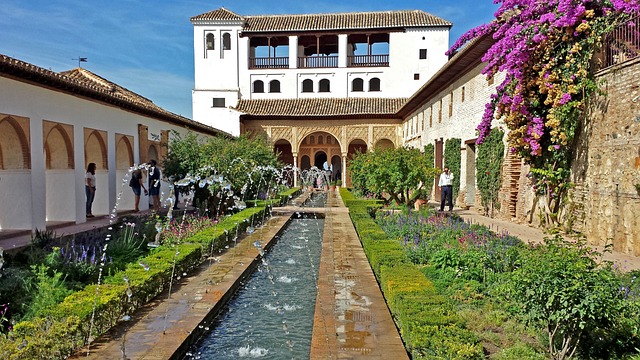
The Generalife Palace (Palacio de Generalife) is a historic architectural complex in the Alhambra, a renowned palace and fortress in Granada, Spain.
The Generalife was originally utilised as a leisure retreat for the Nasrid rulers. The Generalife Palace comprises exquisite gardens, courtyards, and fountains.
Patio de la Acequia is one of the most iconic areas of the Generalife. It features a long central water channel, fountains, and maintained horticultural elements. “Acequia” refers to the irrigation channels that bring water to the gardens.
The name “Generalife” is said to have originated from the Arabic words “Jannat al-Arif,” meaning “Garden of the Architect” or “Architect’s Garden.”
Gormaz Castle
Renowned as Castillo de Gormaz or Fortaleza de Gormaz, the grand palace was developed in 965 CE. Overlooking the Duero River, the Gormaz Castle consists of 1.2 kilometres of walls, countless towers, and defensive structures.
Over time, the strategic importance of the castle diminished, and it eventually fell into disuse. However, efforts have been made to preserve and restore the castle.
Today, tourists can travel to the Gormaz Castle while enjoying the panoramic views of the surrounding countryside.
Arabic Cities in Spain
Spain’s Arabic cities offer immersive glimpses into the country’s past, celebrating the art, architecture, and culture of Al-Andalus.
While Granada’s Alhambra showcases Nasrid dynasty artistry and stunning views, Mezquita of the inaugural capital, Cordoba, represents Islamic and Christian design.
Furthermore, the Alcázar in Seville blends Moorish and Gothic styles, whereas Toledo’s “City of Three Cultures” label reflects its fusion of Islamic, Jewish, and Christian influences.
Zaragoza has the famous Aljaferia Palace, and Cadiz’s maze-like streets narrate tales of the Umayyad era.
Summary – Islamic Historical Places in Spain
The Islamic civilisation’s presence in Spain for eight centuries left behind rich artistic and architectural heritage.
This legacy includes palaces, mosques, and fortresses that showcase that era’s advanced development and artistic sophistication.
These structures continue to adorn Spanish cities and are among Europe’s most visited monuments for halal travel, serving as a reminder of the shared history and cultural connections with Arabs
]]>Jordanian architectural heritage includes a multitude of mosques that not only reflect the country’s beauty but also stand as a symbol of its deep-rooted connection to Islam.
With their stunning architecture and peaceful ambience, the mosques of Jordan provide both locals and visitors with a place for prayer, contemplation, and connection to the city’s history and spiritual essence.
Continue reading to learn about the beautiful mosques in Jordan.
How Many Mosques in Jordan?
According to the Minister of Awqaf and Islamic Affairs, there are approximately 7600 mosques in Jordan.
These include Abu Darweesh Mosque, Ali bin Abi Talib Mosque, King Abdullah I Mosque, King Hussein Mosque, Prophet Shuaib Shrine, Prophet Jadur Shrine, and Nabi Harun Shrine.
However, a 2017 Jordan Times article stated that out of the 6000 mosques in Jordan, 3000 don’t have officially assigned imams. Another article from 2020 reported that 1284 of the 7100 mosques are without imams.
Famous Mosques in Jordan
The country of Jordan is home to some of the most popular Islamic landmarks in the world, including King Abdullah I Mosque, King Hussein Mosque, Abu Darweesh Mosque, Prophet Jadur Shrine, and Nabi Harun Shrine.
The Most Famous Mosque in Jordan: King Abdullah 1 Mosque
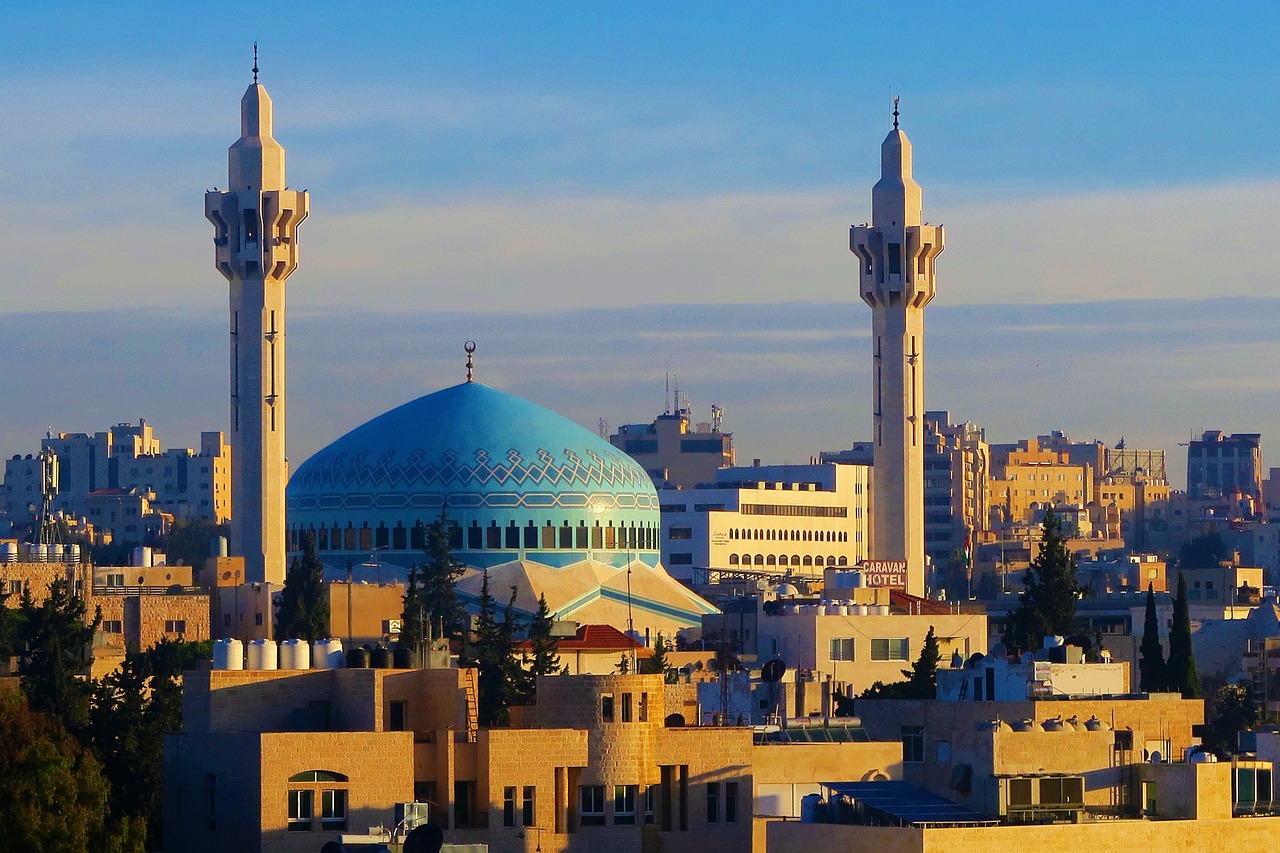
King Abdullah I Mosque is the most famous Masjid in Jordan. Completed in 1989 as a memorial by the late King Hussein to his grandfather, King Abdullah I Mosque is the largest Masjid in the state.
King Abdullah I Mosque is known for its beautiful architecture and distinctive blue dome that can be seen from afar.
The mosque’s octagonal courtyard can accommodate over 3000 worshippers, and the hall can provide space for 7000 people.
King Abdullah 1 Mosque has a small women’s section and private royal enclosure, accommodating up to 200 – 300 people.
In addition to the vast blue dome, the walls of King Abdullah 1 Mosque are decorated with Quranic inscriptions.
King Abdullah 1 Mosque is the only Masjid in Amaan where non-Muslims are allowed.
Other features of King Abdullah 1 Mosque are a library with 20,000 books, a reception area, Dar al-Quran, roofed lounges and halls, an Islamic museum, and a charity market.
If you want to visit a Jordan museum, this is the place to go!
What Can You Wear to the King Abdullah Mosque?
When visiting King Abdullah 1 Mosque, it is important to dress modestly and respectfully. If you are a man, wear long trousers or pants and a shirt that covers your shoulders.
However, women are advised to wear either a full-length dress or loose clothing that covers their bodies.
Wearing long pants and sleeves is essential, and any revealing dress is strictly prohibited.
Women must also wear a headscarf before entering King Abdullah 1 Mosque.
Biggest Mosque in Jordan
King Hussein Bin Talal Mosque is the largest Masjid in Jordan. Also known as King Hussein Mosque, the Masjid covers 60,000 square metres of area and can accommodate up to 5500 worshippers.
The square-shaped mosque features marble floors and four minarets.
King Hussein Bin Talal Mosque’s structure perfectly combines classic and modern architecture, making it the perfect place for halal travel..
Name of the Biggest Mosque in Jordan
The name of the biggest mosque in Jordan is King Hussein Bin Talal Mosque.
King Hussein Mosque is located at King Abdullah II Street in Al Hussein Public Parks near King Hussein Medical Centre.
Oldest Mosque in Jordan
In this section, we will discuss some of the oldest mosques in the history of Jordan that you can discover as you travel through the beautiful country.
Ali bin Abi Talib Mosque
Developed in Irbid, Jordan, Ali bin Abi Talib Mosque was originally built during the Ottoman Empire era and then renovated and expanded in 1998.
Named after the son-in-law of Prophet Muhammad (PBUH), Ali bin Abi Talib Mosque is a place of profound significance for millions of Muslims worldwide.
Ali bin Abi Talib Mosque has a simple architectural design and features one minaret and a grand dome.
The Grand Hussein Mosque
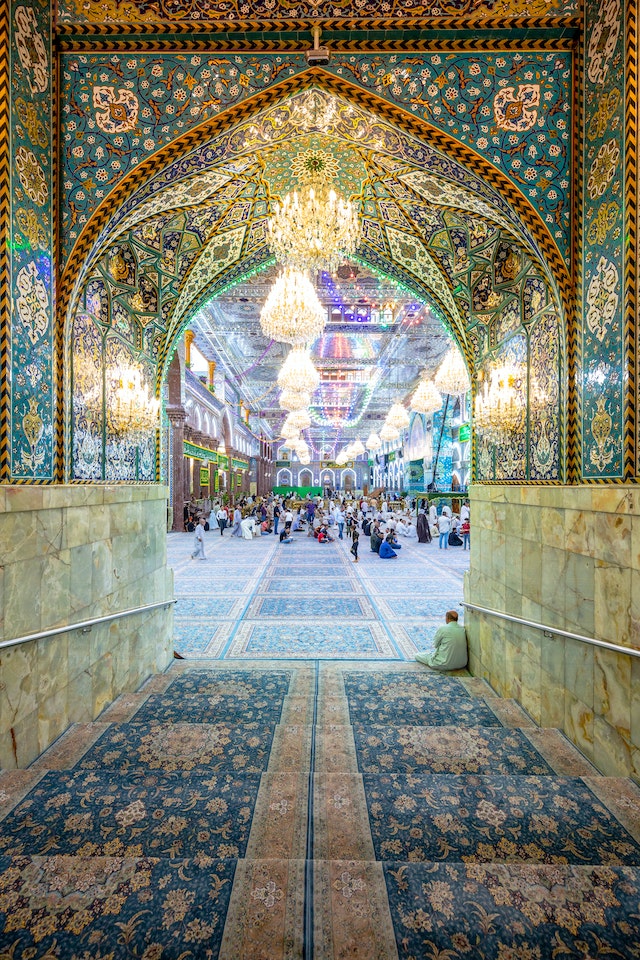
Constructed over 80 years ago, the Grand Hussein Mosque is the oldest Masjid in Amman.
This mosque was one of Jordan’s kingdom’s biggest architectural projects.
According to the religious committee members, the Grand Hussein Mosque is one of the highly visited Amman attractions and receives approximately 1500 worshippers for Zuhr prayer
Thousands of people travel to the mosqye every year to marvel at its grandeur.
However, for senior citizens, visiting the Grand Hussein Mosque is a trip down memory lane.
The Grand Hussein Mosque has a domed fountain, a prayer hall, a courtyard, and walls decorated with Quranic verses.
The Grand Hussein Mosque currently covers 2000 square metres of land and can accommodate 2600 worshippers.
Mosques in Amman
Amman, the capital city of Jordan, is home to various beautiful and historically significant mosques and the perfect place to travel.
These mosques reflect the rich cultural and religious diversity of the region.
How Many Mosques in Amman?
The exact number of mosques in Amman is not known. However, three popular masjids in Amman are King Abdullah 1 Mosque, Ali bin Abi Talib Mosque, and King Hussein Bin Talal Mosque.
King Hussein Mosque

One of the oldest mosques in Amman, King Hussein Mosque, was re-constructed by King Abdullah 1 in 1932 on the exact site of the one built by Umar (AS) during his Caliphate in 640 AD.
The Ottoman-style mosque is located at an altitude of 1013 metres (3323 feet/ 0.62 miles) above sea level.
King Hussein Bin Talal Mosque has a capacity of 5500 worshippers, marble floors, one large centred dome and four minarets.
The mosque has a fort-like architecture and can be seen from afar.
Abu Darweesh Mosque
Featuring striking and distinctive black and white stone architecture, Abu Darweesh Mosque is situated on the top of Jebel al-Ashrafiyeh, the highest hill in Amman, Jordan.
Abu Darweesh Mosque was built in 1961 with financial support from Abu Darweesh (also called Hasan Mustafa Sharkas. Abu Darweesh Mosque covers roughly 2500 square metres of land.
Inside the mosque, the intricate calligraphy and delicate patterns that adorn the walls are a testament to the craftsmanship of local artisans.
Other Historic Islamic Places in Jordan
Want to learn more about the historical monuments in Jordan before you travel? In this section, we will be discussing three of Jordan’s most famous and significant religious sites.
Umayyad Palace
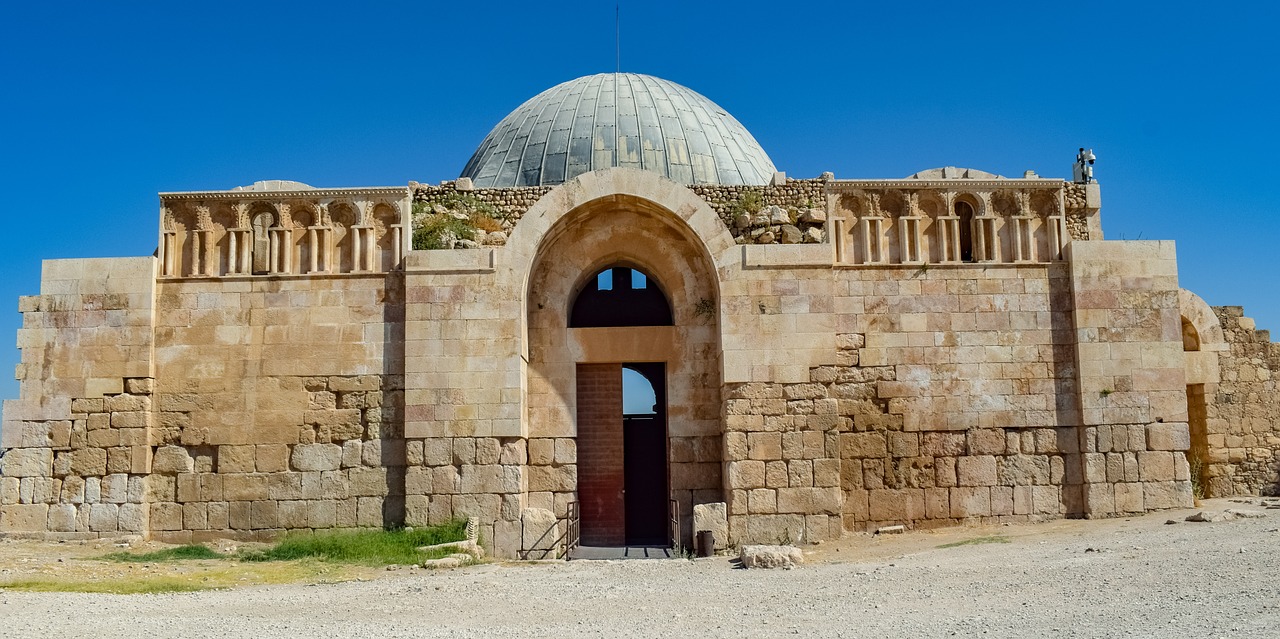
Umayyad Palace is located on Jabal al-Qal’a (Citadel Hill) of Amman, Jordan. The Umayyad Palace was constructed in the first half of the 8th century and used to be the residence of the governors during the Umayyad Dynasty.
The palace comprises three areas; a large area for people to gather, a well-decorated and preserved audience hall, and nine independent buildings that represent the destroyed part of the palace.
Today, the Umayyad Palace features a restored domed entrance chamber called the “monumental gateway” or “kiosk.”
The stucco ornaments and geometric designs make Umayyad Palace’s architecture stand out from other regional palaces.
Dead Sea
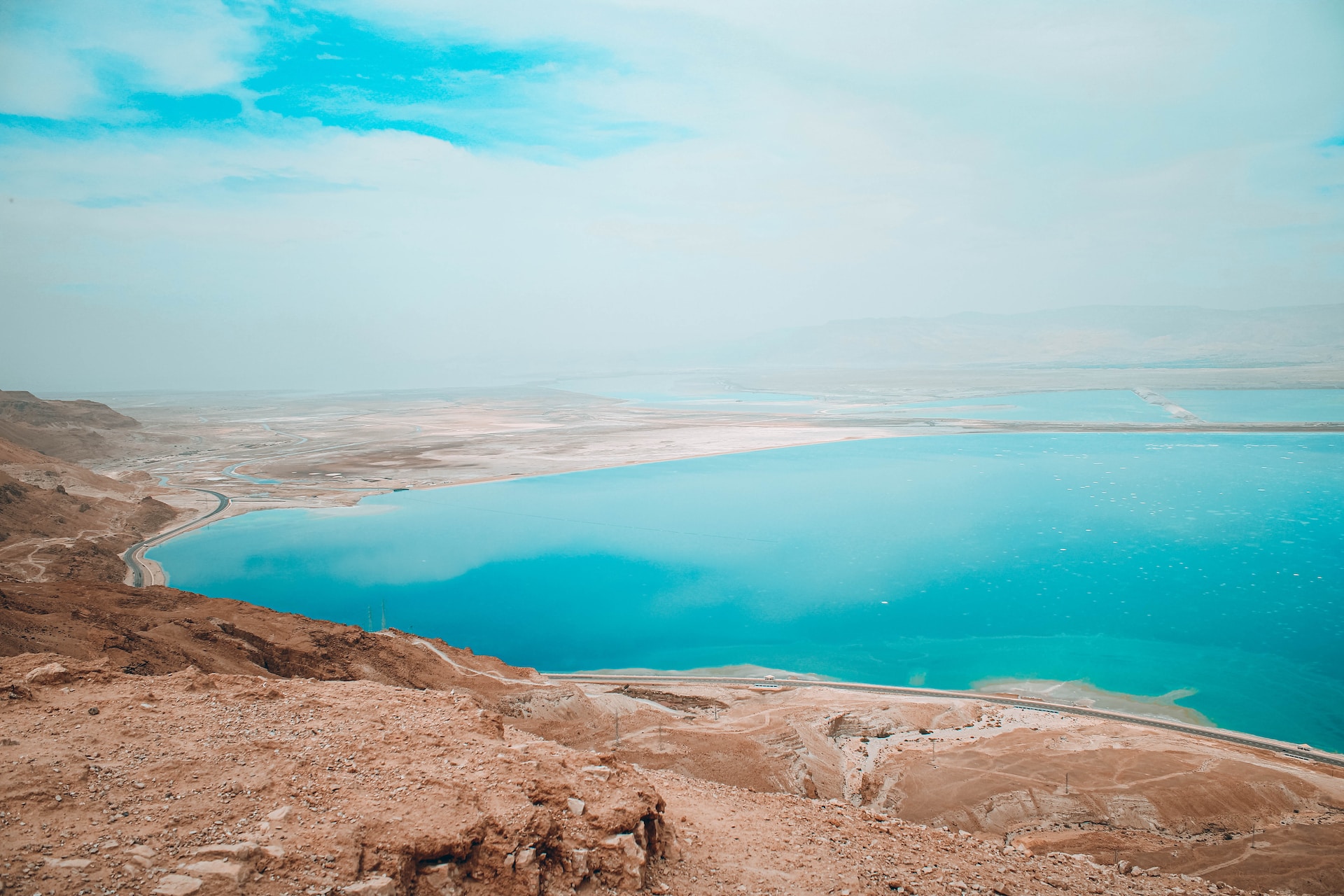
Situated between Jordan, West Bank, and Israel, the Dead Sea is a saltwater lake. Known for its extremely high salt concentration, the Dead Sea is the lowest point in the world, about 1412 feet (400 metres/0.26 miles) below typical sea level.
According to Islamic history, the Dead Sea is a reminder of Allah SWT’s punishment of the wicked evildoers and ignorant people of Sodom city, the Ummah of Prophet Lut (AS).
The Prophet of Allah SWT preached the message of God in every way possible. Despite his endless tries, even Prophet Lut’s (AS) wife didn’t convert. As a result, Allah SWT destroyed the city.
“Turn the cities upside down, and rain down on them brimstones hard as baked clay, spread layer on layer, marked from your Lord.” [Holy Quran 11:82–83]
Prophet Muhammad (PBUH) strictly advised people from visiting a place of God’s punishment, such as the Dead Sea. He said,
“Do not enter the place of those who were unjust to themselves unless you are weeping, lest you should suffer the same punishment as was inflicted upon them.”
However, if you get a chance to travel to the Dead Sea, use the time to remember the story of Prophet Lut (AS) and how he fought for Islam. Allah SWT in the Holy Quran says,
“Surely! In this are signs for those who understand. And verily, they [the cities] are right on the high road. Surely! Therein is indeed a sign for the believers.” [Holy Quran 15:75–77]
“And to Lut, too, We gave wisdom and knowledge; We saved him from the town which practised abominations. Truly they were a people given to evil, a rebellious people. And We admitted him to Our mercy; for he was one of the righteous.” [Holy Quran 21:74–75]
Cave of Ashabe-Kahf
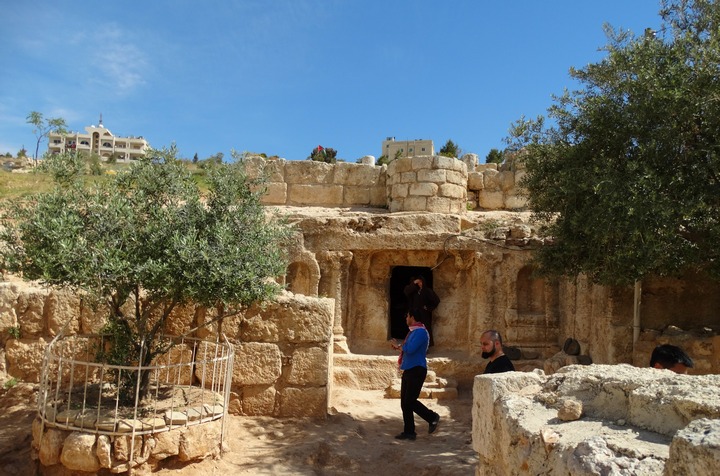
The cave of Ashabe-Kafh is located in the suburb of Abu Alanda, Amman, Jordan.
According to Islamic and Christian tradition, this is the same cave where six believers and one of their dogs found refuge after escaping the persecutions of the cruel Roman king.
Allah SWT in the Holy Quran states, “[Some] say, ‘The sleepers were three, and their dog made four,’ others say, ’They were five, and the dog made six’- guessing in the dark – and some say,’ They were seven, and their dog made eight.’ Say [Prophet], ‘My Lord knows best how many they were.’ Only a few have real knowledge about them, so do not argue, but stick to what is clear, and do not ask any of these people about them.” [Holy Quran 18:22]
The seven slept for over 300 years and miraculously woke up like no time had passed away.
It is said that these people eventually died in 550 AD after sharing the story with the world. Later, the seven were buried inside the Cave of Ashabe-Kahf.
Tomb of Aaron
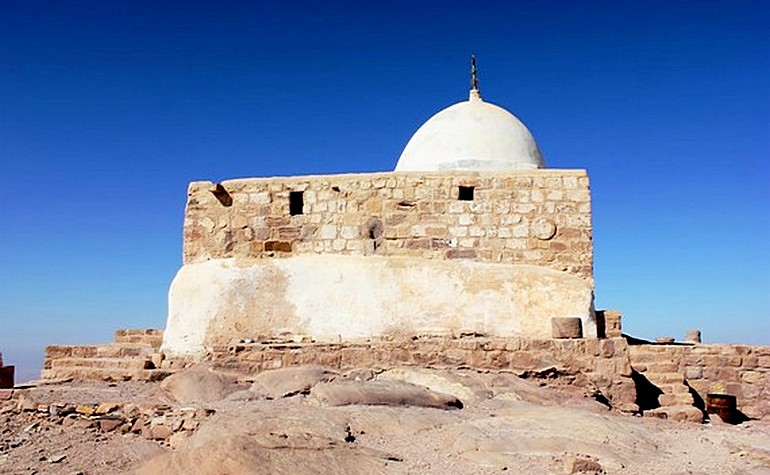
Located in Petra, Jordan, the Tomb of Aaron was constructed in the Mamluk era in the early 14th century and comprised a small courtyard and a room.
The prayer hall of the white-domed mosque is on the ground floor.
Summary – Mosques in Jordan
A country in the middle east with diverse cultural heritage and rich history, Jordan offers unique excursions to visitors worldwide.
From the majestic beauty of King Abdullah I Mosque in Amman and King Hussein Bin Talal Mosque to the historical significance of the Cave of Ashabe-Kahf and Umayyad Palace, every religious site tells a tale of Jordan’s intricate past and its blend of traditions.
Exploring the mosques in Jordan gives you a chance to witness the coexistence of the ancient and modern while instilling peace in your heart and soul.
Remember to stay modest and respectful as you travel through these historic landmarks
]]>These architectural wonders stand as testaments to the country’s rich Islamic heritage and the enduring faith of its people.
In this detailed article, we will take you on a virtual tour of some of the most notable mosques in Egypt, exploring their history, architecture, and significance.
Read on to learn about the magnificent mosques in Egypt, their locations, and related tour packages.
How Many Mosques Are There in Egypt?
Mosques play a central role in the religious and social life of people. Egypt’s landscape is dotted with mosques, ranging from small neighborhood prayer locations to grand historic mosques with rich architectural significance.
According to estimates, there are over 140,000 mosques in Egypt. Among them, a remarkable 100,000 were classified as large mosques, emphasising the country’s deep-rooted religious and cultural significance.
This extensive network of places of worship reflects the central role that mosques play in Egypt’s social and spiritual fabric.
It also plays a significant role in Egypt’s tourism industry as thousands of people book tour packages to visit these mosques every year.
How Many Muslims Are There In Egypt?
Egypt is predominantly a Muslim-majority country, with Islam as the state religion. It is estimated that around 90% to 95% of the population identifies as Muslim.

Biggest Mosque in Egypt
The biggest mosque in Egypt is the Mosque of Muhammad Ali, also known as the Alabaster Mosque.
It is a captivating masterpiece that adorns the skyline of Cairo’s Citadel, standing as one of Egypt’s most iconic and grandest architectural wonders.
The Mosque of Muhammad Ali

Built by the famed ruler Muhammad Ali Pasha, who reigned over Egypt in the early 19th century, this mosque is an enduring symbol of religious devotion and cultural significance in a central location in Cairo.
Construction of the Mosque of Muhammad Ali began in 1830 and was completed in 1848, marking the culmination of almost two decades of meticulous craftsmanship and architectural ingenuity.
The mosque’s design, inspired by the majestic mosques of Istanbul, is a breathtaking fusion of Ottoman and Islamic architecture, leaving visitors in awe of its splendor.
Upon approaching the mosque, one’s eyes are drawn to the impressive twin minarets that flank its entrance, soaring gracefully into the sky.
As visitors step inside the vast courtyard, they are greeted by a serene ambiance.
The polished marble floors, gleaming under the golden sunlight, lead the way to the central prayer hall, its grandeur befitting the reverence of worship.
Today, the Mosque of Muhammad Ali in Egypt remains a cherished place of worship and pilgrimage for both locals and tourists alike.
Its open doors welcome people from all walks of life, inviting them to witness the seamless blending of art, history, and spirituality within its hallowed walls.
It has a capacity of 10,000 people. Opening hours are from 9 AM to 5 PM. The ticket price is EGP 300 for foreigners (adults) and EGP 60 for Egyptians (adults).
Tour packages are also available. You can also visit the Al-Rifa’i mosque which is located nearby.
Oldest Mosque in Egypt
Egypt is known for some of the oldest mosques in the world that bear witness to the country’s rich Islamic heritage.
Read on to learn about the oldest Egyptian mosques and tour packages and prices.
Mosque of Amr Ibn Al-As
The Mosque of Amr ibn al-As is widely considered the oldest mosque in Egypt. It is also counted in some of the oldest mosques in the entire African continent.

This historic mosque is located in Old Cairo, a prominent location, near the city area known as Fustat, which was the first Islamic capital of Egypt.
This mosque in Egypt holds immense historical and religious significance. It was built in 642 AD, just a few years after the Islamic conquest of Egypt by Amr ibn al-As.
The construction of the mosque marked the establishment of Islam as the dominant religion in Egypt.
Over the centuries, the mosque has undergone several renovations and expansions, but it still retains its historical essence.
Today, the beautiful mosque remains an active place of worship in the city, attracting both local worshipers and tourists interested in exploring Egypt’s rich Islamic heritage.
The mosque is open 24 hours, and it is free of charge to visit. However, you can book a tour package for a guided tour.
You can also book one of the nearby hotels to make the best of your trip.
Most Famous Mosques in Egypt
Egypt is home to several iconic and famous mosques that hold significant cultural, historical, and architectural importance.
Thousands of visitors visit Egypt and stay in hotels and Airbnbs to explore some of the most renowned mosques in Egypt and their locations.
Ibn Tulun Mosque

Dating back to the 9th century, the Ibn Tulun Mosque is one of Egypt’s oldest and largest mosques.
It was commissioned by Ahmad ibn Tulun, the founder of the Tulunid dynasty, who sought to create a place of worship that reflected the grandeur of his rule.
The mosque opened in 879. Its unique design, influenced by the architectural styles of locations like Iraq and Persia, sets it apart from other mosques in the region.
The mosque’s massive courtyard is surrounded by arched porticoes leading to the central prayer hall.
The iconic spiral minaret, reminiscent of the Great Mosque of Samarra in Samarra city, Iraq, adds to the mosque’s charm.
The interior is adorned with beautiful stucco decorations, exquisite wooden panels, and intricately designed mihrab and minbar. Entry to the mosque is free.
For a memorable visit, book a tour package and learn about the history and significance of this mosque.
Al-Azhar Mosque

Located in the Cairo city’s historic center, the Al-Azhar Mosque is not only a place of worship but also a renowned center of Islamic learning in Egypt.
Established in 970 AD, it is one of the oldest continuously operating universities in the world.
The mosque’s main prayer hall, with its impressive columns and carved wooden screens, can accommodate thousands of worshipers.
The courtyard is surrounded by arcades and leads to the intricately designed minarets.
Al-Azhar Mosque remains a vibrant center of learning, attracting students and scholars from all over the world to study Islamic theology, law, and philosophy.
It can accommodate up to 20,000 visitors. General entry is free but guided packages are available
Sultan Hassan Mosque
Adjacent to the Citadel, the Sultan Hassan Mosque stands as a prominent example of Mamluk architecture, a style characterised by its massive scale and grandeur. The mosque opened in 1363.
Built during the late 14th century by Sultan Hassan, the mosque’s construction aimed to rival the magnificence of the nearby Mosque of Ibn Tulun.
The mosque’s exterior features intricate stonework, including geometric designs, arabesques, and verses from the Quran. Its enormous courtyard leads to a grand entrance, which opens into the equally impressive prayer hall.
Inside, visitors can marvel at the soaring arches, stately columns, and an intricately carved wooden minbar (pulpit) that adds to the mosque’s regal charm.
Visitors can visit from 9 AM to 5 PM. The ticket price is EGP 120 for foreigners (adults), while locals can visit without purchasing a ticket.
Opt for a tour package in the city for a unique experience. The area also houses several hotels you can choose to stay at.

Al-Rifa’i Mosque
Adjacent to the Mosque of Sultan Hassan, the Al-Rifa’i Mosque is a blend of Neo-Mamluk and Neo-Gothic architectural styles, making it a unique landmark in Cairo city.
Built during the late 19th and early 20th centuries, the mosque serves as the final resting place of members of the Egyptian royal family, including King Farouk and other notable figures.
The mosque’s grand facade, featuring a series of arched windows and intricate stonework, is a sight to behold.
The interior boasts a spacious prayer hall adorned with chandeliers, colorful carpets, and beautiful Quranic inscriptions.
The central dome adds to the mosque’s grandeur, and visitors can also explore the royal tombs and mausoleums within the complex.
The mosque is open 24 hours. The ticket price is EGP 120 for foreigners (adults). Locals can visit the mosque free of charge but paid guided packages are available.
Al-Hussein Mosque
Built-in 1154, the Al-Hussein Mosque, situated in Cairo’s Khan El Khalili market, is one of the city’s most revered places of worship in Egypt.
Dedicated to Husayn ibn Ali, the grandson of Prophet Muhammad (PBUH), the mosque holds immense religious significance for Muslims, particularly those of the Shia sect.
The mosque’s history dates back to the 12th century. It can accommodate up to 2875 worshippers.
The architecture of Al-Hussein Mosque reflects traditional Islamic designs, featuring a central dome and four minarets.
The interior is adorned with beautiful Islamic calligraphy and intricate geometric patterns, creating a serene ambiance for prayer and reflection.
Surrounding the mosque, the lively atmosphere of the city’s Khan El Khalili market adds to its charm, making it a must-visit location for both locals and tourists.
General admission to the mosque is free. You can also choose a tour package to elevate your experience.
Mosque of Sayyida Nafisa
Located in the historic district of Old Cairo, the Mosque of Sayyida Nafisa honors Sayyida Nafisa, a respected descendant of Prophet Muhammad.
As one of the most revered mosques in the area, it attracts Muslims from all over the world who come to pay their respects.
The mosque’s architecture is characterised by its traditional style, with a central dome and minarets adorned with intricate stonework.
Inside, the prayer hall features exquisite Islamic decorations and a serene atmosphere conducive to prayer and meditation.
The courtyard provides a tranquil space for visitors to find respite from the bustling streets of Cairo.
The mosque’s historical and religious significance makes it an essential stop for those interested in Egypt’s Islamic heritage. It remains open from 3 AM to 9 PM for visit and tour packages.
New Mosques in Egypt
Egypt has seen the construction of several new mosques that reflect modern architectural designs and serve as centers of worship, education, and community gathering.
These new Egyptian mosques incorporate innovative features while maintaining the essence of Islamic heritage.
Here are some notable examples:
New Alamein Mosque (El Alamein)
The New Alamein Mosque, also known as the El Alamein Grand Mosque, is a significant religious and cultural landmark located in the coastal city of El Alamein on the Mediterranean coast.
This stunning mosque was inaugurated in 2019 and is part of the larger New Alamein City development project.
Designed with a modern touch, the mosque’s architecture reflects both traditional Islamic elements and contemporary aesthetics.
The mosque’s main prayer hall is capped with an impressive central dome, surrounded by smaller domes and several minarets.
The exterior facade features intricate geometric patterns, and the interiors are adorned with beautifully crafted Quranic calligraphy and Islamic motifs.
The mosque’s spacious courtyard allows for large congregations during Friday prayers and other religious events.
Al-Fattah Al-Aleem Mosque
Also inaugurated in 2019, the Al-Fattah Al-Aleem Mosque is a stunning Egyptian architectural achievement that exemplifies Egypt’s commitment to preserving its Islamic heritage.
Situated in the New Administrative Capital and built to accommodate 17,000 worshipers, the mosque’s design draws inspiration from traditional Islamic architecture with a touch of Ottoman influences.
The mosque’s main prayer hall is adorned with elegant calligraphy and geometric patterns, and its large dome is supported by stately columns.
The minarets provide a visual focal point for the surrounding area, while the courtyard offers ample space for community gatherings and special religious events.
These are some of the most famous mosques in Egypt. Booking a tour package to explore Egypt’s mosques is a smart choice for an enriching and hassle-free experience.
Egypt’s mosques hold profound historical and architectural significance, and with a guided tour package, you can delve into their captivating stories while appreciating their stunning designs.
Professional guide packages provide valuable insights, making the visit not only educational but also spiritually meaningful.
The convenience and safety of a tour package, which often includes hotels, transportation, and well-planned itineraries, ensure that you can fully immerse yourself in Egypt’s cultural and historical treasures.
The right package will help you create lasting memories while exploring the beautiful mosques of this remarkable country
Famous Masjids around the World
The world is adorned with a diverse array of mosques. These iconic places of worship showcase the rich heritage and cultural significance of Islam across different regions.
These revered structures not only exemplify the beauty of Islamic architecture but also hold immense spiritual importance for millions of believers.
Here are some of the most famous masjids around the world, where faith, art, and culture harmoniously converge to create awe-inspiring landmarks of global significance.
- The Blue Mosque (Sultan Ahmed Mosque) – Istanbul, Turkey: A majestic mosque with six minarets and a striking blue interior adorned with intricate tiles, drawing millions of visitors to Istanbul each year.
- Al Fateh Grand Mosque – Manama, Bahrain: Among the world’s largest mosques, featuring a massive fiberglass dome and capacity for over 7,000 worshippers, symbolising Bahrain’s rich Islamic heritage.
- Masjid Al Haram – Mecca, Saudi Arabia: The holiest mosque in Islam, encircling the Kaaba and hosting millions of pilgrims during the annual Hajj pilgrimage.
- Sheikh Zayed Grand Mosque – Abu Dhabi, UAE: A grand architectural marvel representing religious tolerance and cultural diversity, featuring opulent domes and intricate designs.
- Masjid Al Nabawi – Medina, Saudi Arabia: The second holiest mosque in Islam, housing the tomb of Prophet Muhammad and drawing visitors seeking spiritual reflection and devotion.

Summary – Mosques in Egypt
In conclusion, the mosques in Egypt stand as remarkable embodiments of the country’s rich history, culture, and deep-rooted Islamic heritage.
From the iconic Mosque of Muhammad Ali in Cairo to the ancient Mosque of Amr ibn al-As in Old Cairo, each mosque narrates a unique story of faith, art, and architecture.
Egypt’s mosques not only serve as places of worship but also as centers of community life, education, and cultural exchange.
These magnificent structures are symbols of devotion. As visitors and worshippers step inside these hallowed halls, they are transported through time, experiencing the enduring presence of faith and spirituality in the land of the Pharaohs.
As Egypt continues to progress, its mosques will undoubtedly remain, preserving the nation’s traditions and serving as a beacon of unity, spirituality, and cultural pride for generations to come.
]]>Despite the Christian reconquest of the Iberian Peninsula (the Reconquista), during which numerous Islamic structures, particularly places of worship, were either demolished or repurposed as churches, a handful managed to survive, standing tall as reminders of the Muslim rule.
Continue reading to learn about the ten majestic mosques in Spain.
Which Spanish City Has a Famous Mosque?
The Spanish city that has a famous mosque is Cordoba. Also called Mezquita-Catedral de Cordoba, the Great Mosque of Cordoba is one of the greatest monuments in Spain and a prime example of Islamic architecture.
The culture and food of Cordoba are a mixture of all three religions: Christianity, Islam, and Roman paganism.
What Is the Biggest Mosque in Spain?
Mezquita-Catedral de Cordoba or the Great Mosque of Cordoba is the biggest Masjid in Spain.
The Great Mosque of Córdoba
Mezquita-Catedral de Cordoba is a magnificent historical monument located in the city of Cordoba, Spain.
The Great Mosque of Cordoba is renowned for its rich history, stunning architecture, and the interplay of various cultural influences.
Here is an overview covering the history, facts, design and architecture, location, capacity, and the current status of Mezquita-Catedral de Cordoba:
History
The religious heritage of the Great Mosque of Cordoba dates back to the 8th century. It was initially constructed as a small mosque during the rule of the Umayyad dynasty.
However, under the reign of Abd al-Rahman I, the Mosque was expanded and developed into one of the most significant Islamic architectural wonders in the world.
The construction took several phases and rulers over centuries, resulting in a structure that reflects a blend of Islamic, Moorish, and Christian elements due to the region’s complex history.
Facts
- The grave of Abd al-Rahman can be found under the site of the Great Mosque of Cordoba.
- Abd al-Rahman I constructed the Masjid in honour of his beloved wife and originally named it “Aljama Mosque.”
- The Mosque comprises a 180-metre by 130-metre complex and an enclosed courtyard.
- 1984 Mezquita-Catedral de Cordoba was enlisted as an UNESCO World Heritage Site.
- The Great Mosque of Cordoba was built on the site of the Visigoth church.
- The prayer hall of the Mezquita consists of 856 columns.
Design and Architecture
The design of the Great Mosque of Cordoba exhibits a harmonious blend of Islamic and Western architectural styles.
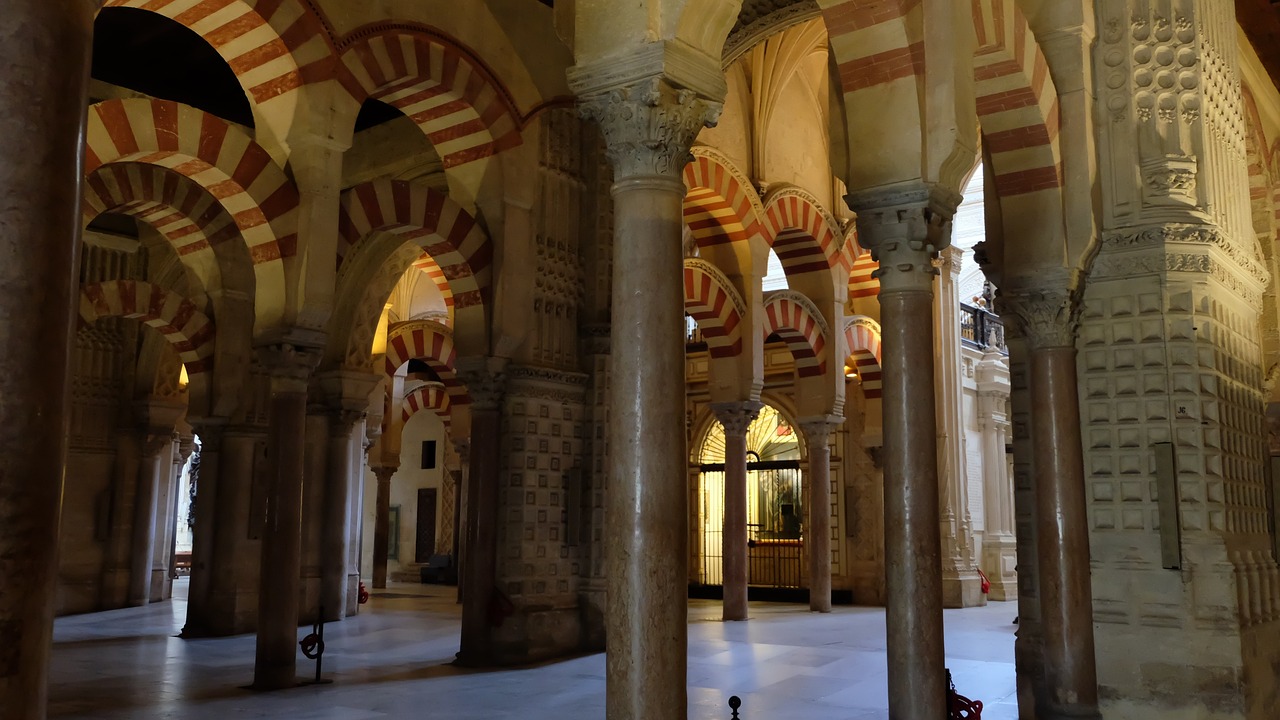
It features a large hypostyle prayer hall with a forest of columns and horseshoe arches supporting the roof.
The arches are alternately coloured red and white, creating a mesmerising visual effect. The mihrab (prayer niche) is exquisitely decorated with intricate mosaics and inscriptions.
The structure also includes a beautiful courtyard with orange trees and a reflecting pool, adding to its serene vibe.
Location/Address
Calle del Cardenal Herrero, 1, 14003 Córdoba, Spain. Click here to view the location of the Great Mosque of Córdoba.
Capacity
While the exact number isn’t known, Mezquita-Catedral de Cordoba can accommodate thousands of worshipers during prayer times.
Its large prayer hall, with its multitude of columns and arches, provides ample space for visitors, tourists, and worshipers.
Is It Still a Mosque, or Has It Been Converted into a Church?
After the Christian Reconquista of Cordoba in the 13th century, the Mosque was converted into a Christian cathedral.
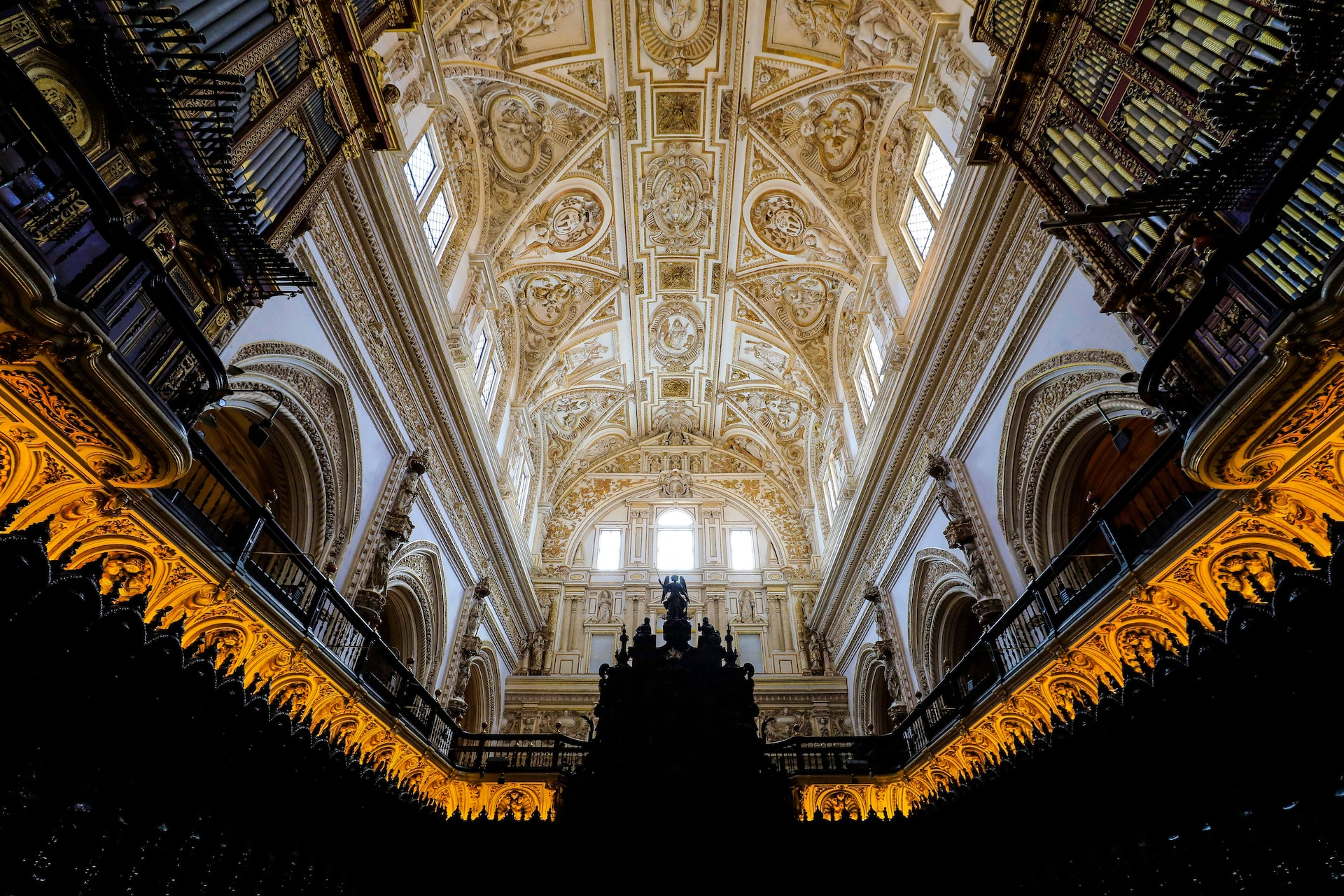
As a result, the Mosque’s Islamic features were preserved, while Christian elements such as chapels and the choir were integrated into the structure.
The cathedral was constructed at the heart of the Mosque’s prayer hall, creating an intriguing fusion of architectural styles and spiritual traditions.
Opening Hours
Monday – Saturday: 10 am to 6 pm.
Religious Festivals and Sundays: 9 am to 10:30 am and 2 pm to 6 pm.
Ticket Prices
Guided Tours cost 40€ per person. However, it is free for children under the age of 8.
The cost of private tours (without a guide) is 10€ per person, 5 € for children (10-14 years old), and free for children under the age of 10
Images
Phone Number
info@mezquitadecordoba.org or informacion@mezquita-catedraldecordoba.es
Opening Date
The construction of the Great Mosque of Cordoba began in the year 785 CE during the rule of Abd al-Rahman I and was opened to the public in 988 CE.
Its expansions and modifications continued through various dynasties and rulers until it reached its present form. The cathedral within the Mosque was consecrated in the 13th century.
Masjid Tarek Ibn Ziyad – Biggest Mosque in Barcelona
Named after the fierce warrior Tariq Ibn Ziyad, Masjid Tarek Ibn Ziyad was made after the Muslim conquest of Barcelona.
The Mosque’s architectural blend of contemporary design and traditional Islamic elements reflects the harmonious coexistence of modernity and tradition.
With its serene ambience and the echoes of prayers that resonate within its walls, Masjid Tarek Ibn Ziyad not only fulfils the spiritual needs of its attendees but also fosters understanding and dialogue among different faiths in the heart of Barcelona.
History
Masjid Tarek Ibn Ziyad, named after the valiant Berber-Muslim general who led the conquest of Hispania in the 8th century, holds an array of historical echoes within its walls.
Founded in the early 9th century, this Mosque is a silent witness to the passage of time and the ebb and flow of empires.
From its inception during the Umayyad Caliphate to surviving the tumultuous eras of Moorish Spain and beyond, the Mosque has imbibed the essence of each era.
Facts
- Masjid Tarek Ibn Ziyad was established in the 9th
- Masjid Tarek Ibn Ziyad is one of Barcelona’s largest and most historic
- The Mosque was named after the Muslim commander Tariq ibn Ziyad.
Design and Architecture
Masjid Tarek Ibn Ziyad’s architecture is a testament to its builders’ skilled craftsmanship.
The Umayyad plus Moorish architectural design of the Mosque includes horseshoe arches, geometric patterns, and ornate calligraphy that adorn the walls.
Location/Address
C/ de Sant Rafael, 10, 08001 Barcelona, Spain.
Capacity
Being the largest Mosque in Barcelona, Masjid Tarek Ibn Ziyad can accommodate thousands of worshippers in its prayer hall.
Is It Still a Mosque, or Has It Been Converted into a Church?
Fortunately, Masjid Tarek Ibn Ziyad is one of the few mosques that haven’t been converted into a church.
Opening Hours
The Mosque is open at all hours.
Ticket Prices
Masjid Tarek Ibn Ziyad is open to the public for free.
Phone Number
There’s no email address associated with Masjid Tarek Ibn Ziyad.
Opening Date
Masjid Tarek Ibn Ziyad was open to worshippers in the 9th century.
Madrid Central Mosque
The Madrid Central Mosque, also known as the Abu-Bakr Mosque, holds a significant place in the history of Islamic architecture and culture in Spain.
It was established as a spiritual and cultural centre for the Muslim community in Madrid.
The Mosque’s history is intertwined with Spain’s rich Islamic past, harkening back to the period of Al-Andalus when Muslim rule left an indelible mark on the region.
In addition to being a place of worship, the Madrid Central Mosque is also used for social, cultural, educational, and charitable purposes.
Due to its proximity to the Strait (Estrecho) Metro Station, the Masjid was also named “Strait Mosque.”
History
After being allotted as Waqf land, a considerable span of time was required to amass adequate individual donations, eventually paving the way for the Mosque’s construction.
Inaugurated in 1988, this establishment marked a historic moment by becoming the first Mosque in the capital since the conclusion of Islamic rule in 1085.
The architectural vision was brought to life by Juan Mora, and it presently serves as the central hub for both the Union of Islamic Communities of Spain and the Islamic Community of Madrid.
The Abu-Bakr Mosque operates under a collaborative agreement with the Community of Madrid and maintains a significant connection with the State through the Islamic Commission of Spain.
Facts
- Abu-Bakr Mosque is the first Masjid built since 1089 AD.
- Juan Mora designed the Mosque.
- Construction of Madrid Central Mosque was completed in 1988.
- It is the headquarters of the Islamic Community of Madrid and the Union of Islamic Communities of Spain.
- Madrid Central Mosque has four floors, including a school, offices, a nursery, an auditorium, a shop, and a library.
Design and Architecture
Masjid-e-Abu Bakr’s design and architecture are greatly inspired by Islamic art and Arab architectural principles.
The four-floor Mosque includes a shop, an auditorium, a library, a school, a nursery, offices, a café, and a mosque. The central dome, minaret, and prayer hall are key features of the Madrid Central Mosque.
Location/Address
Madrid Central Mosque is situated in the Cuatro Caminos neighbourhood of the Tetuán district.
The exact address is Calle Anastasio Herrero, 5, 28020 Madrid, Spain. Click here to view the location of one of the most popular mosques in Spain.
Capacity
Comprising four floors, the Madrid Central Mosque has a generous capacity to accommodate many worshippers.
Is It Still a Mosque, or Has It Been Converted into a Church?
Madrid Central Mosque isn’t only a masjid but the headquarters of the Islamic Community of Madrid and the Union of Islamic Communities of Spain.
The Mosque hosts all of the congregational prayers and is also used for educational, charitable, and cultural purposes.
Opening Hours
Monday – Sunday: 9 am to 10 pm.
Ticket Prices
There is no information available on the ticket price of the Madrid Central Mosque. It is possible that the Mosque does not charge a visitor’s fee.
Images
Phone Number
Opening Date
The Madrid Central Mosque opened its doors to the public in 1988, marking a significant milestone in preserving and continuing Islamic heritage in Spain.
3 Spanish Mosques Converted into Churches
In this section, we will discuss the three Spanish mosques that were converted into Churches after the Christian Reconquista.
Mosque of Cristo De La Luz
Also called Mezquita de Toledo, Cristo de la Luz Mosque is a historic religious site in Toledo, Spain. Holding significant architectural and historical importance, the Cristo de la Luz Mosque represents the religious and cultural transition that occurred in Spain over centuries.
It was also one of the ten blessed ancient mosques that stood during the Moorish era. Like most Islamic monuments, the Cristo de la Luz Mosque was later converted into a church in 1085 CE. Cristo de la Luz Mosque is one of the best-preserved mosques in Spain.
History
Originally built during 999 CE under the rule of the Umayyad Caliphate, the Mosque served as a place of worship for the Muslim community in Toledo. According to scriptures, Ahmad ibn Hadidi paid for the construction of the Mosque out of his own pocket.
It showcases a distinctive blend of Islamic architectural elements, such as horseshoe arches and intricate stucco decorations, which are characteristic of the Moorish style.
Facts
- The name “Cristo de la Luz” (Christ of the Light) was given to the Mosque after the Christian conquest of Toledo, reflecting its transformation into a Christian religious site.
- Cristo de la Luz Mosque measures 8×8 metres.
- Cristo de la Luz Mosque was constructed in 999 CE and was converted into a Church in 1085 CE.
- Cristo de la Luz Mosque was also called Bab al-Mardum Mosque.
Design and Architecture
Showcasing a blend of the Visigothic and Moorish cultures, Cristo de la Luz Mosque consists of geometric patterned small stone and brick walls, white-coloured horseshoe arches, and Islamic inscriptions on the wall.
The 8×8 square-shaped building has 4 columns that further divide into 9 parts. However, in 1186 CE, Cristo de la Luz Mosque was transformed into a chapel, resulting in the destruction of the mihrab and Qibla wall.
Cristo de la Luz Mosque features a beautiful garden and glass floors to preserve the authentic architectural design of the Moorish period.
Location/Address
Cristo de la Luz Mosque is located at Calle Cristo de la Luz, s/n, 45002 Toledo, Spain. Click here to view the exact location of Cristo de la Luz Mosque on Google Maps.
Capacity
Measuring 8×8 metres only, Cristo de la Luz Mosque isn’t particularly large and was likely designed to accommodate a moderate number of worshipers during its use as a mosque.
Is It Still a Mosque, or Has It Been Converted into a Church?
After Toledo was recaptured by Christian forces in the late 11th century, the Mosque transformed. It was consecrated as a Christian church, and an altar was added.
The Mosque’s original architectural elements were preserved, but new Christian iconography and religious features were integrated.
Upon stepping inside, Muslims can feel the religious spirit of the Mosque, especially after reading the Kufic script inscriptions on the walls.
Opening Hours
The Cristo de la Luz Mosque welcomes visitors from Monday to Sunday, with opening hours varying based on the season. Plan your travel accordingly.
March 1st to October 15th: 10am to 6:45pm
October 16th to February 28th: 10:00 am to 05:45 pm
Ticket Prices
- General Ticket:80 €
- Accredited Groups:40 €
- Minors Under 11: Free
Phone Number
+34 925 25 41 91
mezquitaermitacristodelaluz@gmail.com
Opening Date
The construction of the Cristo de la Luz Mosque was completed in 390 AH in the month of Muharram.
Giralda (The Great Mosque of Ishbiliya)
Standing as an emblem of historical significance and architectural marvel, the Giralda Tower is one of the most popular tourist sites in Spain.
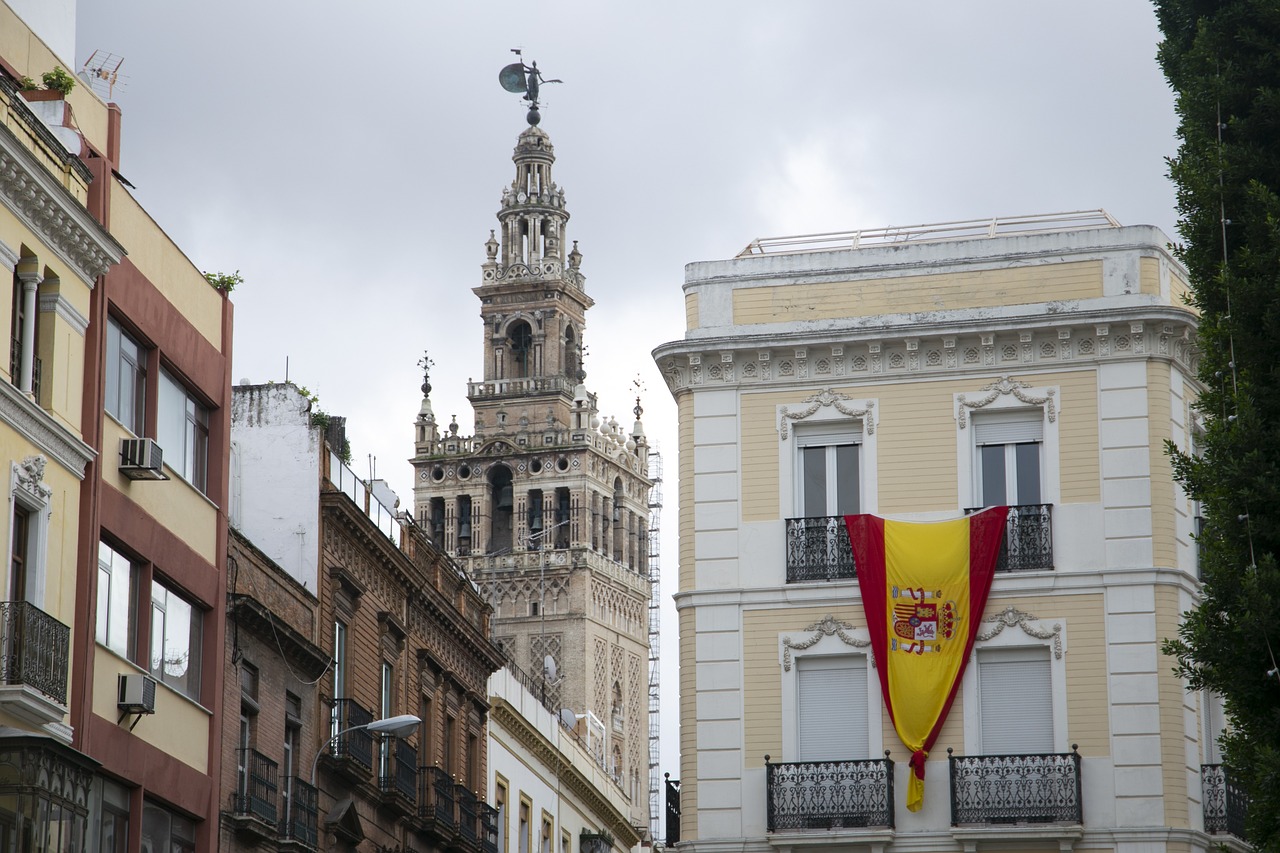
Originally belonging to the Great Mosque of Ishbiliya, the Giralda tower showcases the power of Islam and the peace and harmony that prospered during the Umayyad Era.
History
The Great Mosque of Ishbiliya also recognised as the “Muvahiddin Mosque,” was constructed in 1171 during the reign of Abu Ya’qub Yusuf. It was built on the present-day location of the Seville Cathedral.
Designed with a rectangular layout, the Mosque featured a porticoed courtyard on its northern facade, with the notable Puerta del Perdón, the largest entrance among the three, still extant today.
Tragically, the Mosque suffered extensive damage from the earthquake in 1356, decimating much of its structure, except for the minaret and the courtyard named “Patio de los Naranjos” in Spanish.
Following the invasion of Ishbiliye by King Fernando III of Castille in 1248, the Grand Mosque of Ishbiliye underwent a transformation into a cathedral. Serving as a cathedral for almost two centuries, the Mosque’s primary edifice was entirely dismantled in 1434 to make way for the construction of the Seville Cathedral.
The minaret that once belonged to the Ishiliye Mosque underwent a conversion into a bell tower, subsequently integrated into the cathedral’s architecture completed in 1507. Notably, in 1568, the addition of a rotating statue atop the minaret led to its popular designation as the Giralda.
Facts
- Rising to a height of 343 feet (104.1 metres), the Giralda was one of the tallest structures of its time and still dominates the skyline of Seville.
- The Giralda was actually the minaret of the Great Mosque of Ishbiliya.
- It was originally built in the year 1171.
- The Giralda Tower is 341.5 feet (104.1 metres) in height.
- The Giralda Tower was added by UNESCO to the World Heritage List in 1987.
Design and Architecture
As stated earlier, Giralda is not actually a mosque but a 341.5 feet (104.1 metres) sky-high minaret of the Great Mosque of Ishbiliya. The lower section of the minaret is unmistakably Almohad, with its intricate brickwork patterns and horseshoe arches.
As the tower rises, the upper portion reflects Renaissance influences, featuring classical columns and a statue known as “El Giraldillo,” which represents triumph over adversity.
This amalgamation of styles symbolises the city’s diverse cultural past.
Location/Address
Avenida de la Constitucion s/n, 41004 Seville, Spain. Click here to view the location.
Capacity
The capacity of the Giralda tower is unknown.
Is It Still a Mosque, or Has It Been Converted into a Church?
The Giralda Tower is no longer a mosque. Following the Reconquista, it became part of the Seville Cathedral complex. The tower’s role transformed from a minaret to a bell tower and remains an integral part of the cathedral.
Opening Hours
- Monday: 11 am – 3:30 pm
- Tuesday – Saturday: 11 am – 5 pm
- Sunday: 2:30 pm – 6 pm
Ticket Prices
- General Ticket: €9
- Reduced Admission: €9
- Audio Guide: €3
Images
Phone Number
Opening Date
The foundation of the Giralda Tower was laid in 1171. However, it was renovated into a ring tower in 1248 and then was revamped again in the late 16th and mid-17th century.
The Mosque of Almonaster la Real
Built in the 10th century, the Mosque of Almonaster la Real is a uniquely shaped stone and built building.
Featuring the authentic Visigoth architectural design, the Mosque of Almonaster la Real is located on a hill inside a castle that overlooks the Almonaster la Real village, hence its name.
The Mosque was renovated into a church after Christians regained control of Spain.
History
The history of the Mosque of Almonaster la Real traces back to the 10th century when the region was under the rule of the Umayyad Caliphate of Córdoba.
At this time, the Mosque was constructed as a worship centre for the Muslim community residing in the city.
This period marked the zenith of Islamic rule in the Iberian Peninsula, bringing with it a flourishing of art, science, and architecture.
However, with the passage of centuries, the region witnessed the ebb and flow of power dynamics. As Christian forces reconquered Spain, the Mosque transformed.
In the 13th century, during the reign of King Ferdinand III, the Mosque was converted into a Christian church. This transition encapsulates the historical and religious shifts that marked the region’s complex past.
Facts
- The Mosque of Almonaster la Real was built in the 10th century during the caliphate of Abd al-Rahman III.
- Sixteen tombs were discovered in the Mosque’s oration room.
- In 1931, the Mosque of Almonaster la Real was declared a National Monument.
Design and Architecture
The Mosque of Almonaster la Real has a trapezoidal architectural structure and is divided into three distinct sections: the prayer hall, a minaret tower, and a courtyard of ablutions.
Within the prayer hall, a layout of 5 minor naves is discernible. Notably, the central nave boasts a distinctive covering comprising a hemispherical dome and intricate brick arches.
While the rock facade courtyard is still intact, the brick and stone minaret tower has undergone various expansions and extensions over time.
Location/Address
Castillo, 10, 21350 Almonaster la Real, Huelva, Spain. Click here for the location.
Capacity
The capacity of the Mosque of Almonaster la Real remains unknown.
Is It Still a Mosque, or Has It Been Converted into a Church?
Today, the Mosque of Almonaster la Real stands as a church, inviting individuals to tour the architectural marvel.
Opening Hours
Monday to Sunday: 9 am to 8:30 pm.
Ticket Prices
There is no entrance fee.
Phone Number
Opening Date
The Mosque of Almonaster la Real was open to the public in the 10th century. However, the exact date is unknown.
How Many Mosques Were Destroyed in Spain?
During the Muslim rule in al-Andalus, there existed possibly thousands of mosques in Spain.
However, a majority of the religious buildings and Masjids were converted either into churches or demolished after the Christians regained control of Spain in 1492 (Reconquista).
According to the 2018 report by the Observatory of Religious Pluralism in Spain (El Observatorio del Pluralismo Religioso en España), approximately 1588 Muslim worship places were constructed in Spain.
However, as per another source, there were over 137 mosques in Grenada and about 3,000 mosques in Cordoba alone in the 10th century. These mosques served over 1.5 million Spanish Muslims during the Umayyad Era.
Alhambra Mosque
The Alhambra’s creation was not attributed to a singular ruler, but instead, it emerged as the collaborative effort of successive leaders within the Nasrid dynasty.
History
The Alhambra is a historic building — a palace and fortress complex located in Granada City, Spain. Its history dates back to the 9th century when the original structure was constructed as a small fortress.
However, the most significant developments and expansions occurred during the Nasrid Dynasty in the 13th and 14th centuries.
The Nasrid rulers transformed the fortress into a stunning palace complex that combined Islamic architecture and art with elements of Andalusian culture.
Facts
- The name “Alhambra” is derived from the Arabic words “al-Qal’a al-Hamra,” which means “the Red Fortress” due to the colour of its walls.
- It is a UNESCO World Heritage Site, recognised for its exceptional architecture and cultural significance in 1984.
- The Alhambra is renowned for its intricate tilework, geometric patterns, and lush gardens.
Design and Architecture
The architecture and design of the Alhambra Palace stand as a captivating fusion of Islamic artistry, Moorish craftsmanship, and Andalusian aesthetics.
The Nasrid Palaces, at the heart of the complex, are a testament to the mastery of architectural geometry and spatial arrangement.
The Palacio de los Leones (Palace of the Lions) boasts a central courtyard adorned with a breathtaking fountain supported by intricately sculpted marble lions – an emblem of the harmony between human ingenuity and the natural world.
Wooden ceilings adorned with intricate designs add to the allure, while the Generalife gardens extend an invitation to serenity with their terraced layout, bubbling water channels, and meticulously cultivated flora.
Location/Address
The Alhambra is located on Calle Real de la Alhambra, s/n, 18009 Granada, Spain.
If you want to travel to the Alhambra, click here to see the location on Google Maps.
Capacity
The capacity of the Alhambra varies based on the specific areas visitors are allowed to access. It receives a large number of visitors annually.
Is It Still a Mosque, or Has It Been Converted into a Church?
The Alhambra was originally built by the Nasrid Dynasty as a Muslim palace and fortress.
However, after the Reconquista (the Christian reconquest of Spain), the building was not converted into a church.
Instead, some parts were repurposed for Christian use, but the majority of the architectural and artistic features of the Nasrid period were preserved.
Today, Santa Maira de le Alhambra, a catholic church, stands on the site of Alhambra Mosque.
Opening Hours
1st April to 14th October
- Monday – Sunday: 8:30 am to 8 pm
- Ticket Office: 8 am to 8 pm
15th October to 31st March
- Monday – Sunday: 8:30 am to 6 pm
- Ticket Office: 8 am to 6 pm
Ticket Prices
- Adults: 19.09€
- Children between 12 and 15 years old: 12.73 €
- Children under 12: Free admission
Images
Phone Number
+34 677 417 790 or +34 958 027 971
informacion.alhambra.pag@juntadeandalucia.es.
Opening Date
The exact opening date of the Alhambra Mosque is unknown.
Great Mosque of Almeria
The Great Mosque of Almeria, also known as the Mezquita de Almería, is a historic architectural gem in Almeria, Spain.
This famous Mosque holds a significant place in the region’s history, reflecting the cultural and architectural influences of various civilisations that have shaped its evolution.
Mezquita de Almería was transformed into a San Juan church after Christians regained power in Spain.
History
The Great Mosque of Almeria was originally constructed during the 10th century when Almería was under the rule of the Umayyad Caliphate of Córdoba.
The Mosque was built during the reign of Caliph Abd ar-Rahman III.
It served as a place of worship and a centre of learning for the Muslim community in the region.
After being converted into a church, the Great Mosque of Almeria was destroyed in the 1522 earthquake, and all that remained was the mihrab alcove and the qibla wall.
Facts
- The Great Mosque of Almeria was established in the 10th
- The Great Mosque of Almeria was built during the reign of Abd ar-Rahman III.
- After being converted into a church, the name of the Mosque was changed to Church of San Juan.
Design and Architecture
The Mosque’s architecture showcases a rectangular layout with a prayer hall featuring a central nave flanked by aisles.
The Great Mosque of Almeria also featured a quadrangular mihrab, a lemon-plated patio, and a central fountain.
According to Islamic history, Mezquita de Almería was a part of Alcazaba of Almeria, a larger fortified complex that contained a palace, homes, and public baths.
Location/Address
The Great Mosque of Almeria is located on Plaza de la Constitución, s/n, 04003 Almería, Spain Almería. Click here to view the directions.
Capacity
The Great Mosque of Almeria can accommodate over 9000 worshippers.
Is It Still a Mosque, or Has It Been Converted into a Church?
The Great Mosque of Almeria has undergone various transformations over the centuries.
Following the Reconquista, the Christian conquest of the Iberian Peninsula, the Mosque was converted into the Church of San Juan.
The building was consecrated as the Cathedral of the Incarnation (Catedral de la Encarnación) and underwent subsequent modifications to align with Christian architectural styles.
Opening Hours
- Summer (April to October): 9 pm to 2 pm.
- Winter (November to March): 9 pm to 6 pm.
Ticket Prices
- Standard Ticket: 3-5 €
- Group Ticket (10 people): 2-5 €
- Reduced Ticket: 1-5 €
Images
Phone Number
Unfortunately, there’s no valid email address to contact the Great Mosque of Almeria.
Opening Date
The original Great Mosque of Almería was likely constructed in the 10th century. Following its conversion into the Cathedral of the Incarnation, it underwent modifications and renovations over the centuries.
The conversion into a cathedral marked a significant transition in its history after the Reconquista.
Alcazar of Jerez de la Frontera Mosque
An illustrious and commanding monument deeply ingrained in Spain’s historical narrative, the Moorish rulers of Andalusia originally erected the Alcazar Jerez de la Frontera during the 11th century.
Distinguished by its grand towers and formidable 4000-metre walls, the balcony of the Alcazar Jerez de la Frontera Mosque offers a panoramic view of the town below.
History
The Alcazar of Jerez de la Frontera Mosque traces its origins back to the 11th century during the rule of the Almoravid dynasty.
This famous Mosque was constructed during a time when the Iberian Peninsula was under Islamic rule, a period known for its remarkable architectural achievements.
The Mosque served as a place of worship and spiritual reflection for the Muslim community in Jerez de la Frontera.
Following the 13th-century Christian conquest, the Mosque went through various renovations to align with the Christian architectural styles.
Facts
- Alcazar of Jerez de la Frontera Mosque is one of the first Islamic monuments built in the 11th
- After the Christian Reconquista, the Mosque served as a residential space for the Cadiz governors.
- In 1931, Alcazar of Jerez de la Frontera Mosque was marked by UNESCO as a world heritage site.
- Alcazar of Jerez de la Frontera Mosque is the region’s only Masjid that is preserved in its original state out of 18 others.
Design and Architecture
The 4000-metre-wide Mezquita, or Mosque, stands as a remarkable survivor among the 18 mosques that once graced the Moorish Jerez.
Originally a small private oratory, it boasts a minaret, a courtyard with a central fountain for ablutions, and a prayer hall crowned by a mihrab, indicating its orientation towards Mecca.
While the Mosque underwent a transformation into a Christian chapel dedicated to Saint Mary, its architectural elements, including the octagonal dome and the intimate atmosphere, still exude a sense of spiritual sanctity.
The Alcázar’s structures reflect its diverse history. Islamic remnants, such as the Puerta del Campo gateway and the Torre Octógonal watchtower, harken back to the rule of the Almohad Dynasty.
Location/Address
Alcazar of Jerez de la Frontera Mosque is located within the Alcazar of Jerez de la Frontera complex. Address: Alameda Vieja, s/n, 11408 Jerez de la Frontera, Cádiz, Spain.
Capacity
Having a 4000-metre ground space, the Alcazar of Jerez de la Frontera Mosque can easily accommodate hundreds of worshippers.
Is It Still a Mosque or Has It Been Converted into a Church?
Today, hundreds of years later, the former Mosque remains a significant cultural landmark that reflects the city’s complex history. The architecture is a visual chronicle of the successive civilisations that have shaped the region.
Visitors to the site can explore the remnants of the Mosque’s Islamic origins while also experiencing the subsequent Christian modifications that have left an indelible mark on its design.
Opening Hours
October 1st to June 30th:
- Monday – Friday: 09:30 am – 02:30 pm
July 1st to September 30th:
- Monday – Friday: 09:30 am – 05:30 pm
- Saturday – Sunday: 09:30 am – 02:30 pm
Ticket Prices
- General Ticket: 5 €
- Group Ticket: 4 € per person
Images
Phone Number
The only way to contact the Alcazar of Jerez de la Frontera Mosque management is through the aforementioned phone number.
Opening Date
The Alcazar of Jerez de la Frontera Mosque was inaugurated in the 11th century. However, the exact date remains unknown.
List of Former Mosques in Spain
Below, you will find a list of former masjids in Al-Andalus that have been identified with original buildings or still have ruins of the existing Mosque on the premises:
- Great Mosque of Cordoba
- Mezquita Bab-al-Mardum
- Great Mosque of Seville
- Mezquita de Almonaster la Real
- Mosque of las Tornerías
- Mezquita del Alcázar de Jerez la Frontera
- Aljama Masjid of Madinat al-Zahra
- Mezquita de Tortoles
- Al-Dabbagin Masjid
- Small Royal Mosque inside Aljaferia Palace
- Iglesia de El Salvador, Toledo
- Masjid al-Ta ibin, Mezquita de los Conversos
- San Sebastian Minaret (Alminar De San Sebastian)
- Iglesia de Santigo del Arrabal, Toledo
- Alminar de San Juan
- Church of Nuestra Señora de la Encarnacion
Listed below are the mosques in Spain that were completely destroyed, and the ruins remained undiscovered to date:
- Great Mosque of Zaragoza (Aljama de Saraqusta, Mezquita Mayor de Zaragoz)
- Mosque of Ibn Abbas
- Aljama Mosque of Mayrit
- Nasrid Great Mosque of Granada
- Basílica de Santa María de la Asunción
- Baza Cathedral
- Guadix Cathedral
- Valencia Cathedral
- Santa Catalina, Valencia
- Old Cathedral of Lleida
- Iglesia de San Román, Toledo
- Mimbar de Alfacar
- Church of Santa Maria de Tarifa
- Iglesia de San Mateo
Summary – Mosques in Spain
Conquered by Muslims in the year 711 CE, Spain underwent a transformative journey religiously, economically, and socially.
Despite the challenges posed by the Reconquista, several mosques and churches remain a reminder of Islam and Arab architecture.
If you are planning a halal travel or vacation vacation, visit any of the aforementioned mosques in Spain.
Use the opportunity to learn and explore Islamic history and reflect on how the religion has shaped the nation’s identity
]]>From the bustling markets of Damascus to the ancient alleys of Aleppo, these mosques stand as architectural marvels, reflecting the nation’s intricate past and enduring devotion.
Each mosque tells a unique story, carrying the whispers of worshippers and the echoes of history. Read this guide on Mosques in Syria and as we explore ten remarkable mosques that have etched their beauty into Syria’s tapestry.
How Many Mosques Are There in Syria?
Syria is a land steeped in religious heritage, with mosques serving as essential hubs for communal worship and cultural gatherings. While the precise number may vary due to ongoing developments, it’s estimated that there are thousands of mosques across the country.
These mosques, ranging from small neighborhood sanctuaries to grand historical complexes, embody the rich spiritual fabric of Syria and underscore its role as a center of Islamic civilization.
Each mosque contributes to the vibrant mosaic of Syrian life, bridging the past with the present through its architectural and cultural significance.
How Many Muslims Are in Syria?
Syria, a nation at the crossroads of history and culture, has been home to a predominantly Muslim population for centuries.
As of the latest available data, approximately 87% of Syrians identify as Muslims. This religious composition has significantly influenced the country’s customs, traditions, and societal norms.
Umayyad Mosque in Aleppo (the Great Mosque of Damascus)
The Umayyad Mosque in Aleppo is an luminous gems within Syria’s architectural crown, each encapsulating its own unique narrative.
Umayyad Mosque, Aleppo: Standing proudly in Aleppo, the Umayyad Mosque, also known as the Great Mosque of Damascus, is a remarkable synthesis of architectural styles spanning centuries.
Its towering minaret, an emblem of medieval Islamic architecture, graces the city’s skyline. Within its sacred confines lies a rich history that mirrors the city’s own evolution, from the Umayyad era to Ottoman influences.
The mosque has weathered the ravages of time and conflict, remaining a beacon of resilience and a testament to Aleppo’s enduring spirit.
Through it’s architectural elegance and historical resonance, encapsulate the essence of Syria’s cultural and spiritual tapestry, offering a glimpse into the profound connections between faith, heritage, and identity.
Largest Mosque in Syria
The Umayyad Mosque in Damascus claims the title of the largest mosque in Syria. Its grandeur and historical significance have made it a symbol of Islamic architecture and cultural heritage.
Interior of Umayyad Mosque
Step inside the Umayyad Mosque to witness a breathtaking blend of intricate design, ancient calligraphy, and serene ambiance—a sacred space that echoes centuries of devotion.
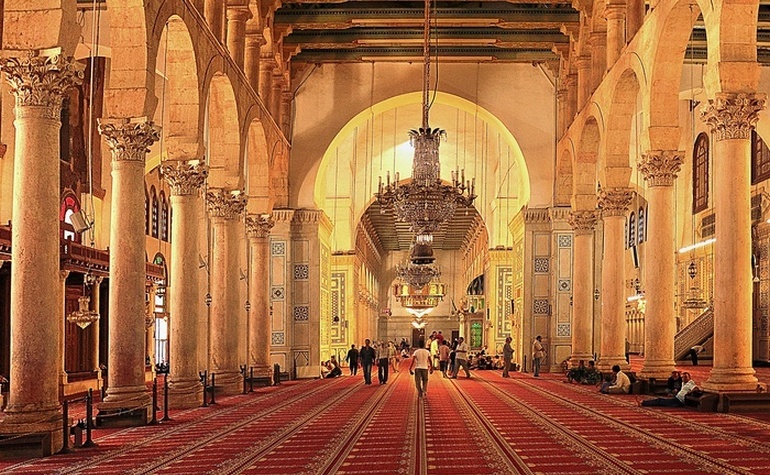
Minaret of Umayyad Mosque
The mosque’s towering minaret punctuates the skyline, a marvel of architecture dating back to 727 CE. Its elegant form and historical resonance continue to inspire.
Mosaics of Umayyad Mosque
Adorned with vibrant mosaics, the Umayyad Mosque narrates stories of faith and artistry. These meticulously crafted designs reflect a rich cultural legacy and aesthetic prowess.
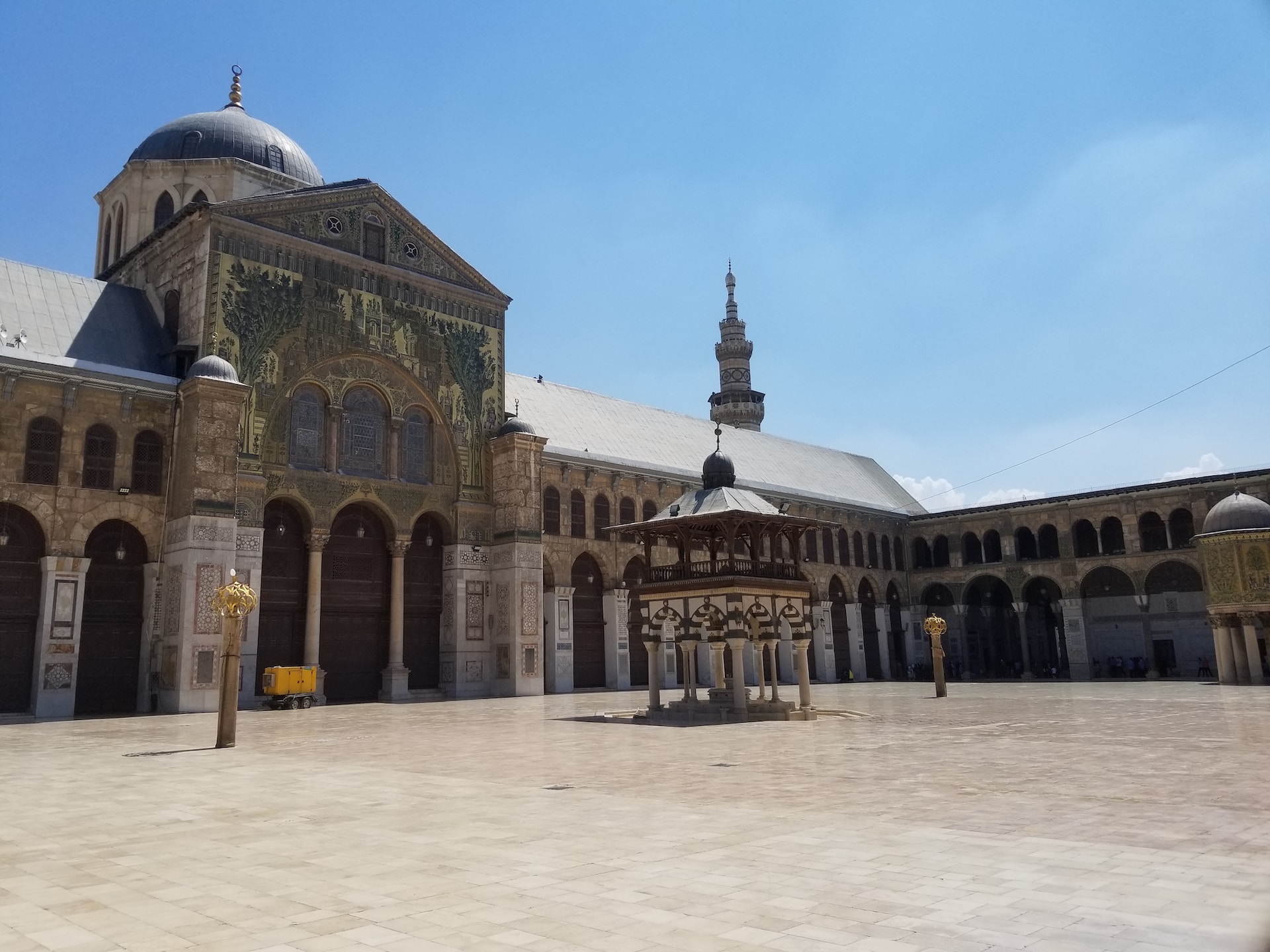
Sayyidah Zaynab Mosque
The Sayyidah Zaynab Mosque, nestled in the heart of Damascus, is a revered site for Shiite Muslims. Its history traces back to the Umayyad period, gaining prominence as a place of spiritual solace.
The mosque’s architecture marries traditional and contemporary elements, with its iconic blue dome catching the eye.
- Address: Sayyidah Zaynab, Damascus.
- Capacity: Accommodates thousands of worshippers.
- It remains a mosque, embodying the essence of Shiite devotion.
- Opening hours vary with prayer times.
- No entry fee is required, as it’s open to all.
- Images of the mosque depict its majesty, attracting visitors worldwide.
- The mosque’s origins date back to the Umayyad era, solidifying its historical significance in the tapestry of Damascus.
Sayyidah Ruqayya Mosque
The Sayyidah Ruqayya Mosque, an emblem of reverence for Shiite Muslims, resides in Damascus. With origins dating back centuries, it holds deep spiritual importance. Its intricate architecture and serene ambiance invite reflection.
- Location: Sayyidah Ruqayya, Damascus.
- Capacity: A sanctuary for numerous worshippers.
- It continues to serve as a mosque, cherishing its Shiite heritage.
- Visiting hours are subject to prayer times.
- No admission fee is enforced.
- Images showcase the mosque’s grandeur.
- The mosque stands as a testament to Syria’s rich religious history.
Al-Omari Mosque
The Al-Omari Mosque, situated in Daraa, stands as a tribute to Islam’s legacy. Steeped in history, it has witnessed epochs of change. Its architectural brilliance reflects a blend of styles.
- Address: Al-Omari Mosque, Daraa.
- A mosque since its inception, it retains its sacred purpose.
- Visiting hours are tailored around prayer schedules.
- Entry is free of charge.
- Images capture the mosque’s timeless allure.
- The mosque’s foundation signifies the roots of faith and community.
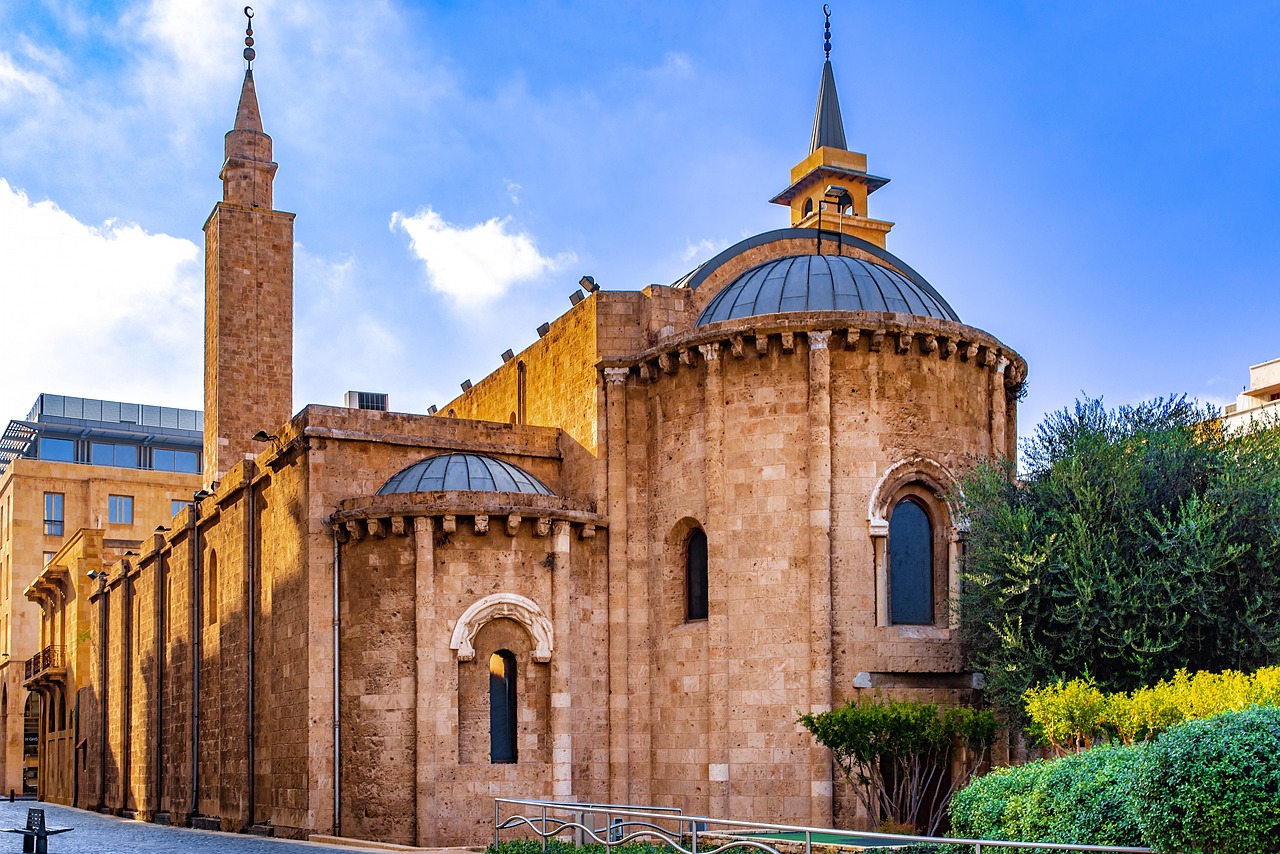
Sulaymaniyya Takiyya Mosque
The Sulaymaniyya Takiyya Mosque, located in Aleppo, is a testament to Ottoman architectural ingenuity. Built during the rule of Sultan Suleiman the Magnificent, it combines mosque and takiyya (Sufi lodge) elements. Its intricate façade and meticulous tilework mirror Ottoman aesthetics.
- Address: Sulaymaniyya Takiyya, Aleppo.
- Capacity: Welcomes a sizable congregation.
- It remains a mosque, embodying Aleppo’s spiritual diversity.
- Visiting hours vary.
- No entry fee is imposed, making it accessible to all.
- Pictures capture the mosque’s captivating details.
- Since its completion in 1557, the mosque has been a beacon of faith and artistic brilliance.
Nabi Habeel Mosque
The Nabi Habeel Mosque, found in Aleppo, holds religious significance for Muslims and Christians alike.
Tradition attributes it to Abel’s burial site. Its simple yet powerful design reflects its historical depth.
- Location: Nabi Habeel, Aleppo.
- The mosque preserves its original function, unifying diverse communities.
- Visiting hours align with prayers.
- No entry fee is mandated, promoting inclusivity.
- Images capture the mosque’s serene atmosphere.
- With origins rooted in shared reverence, the mosque bridges religious divides.
Sinan Pasha Mosque
The Sinan Pasha Mosque, situated in Damascus, stands as a testament to Ottoman elegance.
Designed by renowned architect Mimar Sinan, it showcases intricate details and harmonious proportions.
- Address: Sinan Pasha, Damascus.
- Capacity: Provides a space for worshippers to gather.
- A mosque since its inception, it commemorates Ottoman rule.
- Visiting hours correspond to prayer times.
- Entry is free, fostering accessibility.
- Images exhibit the mosque’s architectural finesse.
- Constructed in 1590, the mosque is an enduring emblem of Ottoman influence.
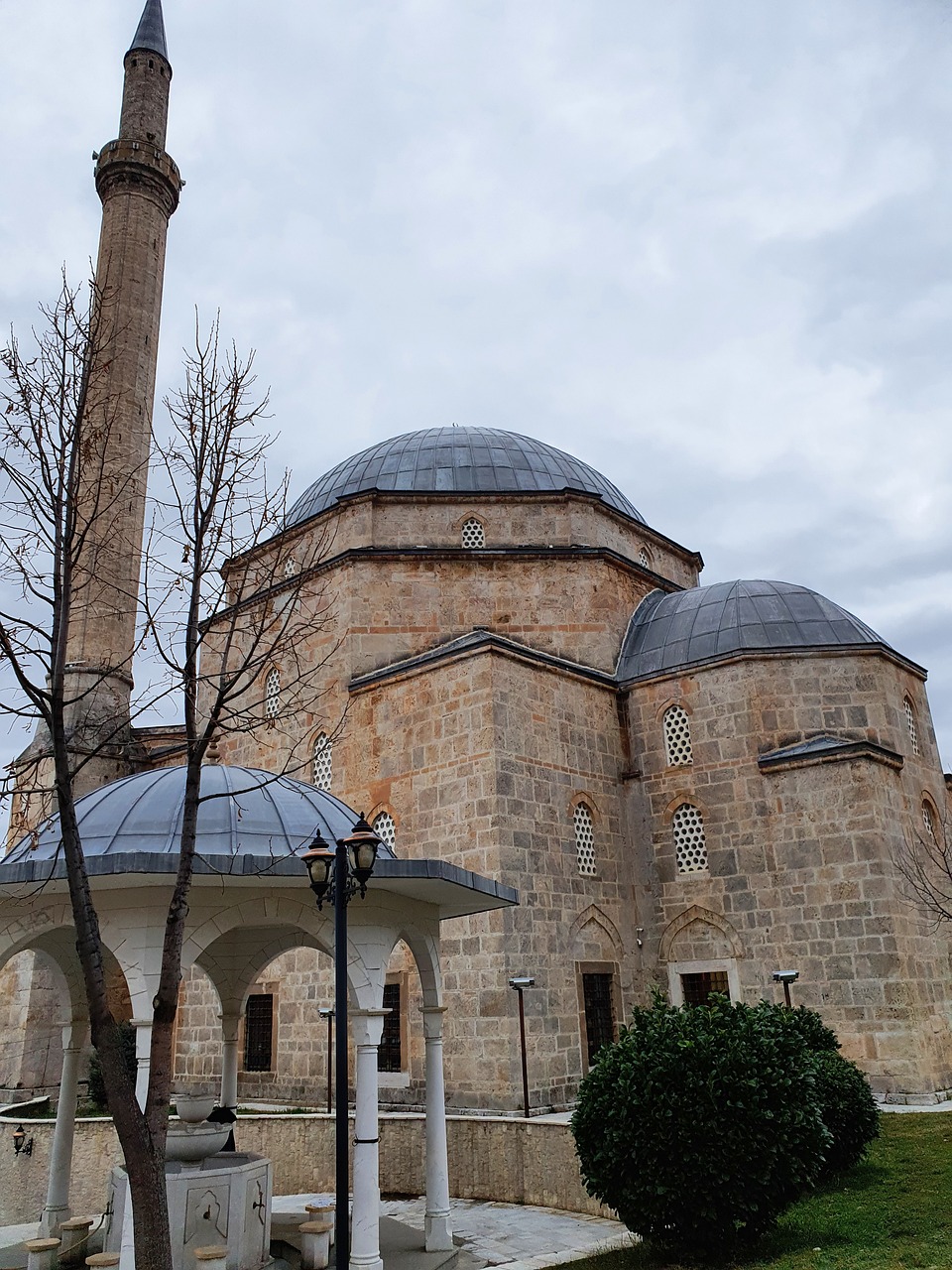
Aqsab Mosque
The Aqsab Mosque, located in Damascus, is a tranquil haven reflecting early Islamic architecture.
Built during the Umayyad era, its historical significance is palpable.
- Location: Aqsab Mosque, Damascus.
- Capacity: Welcomes worshippers and history enthusiasts alike.
- It remains a mosque, echoing the Umayyad legacy.
- Visiting hours coincide with prayers.
- No entry fee is enforced.
- Images showcase the mosque’s timeless charm.
- Since its establishment in the 8th century, the mosque whispers tales of an illustrious past.
Nur al-Din Mosque
The Nur al-Din Mosque, a gem of Aleppo’s skyline, honors the legacy of Nur al-Din Zangi, a medieval ruler.
Its construction in the 12th century marked a shift towards intricate architectural details.
- Address: Nur al-Din Mosque, Aleppo.
- Capacity: Provides a sacred space for worshippers.
- It stands as a mosque, embodying historical continuity.
- Visiting hours align with prayers.
- No entry fee is charged.
- Images capture the mosque’s eternal beauty.
- Since its establishment, the mosque has borne witness to Aleppo’s evolution, reflecting a blend of faith and history.
Khalid Ibn Al-Walid Mosque
The Khalid Ibn Al-Walid Mosque in Homs pays homage to the celebrated Muslim commander Khalid Ibn Al-Walid.
Its contemporary design embraces modern elements while preserving a deep reverence for his legacy.
- Location: Khalid Ibn Al-Walid Mosque, Homs.
- Capacity: Offers a haven for worshippers.
- It continues to function as a mosque, commemorating his achievements.
- Visiting hours accommodate daily prayers.
- No entrance fee is enforced.
- Pictures highlight the mosque’s distinctive design.
- This mosque, established in the 20th century, stands as a tribute to a revered military strategist.
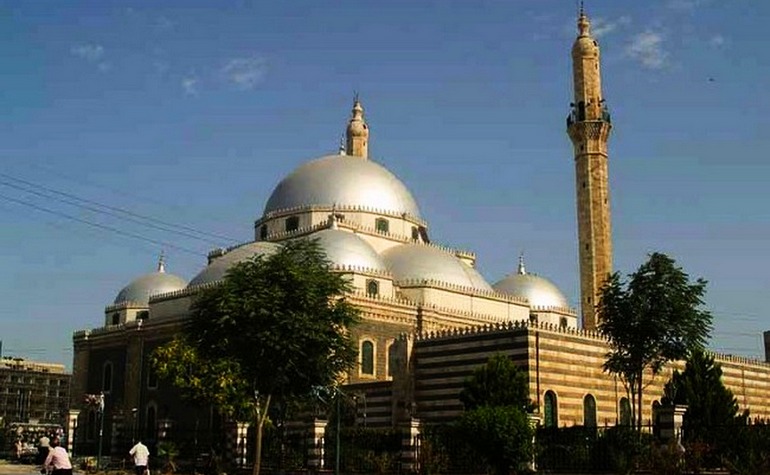
Other Islamic Landmarks in Syria
- Minaret of Prophet Isa (AS): Rising from the enchanting landscapes, the Minaret of Prophet Isa (AS) holds an air of mystery. Linked to the prophet Jesus (AS), its presence speaks to the shared reverence between Islam and Christianity, embodying interfaith connections.
- Shrine of Yahya (AS): The Shrine of Yahya (AS), also known as the Shrine of John the Baptist, stands as a sacred site echoing stories of devotion. This revered location is a testament to the respect Islamic tradition holds for Yahya (AS) and his role in connecting faiths.
- Tomb of Bilal (AS): The Tomb of Bilal (AS), a companion of Prophet Muhammad (peace be upon him), is a cornerstone of Syria’s Islamic heritage. It serves as a tribute to Bilal’s unwavering commitment to the faith, symbolizing the values of equality and justice within Islam.
Summary – Mosques in Syria
We hope you enjoyed reading our guide on ‘Mosques in Syria’. To sum it up, Syria’s mosques embody a fusion of faith, history, and architecture.
From the grandeur of the Umayyad Mosque in Damascus to the intimate sanctuaries of Aleppo, these places of worship narrate tales of devotion and resilience.
Each minaret, mosaic, and dome carries the legacy of a nation woven with threads of faith.
]]>Among the treasures hidden within the vast landscapes are the mosques that stand as silent sentinels of time, carrying with them tales of devotion, resilience, and the spread of Islam.
As we embark on a journey through history, let us unveil the stories of the oldest mosques in Africa.
When Did Islam First Reach Africa?
During the 7th century CE, during the era of the Prophet Muhammad (PBUH), the light of Islam began to cast its glow beyond the Arabian Peninsula.
In the decades following the Prophet’s (PBUH) death, Muslim traders and explorers ventured into the African continent, traversing the vast Sahara and navigating the intricate web of trading routes that connected North Africa to sub-Saharan realms.
The historical record points to a pivotal moment in the early spread of Islam in Africa: the journey of a group of Sahaba (companions of the Prophet Muhammad PBUH) who sought refuge from persecution in the Kingdom of Axum, situated in modern-day Ethiopia.
This migration of companions marked the first known interaction between Islam and Africa, predating even the famous spread of Islam into Spain.
However, it wasn’t until later centuries that Islam truly took root across the continent.
As we delve into the chronicles of Africa’s oldest mosques, we will witness the architectural marvels that testify to the enduring spiritual and cultural connections between Africa and the Islamic world.
Top 10 Oldest Mosques in Africa 2023
Mosques are more than just architectural marvels. They are embodiments of faith, witnesses to the passage of time, and vessels of culture.
Learn about Africa’s ten oldest mosques that weathered the ages.
These mosques unveil stories of devotion, conquests, and the fusion of cultures, offering a window into the intricate relationship between faith and history.
1. As-Sahaba Mosque – The Oldest Mosque in Africa
The journey through Africa’s oldest mosques takes us to the heart of Eritrea, where the As-Sahaba Mosque, also known as the mosque of the companions, stands as a testament to the enduring legacy of Islam in the continent.
Situated in the port city of Massawa, this ancient mosque boasts a history that spans more than a millennium, cementing its standing as a cornerstone of African Islamic heritage.
The mosque’s design, characterized by its simple yet elegant architecture, draws inspiration from the early Islamic architectural styles prevalent in the Arabian Peninsula.
Its significance extends beyond its architectural merits.
It serves as a beacon of faith, resilience, and unity, mirroring the values that Islam imparts.
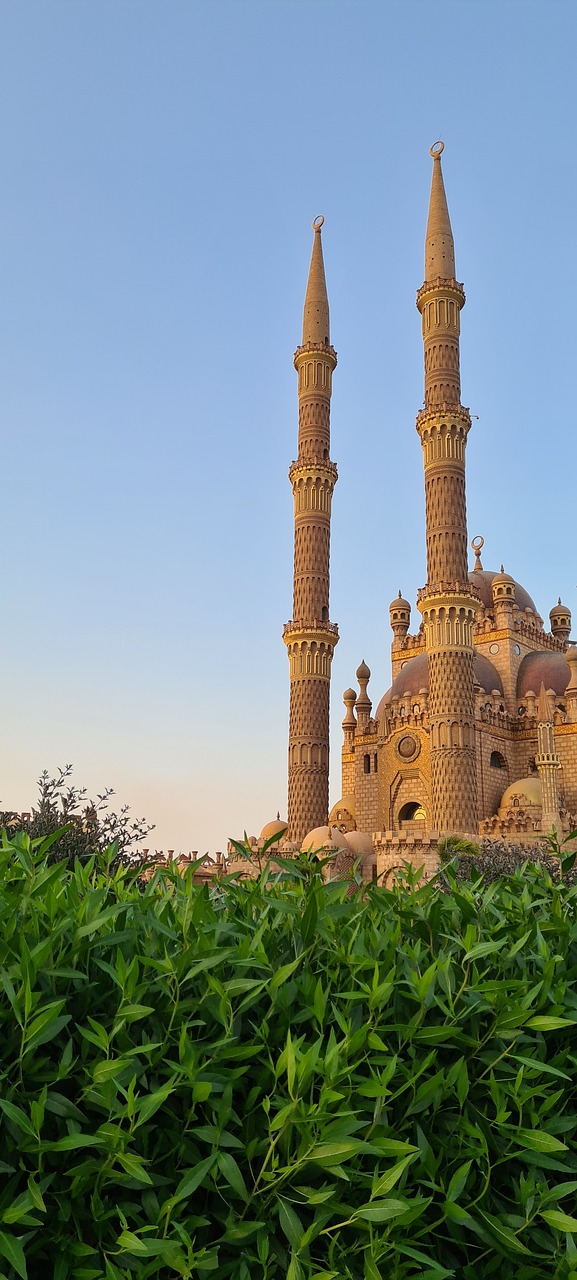
First Mosque in Africa: Eritrea’s Claim to Fame
Nestled by the shores of the Red Sea, the As-Sahaba Mosque proudly claims the title of the first mosque in Africa. It underscores Africa’s vital role in the early days of the spread of Islam.
While the precise date of its construction is a subject of historical debate, it is widely believed to have been established during the lifetime of the Prophet Muhammad (PBUH), making it a contemporary marvel with the earliest mosques in Arabia.
When Was the First Mosque in Africa Built?
Pinpointing the exact year of the As-Sahaba Mosque’s construction is a challenge due to the scarcity of written records from that era. However, historians place its inception between the 7th and 8th centuries CE.
This time frame coincides with the initial waves of Islamic propagation, as North African traders, missionaries, and travelers carried the teachings of Islam beyond the Mediterranean shores.
2.The Great Mosque of Djenné
Nestled in Mali, the Great Mosque of Djenné stands as a remarkable fusion of architecture and cultural identity.
Its towering minarets and intricate geometric patterns echo the local style perfected over generations.
Dating back to the 13th century, though the present structure emerged in the 20th century, the mosque encapsulates history and unity.
Today, it remains an active place of worship, drawing pilgrims and visitors to its awe-inspiring presence.


The Great Mosque of Djenné Is the Largest Mud-Brick Structure in the World
The Great Mosque of Djenné boasts a distinctive adobe structure that blends architectural prowess with cultural identity.
Crafted primarily from mud bricks, straw, and wood, the mosque features soaring minarets, intricate geometric patterns, and an expansive central courtyard.
Its towering walls and grand entrances are adorned with intricate details that showcase the local craftsmanship. Its unique design has earned it a coveted spot on the UNESCO World Heritage List.
3. The Mosque of Kano: Nigeria’s Ancient Spiritual Beacon
Situated in the vibrant city of Kano, Nigeria, the Great Mosque of Kano stands as a silent testament to the country’s deep-rooted Islamic heritage. Its foundations were built as far back as the 15th century.
As the oldest mosque in the country, it carries an immense spiritual weight, providing solace, guidance, and communal connection for generations of worshippers.
The mosque’s graceful minarets, intricate carvings, and spacious courtyard reveal a harmony between aesthetics and functionality. From the call to prayer echoing through its corridors to the architectural details that whisper stories of centuries past, this mosque invites us to honor the legacy of those who have prayed within its walls and to celebrate the enduring vitality of Nigeria’s Islamic identity.
4. Al-Nagashi Mosque: Ethiopia’s Hidden Jewel of Faith
Nestled within the ancient city of Aksum in Ethiopia, Al-Nagashi mosque holds a unique place in history as one of Ethiopia’s oldest and most enduring symbols of Islamic heritage.
It is believed to have been built in the 7th century and named after the term “Al-Nagashi,” which refers to the Muslim community of Ethiopian descent.
The architecture of the Al-Nagashi Mosque is a blend of simple elegance and cultural resonance with whitewashed walls and graceful minaret. Beyond its visual allure, the mosque holds profound spiritual significance for both the local Muslim community and visitors from afar.
It serves as a spiritual sanctuary, a space for reflection, and a symbol of the rich tapestry of Ethiopia’s diverse religious heritage.
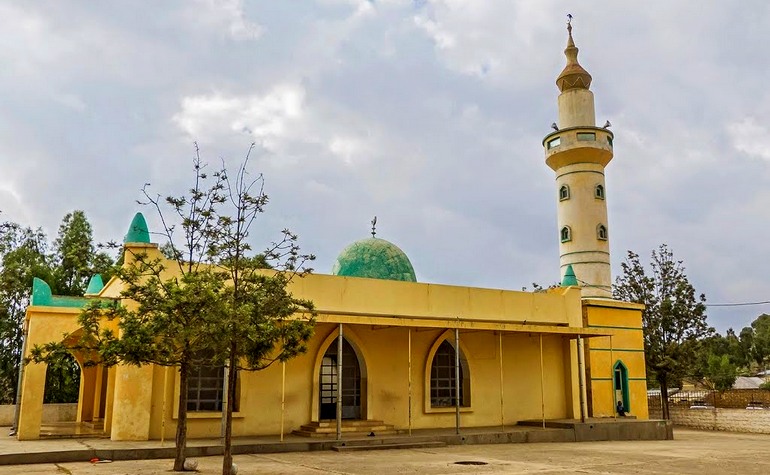
5. Kizimkazi Mosque – One of the Oldest Mosques in East Africa
Kizimkazi is a historic mosque located in the village of Kizimkazi. Thought to be one of the oldest mosques in East Africa, its foundation is attributed to the early days of Islam’s presence in the region, dating back to the 12th century.
Beyond its religious significance, the mosque holds a place of reverence due to its role in the history of Swahili civilization and the interactions between African, Arab, and Persian cultures.
The mosque’s architecture embodies the unique cultural influences that characterize Zanzibar’s history. Its simple, coral-stone structure is adorned with intricately carved wooden decorations, reflecting the region’s maritime heritage and the skillful craftsmanship that defines Swahili architecture.
The mosque’s whitewashed walls contrast beautifully with the azure waters of the Indian Ocean, creating a breathtaking panorama that merges the spiritual and the natural worlds.
6. Qayrawan Mosque – One of the Oldest Mosques in North Africa
The Qayrawan Mosque, also known as the Great Mosque of Kairouan, is widely considered to be the oldest mosque in North Africa.
Located in Kairouan, Tunisia, this mosque is significant in Islamic history and architecture.
It was built in 670 CE and has since served as the region’s spiritual and cultural center.
The mosque’s intricate design, with its impressive prayer hall, minaret, and courtyard, reflects the early architectural styles of Islamic North Africa and has influenced mosque design in the region for centuries.
The Qayrawan Mosque’s historical and architectural importance has earned it recognition as a UNESCO World Heritage Site.

7. Masjid al-Qiblatayn – Tracing History in Somaliland
In the northwestern Awdal region of Somalia, the historic town of Zeila cradles a mosque that whispers the tales of centuries past—the Masjid al-Qiblatayn, also known as Labo-qibla Mosque.
This mosque stands as a testament to the rich Islamic heritage of the region, intertwining faith, history, and architecture in its storied walls.
Masjid al-Qiblatayn carries a weighty history that dates back to the earliest days of Islam. Its name, which translates to “The Mosque of the Two Qiblas,” alludes to a pivotal moment when the direction of prayer (qibla) was changed from Jerusalem to Mecca.
The mosque’s significance reaches beyond its local setting, resonating with the broader narrative of Islam’s evolution.
The mosque’s architecture, though simple in design, echoes the aesthetics of early Islamic mosques with a single minaret and understated elegance.
This unassuming beauty is a testament to the devotion and craftsmanship of those who built it, and it evokes a sense of timelessness that transports visitors to an era of reverence and simplicity.
8. Arba’a Rukun Mosque: A Pillar of Faith and History
Arba’a Rukun Mosque, whose name translates to “Mosque of the Four Pillars,” carries a deep-rooted significance that extends beyond its physical structure.
It was established during the early Islamic presence in the heart of Harar, Ethiopia, built back in the 13th century.
The mosque’s pillars not only support its architecture but also symbolize the unity of the Muslim community in their devotion to prayer and faith.
The architecture of the mosque combines Islamic and local elements, resulting in a beautiful and cohesive space.
Its whitewashed walls, intricate carvings, and graceful archways reflect the elegance of Islamic design principles while embracing the cultural context of Harar.
Arba’a Rukun Mosque is not only a spiritual center but also a cultural haven. It has played a pivotal role in developing Harari culture and preserving the city’s historical identity.
9. Chinguetti Mosque: A Sahara Jewel of Spiritual Heritage
The Chinguetti Mosque, often called the “City of Libraries,” rises like a golden mirage in the heart of the Mauritanian Sahara. As one of the most iconic landmarks of Chinguetti and a UNESCO World Heritage Site, this mosque traces its origins back to the 13th century.
Founded during the zenith of Saharan trade routes, this mosque stood at the crossroads of cultural exchanges and intellectual endeavors.
As a center of learning and faith, it became a beacon for travelers, scholars, and pilgrims traversing the vast desert landscape.
The architecture tells a tale of survival against the relentless desert sands. Its adobe walls reflect the practical brilliance of Saharan builders.
This architectural marvel not only blends seamlessly with the arid environment but also stands as a living example of human adaptation and ingenuity.
10. Larabanga Mosque: An Architectural Marvel of Spiritual Significance
In the remote town of Larabanga, nestled within the Northern Region of Ghana, a sacred jewel of architecture and faith graces the landscape—the Larabanga Mosque.
Known as one of the oldest mosques in West Africa, Larabanga was built in the 15th century, tracing its roots to the early days of Islamic influence in the region.
Founded during the trans-Saharan trade era, the mosque’s Sahelian style architecture is characterized by its adobe construction, graceful minarets, and intricate designs. The mosque’s exterior, with its warm earth tones, harmoniously blends with the surrounding landscape.
The minaret, reminiscent of traditional Sudano-Sahelian architecture, adds a touch of elegance and reverence to the structure.
Beyond its architectural significance, the Larabanga Mosque is a cultural haven and a spiritual center that unites the community. It continues to serve as a place of worship, drawing worshippers and visitors alike.
The mosque’s history is interwoven with local traditions, folklore, and stories passed down through generations. As a touchstone of identity, it anchors Larabanga’s sense of place and belonging.

Summary – Oldest Mosques in Africa
From the shores of Massawa in Eritrea, where the As-Sahaba Mosque proudly claims its place as the world’s first, to the tranquil oases of the Sahara, where the Chinguetti Mosque whispers tales of Saharan civilizations, mosques around Africa carry the weight of centuries, bridging eras and cultures.
The Great Mosque of Djenné, rising majestically from Mali’s landscape, showcases the craftsmanship of a people steeped in tradition. The Qayrawan Mosque in Tunisia carries the weight of centuries.
As we traverse Africa’s map, we encounter the cultural nexus of the Arba’a Rukun Mosque in Ethiopia and the architectural marvel of the Larabanga Mosque in Ghana.
We find solace in the Sahelian splendor of the Larabanga Mosque. The Masjid al-Qiblatayn in Zeila, Somalia, resonates with a profound shift in Islamic history, while the Al-Nagashi Mosque of Ethiopia’s Aksum tells tales of crossroads between cultures.
As we gaze upon these ancient sanctuaries, remember that they are more than structures; they are beacons of devotion, knowledge, and human aspiration.
The echoes of prayers, the whispers of scholars, and the footsteps of countless believers reverberate within their walls, guiding us to reflect on the interplay between faith, history, and the human journey.
]]>This somber chapter unearths a tale of unparalleled devastation, recounting a time when the bubonic plague wreaked havoc upon the companions of Amwas, leaving a trail of unimaginable death and sorrow in Syria.
This event would go down as one of the most catastrophic outbreaks of the bubonic plague in history, claiming a staggering toll of 25,000 lives. Read on to learn more about this tragedy that forever left its mark on the pages of time, reminding us of the cost of unchecked disease and the resilience of those who survived its deadly grip.
Bubonic Plague in Early Islamic History
As the Muslim world began to take shape under the leadership of the Prophet Muhammad (peace be upon him), a silent menace silently infiltrated the landscape.
The bubonic plague was a potent force. With its ability to thrive in unsanitary conditions, the plague found fertile ground in the crowded urban centers of the time. This devastating epidemic is particularly significant in Islamic history due to its impact on the early Muslim community.
What Was the Plague of Amwas?
The Plague of Amwas, also known as the Amwas Epidemic, was a deadly outbreak of the bubonic plague that occurred in the 7th century in the region of Amwas, located in present-day Palestine. The bubonic plague, caused by the bacterium Yersinia pestis, is transmitted through fleas that infest rodents like rats.
Fleas that carry the bacteria can also bite humans, transmitting the disease to them.
The impact of the Plague of Amwas was particularly profound due to the loss of a significant number of companions of the Prophet Muhammad (peace be upon him). These companions were revered individuals who had been close to the Prophet (PBUH) and played pivotal roles in the early Islamic community. Their loss had a lasting impact on the social and religious fabric of the Muslim community.
The Plague of Amwas serves as a reminder of the unpredictability of disease and its ability to shape the course of history. It also highlights the resilience of communities in the face of adversity and their ability to come together to support one another during times of crisis.

Origins of the Amwas Plague
The Plague of Amwas emerged in Syria during the early Islamic expansion when trade routes and urban centers facilitated the rapid spread of diseases. It is believed that the outbreak originated from these trade networks and rapidly swept through the region, leaving devastation in its wake.
How Did the Muslims Respond to the Outbreak?
In response to the Plague of Amwas in Syria, the Muslim community exhibited a range of reactions that reflected both the challenges of the epidemic and the teachings of Islam. The response was a complex interplay of religious beliefs, practical measures, and communal solidarity. Here are some key aspects of how Muslims responded to the outbreak:
- Faith and Resilience: Islamic teachings emphasise the importance of patience, faith, and submission to the will of Allah SWT during times of trial. Many Muslims turned to their faith for solace and strength in the face of the epidemic. They viewed the outbreak as a test from God.
- Care for the Sick: Despite the highly contagious nature of the plague, Muslims demonstrated remarkable compassion by caring for the sick. This act of selflessness was rooted in the teachings of Prophet Muhammad (peace be upon him), who emphasised the importance of caring for the sick and vulnerable.
- Quarantine and Isolation: Historical records suggest that during the Plague of Amwas, some Muslims implemented practices akin to quarantine. This was an early form of public health intervention aimed at reducing transmission.
- Reliance on Natural Remedies: The Islamic tradition values using natural remedies and encourages seeking medical treatment. During the outbreak, Muslims sought various herbal and natural remedies to alleviate the symptoms of the plague.
- Emphasis on Hygiene: Islamic teachings strongly emphasise personal hygiene and cleanliness. Maintaining cleanliness was seen as both a religious duty and a practical measure to reduce the risk of infection.
- Solidarity and Support: The Plague of Amwas united the Muslim community in a spirit of solidarity. Individuals supported one another emotionally and materially, recognising the need for collective action during times of crisis.
How Many People Died During the Amwas Plague?
The historical records vary, but it is estimated that the Plague of Amwas, a devastating outbreak of the bubonic plague that occurred in the 7th century, resulted in the deaths of approximately 25,000 people. This toll includes members of the Muslim community and others affected by the epidemic.
The numbers serve as a stark reminder of the scale of devastation that infectious diseases can bring upon plague stricken communities during times of crisis.
How Many Companions Died During the Amwas Plague?
Around 25,000 companions of the Prophet Muhammad (peace be upon him) died during the Plague of Amwas in Syria. It is widely acknowledged that a significant number of companions did fall victim to the epidemic.
It is evident from history sourcebooks that the deaths of companions during the outbreak contributed to the collective grief experienced by the early Muslim community. Their loss, along with the loss of other community members, serves as a reminder of the indiscriminate nature of infectious diseases and the challenges societies have faced throughout history in confronting such epidemics.
Plague Symptoms
The symptoms of the bubonic plague, including the Plague of Amwas, can be distressing and debilitating. The disease manifests in various stages, each marked by distinct symptoms that reflect the progression of the infection.
Initial Symptoms
The incubation period for the bubonic plague typically ranges from 2 to 6 days after exposure to the bacterium Yersinia pestis. During this time, an individual may not exhibit any noticeable symptoms. The onset of the disease is often sudden and characterised by a rapid deterioration of health. The initial symptoms may include:
- High Fever: The individual experiences a sudden and severe fever, often reaching temperatures of 101 to 105 degrees Fahrenheit (38.3 to 40.5 degrees Celsius).
- Chills: Accompanying the fever, the person may experience chills and shivering.
- Malaise: A general feeling of malaise, weakness, and fatigue sets in.
Development of Buboes
One of the hallmark features of bubonic plague is the appearance of painful, swollen lymph nodes known as buboes. These buboes often develop in the areas closest to the site of the bacterial entry. Symptoms at this stage may include:
- Painful Swelling: Buboes become swollen, inflamed, and exquisitely tender to the touch.
- Redness and Warmth: The skin over the buboes may become red and warm due to inflammation.
- Boil Formation: Buboes can develop into large, pus-filled boils that cause intense discomfort.
If left untreated, the infection can progress, which occurs when the bacteria enter the bloodstream. At this point, symptoms may worsen and include:
- Dissemination of Infection: The infection spreads throughout the body via the bloodstream, leading to a range of symptoms.
- Severe Weakness: Patients may experience profound weakness, fatigue, and dizziness.
- Nausea and Vomiting: Nausea, vomiting, and abdominal pain may occur.
- Skin Changes: Skin discoloration, such as purplish or bluish patches, may develop due to reduced blood circulation.
How Did the Ummah Respond to the Outbreak?
The outbreak prompted the Ummah to engage in introspection and spiritual reflection. Some saw the plague as a call to repentance and a reminder of the transient nature of life.
The experience encouraged individuals to reevaluate their priorities, strengthen their relationship with God, and seek forgiveness for their sins.
The Plague of Amwas tested the faith and resilience of the Muslim Ummah. While facing the grim realities of the epidemic, many Muslims found strength in their faith and the teachings of Islam.
The experience of overcoming challenges together reinforced their belief in the power of collective action and reliance on God’s guidance.
Abu Umar ibn al-Khattab, known as Umar the Second Caliph, also displayed exemplary leadership during the devastating Plague of Amwas.
Abu Umar’s initial response to news of the plague was one of concern, as he recognised the potential for widespread suffering. While some counselled caution, Abu Umar’s heart was moved by compassion.
Ultimately, as the Caliph, Abu Umar’s resolve prevailed. He decided to personally journey into the plague-stricken region, accompanied by a retinue of companions.
Abu Umar’s arrival brought solace to the afflicted, and his tireless efforts to aid the sick and provide comfort showcased his genuine care.
Abu Umar’s actions projected the essence of a true caliph— a leader who bears the weight of responsibility for his subjects.
His presence in the midst of the plague-ridden area exemplified the ideal of selfless leadership. Abu Umar’s dedication to the well-being of his people set a standard for future leaders to emulate.
Abu Umar’s response was not merely a pragmatic decision; it was a testament to his character as a caliph.
His legacy as Abu Umar, the compassionate caliph, remains etched in history, reminding us of the power of empathy and leadership during times of adversity.
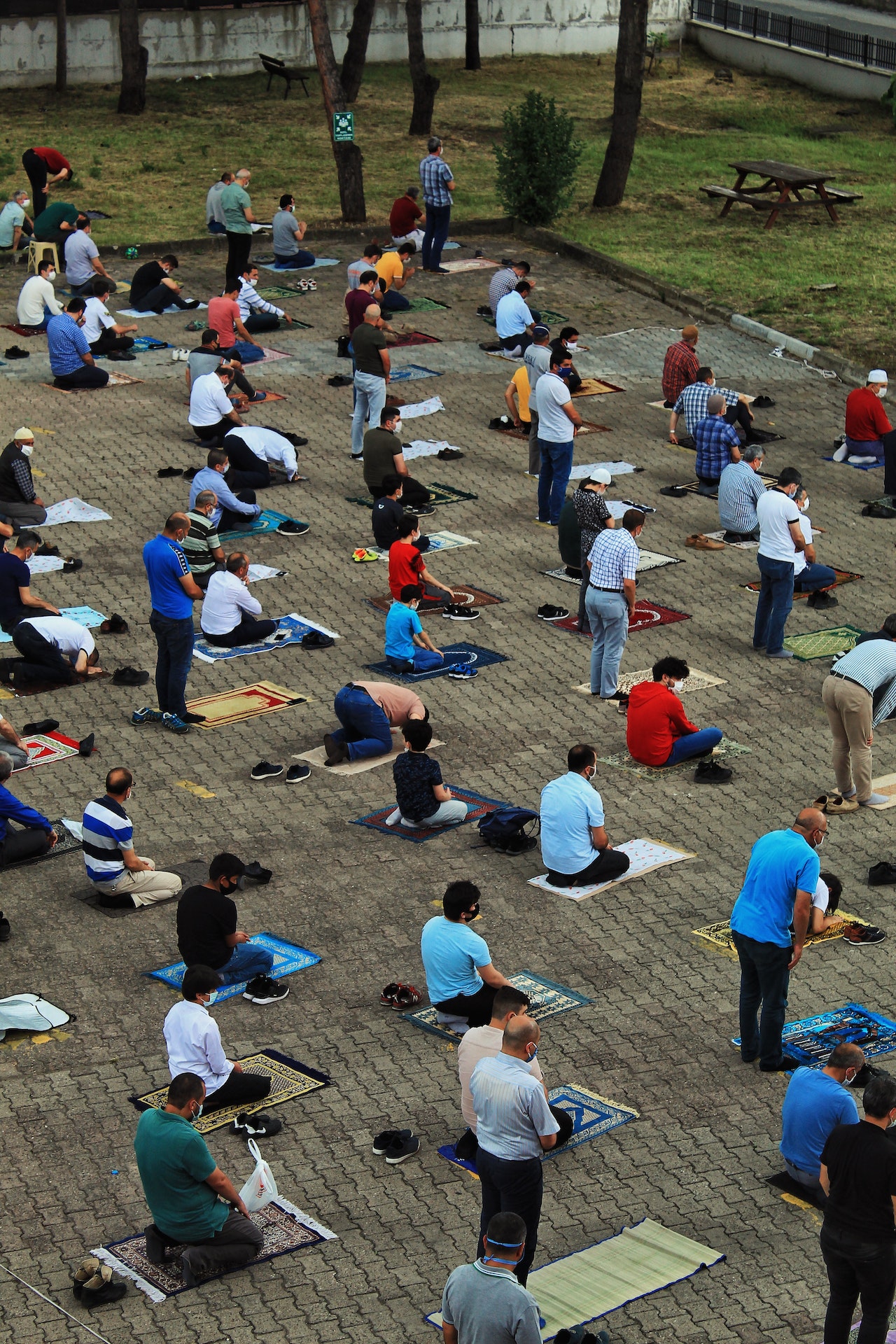
Did the Amwas Plague Reemerge Again?
Historical records do not document a reemergence of the specific “Plague of Amwas” in the same manner or intensity as the initial outbreak. However, throughout history, various forms of plague, including bubonic plague, have continued to affect populations in different regions.
Notable historical instances of plague outbreaks include the Black Death in the 14th century, which devastated Europe and other parts of the world, and the third pandemic in the 19th and 20th centuries, which spread globally through trade routes.
In the modern era, due to advancements in medical knowledge, hygiene practices, and the availability of antibiotics, the bubonic plague is more controllable and treatable than it was in earlier times.
Aftermath
The aftermath of the Plague of Amwas left a deep impact on the Muslim community. Societal disruption and economic instability followed the loss of lives, including esteemed companions of the Holy Prophet Muhammad (peace be upon him), resulting in a period of mourning and reflection.
The epidemic prompted a renewed focus on public health and hygiene, fostering communal solidarity and prompting changes in cultural norms. While historical details may fade, the memory of the plague contributed to broader medical awareness, influencing responses to future challenges and shaping the cultural, social, and religious perspectives of the affected communities.
Plague Disease History
Plague’s origins trace back to antiquity, with accounts of disease outbreaks resembling the symptoms of bubonic plague found in various ancient civilisations. However, one of the earliest well-documented and widely recognised plague pandemics occurred during the reign of the Byzantine Emperor Justinian I in the 6th to 8th centuries.
What was the Justinian plague?
The Justinian Plague, named after the Byzantine Emperor Justinian I, was a devastating pandemic from the 6th to 8th centuries.
It is widely believed to have been caused by the same bacterium, Yersinia pestis, responsible for the bubonic plague.
The pandemic had far-reaching effects, including significant loss of life and societal disruption. The Justinian Plague weakened the Byzantine Empire, altered trade routes, and influenced historical events.
It serves as a historical precursor to later plague outbreaks, including the more famous Black Death of the 14th century.
Summary – The Plague of Amwas
The Plague of Amwas is a significant chapter in Islamic history, marked by the ominous shadow of the bubonic plague that cast a pall over the early Muslim community.
Emerging in the 7th century, this deadly epidemic spread through bustling trade routes, leaving a trail of devastation and loss in its wake.
The outbreak claimed several lives, including revered companions of the Prophet Muhammad, and tested the community’s faith, resilience, and compassion.
Muslims responded by turning to their faith for solace, caring for the sick despite the risks, and implementing measures like isolation and hygiene.
The Plague of Amwas underscores the unpredictability of disease and the lessons it imparts on the importance of unity, solidarity, and the pursuit of medical understanding.
While historical records provide a glimpse into the past, the legacy of the Plague of Amwas continues to reverberate, reminding us of the enduring human spirit in the face of adversity and the capacity to learn from history’s trials
]]>